
Aji Charapita vs Lemon Drop: Tiny Amazon Heat or Lemony Aji Workhorse?
Aji Charapita is best when a few tiny pods can perfume a sauce, ceviche-style topping, or finishing condiment. Lemon Drop is better when you need a larger yellow aji for fresh salsa, sauces, pickles, powder, or garden harvests with a clear lemon note.

Aji Charapita
HotLemon Drop
HotQuick Comparison
| Attribute | Aji Charapita | Lemon Drop |
|---|---|---|
| Scoville evidence | 30K-50K SHU | 15K-30K SHU |
| Heat Tier | Hot | Hot |
| vs Jalapeño | 6x hotter | 4x hotter |
| Flavor | fruity and citrusy | citrusy and bright |
| Species | C. chinense | C. baccatum |
| Origin | Peruvian Amazon | Peru |
Is Aji Charapita Hotter Than Lemon Drop?
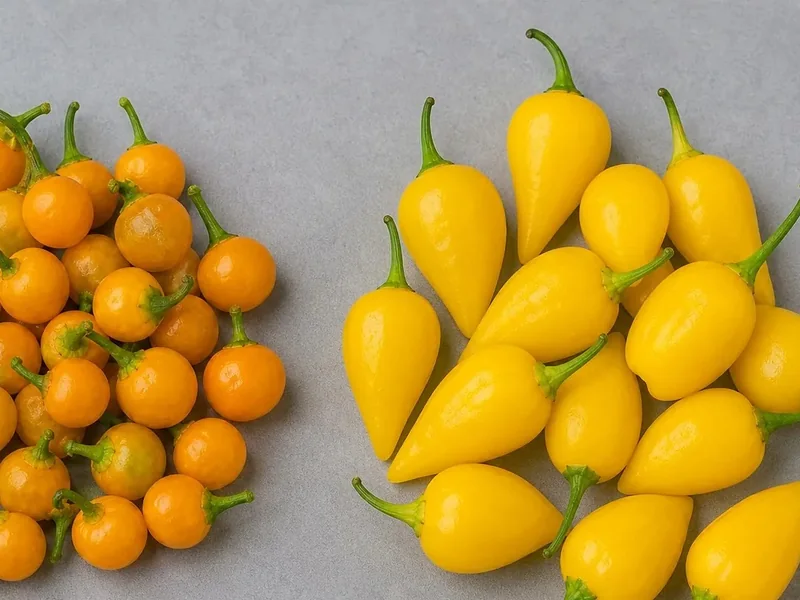
Aji Charapita is smaller, but it is not gentler. It sits around 30,000-50,000 SHU, while Lemon Drop sits around 15,000-30,000 SHU.
That makes Charapita the hotter pepper even though the pod looks like a tiny yellow bead.
The first cooking decision is serving size. Lemon Drop can be sliced, minced, pickled, dried, or blended by the pod.
Charapita should usually be counted by the berry because a few small fruits can move a whole bowl of sauce.
The species difference plays into that heat gap. Aji Charapita is Capsicum chinense, the same species family as habaneros and scotch bonnets, which tend to deliver heat that builds and lingers rather than spiking and fading the way many baccatum peppers like Lemon Drop do.
| Decision | Aji Charapita | Lemon Drop |
|---|---|---|
| Seller-listed heat | 30,000 to 50,000 SHU | 15,000 to 30,000 SHU |
| Pod scale | Tiny, berry-sized | Larger, elongated |
| Best role | Measured aromatic finish | Sauce, salsa, pickle, or powder |
| Species | C. chinense | C. baccatum |
How Do Aji Charapita and Lemon Drop Taste Different?
Both peppers read citrusy, but the citrus is not doing the same job. Aji Charapita leads with quick citrus and tropical fruit over a compact, fast burn, closer to a berry than a chile in the first bite.
Lemon Drop leans further into pure acidity. Its citrus note is not a background accent, since it is the dominant character, tasting closer to fresh-squeezed lemon than to a typical fruity aji.
That difference decides which pepper reads as a garnish and which reads as an ingredient. Charapita's tropical-fruit undertone works as a finishing accent, while Lemon Drop's straight acidity can carry a sauce or marinade on its own.
That chinense backbone also shapes how the heat itself reads. Charapita's burn leans floral and fruity rather than vegetal, a family trait it shares with habaneros and scotch bonnets despite the enormous size difference between the pods.
What Dishes Suit Aji Charapita and Lemon Drop?
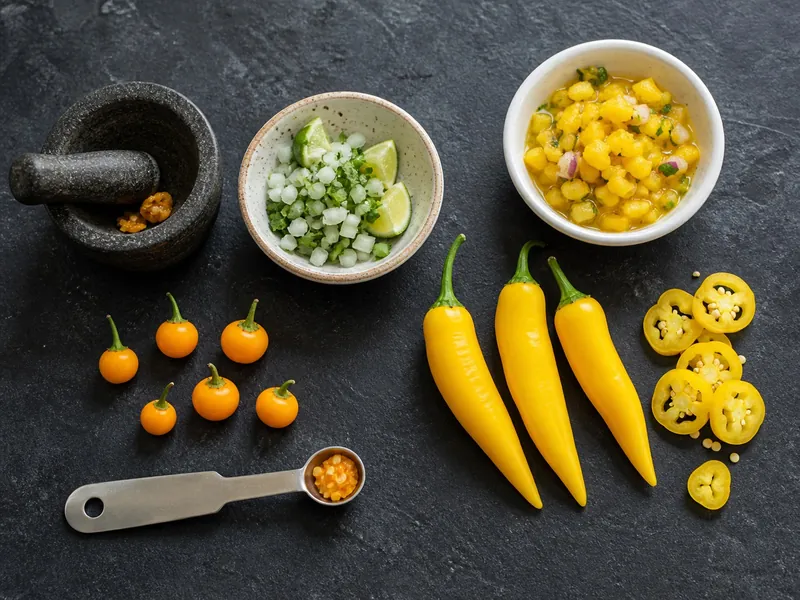
Charapita belongs in small, high-aroma uses: lime-onion toppings, fish, rice, light hot sauce, yuca, plantain, and finishing powders. It is especially useful when the pepper should disappear into the bite while its aroma stays visible.
Lemon Drop is more of a working yellow aji. It has enough pod size for fresh salsa, pickled rings, vinaigrettes, marinades, fruit hot sauce, and dried powder.
Peruvian-style use shows the split. Charapita can season a raw onion and lime mixture with only a few crushed pods.
Lemon Drop can carry a larger sauce or condiment where body and repeated spoonfuls matter.
That is why Aji Charapita hot sauce should stay restrained. If the sauce needs bulk, build it with mild pepper, fruit, or vinegar, then let Charapita supply the high note.
The 2026 Frontiers study situates Aji Charapita within a wider set of Amazon-region chinense varieties, a reminder that Loreto growers maintain far more pepper diversity than the single "charapita" market name suggests.
Which Should You Buy or Grow, Charapita or Lemon Drop?
Pick Charapita when rarity, tiny dose control, and concentrated Amazon-style aroma matter. Pick Lemon Drop when you want a bigger harvest, easier prep, and a lemon-forward aji that can carry a whole recipe.
A home cook who only needs one fresh yellow chile for weekly use should buy or grow Lemon Drop first. A sauce maker chasing a small aromatic accent should treat Charapita as a finishing pepper, not a bulk ingredient.
Lemon Drop's combination of manageable heat and citrus-forward flavor made it a quick favorite among North American growers once seed companies began offering it in the 1990s, at a time when most available hot peppers read as one-dimensional heat with little aromatic payoff.
How Hard Is Each to Find, and Can You Swap Them?
Availability is part of the comparison. Lemon Drop seed and pods are much easier to find, and the plant gives enough harvest to experiment.
Charapita is more specialty-market and seed-catalog dependent, so wasting pods in a recipe that needs pepper mass is expensive and unnecessary.
To replace Lemon Drop with Charapita, use fewer pods and add a mild yellow pepper or fruit if the recipe needs body. To replace Charapita with Lemon Drop, accept less concentrated aroma and add the Lemon Drop earlier so its flavor can spread through the dish.
For a closer heat fallback, use the Aji Charapita substitute strategy. For the lemony side, compare Lemon Drop with Aji Amarillo vs Lemon Drop because that decision is about paste body versus citrus bite.
Scarcity claims around Aji Charapita deserve a skeptical read. Earlier marketing around the pepper leaned on exact price figures per pound to imply rarity and authenticity, but that framing is a buying caveat, not proof of anything about the pod itself, so judge a seed packet or jar by species (Capsicum chinense) and regional sourcing claims instead of price alone.
Growing conditions widen the gap further. Lemon Drop plants are productive enough for a home garden to supply a season of fresh cooking, pickling, and drying, while Charapita's tiny berry-sized pods mean even a healthy plant yields only enough for accent use, not for stocking a pantry.
Choose by the job
- Use Charapita when a few small pods should supply concentrated aroma
- Use Lemon Drop when the recipe needs pepper flesh and lemon-like acidity
- Add mild yellow pepper or fruit when a Charapita swap needs more body
- Reduce pod count when replacing Lemon Drop with hotter Charapita
Where Do Aji Charapita and Lemon Drop Come From?
Aji Charapita is a Capsicum chinense pepper associated with Peru's Amazon region. The cited Frontiers research identifies Aji Charapita material from Loreto, which supports a regional identity without inventing a breeder story or a single domestication date.
Lemon Drop is a Capsicum baccatum pepper associated with Peru. The two peppers therefore share a national association but differ in species, pod scale, and the way cooks portion them.
The available sources do not establish the old claims about 16th-century documentation, a precise coastal origin, or a 1990s North American introduction. Those details have been removed because they do not help choose between the peppers and were not owned by the cited records.
Does Nutrition Differ Between Charapita and Lemon Drop?
No cultivar-specific nutrient analysis was located for either pepper. USDA generic hot-pepper data cannot establish exact calories or vitamin percentages for Aji Charapita or Lemon Drop, so nutrition is not a reliable reason to choose one over the other.
Serving size is the practical difference. A cook may use only a few berry-sized Charapita pods for aroma and heat, while a larger Lemon Drop portion can supply visible pepper flesh and acidity to salsa, pickles, or sauce.
Capsaicin is concentrated most heavily in placental tissue in both peppers, but the article does not claim that removing it cuts heat by a fixed percentage. Wear gloves for batch preparation and adjust heat by measured additions.
Aji Charapita vs Lemon Drop FAQ
- University of Minnesota Extension - Growing Peppers