
Aleppo Pepper vs Calabrian Chili: Flakes, Paste, and Heat
Aleppo pepper is usually a fruity, mildly hot flake for finishing food, while Calabrian chili is a hotter regional ingredient sold in several forms, often chopped or packed in oil. Choose by the job and read the Calabrian jar before using a fixed substitution ratio.

Aleppo Pepper
HotCalabrian Chili
HotQuick Comparison
| Attribute | Aleppo Pepper | Calabrian Chili |
|---|---|---|
| Scoville evidence | 10K-10K SHU | 25K-40K SHU |
| Heat Tier | Hot | Hot |
| vs Jalapeño | 1x hotter | 5x hotter |
| Flavor | fruity, tart, sweet-hot, lightly earthy | fruity, savory, lightly smoky heat |
| Species | C. annuum | C. annuum |
| Origin | Syria | Calabria, Italy |
Is Calabrian Chili Hotter Than Aleppo Pepper?
Aleppo pepper and Calabrian chili are not interchangeable measures of the same ingredient. Aleppo usually arrives as coarse flakes, while a product sold as Calabrian chili may be whole, crushed, dried, powdered, or packed in oil.
For a direct answer, choose Aleppo pepper for gentler finishing heat and choose Calabrian chili for a hotter ingredient that seasons a sauce or pan. The exact amount depends on the Calabrian product because a spoonful of oil-packed paste is not equivalent to a spoonful of dry flakes.
Claremont Spice and Dry Goods places Aleppo pepper near 10,000 Scoville heat units, a level warm enough to notice but usually easier to scatter across a finished dish than a hotter crushed chile.
KnowThePepper's Calabrian chili profile uses a working range of 25,000 to 40,000 SHU from a secondary heat reference. Calabria's official tourism site gives a broader regional figure of 40,000 to 50,000 SHU, showing why the regional name should not be treated as one laboratory-fixed cultivar.
That variation is not a technical footnote. A long Diavolicchio, a round Ciliegino, and a jar of chopped mixed peppers can all reach shoppers under Calabrian wording, yet their pod type and packed liquid can change the bite.
The Calabria Region names Calabrese Tondo, Ciliegino, Guglia, Diamante, Pizzitano, Verde, Naso di Cane, and Diavolicchio among the region's peppers, so in practical terms the label describes a place and tradition more often than one uniform pepper shape.
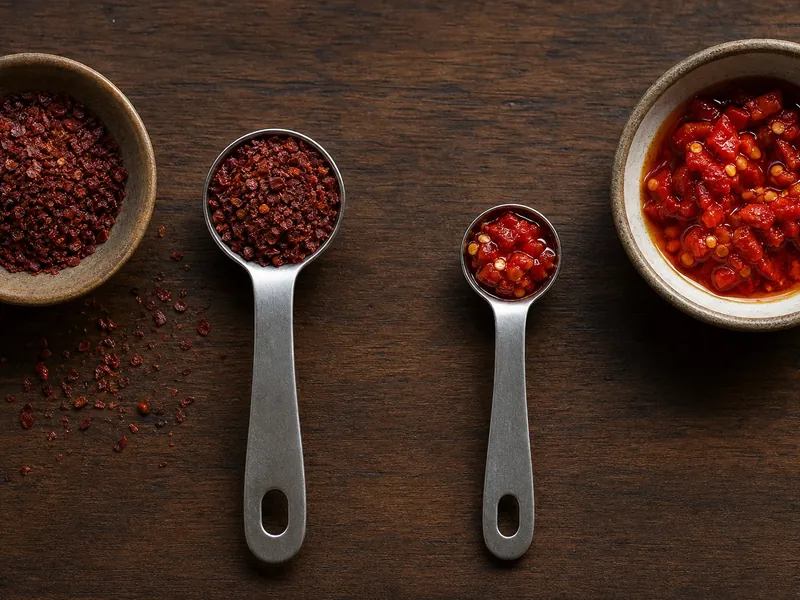
Form changes concentration too. One teaspoon of dry Aleppo is mostly chile flakes, but one teaspoon from a Calabrian jar may include olive oil, vinegar, salt, or other vegetables.
Read the ingredient list before comparing spoonfuls. A product with chile first will usually deliver more pepper material than a loose sauce or spread in which oil and vegetables occupy much of the jar.
Heat also spreads differently through food because dry flakes leave concentrated warm spots on the surface, while finely chopped or pasted chile disperses capsaicinoids through fat and sauce.
New Mexico State University explains that modern Scoville values are derived from measured capsaicinoids rather than the old tasting-panel method. Even so, a published range describes the pepper material and cannot predict how much diluted product sits in your spoon.
For a cautious swap, begin with about half as much Calabrian paste as Aleppo flakes, then cook and taste. This is a kitchen starting point, not a universal conversion, because brands differ in pepper percentage and heat.
When replacing Calabrian chile with Aleppo, start with the same measured amount and expect less heat and less oily body, then add more flakes only after they have hydrated or bloomed and the warmth has spread through the dish.
How Do Aleppo Pepper and Calabrian Chili Taste?
Aleppo pepper tastes fruity, gently tart, and rounded rather than sharply hot. Serious Eats describes the traditional Halaby chile as ripened, dried, seeded, and crushed, which helps explain its soft flake texture and relatively restrained bitterness.
Many commercial Aleppo flakes also contain salt and a small amount of oil. The Spice House lists chiles, vegetable oil, and salt in its product, so its raisin-like, savory character comes from both the pepper and the finished seasoning.
That ingredient list matters at the stove because salted Aleppo can season a dish while adding heat, which means you should taste before adding the recipe's full amount of salt.
Oil-treated flakes also feel softer than brittle generic crushed red pepper. They cling to yogurt, eggs, roasted vegetables, and meat instead of scattering like dry seeds.
Calabrian chili has ripe red-pepper fruit, a more forceful burn, and a savory character that suits olive oil. The Calabria Region describes regional peppers used fresh, powdered, dried in braids, pickled, preserved in oil, and worked into cured meats.
Those formats do not taste identical because a dried Calabrian pepper can be direct and concentrated, while a jarred product may bring acidity, salt, and richness along with the chile.
Vinegar is the easiest flavor difference to miss. If it appears high on the Calabrian jar's ingredient list, the product can sharpen a tomato sauce or mayonnaise in a way that plain Aleppo flakes cannot.
Oil is equally important. Chopped Calabrian chile in oil can make a pasta sauce feel richer, while the same spoonful of dry Aleppo adds aroma and speckled color without adding meaningful liquid fat.
Although both peppers belong to Capsicum annuum, species does not decide their finished flavor because cultivar, ripeness, drying, seed removal, salt, oil, and storage all shape what reaches the plate.
A useful comparison therefore starts with the package, not color alone. Two red ingredients can create very different seasoning because one is a prepared flake and the other may be a preserved condiment.
Aleppo is the better choice when a dish needs warmth without losing delicate dairy, egg, vegetable, or lamb flavors. Its fruit and mild tang can remain identifiable even when it is used as a visible garnish.
Calabrian chile is better when tomato, sausage, beans, bitter greens, or cheese can support a hotter savory note because its stronger heat and common oil-packed form make it easier to distribute through those richer foods.
Storage preserves those distinctions. Keep Aleppo flakes tightly sealed away from heat and light, and refrigerate an opened Calabrian jar when its label instructs you to do so.
How Do You Cook With Aleppo and Calabrian Chili?
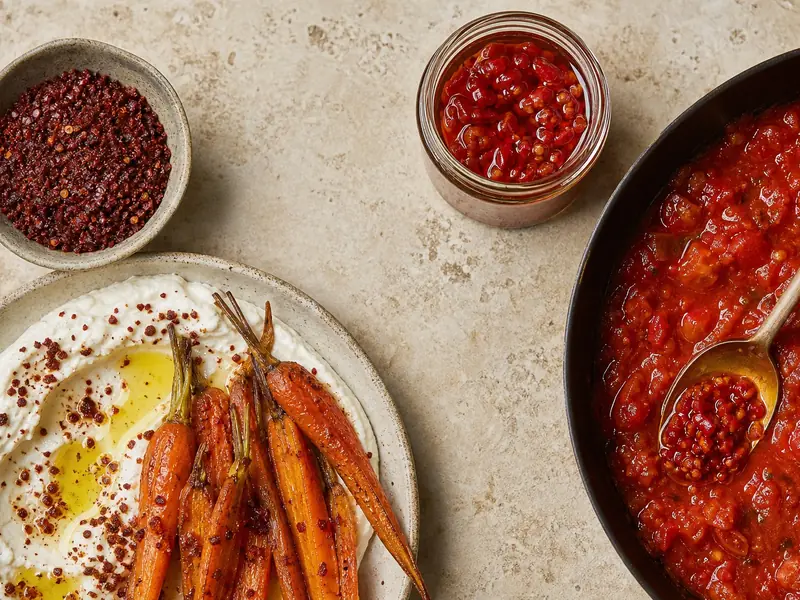
Use Aleppo pepper at the end of cooking when you want its color, fruit, and gentle texture to stay obvious. Sprinkle it over hummus, labneh, fried eggs, roasted carrots, grilled meat, beans, or warm flatbread.
Aleppo can bloom briefly in fat if you warm it over low heat for less than a minute, then move on as soon as the oil turns red and aromatic so the flakes do not scorch.
Hard frying can flatten the pepper's fruit and make small particles taste bitter. A late addition or gentle bloom gives you more control than dropping the flakes into a smoking pan.
Calabrian chile usually benefits from earlier mixing when the goal is even heat. Stir chopped peppers or paste into warm olive oil, tomato sauce, beans, braised greens, or mayonnaise so the chile disperses through the base.
For pasta, loosen a dense Calabrian paste with oil or cooking water before coating the noodles so one spoonful does not remain in a single hot pocket.
For pizza, decide whether you want a surface seasoning or a sauce ingredient. Aleppo flakes suit a finishing sprinkle, while chopped Calabrian peppers or paste can be blended into tomato sauce or dotted sparingly across the pie.
The Calabria Region connects regional chile with Salumi di Calabria PDO products, preserved vegetables, anchovy-stuffed peppers, and many other preparations. That range supports using Calabrian chile as an ingredient with fat, meat, seafood, and preserved foods rather than limiting it to pasta.
Aleppo belongs in a different cooking context, and Serious Eats associates it with Syrian and Turkish cooking where its warm fruit can season kebabs, dips, vegetables, and other dishes without becoming the sole flavor.
Neither tradition makes one pepper universally better. The useful question is whether the dish needs a dry finishing spice or a hotter preserved ingredient that changes the sauce itself.
Texture can settle the choice quickly. Use Aleppo when visible flakes and a dry surface are welcome, but use a Calabrian jar when the recipe needs moisture, coating power, or pieces of tender pepper.
A creamy sauce shows the distinction clearly because Aleppo makes red speckles and mild warmth, while Calabrian paste can tint the entire sauce and push heat into every bite.
A dry rub favors Aleppo because it mixes evenly with ground spices without adding wet ingredients. A Calabrian paste can still work as part of a wet marinade, but its salt, oil, and acid must be counted with the other ingredients.
When the dish already contains vinegar or lemon, inspect a jarred Calabrian product before adding more acid. When it already contains salty cheese or cured meat, make the same check for both the jar and salted Aleppo flakes.
To prevent the common substitution mistake, match the pepper's job first, adjust salt and fat second, then correct the heat after the chile has had time to spread.
Which Should You Choose, Aleppo or Calabrian Chili?
Choose Aleppo pepper when you need a mild-to-moderate flake for finishing, a dry rub, or a gentle bloom in oil. It is especially useful when fruity chile flavor should remain clear beside yogurt, eggs, vegetables, lamb, or beans.
Choose Calabrian chili when you need stronger heat inside pasta sauce, pizza sauce, aioli, braised greens, sausage, or a spread. A chopped or pasted product is also the better fit when the chile must coat the food instead of sitting on top.
Before buying, check four things on the Calabrian label including the pepper format, the first ingredient, added vinegar, and the amount of salt per serving.
Make the same inspection for Aleppo. A package labeled Aleppo-style may use peppers grown outside Syria, and commercial blends can differ in salt and oil even when the flakes look similar.
For one teaspoon of Aleppo flakes, start with one-half teaspoon of Calabrian paste. Taste after it has cooked into the fat or sauce, then add more in small amounts if the dish still needs heat.
For one teaspoon of Calabrian paste, begin with one teaspoon of Aleppo flakes plus only enough oil to replace the missing texture, and expect a milder result that may need a separate hotter chile when heat is essential.
Do not copy the jar's oil blindly. If the Calabrian product contains vinegar or salt, neutral olive oil can replace its texture but cannot replace those seasonings.
Generic crushed red pepper is a closer heat tool than Aleppo when a recipe depends on Calabrian punch. Aleppo remains the better flavor tool when the target is fruit, gentle warmth, and a soft flake.
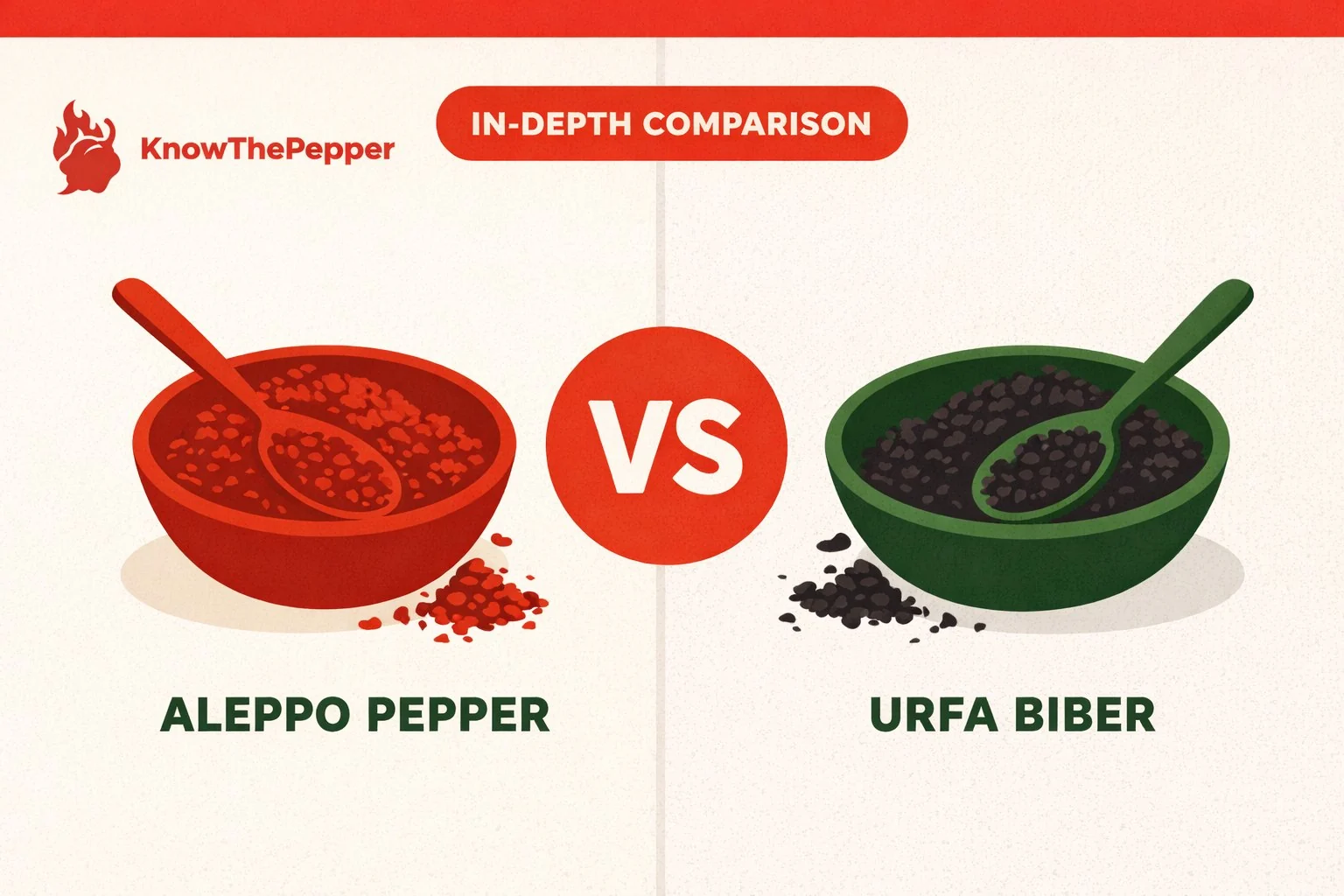
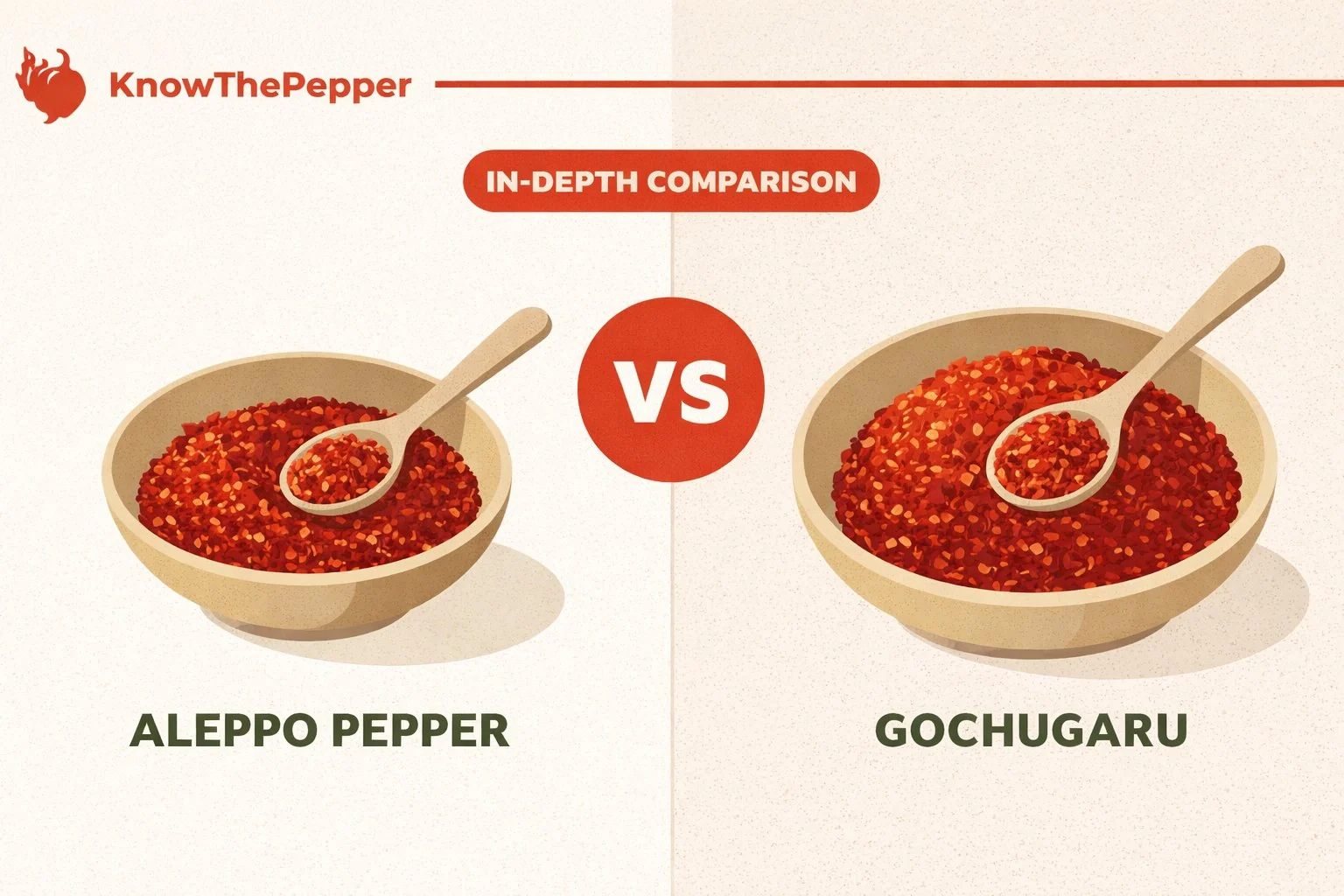
Gochugaru can make sense when you need a mild red flake with broad surface coverage although its texture and flavor are not identical to Aleppo, whereas Urfa Biber is darker and smokier and belongs in a separate comparison.
The safest choice for a named regional recipe is still the ingredient it specifies. Substitution becomes more reliable when you preserve the original format, because flakes, whole peppers, and paste behave differently before heat is even considered.
The final decision is simple. Pick Aleppo for a fruity finishing flake, and pick Calabrian chile for a hotter preserved ingredient that carries through oil or sauce.
If only one is in your pantry, adapt the method as well as the quantity by controlling salt, acid, and added oil first, then adjusting heat after tasting the finished mixture.
Aleppo Pepper vs Calabrian Chili FAQ
- Claremont Spice and Dry Goods - Aleppo Pepper
- The Spice House - Aleppo Peppers
- Calabria Region - The Chilli Pepper of Calabria
- New Mexico State University Circular 706 - Measuring Chile Pepper Heat