Choose flakes
Use them when visible texture, uneven sparks of heat, or a finishing accent improves the dish. They also tolerate storage better than fully ground chile when color retention matters.


Chile flakes are dried chiles crushed into coarse pieces. Choose the jar by flavor, grind, heat direction, and cooking stage because generic crushed red pepper, gochugaru, Aleppo-style pepper, Urfa biber, and smoked flakes do different jobs.
Chile flakes are dried chile peppers broken into coarse pieces rather than ground into a fine powder. The pieces may include skin, flesh, seeds, and bits of inner tissue, depending on how the producer processes the pods.
The label is broad. “Chile flakes,” “chili flakes,” and “chilli flakes” can name the same category, while “red pepper flakes” often points to the familiar seed-speckled blend used in American pizza shops.
A named product such as gochugaru, Aleppo-style pepper, Urfa biber, ancho flakes, or chipotle flakes carries the character of a particular pepper or processing tradition. Generic crushed red pepper usually puts straightforward heat first, so the two jars can be red and coarse without doing the same job.
A recipe that says only “chile flakes” leaves part of the seasoning decision to you. The surrounding ingredients usually reveal whether the writer expects neutral heat, a regional flavor, a red color, or a visible finishing texture.
If the recipe gives no regional clue and uses a small amount for background heat, generic crushed red pepper is the practical fallback. Start cautiously when the jar is new because blends vary by producer and batch.
The useful question is what the flakes should contribute after the burn fades. Smoke, dried-fruit sweetness, earthiness, bright red color, and crisp texture can shape a dish as much as heat.
| Flake style | Typical character | Heat direction | Good first uses |
|---|---|---|---|
| Generic crushed red pepper | Direct, neutral pepper heat with visible seeds | Medium to hot, but variable | Pizza, tomato sauce, beans, marinades |
| Aleppo-style pepper | Fruity, earthy, gently savory | Mild to medium | Eggs, roasted vegetables, yogurt, grilled meat |
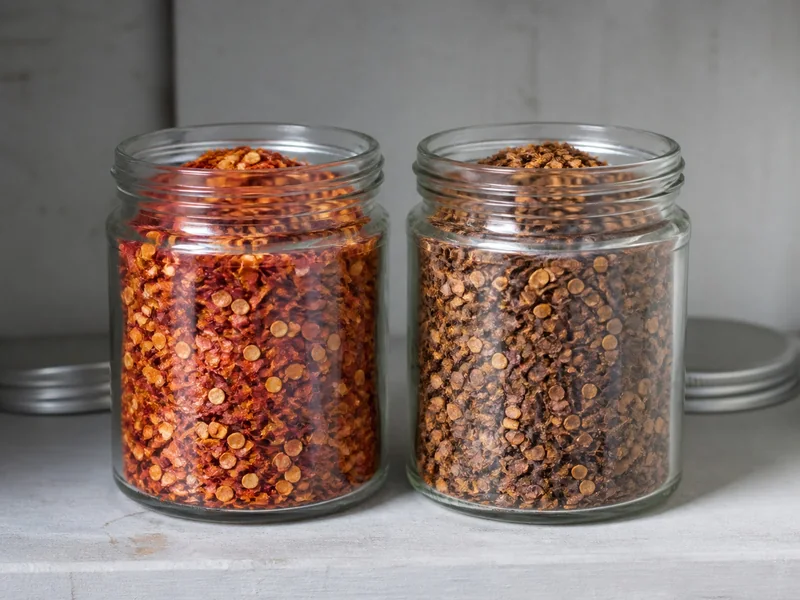
| Urfa biber | Dark, smoky, raisin-like, often slightly moist | Slow, moderate warmth | Finishing eggs, meat, squash, chocolate desserts |
| Gochugaru | Bright red, fruity, lightly sweet | Mild or hot according to the package | Kimchi, Korean stews, dressings, seasoned vegetables |
| Ancho flakes | Dried fruit, cocoa-like depth, little sharpness | Usually mild | Beans, braises, dry rubs, squash |
| Chipotle flakes | Pronounced smoke with ripe jalapeno character | Moderate and lingering | Chili, grilled corn, barbecue rubs, tomato sauces |
| Calabrian chile flakes | Fruity, salty-bright impression, assertive heat | Medium to hot | Pasta, seafood, pizza, vegetables |
| Chile de arbol flakes | Clean, sharp heat with a toasted edge | Hot | Salsa, oil infusions, soups, peanut sauces |
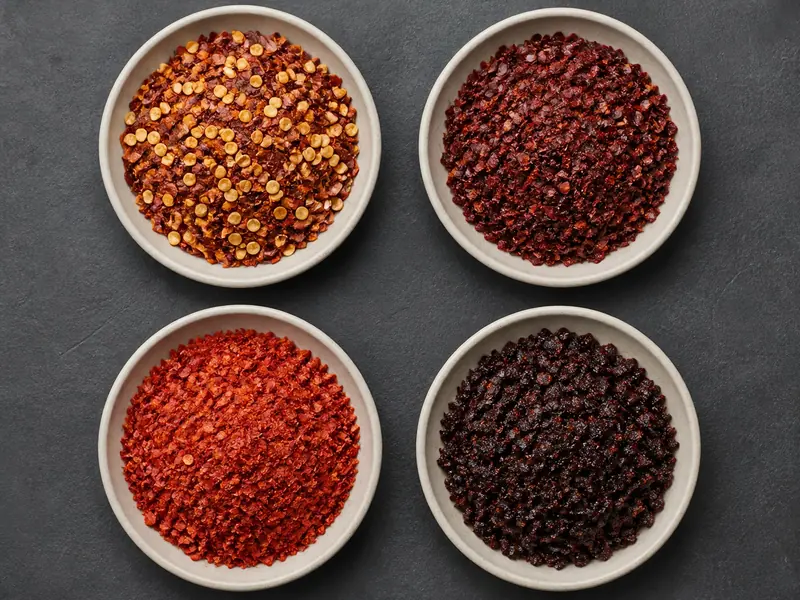
Aleppo-style and Urfa flakes suit dishes where the spice stays visible on the surface. Their moderate warmth lets you use enough to taste the fruit and earth beneath it.
Gochugaru behaves differently from a cayenne-heavy pizza blend. Coarse gochugaru can supply red color and fruit across a large batch without always making the dish aggressively hot, although packages labeled hot still require a careful first taste.
Ancho and chipotle begin with different forms of jalapeno-family and poblano-family peppers, then drying changes their jobs. Ancho leans sweet and dark, while chipotle adds smoke that can redirect a clean tomato sauce or dry rub.
Calabrian and chile de arbol flakes push harder. Use them when the dish can carry assertive heat, then let the product label and a small taste settle the actual dose.
A front label may describe origin, style, grind, or marketing rather than a standardized formula. Turn the package over before deciding that two similarly named products are interchangeable.
Clear packaging helps with grind and color, but it also exposes the spice to light.
A small window is useful for inspection. An opaque or well-boxed package offers better protection during storage.
Flakes release flavor more slowly and unevenly than powder, which is often the point. They leave visible bursts on a slice of pizza or roasted vegetable instead of coloring every bite alike.
Fine powder disperses quickly and can thicken a spice paste or coat a dry rub evenly. Whole dried pods take longer to infuse and are easier to remove from broths, beans, and braises.
Use them when visible texture, uneven sparks of heat, or a finishing accent improves the dish. They also tolerate storage better than fully ground chile when color retention matters.
Use it for even coating, quick dispersion, smooth sauces, and spice blends. Measure carefully because a spoonful packs more chile into less space than coarse flakes.
Use them for a slower infusion or when you want to toast, soak, seed, and blend the pepper yourself. Whole pods also keep the cultivar easier to identify.
New Mexico State University reports that flakes retain red color better than ground powder under comparable storage conditions. That advantage does not make old flakes permanent, but it explains why processors may store dried chile as flakes before final grinding.
A heat range describes a pepper or tested product, not the exact sensation from every jar. Genetics, weather, growing conditions, fruit age, processing, and the blend inside the package can all shift what reaches your spoon.
Visible seeds are not a reliable heat meter. New Mexico State University explains that capsaicinoids form in glands associated with the placenta.
Seeds can carry those compounds after contact, but they do not produce the heat.
Test an unfamiliar product in one spoonful of the dish before seasoning the full pot. Use a measured small pinch, wait for the heat to build, then scale from that result.
Color also misleads. Bright gochugaru may be milder than a duller cayenne blend, and dark Urfa biber can taste deeper without delivering the sharpest burn.
A package marked mild, medium, or hot gives a useful starting direction. Your first controlled taste still provides better dosing information than a photograph, seed count, or category name.
Chile flakes change character according to when they meet heat, fat, and liquid. Choose the stage from the result you want rather than adding them at the same point in every recipe.
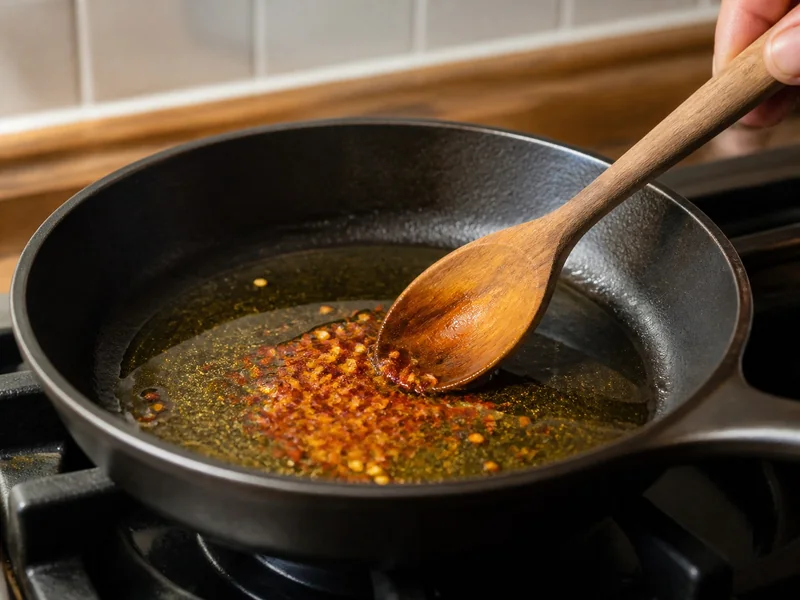
Small flakes can burn before garlic, onion, or other ingredients finish cooking. If the pieces turn very dark and smell acrid, adding liquid will stop further scorching but will not remove the bitterness already formed.
A wet or oil-treated flake such as some Aleppo-style or Urfa products behaves differently from a dry cayenne blend. Watch the pan rather than forcing both products through the same timing.
A successful swap preserves the trait the dish actually needs. That may be clean heat, smoke, red color, dried-fruit flavor, or coarse texture, and one substitute rarely matches all five.
| Missing job | Useful substitute path | Adjustment |
|---|---|---|
| Neutral background heat | Generic crushed red pepper or cayenne flakes | Start below the stated amount if the replacement jar tastes sharper |
| Mild fruit and visible flakes | Aleppo-style pepper, mild gochugaru, or ancho flakes | Choose by cuisine, then correct salt if the product is seasoned |
| Smoke | Chipotle flakes | Use less at first because smoke can dominate before heat does |
| Bright red color with moderate warmth | Mild coarse gochugaru | Do not replace it spoon for spoon with a hot cayenne blend |
| Dark, slow warmth | Urfa biber or a restrained mix of Aleppo-style and chipotle flakes | Add late so the dark fruit and smoke remain noticeable |
| Texture only | A mild flake plus separate heat from the recipe's existing chile | Split texture and heat instead of forcing one jar to supply both |
Never assume a one-to-one volume swap between named flakes. Powder is denser than flakes, cayenne-heavy blends can be much hotter than gochugaru, and salted products alter the rest of the seasoning.
When the original chile carries regional identity, substitution has a limit. The replacement may make a good dish, but it will not reproduce the same ingredient or traditional flavor.
Fresh flakes should smell like their named pepper before they smell dusty. Color helps, but compare it with the style's normal starting point because Urfa biber begins dark while quality gochugaru begins bright red.
Maangchi advises looking for coarse, bright red gochugaru and avoiding packages that have shifted toward brown or yellow-red.
That cue belongs to gochugaru. It should not be imposed on naturally burgundy Aleppo-style pepper or dark Urfa biber.
Keep chile flakes tightly sealed in a cool, dark cupboard away from the stove, oven, dishwasher steam, and direct sun. Open the jar only as long as needed, then use a dry spoon so moisture does not enter the package.
New Mexico State University identifies storage temperature, light, and oxygen as major drivers of color loss in dehydrated chile. The USDA also notes that ground spices lose aroma faster than whole spices, which supports buying smaller quantities rather than treating a large container as permanent.
A faded spice signals lost quality before it automatically signals a safety problem.
Discard flakes that show mold, insect activity, unexplained moisture, or an off odor. Replace merely dull flakes when they no longer season food well.
Large bags of gochugaru are often kept cold because cooks may use them over several months. Divide the bag before freezing, keep each portion airtight, and let a sealed portion reach room temperature before opening so condensation forms outside the package rather than on the flakes.
Coarse flakes look less hazardous than a fresh superhot pod, but broken pieces and grinder dust can still transfer concentrated capsaicin. The risk rises when you crush a hot product, shake it near your face, or work in a poorly ventilated room.
Move into fresh air after inhaling chile dust and rinse exposed eyes with clean water. Trouble breathing, severe eye pain, or symptoms that do not settle require prompt professional medical help.
Colorado State University Extension recommends gloves and eye protection when processing capsaicin-rich chiles. The same barrier principle applies when a dried product is hot enough to irritate skin, eyes, or airways.
A dish that tastes wrong after adding flakes does not always need less or more heat. Separate burn, bitterness, faded aroma, and texture before choosing the repair.
Increase the unseasoned base, then rebalance salt and acid. Water alone often spreads the same capsaicin through a thinner dish without restoring flavor.
Stop cooking the scorched flakes and transfer any unaffected food to a clean pan. Burnt chile bitterness rarely disappears under sugar or acid.
Do not add more flakes just to create aroma. Use a fresh finishing pinch of a milder aromatic flake, or brighten the dish with an ingredient it already supports.
Give coarse flakes more time in liquid, blend the sauce, or strain it if the texture is unacceptable. Next time choose a finer grind for that method.
Record the product and amount when a new jar surprises you. The note turns a failed guess into a reliable starting point for the next dish.