Red Pepper Flakes: How to Dry Chiles Until They Snap and Crush Them Coarse
To make red pepper flakes, dry ripe red chiles until the pieces snap, crush them coarse, and store them in a small airtight jar away from heat and light. The pepper mix matters more than the grinder. Mild red chiles give color and body, while cayenne-type pods add the familiar shaker heat.
Which peppers should you use for red pepper flakes?
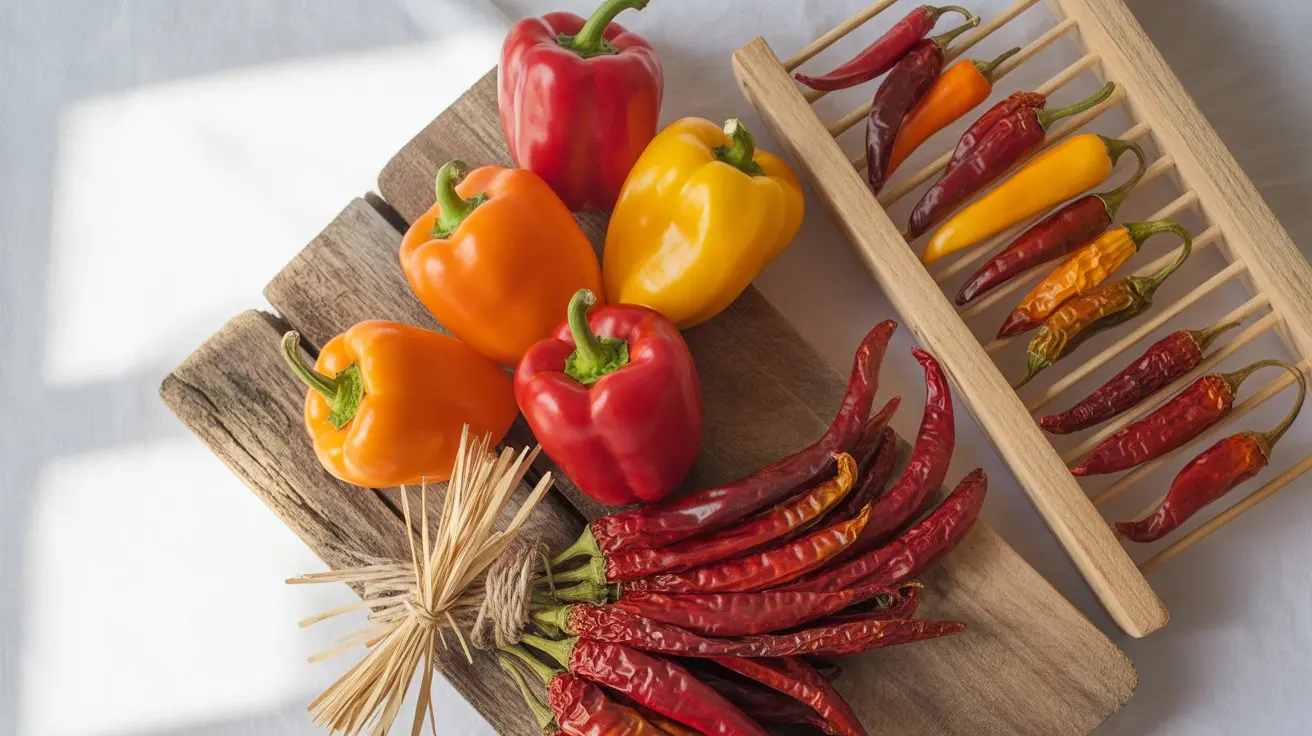
Red pepper flakes are crushed dried chiles, not a single fixed pepper. Decide the heat first, then choose the pods.
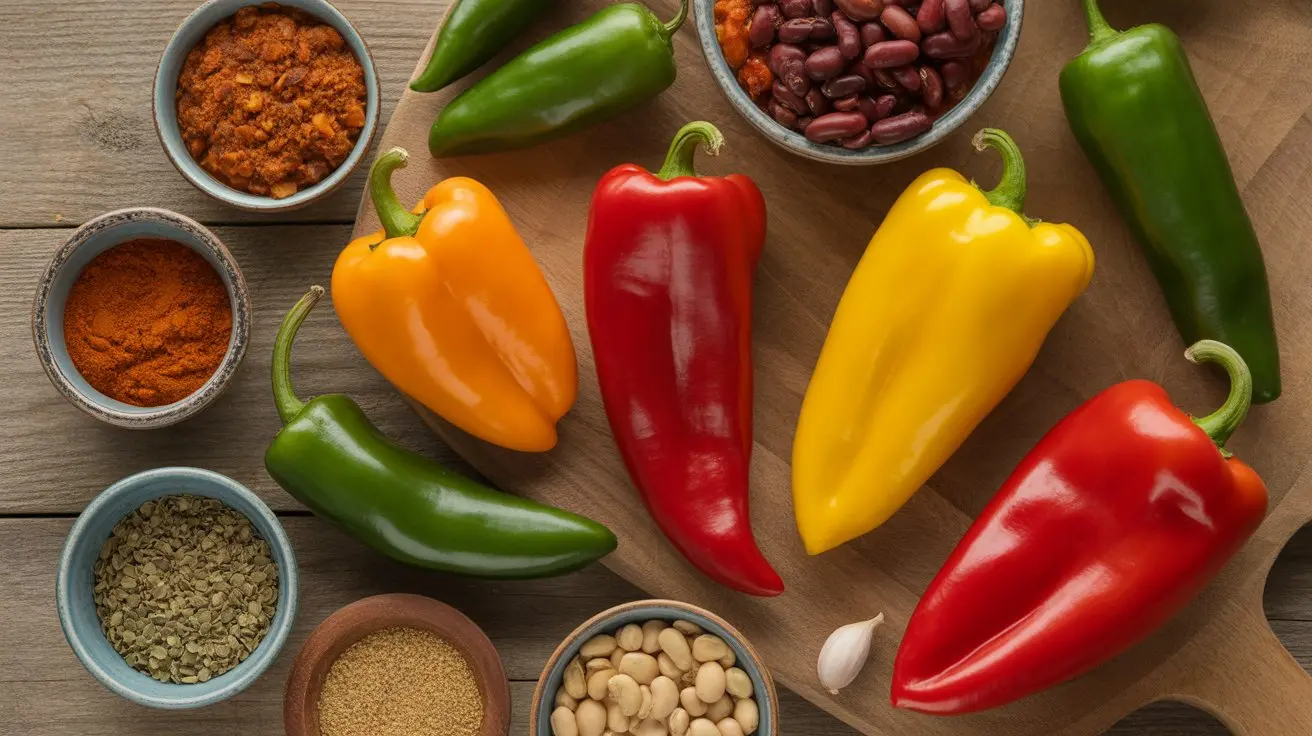
For a pizza-shop jar, use mostly cayenne-style red chiles or a prepared hot red flake as the benchmark. For a family table jar, blend one hot pod with several mild red peppers so the flakes taste warm instead of sharp.
| Heat goal | Best pepper mix | Result |
|---|---|---|
| Mild color | Red sweet peppers or Carmen-style ripe pods | Bright flakes with low burn |
| Everyday heat | Mostly medium red chiles with one hotter pod | Balanced flakes for eggs, pizza, beans |
| Sharp table heat | Cayenne-type pods or thin hot red chiles | Fast heat and less sweetness |
We usually dry each heat group separately. Blending after crushing gives more control than guessing while the peppers are still fresh.
Heat planning by pepper type
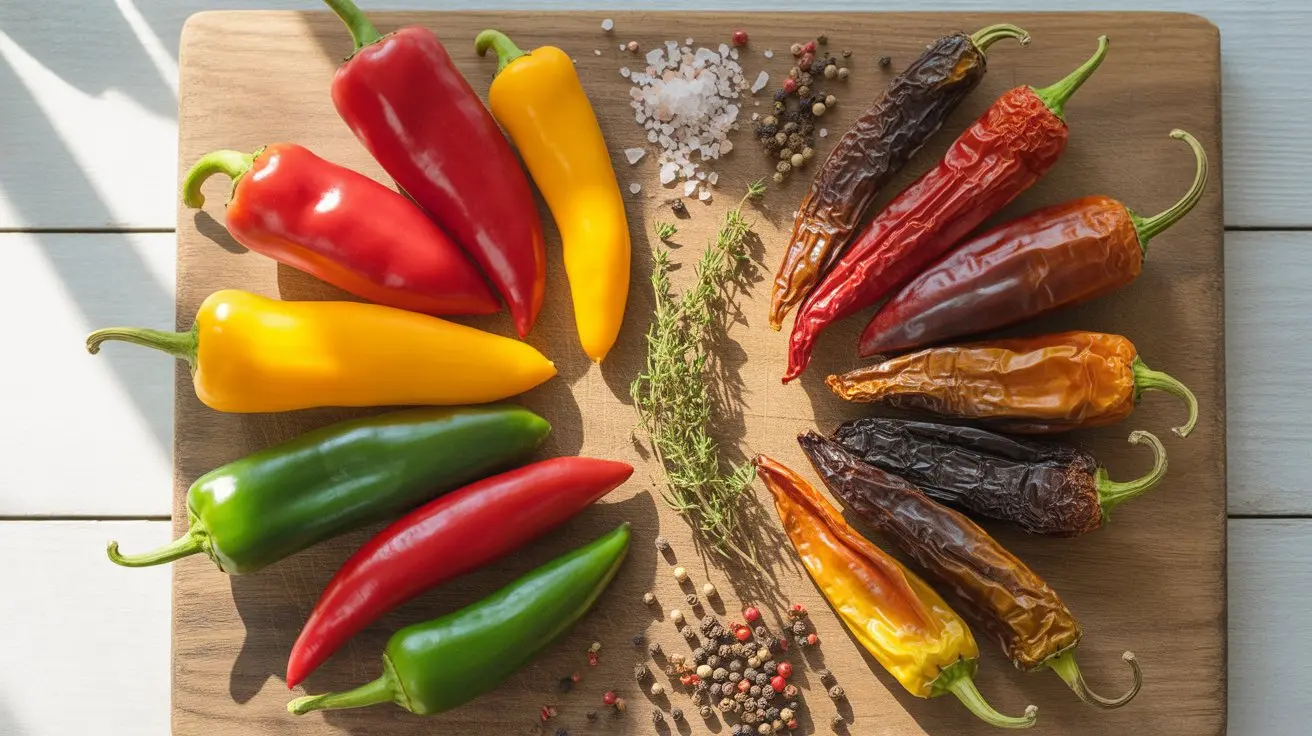
Color alone is a bad guide. A red sweet pepper and a red cayenne can look related on the tray, but they land in completely different heat ranges once dried.
Build the jar around a target use. Pizza flakes can handle more sharp heat.
A pasta or family-table jar needs more mild red pepper body so one pinch does not take over the plate.
| Pepper type | What it adds | How much to start with |
|---|---|---|
| Mild red peppers | Color, sweetness, body | 3 to 4 parts |
| Medium red chiles | Everyday heat | 1 to 2 parts |
| Thin hot chiles | Fast burn | Pinches, not handfuls |
Prep for airflow
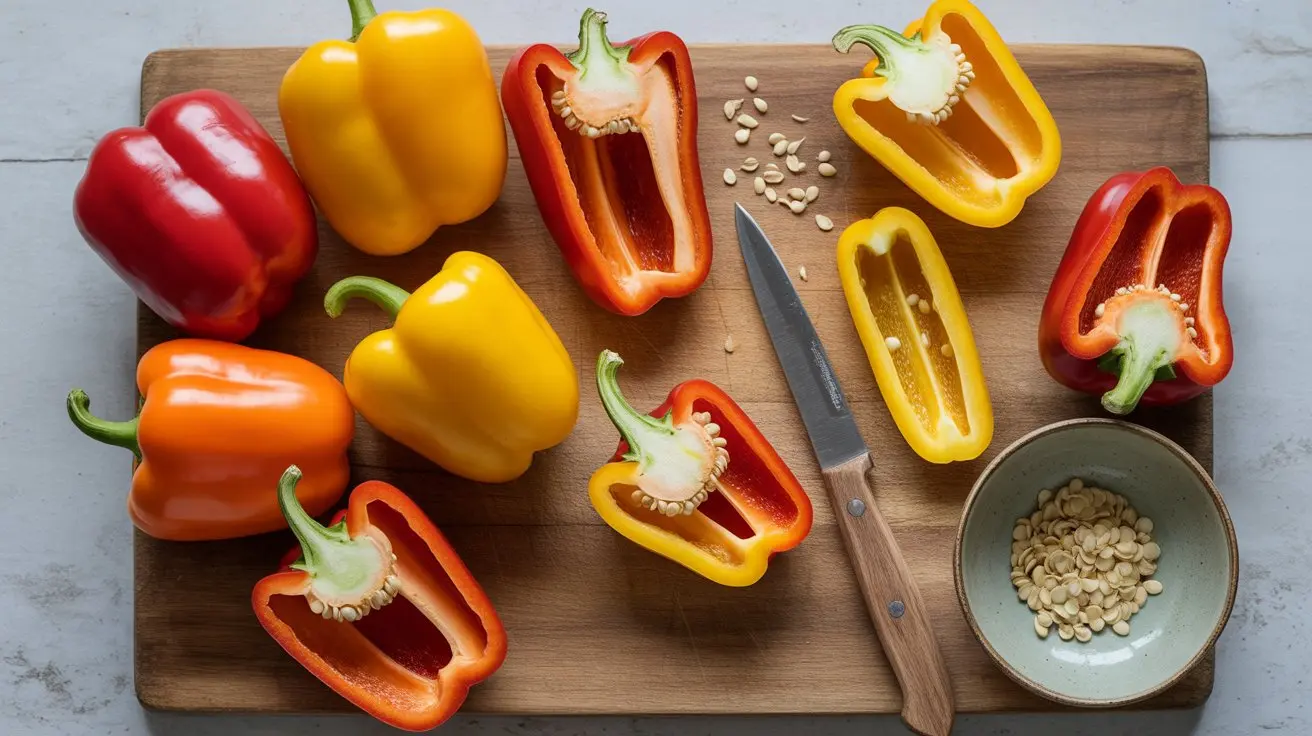
Wash the peppers, dry the skins, and remove the stems. Thick peppers need to be split or sliced so air reaches the inner wall.
Thin cayenne pods can dry halved. Thick red jalapenos, red bells, and other fleshy pods dry better as rings or narrow strips because trapped moisture sits near the seed core.
Seeds are optional. Keep some if you like the speckled look, but remove most if the batch tastes papery or bitter in a quick oil test.
- Use gloves for hot pods because capsaicin stays on skin.
- Keep pepper thickness similar on each tray.
- Label mild and hot trays before they all look dark red.
How should you dry peppers for flakes?
A dehydrator is the most repeatable path because it holds steady heat and airflow. The National Center for Home Food Preservation describes dehydrators as drying food fast at about 140 degrees F, which fits sliced chiles well.
Set the dehydrator around 135 to 140 degrees F. Thin pieces may finish in 6 to 10 hours, while thick rings can need 12 hours or more.
An oven can work if it runs low and the door can vent moisture. Use the lowest setting, spread the pieces in one layer, and check often because oven hot spots can brown the skins before the center dries.
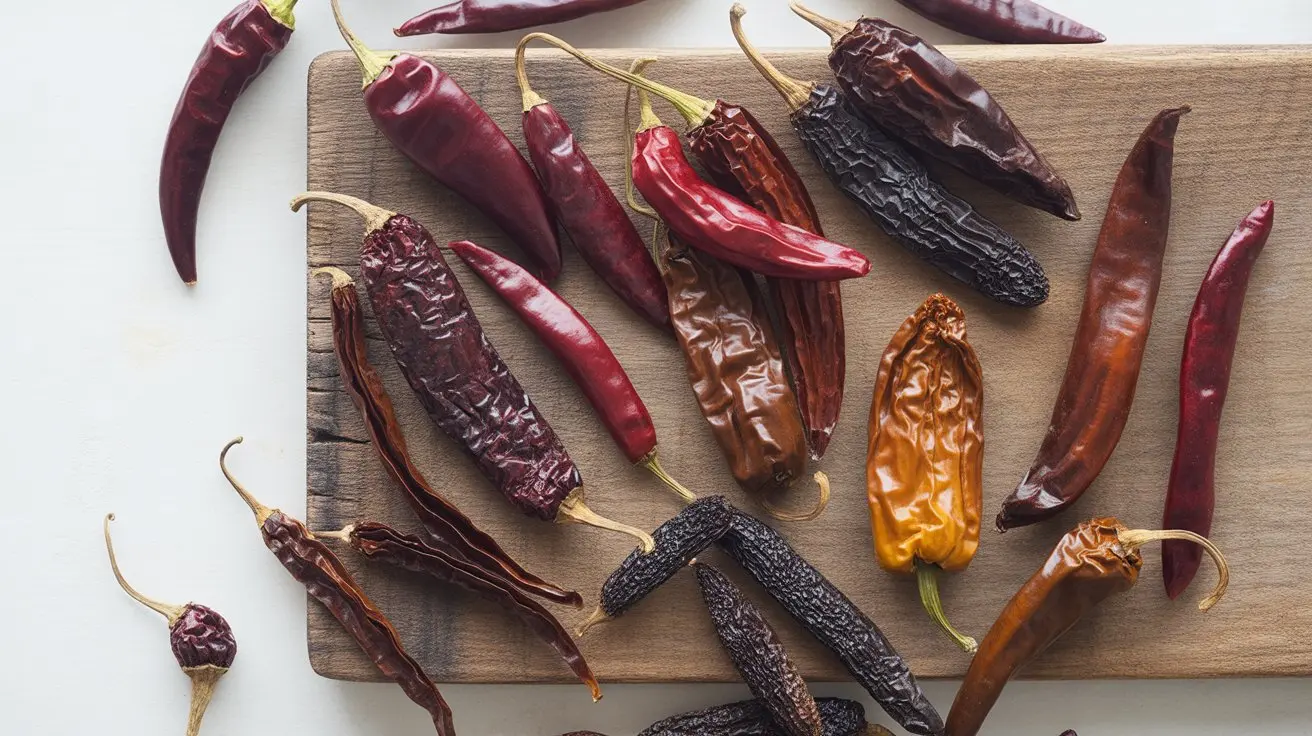
Air drying is best for thin whole chiles in a dry room with moving air. We skip it for thick peppers because the outside can wrinkle while the inside still bends.
Dehydrator, oven, or air drying
Use a dehydrator when you care about repeatability. It gives the cleanest airflow and makes the snap test easier to trust.
Use an oven only when it can run low and vent moisture. If the skins darken before the flesh snaps, the heat is too aggressive for a bright flake jar.
Air drying belongs to thin pods in dry rooms. Thick sliced peppers need controlled airflow because the inner wall can stay flexible while the outside looks finished.
- Choose a dehydrator for thick pieces or mixed pepper sizes.
- Choose an oven for a small test batch you can watch closely.
- Choose air drying only for thin pods and dry indoor air.
How do you know the peppers are dry enough to crush?
The batch is ready when the pieces snap instead of bend. That test matters more than the clock.
NCHFP storage guidance warns that dried foods can reabsorb moisture and spoil if they are packed before they cool and dry fully. For flakes, a leathery pepper can soften the whole jar.
Break the thickest piece from the tray, not the thinnest edge. If that piece bends, keep drying.
Cool the peppers before crushing. Warm pieces can sweat in a closed grinder or jar, which dulls aroma and raises the risk of mold.
Crush, do not powder
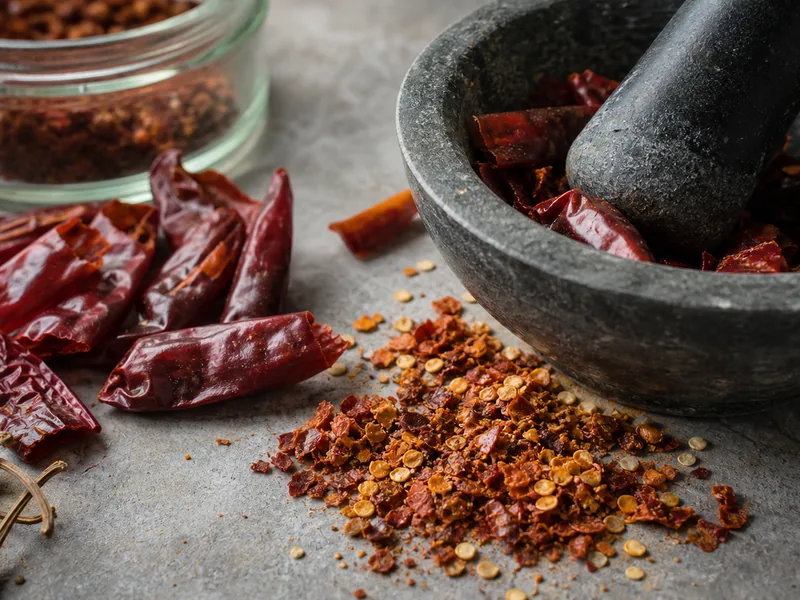
Flakes need uneven pieces. Pulse briefly in a spice grinder, crush in a mortar, or break the pods in a bag with a rolling pin.
Stop before the mix turns dusty. Powder burns faster in oil and disappears into sauces, while flakes stay visible and release heat more slowly.
For a cleaner jar, sift out the fine dust and save it as a cooking powder. For a classic shaker jar, keep a little dust so the flakes bloom quickly on pizza or eggs.
| Texture | Best use | Tradeoff |
|---|---|---|
| Coarse flakes | Pizza, noodles, finishing oil | Slower heat release |
| Mixed flakes | General table shaker | Most flexible |
| Fine dust | Rubs and sauces | Closer to powder than flakes |
How do you store homemade red pepper flakes?
Pack the cooled flakes into clean, dry jars. Small jars protect quality because each opening lets in air and moisture.
NCHFP recommends cool, dry, dark storage for dried foods, with quality tied closely to temperature. A four-ounce jar near the stove loses aroma faster than the same flakes in a pantry drawer.
Use glass when possible. Condensation on glass is easy to see, and any wet-looking clumps mean the flakes need to be redried or discarded if mold appears.
- Keep one small working jar near the table.
- Store the backup jar in a dark cabinet.
- Label the pepper mix and drying date.
What if your flakes taste flat, too hot, or too mild?
If the flakes taste flat, toast a teaspoon in warm oil for 20 to 30 seconds and smell it. A dull smell usually means stale peppers, while a scorched smell points to drying heat that ran too high.
If the jar is too hot, crush a mild dried pepper and blend it in by volume. If it is too mild, add a small amount of hotter flakes instead of dumping in powder.
If the texture turned dusty, use that batch in chili, beans, rubs, or tomato sauce. Start the next batch with fewer grinder pulses and a coarser sieve.
When should you add red pepper flakes to a dish?
Add flakes early when you want heat to spread through oil or sauce. Add them at the table when you want visible heat and a rougher bite.
For marinara, bloom a pinch in olive oil before the tomatoes. For roasted vegetables, toss the flakes with oil first so the heat coats the pan instead of landing in one bite.
Flakes are not a clean substitute for a fine seasoning blend. If a recipe needs cumin, garlic, and a smooth base, chili powder substitute ratios will work better than a spoonful of flakes.
Blend after tasting
The safest flavor move is to crush each pepper type into its own small bowl first. Taste a tiny pinch in oil, then build the jar from measured parts.
A good starter blend is three parts mild red pepper, one part medium red chile, and a small pinch of hotter flakes. That gives color, aroma, and heat without making the first spoonful decide the whole jar.
If the mild base tastes too sweet, add a thin hot pepper rather than more seeds. Seeds add texture, but they do not add the same clean red chile flavor as the wall of the pod.
| Blend style | Mix by volume | Use it on |
|---|---|---|
| Pizza table | 2 parts medium red chile, 1 part hot chile | Pizza, pasta, sandwiches |
| Family mild | 4 parts mild red pepper, 1 part medium chile | Eggs, beans, roasted potatoes |
| Cooking base | 3 parts mixed flakes, 1 part fine dust | Soups, tomato sauce, chili |
Clean the grinder
Capsaicin dust sticks to lids, blades, and plastic gaskets. Wipe the grinder after the powder settles, then run a spoonful of dry rice through it if the smell stays strong.
Do not rinse an electric grinder cup unless the manufacturer says it can get wet. A dry brush and a damp towel keep pepper dust from turning into a red paste under the blade.
We also label the grinder jar if it is used for hot chiles. Coffee, cinnamon, and mild spice blends pick up pepper aroma faster than people expect.
Know when to remake it
Red pepper flakes are cheap to remake in small batches, so do not protect a bad jar. If the flakes smell musty, show mold, or clump with visible moisture, discard them.
If the only problem is weak aroma, move the jar to cooked food. Long simmering can use a dull batch, but finishing dishes need fresher flakes.
The second batch should change only one variable. Change pepper mix, drying heat, or crush size, not all three, so you know which choice fixed the jar.
When flakes beat powder
Use flakes when the reader or eater should notice the pepper. They sit on the surface of pizza, fried eggs, noodles, and roasted vegetables, so the heat arrives as a visible bite.
Powder is better when the pepper should disappear into the dish. If you are seasoning taco meat, chili, or a dry rub, the fine texture spreads more evenly and avoids hard red pieces.
This is also why a mixed homemade jar is useful. Coarse flakes can finish food, while the dusty sifted portion can season the pot.
Batch size and yield
Fresh peppers shrink more than new makers expect. A full tray of sliced red chiles may become only a small jar once the water is gone.
Plan for a test batch before preserving a harvest. One pint of fresh sliced thin chiles often lands near a few tablespoons of finished flakes, depending on wall thickness and seed removal.
That small yield is a benefit. It lets you remake the jar while the aroma is still bright instead of storing a large stale shaker for a year.
Heat references before blending
Use the Scoville scale chart when a batch mixes mild and hot pods. It keeps the jar from depending on color alone.
A mostly medium heat pepper range blend works for family cooking. A hot pepper range blend belongs in smaller doses because dried pieces concentrate the bite.
If you use ripe jalapenos, compare the jar with jalapeno powder for dry green heat. The powder spreads through food, while flakes stay visible.
If you add smoke, keep that batch separate from plain flakes. Smoked chili powder has a different job, and smoke can take over eggs or pizza oil fast.
Finish, bloom, or cook
Use flakes three different ways. Finish with them when texture matters, bloom them when oil should carry the heat, and cook them when a sauce needs a soft background burn.
For finishing, keep the flakes coarse. For blooming, include a little fine dust so the oil turns red quickly.
For long cooking, the texture matters less, so an uneven batch can still work.
Warm oil before adding flakes, then watch the color. If the flakes turn dark brown in seconds, the pan is too hot.
This is the practical reason to sift the batch. Coarse pieces go in the table jar, while fine dust becomes a cooking pinch for beans, sauces, and rubs.
Red Pepper Flakes: How to Dry Chiles Until They Snap and Crush Them Coarse FAQ
- New Mexico State University Chile Pepper Institute - Heat
- National Center for Home Food Preservation - Food Dehydrators
- National Center for Home Food Preservation - Packaging and Storing Dried Foods
- Colorado State University Extension - Drying Vegetables