

Best Calabrian Chili Substitutes for Paste, Flakes, and Oil
Match a Calabrian chile substitute to product form first, using Aleppo-style pepper for flakes, oil-bloomed red pepper flakes for jarred chile, or ripe Fresno for fresh pieces. The 25,000 to 40,000 SHU supplier figure above describes one product, while the European Union's Calabrian PGI specification spans 5,000 to 70,000 SHU, so taste and adjust instead of relying on one heat conversion.
Heat at a glance
Match the Substitute to the Product Form
Calabrian chile is a family of products, not one standardized pepper powder. The European Union specification for Peperoncino di Calabria covers several Capsicum annuum varieties sold fresh or dried across 5,000 to 70,000 Scoville heat units, so a spoon-for-spoon swap cannot promise equal heat.
Start with the form the recipe expects. Dry flakes need a flake substitute, a jarred chile needs oil and soft pepper solids, and a fresh garnish needs crisp fresh flesh.
After that match the dish's tolerance for fruit, smoke, and sharp heat.
The quantities below are editorial starting points for texture and volume. Taste after the substitute has dispersed through the food, then add heat in small increments because brands, harvests, and jars vary.
Five Calabrian Chili Substitutes Matched to Form
Aleppo-Style Flakes for Dry Uses
Closest MatchAleppo-style flakes are the closest first choice when a recipe calls for dry Calabrian flakes at the table or near the end of cooking. Bon Appetit describes Aleppo-style pepper as coarse, slightly oily, fruity, and gently warming, qualities that suit pasta, eggs, beans, pizza, and finishing oil without turning the dish into a sharp heat delivery system.
Begin with 1 teaspoon of Aleppo-style flakes for 1 teaspoon of Calabrian flakes. This is a volume starting point, not a heat equivalence.
If the finished bite is too mild, add a pinch of hotter crushed red pepper rather than increasing Aleppo until its fruit dominates.
Its soft texture is especially useful on food where dry, brittle flakes would feel separate from the sauce. It is less suitable when the original ingredient is a wet paste, because flakes alone cannot replace the oil or pepper body that makes a paste cling.
Red Pepper Flakes Bloomed in Olive Oil
Runner-UpRed pepper flakes bloomed in olive oil are the practical pantry answer for jarred chopped Calabrian chile. Tutto Calabria's product information confirms that the commercial form combines chile with oil, while the Culinary Institute of America's olive-oil course uses a brief bloom of pepper flakes in oil to release their flavor.
For each tablespoon of chopped chile requested, start with 1 teaspoon red pepper flakes and 2 teaspoons olive oil. Warm the mixture gently for about 30 seconds without browning the flakes, then use it in pasta sauce, beans, marinades, or pizza sauce.
Cool it first for mayonnaise and other cold mixtures.
That measure recreates roughly a tablespoon of seasoned mixture, not a fixed Scoville result. A neutral crushed-red-pepper blend may taste sharper and less fruity than a Calabrian jar, so correct the finished dish with more oil or a small pinch of flakes instead of assuming another full spoon is needed.
Ripe Fresno for Fresh Pieces
Also GreatA ripe red Fresno is the best match when the recipe needs fresh chopped pepper rather than flakes or paste. New Mexico State University's Chile Pepper Institute describes ripe Fresno fruit as a medium-heat chile used fresh and in sauces, with a fruity character that keeps relish, salsa, compound butter, and chopped toppings bright.
Use an equal volume of finely minced Fresno as the requested fresh Calabrian chile, then taste. Equal volume preserves the amount of fresh pepper in the dish, but it does not claim equal heat because the official Calabrian range is broad and individual Fresnos also vary.
Keep this swap fresh when texture matters. If a recipe actually calls for jarred chile, stir a little olive oil into the minced Fresno only when the sauce needs that cling.
Smoked paprika is not a default addition because smoke changes the dish rather than restoring a documented Calabrian trait.
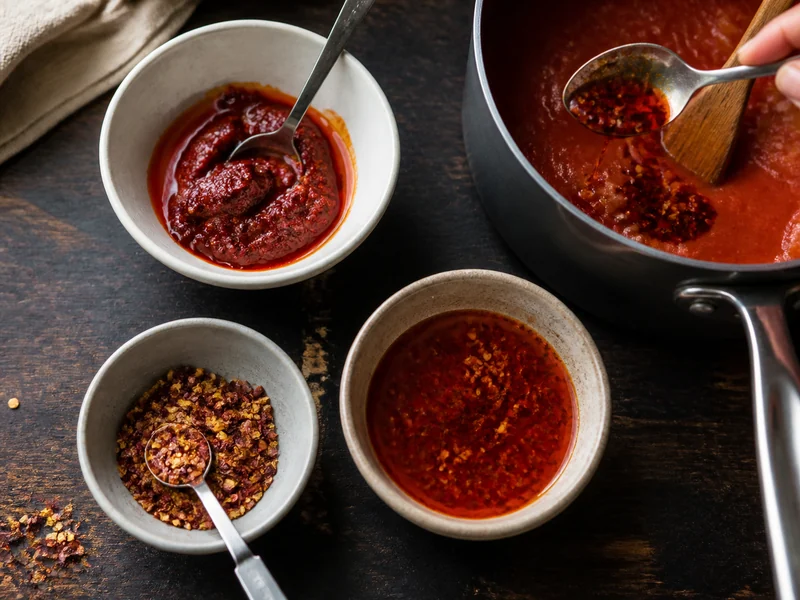
Chile de Arbol and Sweet Paprika for Cooked Sauces
Chile de arbol with sweet paprika works in a cooked sauce that needs stronger dried heat plus red-pepper color. The National Park Service gives chile de arbol a 15,000 to 30,000 SHU range and shows it used in a blended cooked sauce, while University of Illinois Extension distinguishes sweet paprika as the mild form that contributes pepper flavor and color without adding another large dose of heat.
Start with 1/2 teaspoon crushed or ground chile de arbol and 1/2 teaspoon sweet paprika for 1 teaspoon of Calabrian flakes. The split is an editorial balance for cooked sauce, not a laboratory conversion, and it lets you add de arbol by pinches if the pot needs more heat without also increasing paprika.
Use ground chile or blend the sauce well when tough flakes would be distracting. This pairing fits tomato sauce, marinades, and cooked chile oil better than a raw garnish, where de arbol's sharper bite can feel more abrupt than the softer texture expected from Calabrian flakes.
Roasted Red Pepper Puree and Cayenne for Paste
Roasted red pepper puree plus cayenne separates the two jobs of a Calabrian paste: soft pepper body and adjustable heat. Nutrition.gov's roasted-red-pepper spread demonstrates the body and sweetness of pureed roasted peppers, while University of Illinois Extension identifies cayenne as a hot ground pepper that can supply heat in very small additions.
Puree enough drained roasted red pepper to match the volume of paste in the recipe, then add cayenne by the pinch. Stir, let the mixture disperse through the sauce, and taste before adding more.
This method is safer than an oversized fixed formula when both the original jar and cayenne brand can differ.
Choose this option for dips, soups, tomato sauce, and marinades where the wet texture belongs. It is a poor substitute for a finishing flake because the puree changes the surface texture and adds more sweet pepper flesh than a dry seasoning would.
Can Chipotle Replace Calabrian Chili?
Chipotle is a conditional substitute only when smoke already fits the food. USDA product specifications identify chipotle as smoked jalapeno, so it can support barbecue sauce, beans, or grilled meat, but it changes a bright seafood pasta or clean tomato sauce in a direction Calabrian chile does not require.
There is no useful universal ratio here. Add a small pinch of chipotle powder to the finished sauce, taste, and stop as soon as the smoke becomes noticeable.
Choose one of the five form-matched options above when smoke is not part of the recipe.
Adjust Form, Body, and Heat in That Order
Choose the replacement in this order: form, pepper body, heat, then any optional smoke. That sequence prevents the common mistake of adding enough cayenne to reach a desired burn while leaving a paste-based sauce dry, or adding enough puree for body while making a flake garnish wet.
After the substitute is mixed into the food, taste the whole bite rather than the ingredient alone. Fat softens how quickly heat is perceived, tomato and vinegar can sharpen it, and a long simmer spreads capsaicin farther through the dish, so final adjustment belongs after those ingredients have combined.
Avoid plain sweet paprika as the only swap when heat matters, and avoid cayenne alone when the recipe depends on paste texture. Peperoncino is too broad a label to rank as a separate answer because the Calabrian PGI product itself is peperoncino.
The package's variety, form, and heat information are more useful than the generic name.
Substitution tip: When substituting Calabrian Chili, start with less of a hotter substitute and add more to taste. For milder substitutes, increase the quantity.
Our swap ratio calculator gives precise conversion amounts, and the heat unit converter translates between Scoville and other scales.
Calabrian Chili Substitute FAQ
- European Union: Peperoncino di Calabria PGI specification
- Culinary Institute of America: Olive Oil Kitchen Course Guide
- New Mexico State University Chile Pepper Institute: Fresno
- National Park Service: Chile de Arbol Sauce
- University of Illinois Extension: Sweet, Hot, or Smoked Paprika
- USDA AMS: Chipotle Product Specification
- Spices Inc: Calabrian Chile Flakes Product Specification