

Which Poblano Substitute Fits Your Cooking Method?
Use Anaheim for roasted poblano strips and most general cooking. Choose a small green bell pepper plus separately controlled heat when a cavity must hold filling, Cubanelle for quick sauteing, canned green chile for chopped moist dishes, and ancho only when the recipe can trade fresh structure for a dark blended sauce.
What Is the Closest Substitute for Poblano?
Anaheim is the closest overall poblano substitute, but it is not the best answer for every recipe. It preserves the roast-and-peel behavior more reliably than the broad cavity needed for stuffing.
The name poblano itself describes a fresh green form.
The New Mexico State University Chile Pepper Institute defines poblano in U.S. produce markets as a green ancho or mulato, which is why replacing it with a dried dark chile changes more than heat.
Separate the decision into four parts. Check whether the recipe needs a whole cavity, broad roasted strips, quick-cooking slices, or blended pepper flesh, then compare flavor and heat inside that physical requirement.
Poblano and Anaheim occupy overlapping mild ranges, so either can surprise you at pod level.
Bell pepper removes heat entirely, while jalapeno usually creates a larger jump and should serve as a measured heat add-in rather than as the replacement body.
The chart is an orientation tool, not a pod guarantee. Cultivar, growing conditions, maturity, and sampling can change measured pungency, and a mild structural substitute lets you add heat more safely than a small hot pod lets you remove it.
| Cooking job | Best starting swap | Main correction |
|---|---|---|
| Roast and peel | Firm Anaheim | Match roasted weight and check heat |
| Stuff and bake | Small green bell or broad Anaheim | Scale filling and add heat separately |
| Quick saute | Cubanelle | Shorten cooking time |
| Chopped moist dish | Canned green chile | Drain and check salt |
| Dark blended sauce | Ancho | Restore moisture and expect sweetness |
Use the table to choose a starting form, then let the recipe settle the details. Structure comes before fine heat matching when the pepper must stay visible or hold food.
Which Poblano Substitute Roasts and Peels Best?
Anaheim is the better roasting substitute when you can find a firm pod with enough width for the finished dish.
Colorado State University Extension recommends mature chiles that feel heavy and firm, because soft spots or decay become worse once the pepper meets high heat.
Direct heat blisters the outer skin so it can be removed.
Slow flame roasting also caramelizes sugars, which means a substitute's sweetness and wall thickness become more noticeable after the peel comes away.
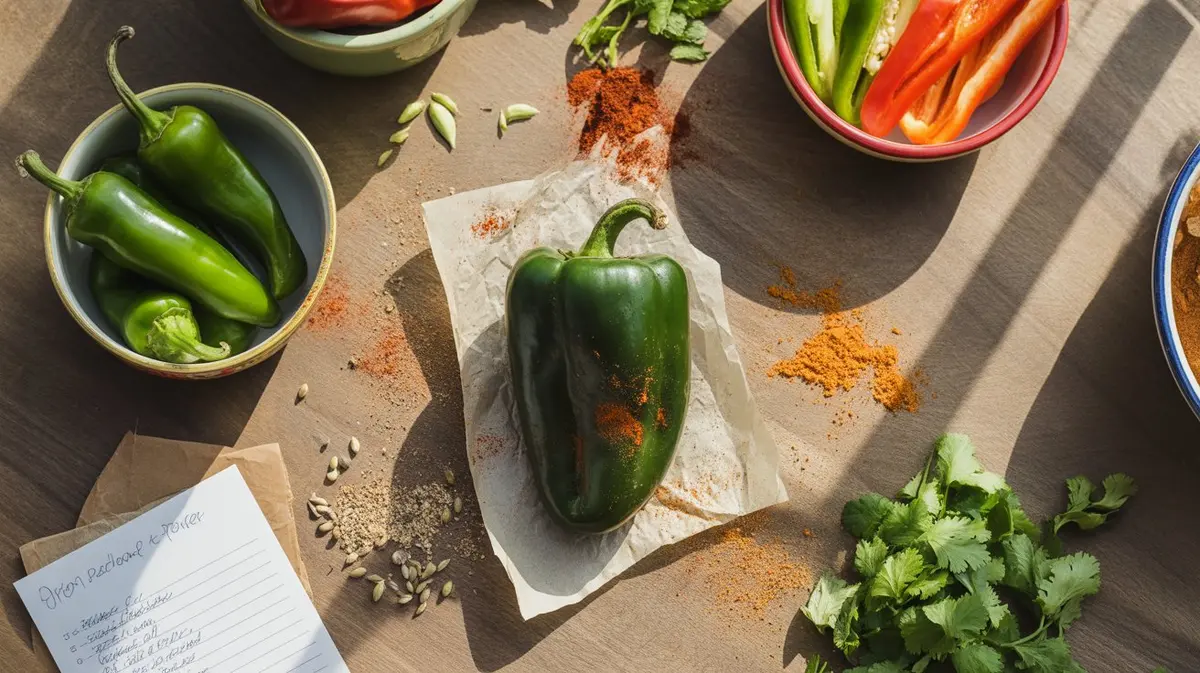
The sheet-pan image shows the material difference that a heat chart cannot.
The poblano produces a broad dark strip, while the longer Anaheim produces a narrower, paler strip even when both skins blister successfully.
Cover the hot peppers briefly in a bowl or food-safe container, then rub or scrape away loosened skin once they are cool enough to handle. Avoid soaking them unless a trusted recipe requires it, because water can wash away roasted flavor and make fragile flesh harder to use.
For rajas, tacos, and casseroles, a narrow peeled strip is usually acceptable. For rellenos, inspect the shoulder and side wall before roasting because a pod that begins too narrow cannot gain stuffing space after it softens.
Use torn pieces rather than discarding them. They can thicken salsa, soup, queso, or enchilada sauce, while the intact sections carry the visible job the recipe needs.
Which Poblano Substitute Fits Each Cooking Method?
Anaheim for roasting, strips, and general cooking
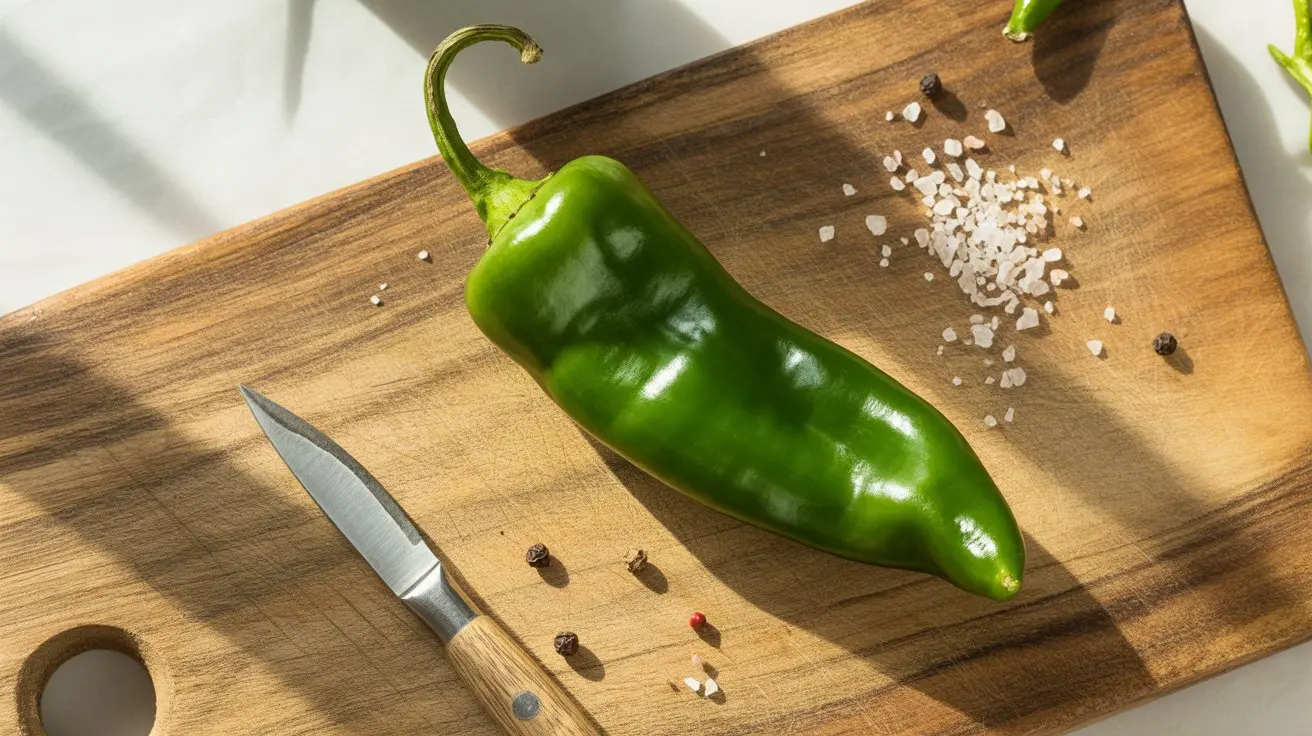
Closest MatchAnaheim is the closest all-purpose fresh substitute because its long green pod can blister, peel, soften, and cut into broad cooked strips. Its flavor is usually brighter and less earthy than poblano, but it stays in the same general mild-roasted direction.
Match the prepared amount rather than counting pods blindly.
Use the same roasted weight or chopped volume, and expect to need more than one small Anaheim when a recipe was written for a large poblano.
Width is the main limit. A broad Anaheim can hold cheese or meat, while a narrow pod is better for rajas, tacos, enchiladas, casseroles, and soup than for a full-size relleno.
Green bell pepper plus separate heat for stuffing
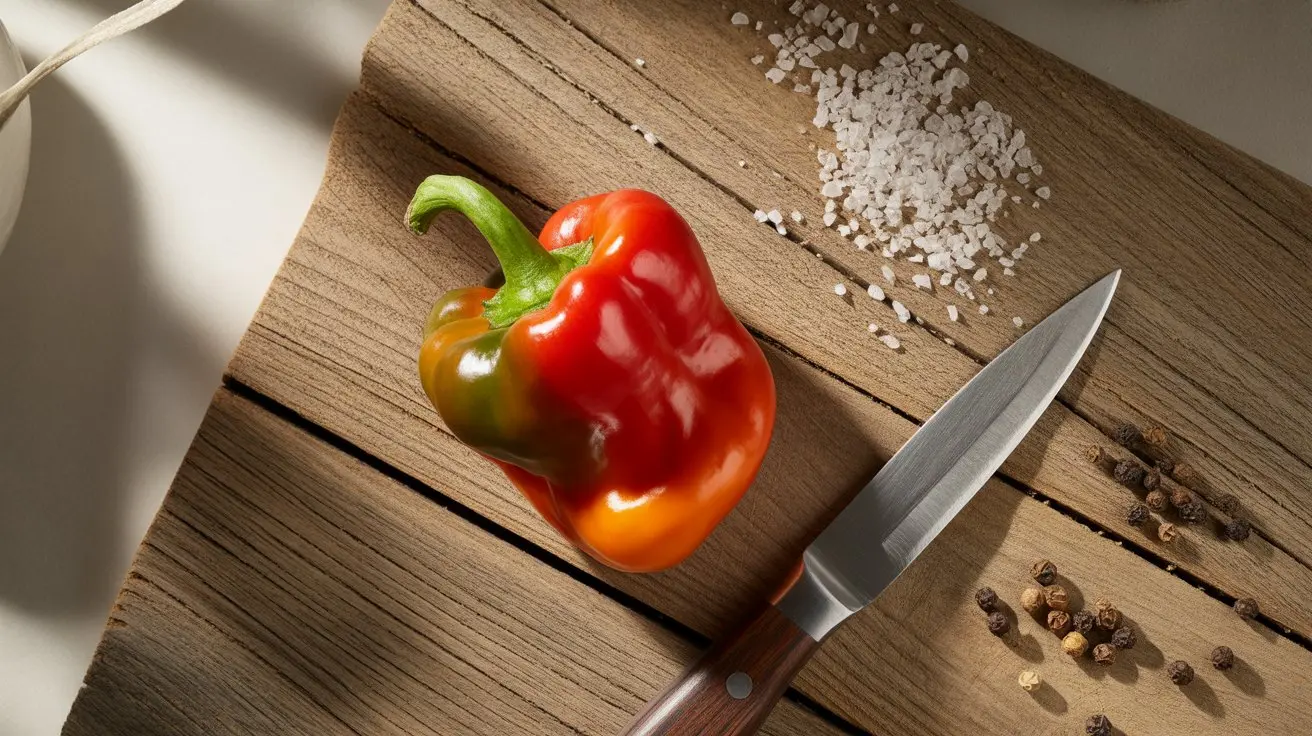
Runner-UpChoose a small green bell pepper when the recipe needs a roomy cavity and a wall that will support a heavy filling.
Bell pepper contributes no chile heat, so add warmth to the filling or sauce with a measured amount of jalapeno, serrano, or chile powder.
One bell pepper can replace one poblano for an individual stuffed portion, but the cavity may hold more. Scale the filling to the pepper in front of you instead of forcing the original volume inside it.
Green bell tastes grassy and can become sweeter as it cooks.
Roasting and peeling it reduces some raw edge, though the thick flesh remains more substantial than poblano.
- Keep the pepper mild for children or mixed-heat tables.
- Put added heat in the sauce when every serving should stay structurally identical.
- Put added heat in the filling when the sauce must remain mild.
New Mexican green chile for a stronger roasted character
Also GreatUse a New Mexican or Hatch-labeled green chile when roasted flavor matters more than poblano's broad shoulder. The Chile Pepper Institute notes that the New Mexican or Long Green pod type is often called Anaheim, but individual cultivars and heat labels still matter.
Substitute by roasted weight or chopped volume.
These chiles can run hotter and their long shape produces slimmer strips, so taste before adding any secondary hot pepper.
This option is especially useful in green chile stew, enchilada filling, cheeseburgers, queso, and roasted salsa. It is less predictable for a mild cream sauce or a large stuffed presentation.
Cubanelle for quick sauteing and raw slices
Cubanelle has a thin wall that softens quickly in a skillet.
Use it when poblano would be sliced into eggs, sausage, rice, fajita-style vegetables, sandwiches, or a fast pan mixture rather than roasted whole.
Replace poblano by chopped volume, then shorten the cooking time.
The thinner strips can collapse or scorch while a thick poblano would still be firm.
Its flavor is lighter and often sweeter, with little heat. That gentleness is useful when the dish already contains a hotter chile, but it will not reproduce poblano's earthy roasted depth by itself.
Canned diced green chile for casseroles, soups, and fillings
Canned green chile is a practical replacement after the fresh pepper was going to be roasted, peeled, chopped, and mixed into a moist dish.
Drain it for a firm casserole or filling, but keep some packing liquid when soup or queso can use the moisture.
Start with the same drained volume as the prepared poblano called for in the recipe.
Taste for salt before seasoning because brands and packing liquids vary.
This shortcut cannot supply a whole pod, a crisp raw slice, or a controlled relleno cavity. It solves the chopped cooked role only.
Ancho for a dark blended sauce
Ancho is the ripe dried form associated with poblano, so it can preserve a family resemblance in a sauce while changing color, sweetness, moisture, and aroma.
Toast it gently, remove the stem and seeds, soak it until flexible, then blend it with enough soaking liquid or stock to restore body.
Begin with one medium ancho for one large poblano only as a tasting trial. Pod size and drying concentration vary, so adjust the finished puree by flavor and thickness rather than treating that count as a fixed conversion.
Ancho belongs in mole, braises, marinades, and dark chile sauces. It cannot replace the green flesh, cavity, or fresh moisture required for roasting strips or stuffing.
What Works Instead of Poblano for Chiles Rellenos?
A good relleno substitute needs space, an intact stem, and a wall that survives handling.
Heat similarity matters less if the pepper splits while you peel it or cannot hold the planned filling.
The cut-pepper image compares the useful interior evidence. Poblano offers a long broad cavity, Anaheim offers length with less width, and green bell offers the most room with thicker, sweeter flesh.
Utah State University Extension notes that blistered chiles can be slit, cleared of seeds and veins, and left with stems attached for chile rellenos. That sequence favors firm broad Anaheim pods when you want a chile shape, or small green bells when stable capacity matters most.
- Choose a pod with no shoulder split, soft spot, or deep crease.
- Roast until the skin blisters, but stop before the wall collapses.
- Make one controlled lengthwise slit and keep the stem attached.
- Remove loose seeds and veins without scraping through softened flesh.
- Fill to the actual cavity and leave room for cheese, rice, or meat to expand.
- Chill a fragile filled pod briefly before battering when the recipe allows it.
Green bell changes the eating experience because its thick wall stays more vegetable-like and holds more filling.
A broad Anaheim tastes closer and peels more like a chile, but its smaller cavity may turn one large portion into two slender portions.
Do not solve a narrow pod by overfilling it. Put extra filling under or beside the pepper, or choose a casserole presentation where split roasted chiles can layer around the filling.

Can Ancho or Pasilla Replace Fresh Poblano in Sauce?
Ancho can replace poblano in a blended dark sauce, but the swap changes fresh green flesh into dried ripe chile. It adds concentrated sweetness and depth while removing the original pepper's crisp bulk and much of its water.
The Chile Pepper Institute's terminology is useful here.
Poblano is the fresh green market form associated with ancho or mulato, while pasilla is a distinct dried chile with its own long shape and flavor.
Mulato tends to move a sauce darker and deeper than a typical ancho.
Pasilla contributes a different dried-fruit and earthy direction, so neither name should be used as a casual synonym just because all three can appear in mole.
Toast dried chiles only until fragrant, then stem, seed, and soak them in hot water until flexible.
Blend with a small amount of soaking liquid or stock, strain when a smooth texture matters, and adjust the final sauce after the dried chile has fully dispersed.
The image makes the boundary visible. Fresh poblano can become strips, cavity, or green puree, while dried chiles and ground powder can only contribute concentrated flavor to a sauce, braise, paste, or marinade.
Use ancho when the sauce welcomes sweeter ripe-chile notes. Use pasilla for a more distinct dark dried-chile character, and use mulato when a deep mole-style profile is already part of the recipe.
Do not carry these choices back into stuffing or fresh salsa. Rehydration softens dried skin but cannot recreate a fresh pod's intact wall, clean moisture, or raw crunch.

Which Poblano Substitutes Usually Fail?
- Do not use jalapeno as the whole replacement. It can supply missing heat, but its small cavity, sharper green flavor, and greater heat make it a poor stand-in for poblano bulk.
- Do not use serrano for structure. Its narrow crisp pod is useful for minced heat in salsa or sauce, not for broad roasted strips or a stuffed pepper.
- Do not use chipotle in adobo when fresh green flavor matters. Smoke, vinegar, sauce, and concentrated heat move the dish away from roasted poblano even when the ingredient works in a dark sauce.
- Do not use dried ancho, pasilla, or mulato for a whole fresh application. Rehydration can support a puree or braise, but it cannot rebuild the wall, cavity, or clean green moisture of a fresh pod.
- Do not choose by Scoville range alone. A pepper with similar heat may be too small, thin, sweet, smoky, or wet to perform the recipe's physical job.
Substitution tip: When substituting Poblano Pepper, start with less of a hotter substitute and add more to taste. For milder substitutes, increase the quantity.
Our swap ratio calculator gives precise conversion amounts, and the heat unit converter translates between Scoville and other scales.
Questions About Replacing Poblano
- New Mexico State University Chile Pepper Institute - Chile Terminology
- Colorado State University Extension - Roasting Chile Peppers
- Utah State University Extension - How to Preserve Chiles
- National Center for Home Food Preservation - Ingredients for Salsa Recipes
- New Mexico State University - Measuring Chile Pepper Heat