

Pepper X Substitutes: Superhots That Get Close to 2,693,000 SHU
Pepper X sits at the absolute ceiling of documented heat - 2,693,000 SHU (Guinness-certified average) - making it one of the hardest peppers to replace like-for-like. Whether you can't source it or simply need something more available, the substitutes below cover the same scorching territory with similar fruity and earthy flavor profiles. None will match Pepper X exactly, but the right pick depends on how close you need to get on heat and whether flavor nuance matters for your recipe.
Heat at a glance
What Can You Use Instead of Pepper X?
Dragon's Breath
Closest MatchDragon's Breath clocks in at 2,480,000-2,500,000 SHU - the closest any documented pepper gets to Pepper X's upper range. Flavor-wise, it skews intensely hot with less of the earthy depth that defines Pepper X, but the sheer capsaicin load makes it the most direct swap when raw heat is the primary goal.
Dragon's Breath is a heat-first substitute, not a flavor match. Use it only in tiny measured amounts for challenge sauces, extract-free heat blends, or novelty products where extreme capsaicin is the goal.
For edible sauce, dilute the pepper mash before final seasoning and taste with a clean spoon each time.
Whole-pod ratios are risky at this heat tier. Gram weight is safer.
Carolina Reaper
Runner-UpBefore Pepper X was measured, the Carolina Reaper's fruity, scorching character held the world record. At 1,400,000-2,200,000 SHU, it tops out roughly 1 million units below Pepper X's ceiling, but its sweet-fruity flavor is arguably the closest flavor match on this list.
Both are the C. chinense cultivar line cultivars, so the base flavor chemistry is similar.
For a direct heat comparison, the side-by-side heat gap between these two is worth reviewing before you commit to a ratio.
Carolina Reaper is the most practical documented substitute because seeds, powders, sauces, and fresh pods are easier to source. It sits lower than Pepper X but still brings extreme heat with fruit and sweetness.
Use 1.25 to 1.5 times Reaper by weight only after dilution, not as a first move.
In hot sauce, build the base flavor first, then add Reaper mash in drops.
Komodo Dragon Pepper
Also GreatThe Komodo Dragon's intensely fruity burn lands at 1,400,000-2,200,000 SHU - identical range to the Reaper but with a slightly more aggressive, less sweet character. It's a strong choice when you want Pepper X's fruity notes without the Reaper's candy-sweet edge.
Works particularly well in hot sauces where the fruit forward heat can build gradually.
Trinidad Moruga Scorpion
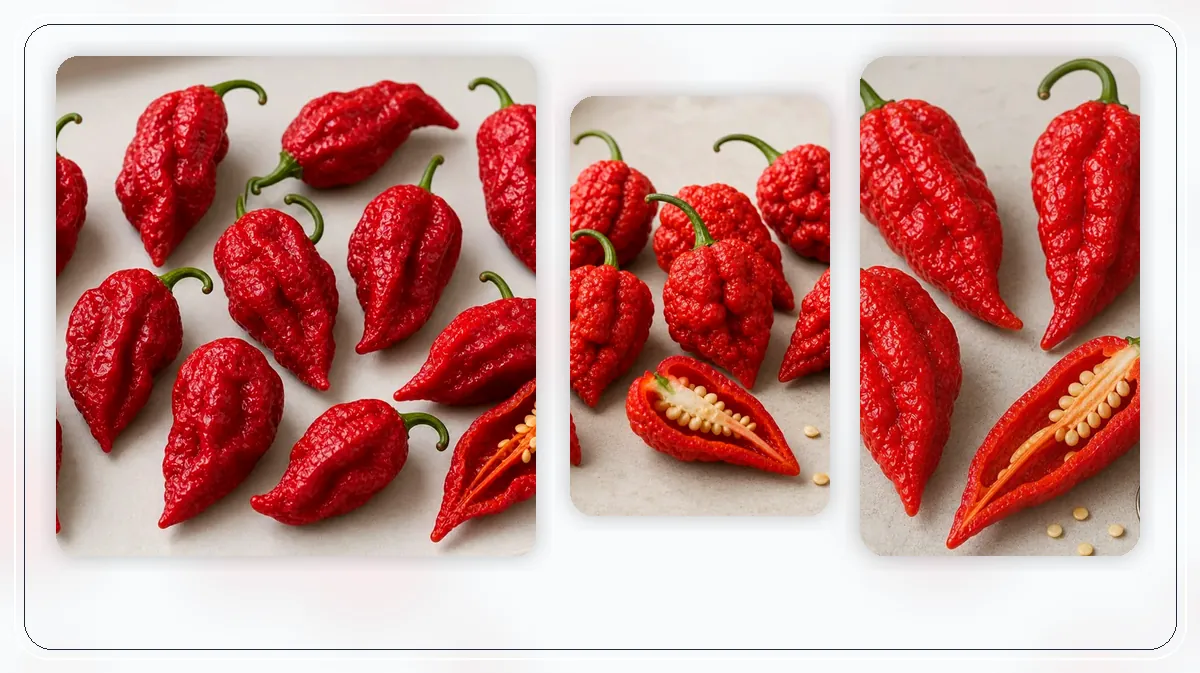
At 1,200,000-2,009,231 SHU, the Trinidad Moruga Scorpion's floral, fruity heat is one of the more complex options here. The floral note adds a dimension Pepper X lacks, which can either enhance or distract depending on your application.
Best used in sauces and marinades where the floral character has room to integrate rather than dominate.
Chocolate Bhutlah
The Chocolate Bhutlah's deep smoky intensity ranges 1,500,000-2,000,000 SHU and brings something none of the other substitutes offer: a pronounced smokiness that pairs naturally with Pepper X's earthy quality. If the recipe leans savory, this is worth serious consideration.
The smoke can amplify earthy notes in meat-based dishes, making it a surprisingly apt match for Pepper X's flavor profile even if it falls short on raw SHU. These peppers belong to the super-hot heat category alongside Pepper X, so the kitchen role is identical.
7 Pot Douglah
The 7 Pot Douglah's nutty, earthy heat runs 923,000-1,853,396 SHU and is the most flavor-compatible option for Pepper X's earthy side. The nutty quality is rare among super-hots and complements earthy applications, think chili, dry rubs, and fermented hot sauces.
This is the substitute to reach for when flavor alignment matters more than matching heat exactly. It also represents the broader American pepper tradition of pushing cultivars toward extreme heat with complex flavor.
7.
Trinidad Scorpion Butch T
Rounding out the list, the Trinidad Scorpion Butch T's fiercely fruity heat sits at 800,000-1,463,700 SHU - the lowest ceiling of any substitute here, but still far above a jalapeño's 2,500-8,000 SHU. Its fruity intensity holds up well in small-batch hot sauces and spice blends where you need super-hot character without the sourcing headache of rarer varieties.
At this ratio, the heat contribution approaches Pepper X's lower range, though the flavor will be fruitier and less earthy.
Best Choice by Use
For novelty-level heat, Dragon's Breath is the closest Pepper X substitute because the Scoville range sits nearest to the same extreme tier. It is not a flavor twin, so use it when the recipe is built around heat impact first.
For hot sauce that still tastes like pepper, Carolina Reaper is usually the better choice. It is easier to source, has a clearer fruity profile, and behaves predictably in fermented sauces.
Use 1.25 parts Reaper for 1 part Pepper X when heat is the main target, then reduce the amount of added sugar because Reaper brings more fruit sweetness.
For earthy sauces, powders, and savory marinades, 7 Pot Douglah or Chocolate Bhutlah fit better than Reaper. They will not reach Pepper X's peak heat, but their darker flavor supports smoked meat, black beans, mole-style sauces, and vinegar-heavy barbecue sauce.
Ratio and Dilution Notes
Pepper X is so hot that substitution works better by finished-batch heat than by pepper count. Start with half the planned amount, blend or steep, wait 10 minutes, then taste a diluted spoonful with rice, tortilla, or bread.
When replacing Pepper X in a commercial-style sauce, keep the pepper weight low and build body with carrot, onion, mango, vinegar, or roasted garlic. A substitute that is less hot but more flavorful often makes a better eating sauce than chasing the exact Scoville number.
Which Peppers Make Poor Pepper X Substitutes?
Habanero seems like a logical step-down substitute, but at 100,000-350,000 SHU it falls so far below Pepper X's floor that no practical conversion ratio bridges the gap, you'd need so much habanero that the flavor would overwhelm any dish before the heat even registers comparably.
Ghost Pepper (Bhut Jolokia) sits at around 1,000,000 SHU and shares the C. chinense family, but its thin flesh and distinctly smoky-sweet flavor profile diverges sharply from Pepper X's fruity-earthy character. The heat gap is also significant enough that recipes calibrated for Pepper X will read as noticeably milder.
Scotch Bonnet, despite being a close botanical relative, caps out around 350,000 SHU and brings a tropical sweetness that clashes with Pepper X's earthy depth. It's an excellent pepper in its own right, but not a credible stand-in for anything in the super-hot tier.
Carolina Reaper powder of unknown age can be weaker than expected. Old powder loses aroma faster than heat, so a stale jar may give burn without the fruity pepper character that makes the swap worthwhile.
Random superhot blends are hard to control. If the label does not list the peppers, avoid using it as a Pepper X replacement in a measured recipe.
Avoid trying to replace Pepper X with volume from habanero, ghost, or cayenne. The sauce texture and flavor will change before the heat gets close.
If true Pepper X heat is unavailable, it is better to label the recipe as a step-down super-hot version and use a measured Reaper or scorpion base.
Substitution tip: When substituting Pepper X, start with less of a hotter substitute and add more to taste. For milder substitutes, increase the quantity.
Our swap ratio calculator gives precise conversion amounts, and the heat unit converter translates between Scoville and other scales.
Pepper X Substitute FAQ
- Pepper X - Guinness World Records
- Capsaicin and the TRPV1 Receptor - NIH