

KnowThePepper
Chocolate Bhutlah: Heat Evidence, Identity, and Safe Use
Chocolate Bhutlah is a brown Capsicum chinense superhot commonly sold at 1,000,000-2,000,000 SHU. Refining Fire Chiles traces the Bhutlah parent line to Bhut Jolokia and 7 Pot Douglah, but later chocolate selections vary, so verify the strain source and handle every pod with gloves, eye protection, fresh air, and a diluted test dose.
- Species: C. chinense
- Heat tier: Super-Hot (1M+ SHU)
- Comparison: 125-800x hotter than a jalapeño, depending on where the jalapeño falls in its 2,500-8,000 SHU range
What Kind of Pepper Is Chocolate Bhutlah?
Chocolate Bhutlah is a brown-fruited superhot Capsicum chinense cultivar sold with a commonly reported 1,000,000-2,000,000 SHU range, but that range should be read as a supplier claim rather than a certified record.
Refining Fire Chiles, which documents breeder Chad Soleski's lines, says Soleski created the original Bhutlah from Bhut Jolokia and 7 Pot Douglah.
The source also explains that brown or chocolate selections appeared later, so seed sold under the broad Chocolate Bhutlah name may not represent one identical stabilized line.
This evidence supports the parent story but also sets a boundary. No public cultivar-specific laboratory certificate or Guinness record was located for a standardized Chocolate Bhutlah sample, so claims that every pod reaches 2 million SHU or exceeds a Carolina Reaper are not established.
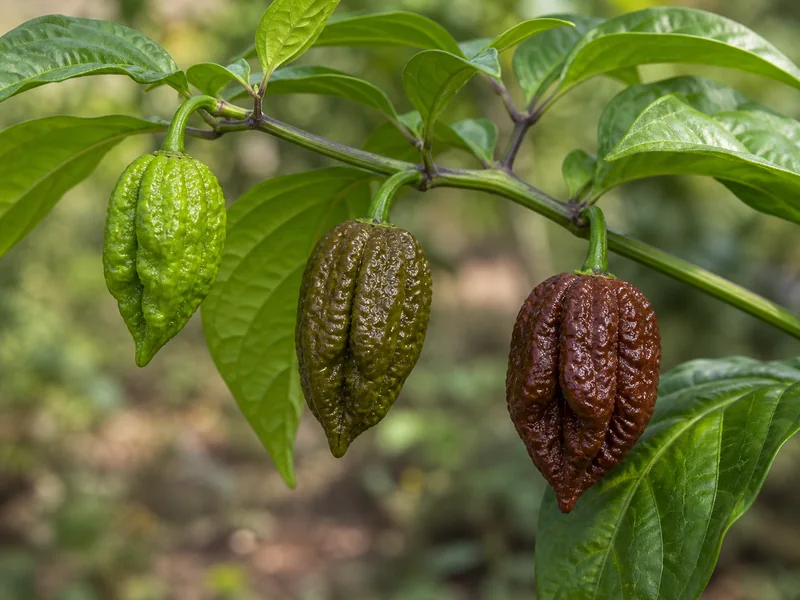
Mature pods are typically sold as deep brown, heavily wrinkled, and elongated, while unripe fruit begins green. Shape and surface can vary between selections, which makes the vendor's current fruit photograph and strain name more useful than a generic packet illustration.
The heat level changes the first task from tasting to containment.
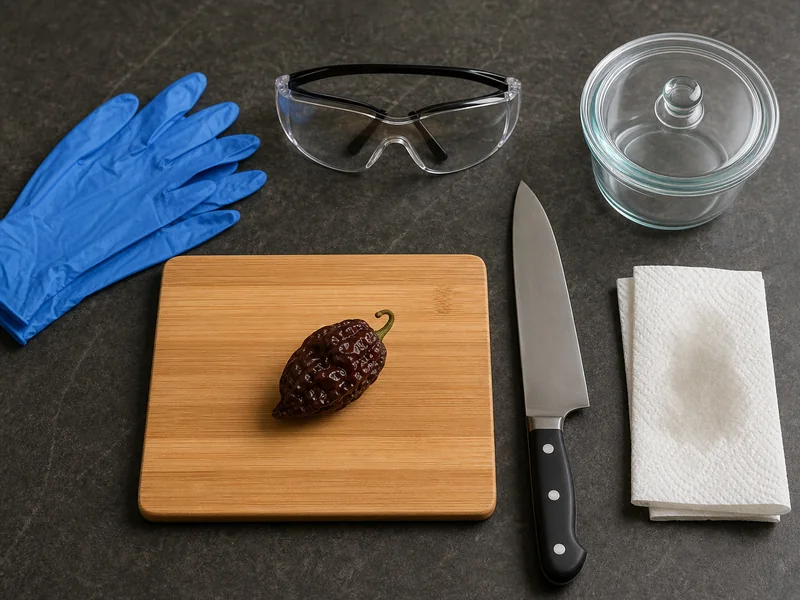
Poison Control says capsaicin can irritate skin, eyes, the gastrointestinal tract, and airways, so gloves, eye protection, fresh air, and a lidded scrap container should be ready before a pod is opened.
| Claim | Named owner | How to read it |
|---|---|---|
| Bhutlah parent claim | Refining Fire Chiles documenting Chad Soleski | Breeder-line history |
| 1,000,000-2,000,000 SHU | Sanctuary Farm Produce | Supplier range, not a public lab certificate |
| Chocolate Bhutlah is a record holder | No qualifying source located | Do not publish as fact |
| Smoky-fruity description | Refining Fire Chiles for the CS line | Attributed line description, not a site tasting note |
What Is the Origin of Chocolate Bhutlah?
The name Bhutlah combines the parent names commonly given by the breeding source.
Refining Fire Chiles attributes the original red Bhutlah to Wisconsin grower Chad Soleski and a cross between Bhut Jolokia and 7 Pot Douglah.
The same source distinguishes the original red Bhutlah from later chocolate selections. It identifies Chocolate Bhutlah CS as Soleski's own brown line and notes that other growers also selected larger chocolate variants.
That branching history explains why catalog photographs and pod shapes do not always agree. A seller should name the selection, such as Chocolate Bhutlah CS, rather than treating every brown Bhutlah descendant as genetically interchangeable.
Chocolate Bhutlah is a Capsicum chinense breeding line rather than a landrace tied to a traditional food region. Its useful public history is therefore the breeder, parent claim, selection name, and current seed provenance.
How Hot Is Chocolate Bhutlah, and What Does It Taste Like?
The Chocolate Bhutlah delivers 1M–2M Scoville Heat Units, placing it in the Super-Hot tier (1M+ SHU). That makes it roughly 125-800x hotter than a jalapeño, depending on where the jalapeño falls in its 2,500-8,000 SHU range.
Flavor notes: Refining Fire Chiles describes Chocolate Bhutlah CS as smoky-fruity; ripe brown color does not prove chocolate flavor..
Chocolate Bhutlah Nutrition Facts
No cultivar-specific nutrient analysis for Chocolate Bhutlah was located. General hot-pepper data can describe Capsicum nutrients, but it cannot prove a vitamin C, vitamin A, calorie, or antioxidant value for this breeding line.
Capsaicin is the relevant safety compound, not a reason to consume a larger amount. Poison Control documents skin, eye, digestive, and inhalation irritation, while health-effect studies do not establish a cooking dose for this cultivar.
What Is Chocolate Bhutlah Best Used For?
Dilute before dosing a full dish.
A universal pod count is unsafe because the published heat range is not independently standardized and individual fruit can vary.
Prepare a separate test base with one small trimmed sliver blended into one cup of the recipe's sauce, stock, or bean puree. Add that diluted base to the main batch one teaspoon at a time, stir completely, and wait before deciding whether the food needs more.
Refining Fire Chiles describes its Chocolate Bhutlah CS line with smoky and fruity tones.
That attributed description supports dark tomato sauces, black beans, beef braises, and molasses-based barbecue sauce, while the brown color alone does not prove a chocolate flavor.
A dedicated method for making hot sauce should control acidity, salt, fermentation, and bottling. This profile only controls the pepper dose and handling boundary, so it does not replace a tested preservation formula.
For a dry rub, pre-dilute the powder through a larger measured quantity of salt, sugar, paprika, or another recipe ingredient before it touches food. A direct pinch from the jar can create one concentrated patch and makes the remaining dose impossible to reconstruct.
Do not fry fresh or powdered Chocolate Bhutlah in a dry hot pan. Poison Control warns that inhaled capsaicin can cause respiratory distress in susceptible people, so wet cooking and active ventilation reduce the chance of airborne irritant.
| Form | Reader task | Control before the full batch |
|---|---|---|
| Fresh pod | Cooked sauce, beans, or braise | Blend one small sliver into a separate cup of base |
| Frozen pod | Cooked applications | Measure while contained and expect soft texture |
| Whole dried | Sauce or steeped chile base | Rehydrate under ventilation, then dilute |
| Powder | Rub or seasoning blend | Pre-mix through a larger measured dry ingredient |
How Do You Buy and Store Chocolate Bhutlah?
Buy by provenance before heat marketing. The listing should name Chocolate Bhutlah or a specific selection, show current brown ripe pods, identify the breeder or seed source, and describe whether seed plants were isolated.
A range such as 1,000,000-2,000,000 SHU needs an owner. Sanctuary Farm Produce is one supplier that markets the cultivar in that range, but a seller statement does not establish the result for another grower's pod.
Reject fresh fruit with wet leakage, spreading soft spots, visible mold, or a fermented odor. University of Minnesota Extension says peppers can keep a week or more refrigerated, but the actual stop point is condition rather than a promised date.
Keep fresh pods dry and contained in the refrigerator, with a clear extreme-heat label that prevents accidental use.
Freeze intact sound pods for cooked applications when short refrigerated storage is insufficient, and treat the thawed fruit as soft rather than crisp.
Store fully dried pods and powder airtight, dark, and cool. New Mexico State University explains that dehydrated chile quality depends on retaining extractable red color, pungency, and flavor, so faded aroma or moisture is more informative than an arbitrary shelf-life promise.
The dried-pepper storage method covers container and moisture control in detail. Discard any dried form that becomes damp, moldy, insect-damaged, or musty.
Dried form: Drying concentrates the pepper into a form that is easier to overmeasure.
Follow a controlled pepper drying method with ventilation, separate equipment, and a fully dry end point before sealing the pods.
Whole dried pods preserve identity better than loose powder because the buyer can still inspect color, shape, and surface. Powder trades that evidence for convenience and should carry the cultivar name, source, lot, and grind date.
Open powder away from the face and let dust settle before measuring. Pre-dilute it into a larger spice blend rather than shaking it directly over steam, which can lift capsaicin-bearing particles toward the eyes and airway.
Verify the product before buying
- Exact Chocolate Bhutlah selection name
- Breeder or seed-source lineage
- Current photograph of ripe brown pods
- Isolation method for seed plants
- Heat range attached to a named source
- No leakage, mold, or damp damage
Which Peppers Can Replace Chocolate Bhutlah?
Compare substitutes for Chocolate Bhutlah by form, flavor, and heat before choosing a ratio. Measured adjustments must account for the dish and the concentration of the replacement.
Direct comparisons show where flavor, form, and preparation differ in the Carolina Reaper vs Chocolate Bhutlah and 7 Pot Douglah vs Chocolate Bhutlah matchups.
How Do You Start and Grow Chocolate Bhutlah Peppers?
Chocolate Bhutlah seed should be grown under the general warm-pepper controls published by extension services, then checked against the seed seller's strain notes. No university trial specific to this cultivar was located.
University of Minnesota Extension recommends starting pepper seed about 8 weeks before outdoor planting and keeping the germination flat at 80-90°F until seedlings emerge.
The same source calls 70°F soil ideal and stresses bright overhead light after emergence.
Penn State Extension places optimum pepper germination near 85°F and warns that blossom drop can occur when nights fall below 60°F or days rise above 85°F.
Use those thresholds to schedule transplanting rather than relying on a calendar date alone.
Move seedlings outdoors gradually and transplant only into warm, well-drained soil. A container can extend the season in a cool climate, but its volume should be chosen for stable moisture and root space rather than a universal five-gallon claim.
Water deeply enough to wet the root zone, then let the surface begin to dry before watering again. Extension guidance links uneven water and temperature stress with poor fruit set, so repeated wet-dry swings should be corrected before adding fertilizer.
Use the site's pepper pest and disease diagnosis for aphids, mites, leaf spots, and wilting instead of treating every damaged leaf with neem oil.
The visible symptom and pest identity should decide the response.
For seed saving, isolate flowers or plants and record the exact source line. Saving pepper seeds without isolation can preserve a viable seed while losing the Chocolate Bhutlah identity the grower intended to keep.
Chocolate Bhutlah FAQ


- Refining Fire Chiles Bhutlah Variants and Breeder History
- Sanctuary Farm Produce Chocolate Bhutlah Supplier Listing
- University of Minnesota Extension Growing Peppers
- Penn State Mid-Atlantic Commercial Vegetable Production Recommendations
- Poison Control Capsaicin Safety
- New Mexico State University Postharvest Handling of Dehydrated Chiles
Species classification: C. chinense - based on published botanical taxonomy.