

KnowThePepper
7 Pot White: Why Collectors Seek This Rare, Pale, Floral Trinidad Superhot
The 7 Pot White is a rare Trinidadian super-hot reaching 800,000-1,000,000 SHU - below the highest Trinidad Scorpion listings but still firmly superhot, but with a distinctly floral, fruity character that sets it apart from its redder relatives. Its pale, wrinkled pods and unusual aroma make it one of the more striking members of the super-hot SHU bracket and a prized find for collectors.
- Species: C. chinense
- Heat tier: Super-Hot (1M+ SHU)
- Comparison: 100-400x hotter than a jalapeño, depending on where the jalapeño falls in its 2,500-8,000 SHU range
What Kind of Pepper Is 7 Pot White?
Before the heat even registers, the 7 Pot White announces itself through scent, a sweet, almost tropical floral note that smells closer to a ripe stone fruit than anything you'd expect from a pepper capable of 1 million SHU. That contrast is the whole story with this variety.
Biting in, the fruity flavor surfaces first, bright and clean on the front palate. Then the heat builds, not a sharp stab like a Naga Viper's scorching capsaicin load, but a slower, spreading burn that saturates the mouth and throat over 30-60 seconds.
It's intense without being one-dimensional.
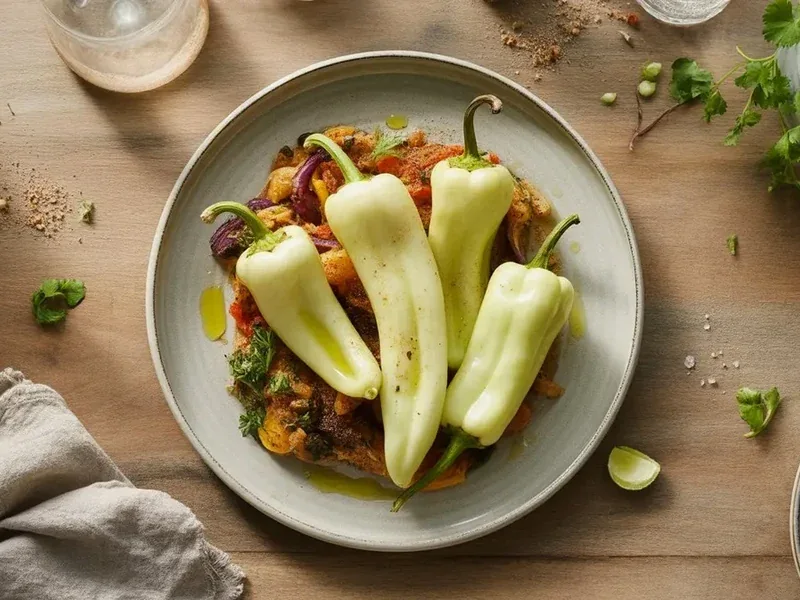
Botanically a the broader C. chinense species line cultivar, the 7 Pot White shares its species with habaneros and Scotch Bonnets, which explains the fruity backbone. What distinguishes it visually is the pale cream-to-white coloring of mature pods, unusual among reds and oranges, combined with the deeply wrinkled, bumpy texture characteristic of the 7 Pot family.
The name references Trinidadian folklore: one pepper hot enough to season seven pots of stew. Whether that's literal or hyperbole, the heat is real.
At its upper range, this pepper sits comfortably in the same tier as the wrinkled, deeply pungent Brain Strain variant and other extreme Trinidadian cultivars.
For collectors, the white coloring and floral flavor profile make it genuinely different from the crowd.
What Is the Origin of 7 Pot White?
Trinidad's pepper-growing tradition runs deep, shaped by African, Indian, and indigenous cooking influences that converged under British colonial rule. The 7 Pot family of peppers emerged from this environment, small-scale growers selecting for maximum heat and pod productivity across generations.
The 7 Pot White is a color variant within that lineage, likely the result of natural mutation or selective breeding isolating the recessive gene responsible for pale pod pigmentation. Exact documentation is sparse, as with many Trinidadian landrace varieties.
The pepper gained wider recognition in the early 2010s when the super-hot collector community began cataloging and trading rare regional variants.
Trinidad's regional pepper heritage produced several extreme cultivars during this era, including the 7 Pot Barrackpore. The White sits within that same cultural lineage, though its pale pods and floral notes give it a distinct identity.
How Hot Is 7 Pot White? Heat and Flavor
The 7 Pot White delivers 800K–1M Scoville Heat Units, placing it in the Super-Hot tier (1M+ SHU). That makes it roughly 100-400x hotter than a jalapeño, depending on where the jalapeño falls in its 2,500-8,000 SHU range.
Flavor notes: fruity and floral.
What Nutrients Does 7 Pot White Provide?
Like other the broader Capsicum chinense group super-hots, the 7 Pot White delivers concentrated nutrition in small doses. A single fresh pod provides meaningful vitamin C - estimates for extreme hot peppers suggest 100-200% of the daily recommended value per pod, though exact figures for this specific variety are not independently published.
Capsaicin, the compound responsible for heat at 800,000-1,000,000 SHU, has been studied for anti-inflammatory and metabolic effects. Vitamin A (from beta-carotene), potassium, and B vitamins are present in quantities consistent with other chinense cultivars.
Given the heat level, practical serving sizes are small, a few grams at most, so nutritional impact is modest per use.
What Is 7 Pot White Best Used For?
The floral-fruity character of the 7 Pot White opens up applications that pure-heat peppers can't match. The aroma alone, sweet and tropical before any capsaicin hits, makes it worth using in preparations where the pepper is added early and heat is applied, which intensifies the fruit notes.
Hot sauces are the most natural fit. A small-batch sauce built around mango or pineapple gains real complexity from the White's floral undertone, something a Jay's Peach Ghost Scorpion can also deliver but through a different flavor lens.
The White's flavor reads cleaner and more floral than most ghost-type peppers.
For cooking applications beyond sauce, the dried and powdered form is the most practical approach. A quarter teaspoon in a marinade or dry rub delivers serious heat with aromatic depth.
Fresh pods can be deseeded and minced into salsas or ceviche, the seeds and placenta carry most of the capsaicin, so removing them drops the heat to manageable levels while preserving the flavor.
Compared to 7 Pot Red Giant, the White holds its own on flavor. Fermented mash is another excellent use, the floral notes survive lacto-fermentation well and add complexity to the finished product.
How Should You Buy and Store 7 Pot White?
Fresh 7 Pot White pods are rarely found in retail. Your best options are specialty hot pepper vendors, online growers, or farmers markets serving the hot pepper collector community.
Seeds are more accessible through dedicated seed banks and the Infinity Chili and similarly extreme pepper trading communities.
Fresh pods keep 1-2 weeks refrigerated in a paper bag. For longer storage, freeze whole pods without blanching, they retain heat and most flavor for up to 12 months.
Dried pods or powder store well in an airtight container away from light for 1-2 years.
Always handle with gloves. Capsaicin residue on skin or eyes causes significant irritation.
What Can You Use Instead of 7 Pot White?
No dedicated substitute guidance is published for 7 Pot White yet.
How Do You Start and Grow 7 Pot White Peppers?
Growing the 7 Pot White follows the same general path as other extreme C. chinense varieties, with a few points worth noting. Start seeds 10-12 weeks before your last frost date, this species germinates slowly and needs a long season.
Soil temperature for germination should stay between 80-85°F.
A heat mat is essentially mandatory.
Transplant outdoors only after nighttime temperatures are consistently above 55°F. The plants are sensitive to cold soil more than cold air, and a chill at root level sets them back significantly.
Full sun, minimum 6-8 hours daily, drives pod development and resin production.
Fertilize with a balanced feed through vegetative growth, then shift to a lower-nitrogen formula once flowering begins, excess nitrogen pushes leaf growth at the expense of pods. The 7 Pot White tends toward a bushy structure and handles container growing reasonably well, though a minimum 5-gallon pot is necessary for full production.
For those newer to super-hots, the grow cayenne covers the fundamentals that apply across hot varieties. Days to maturity run 90-120 days from transplant.
Pods start green and transition to cream-white when fully ripe, harvest at full color for peak heat and flavor.
Gloves are non-negotiable during harvest.
7 Pot White FAQ


- Reimer Seeds - 7 Pot White Pepper Seeds
- ChiliLovers - 7 Pot White
- Semi Strani - 7 Pot White Chili Seeds
-
Sourcing note: grower and seed-catalogue documentation only No university, government or research body publishes data on this cultivar. The figures on this page come from grower reports and seed-catalogue listings, which are the only documentation that exists for it.
Species classification: C. chinense - based on published botanical taxonomy.