

KnowThePepper
Apollo Pepper: Ed Currie's Superhot and Its Reported 2.5M-3M SHU Range
Apollo pepper is a reported Ed Currie/PuckerButt superhot tied to Carolina Reaper and Pepper X breeding. Treat the 2,500,000-3,000,000 SHU range as a reported specialty-pepper range, not a Guinness-certified record number.
- Species: C. chinense
- Heat tier: Super-Hot (1M+ SHU)
- Comparison: 313-1,200x hotter than a jalapeño, depending on where the jalapeño falls in its 2,500-8,000 SHU range
What Is Apollo Pepper Known For?
Apollo pepper is a reported superhot associated with Smokin' Ed Currie and PuckerButt Pepper Company, the same breeder network behind Carolina Reaper and Pepper X. We list Apollo in the 2,500,000-3,000,000 SHU bracket because that is the commonly reported specialty-pepper range, but that number should be read as reported, not officially certified.
The strongest public source is PuckerButt's The Last Dab Apollo product page, which says the Apollo pepper was bred from Carolina Reaper and Pepper X strains. That source does not publish a standalone lab certificate for Apollo, so it cannot carry the same weight as Guinness World Records data for Pepper X.
Guinness lists Pepper X at an average 2,693,000 SHU, with testing by Winthrop University across multiple years of specimens. That gives readers a useful anchor: if Apollo's reported range is accurate, it belongs near record-level superhots, but Apollo itself should not be called the official hottest pepper.
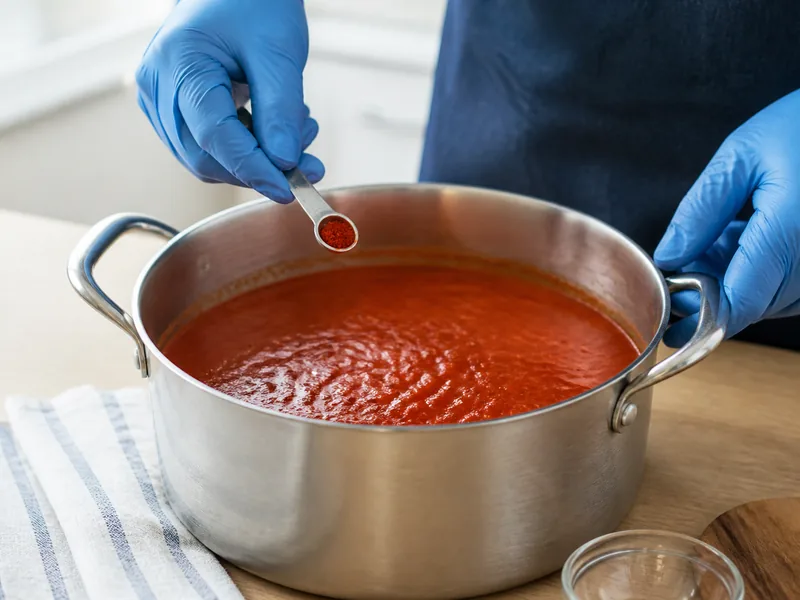
For home use, treat Apollo more like a heat concentrate than a normal fresh chile. A tiny sliver, a few drops of Apollo-based sauce, or a pinch of dried powder can change a full pot of sauce or chili.
The goal is controlled dosing, not proving tolerance.
Use disposable gloves, keep your hands away from your face, and ventilate if the pepper is heated. For the science behind the burn, the capsaicin explains why placenta tissue carries more heat than the seeds themselves.
| Statement | Named source | How to read it |
|---|---|---|
| Apollo was bred from Carolina Reaper and Pepper X strains | PuckerButt product page | Original commercial lineage claim |
| Apollo is commonly reported at 2.5 to 3 million SHU | Specialty-pepper reporting | Reported range. No public standalone Apollo lab certificate is cited |
| Pepper X averages 2,693,000 SHU | Guinness World Records, citing Winthrop University testing | Certified comparison context, not an Apollo measurement |
What Is the Origin of Apollo Pepper?
Apollo's public story is tied more to a sauce release than to a university cultivar release. PuckerButt sells The Last Dab Apollo as an Apollo-pepper sauce and describes the pepper as bred from Carolina Reaper and Pepper X strains by Smokin' Ed Currie.
That matters because it gives Apollo an original commercial source, but it is still not the same as a peer-reviewed cultivar paper or a Guinness record page. The accurate source hierarchy is: PuckerButt for the breeder/product claim, Guinness for record-certified Pepper X context, and secondary pepper references only for reported Apollo heat ranges.
Older wording on this page treated Apollo like a settled record-level cultivar. The safer profile is narrower: Apollo is a reported modern superhot with Reaper and Pepper X lineage claims, strong product-source support, and limited public lab evidence for its exact SHU range.
That distinction is also why Apollo does not hold a ranked spot on the hottest peppers ranking. Apollo belongs here as an evidence-status profile; Pepper X and Carolina Reaper own the official record discussion.
How Spicy Is Apollo Pepper, and How Does It Taste?
The Apollo Pepper delivers 2.5M–3M Scoville Heat Units, placing it in the Super-Hot tier (1M+ SHU). That makes it roughly 313-1,200x hotter than a jalapeño, depending on where the jalapeño falls in its 2,500-8,000 SHU range.
Flavor notes: reported sweet heat, earthy finish.
How Nutritious Is Apollo Pepper?
Apollo is not a pepper people eat for nutrition. Serving sizes are usually tiny because the reported SHU range sits near record-level heat, so vitamin or calorie numbers matter far less than handling and dose control.
Use generic fresh hot-pepper nutrition data only as background, not as Apollo-specific lab data. Without an Apollo nutrition analysis, a precise 100g vitamin table would imply more certainty than the public evidence supports.
The meaningful nutrition-related fact is capsaicin exposure. Capsaicin concentrates mostly in the pale placenta tissue inside the pod, and high-capsaicin peppers can irritate skin, eyes, throat, and lungs during prep or cooking.
For a normal kitchen, the safer rule is simple: treat Apollo as a seasoning measured in tiny amounts, not as a vegetable serving. The Scoville scale explains how SHU connects to capsaicinoid concentration.
How Do You Use Apollo Pepper in the Kitchen?
Apollo is best used where very small amounts can be spread through a large volume: hot sauce, chili, stew, curry, barbecue sauce, and pepper mash. It is a poor fit for casual raw slicing because one uneven piece can dominate the dish.
If you are using Apollo sauce, start with drops. If you are using dried powder, start below 1/8 teaspoon in a quart-size batch, stir thoroughly, wait a few minutes, then taste.
Superhot heat can build after the first bite, so fast tasting leads to overdosing.
PuckerButt describes Apollo flavor as carrying Carolina Reaper sweetness with Pepper X earthiness. In practical terms, use it where a fruity-earthy superhot note makes sense: tomato sauces, fermented hot sauce, smoky rubs, and fruit-based sauces with mango, pineapple, or peach.
Do not use Apollo as a direct swap for everyday hot peppers. A fruit-forward habanero or Caribbean-style Scotch bonnet is a better choice when the recipe needs chile flavor more than extreme SHU.
For record-level heat comparisons, use Pepper X record-level profile, Carolina Reaper, or Trinidad Moruga Scorpion as context. For cooking, the useful question is smaller: how little Apollo can do the job without taking over the food?
Where Can You Buy Apollo Pepper, and How Do You Store It?
Fresh Apollo pods are rarely a grocery-store item. Most readers will encounter Apollo through The Last Dab Apollo sauce, specialty growers, seed listings, dried powder, or hot sauce makers that name the pepper.
Buy with evidence in mind. A good listing explains the seed source or product source.
A weak listing only says "world's hottest" or gives an exact SHU number with no lab or breeder context.
Avoid sellers that present Apollo as a casual medium-hot cooking pepper.
Fresh pods, if you have a trustworthy source, should be handled like other superhots: unwashed in the refrigerator for short storage, frozen for cooked uses, or dried for measured powder. Keep dried pods and powder in an airtight container away from light and heat.
For preservation, do not convert an Apollo sauce or mash into a shelf-stable product by guessing at vinegar. Use tested preservation guidance before canning any pepper product.
If the goal is only short-term cooking, refrigerator storage is the safer assumption.
What Can Replace Apollo Pepper in a Recipe?
Direct comparisons show where flavor, form, and preparation differ in the Apollo vs Carolina Reaper matchups.
How Do You Start and Grow Apollo Peppers?
Apollo seed stock is harder to verify than common garden peppers, so start with the source before you start with the seed tray. Buy only from sellers that explain their Apollo source, isolation practices, and whether the seed is stable or open-pollinated.
If you grow Apollo, treat it like a long-season superhot in the super-hot tier. Start seed indoors early, keep the root zone warm, and avoid transplanting until nights are consistently warm.
Cold starts and short seasons are more likely to limit pods than ordinary jalapeno-style timing.
Do not treat any homegrown Apollo pod as proof of a 3,000,000-SHU harvest. Heat changes with genetics, plant stress, ripeness, and post-harvest handling, and Apollo's public lab trail is limited.
Label your plants, isolate flowers if saving seed, and keep notes on the seed vendor and season.
Expect slower growth, later ripening, and lower practical use than medium-hot peppers. One plant can still produce more heat than most households need, so the better grower metric is clean identity and mature pods, not maximum yield.

Apollo Pepper FAQ


- PuckerButt Pepper Company - The Last Dab Apollo
- Guinness World Records - Pepper X dethrones Carolina Reaper as world's hottest chilli pepper
- National Center for Home Food Preservation - Pickled Hot Peppers
- KnowThePepper - Scoville Scale Explained
Species classification: C. chinense - based on published botanical taxonomy.