

KnowThePepper
7 Pot Primo: Troy Primeaux's Louisiana Cross of Naga Morich and 7 Pot
7 Pot Primo is Troy Primeaux's Louisiana-bred Capsicum chinense superhot, created from Naga Morich and Trinidad 7 Pot material and described by Primeaux around 1.5 million SHU. The official seed listing reports a peak of 1,790,150 SHU, but those figures describe reported samples and breeder records rather than the heat of every pod.
- Species: C. chinense
- Heat tier: Super-Hot (1M+ SHU)
- Comparison: 100-716x hotter than a jalapeño, depending on where the jalapeño falls in its 2,500-8,000 SHU range
What Is 7 Pot Primo Known For?
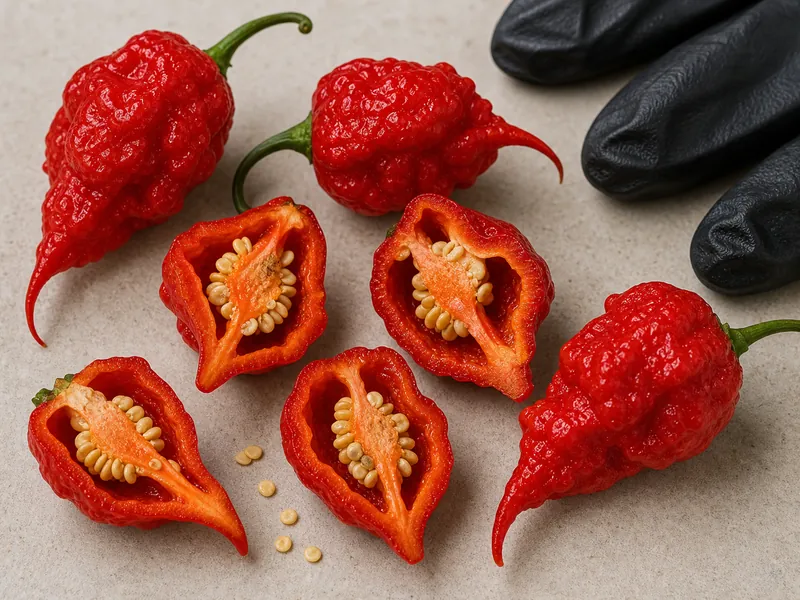
7 Pot Primo is a Louisiana-bred Capsicum chinense pepper created by Troy Primeaux, whose Cajun surname is pronounced and sometimes written Primeaux. A ripe pod is usually red, deeply wrinkled, round to slightly elongated, and finished with a narrow stinger-like tail.
The tail helps with recognition, but it cannot prove identity by itself. Carolina Reaper and other modern superhots can also grow rough red pods with pointed tails, so a named seed source and known lineage carry more weight than one photograph.
Primeaux's published account describes the original fruit as round and warty with a distinct long appendage. That combination of skin texture, mature red color, and tail is more useful than size alone because pod size changes with plant health and growing conditions.
The pepper is known for extreme heat, but its identity also includes a fruity, floral Capsicum chinense aroma. That flavor is easiest to notice after a very small amount has been diluted through sauce, seasoning, or another full batch of food.
Where Did 7 Pot Primo Originate?
Troy Primeaux began the 7 Pot Primo cross in 2005 while working as a student aide at the University of Louisiana at Lafayette Office of Renewable Resources, then home to the university's horticulture program. In a published interview with La Boîte, Primeaux says horticulturists Dennis Wollard and Jim Foret helped him learn plant breeding methods.
Primeaux names Naga Morich and Trinidad 7 Pot as the parent material. He says Wollard supplied seed obtained from a Trinidadian market, then he used controlled pollination rather than leaving the cross to chance.
The first selected fruit differed from both parents because it was round, warty, and carried a long stinger. Primeaux distributed seed through the HotPepper forum after several grow-outs, where another pepper enthusiast attached the name Primo to the 7 Pot family marker.
Primeaux says the line was still unstable when it first circulated but later became stable. That history matters to seed buyers because an old open-pollinated cross, a recent derivative, and seed sold under the established cultivar name do not carry the same identity evidence.
7 Pot Primo is sometimes discussed beside Carolina Reaper because both can produce red, rough-skinned fruit with tails. The visual resemblance does not make them the same named cultivar, and this profile does not settle claims about one breeder's work from appearance alone.
What Does 7 Pot Primo Taste Like, and How Hot Is It?
The 7 Pot Primo delivers 800K–1.8M Scoville Heat Units, placing it in the Super-Hot tier (1M+ SHU). That makes it roughly 100-716x hotter than a jalapeño, depending on where the jalapeño falls in its 2,500-8,000 SHU range.
Flavor notes: fruity, floral C. chinense aroma with extreme heat.
What Nutrients Does 7 Pot Primo Provide?
USDA FoodData Central does not publish a cultivar-specific nutrition record for 7 Pot Primo. Generic values for raw hot chile peppers cannot show exactly how much vitamin C, potassium, or fiber this particular cultivar contains.
A normal cooking dose is also far below the 100-gram reference amount used in many nutrition tables. The useful health information here is therefore exposure control, not a nutrient claim or a reason to eat a larger serving.
New Mexico State University identifies the placenta, the pale tissue inside the fruit, as the main site of capsaicinoid production. Seeds can pick up capsaicinoids from contact, but removing loose seeds does not make a 7 Pot Primo safe to handle like a mild pepper.
How Do You Use 7 Pot Primo in the Kitchen?
Use 7 Pot Primo as a concentrated seasoning, not as a vegetable measured by the pod. Its fruity and floral character can support fermented hot sauce, vinegar sauce, fruit sauce, dry seasoning, and marinades when the pepper is diluted across many portions.
Mango, pineapple, carrot, citrus, garlic, and vinegar can complement the aroma, but none of them neutralizes a reckless dose. A safe starting amount depends on the size and heat of the actual pod, the batch volume, and the people who will eat it, so there is no responsible universal one-pod ratio.
For a new batch, add less than the finished recipe seems likely to need, mix thoroughly, then let one informed adult evaluate a small sample before adding more. Do not serve an experimental superhot batch to someone who was not told what it contains.
Powder requires extra control because fine particles can reach the eyes and airways. Open the container away from your face and add it where moving air cannot blow dust across the room.
If pepper juice reaches an eye, rinse with clean running water and seek medical help when pain or vision symptoms persist. Water alone is usually poor relief for mouth burn because capsaicin does not dissolve in water, but severe symptoms or breathing trouble need professional medical help rather than a kitchen remedy.
Handling a superhot without contaminating the kitchen
- Hands: Wear intact disposable gloves and remove them without touching the outer surface.
- Tools: Wash the knife, board, blender lid, handles, and sink area after preparation.
- Air: Ventilate the room and avoid leaning over hot oil, dehydrators, or airborne powder.
- Labels: Mark sauce, frozen pods, powder, and infused ingredients with the pepper name and a heat warning.
How Do You Buy and Store 7 Pot Primo?
Buy 7 Pot Primo seed from a seller who names the breeder line and explains isolation. A photograph of a tailed red pod is supporting evidence, but it cannot rule out another superhot or an accidental cross.
Primeaux says the early line circulated before it was stable and that the established variety is now stable. Seed saved near other flowering Capsicum plants can still cross in a new garden, so ask whether the parent plants were isolated and expect some off-type risk when the seller gives no method.
Fresh pods should feel firm and have no wet leaks, mold, or collapsing tissue. Deep wrinkles belong to the cultivar's normal surface, while soft patches and liquid around the stem signal deterioration.
Keep fresh pods dry and separated from ordinary peppers in the refrigerator. University of Minnesota Extension says peppers generally keep for a week or more under refrigeration, but cold injury and moisture loss eventually reduce quality.
Freeze labeled whole or chopped pods for cooked dishes when texture no longer matters. Keep completely dried pods or powder in a sealed, clearly marked container away from light, heat, moisture, children, and anyone who may mistake it for ordinary chile powder.
What Is a Good Substitute for 7 Pot Primo?
Compare substitutes for 7 Pot Primo by form, flavor, and heat before choosing a ratio. Measured adjustments must account for the dish and the concentration of the replacement.
Direct comparisons show where flavor, form, and preparation differ in the 7 Pot Brain Strain vs Primo matchups.
What Does 7 Pot Primo Need to Grow Well?
Start 7 Pot Primo indoors about eight weeks before the safe outdoor planting date. University of Minnesota Extension recommends sowing pepper seed one-quarter inch deep and holding the germination flat at 80 to 90°F until seedlings emerge, while monitoring moisture because heat mats dry the mix faster.
Bright overhead light should begin as soon as seedlings emerge. Harden plants gradually over one or two weeks, and bring them inside when nighttime temperatures fall below 55°F during that transition.
Transplant only after nighttime lows remain above 50°F. UMN recommends spacing pepper plants 18 inches apart in rows 30 to 36 inches apart, which gives a concrete starting point for a bed even though containers and local climate may require adjustment.
Keep soil moisture steady because drought and uneven watering weaken flowers and young fruit. UMN also warns that dry soil, daytime temperatures above 90°F, and nights below 60°F or above 70°F can reduce plant growth or fruit set.
Harvest identity is clearest when fruit has reached mature size and changed fully to red. Clip the stem with shears instead of pulling the pod, then wear gloves during harvest and cleanup.
To save seed true to the named cultivar, isolate open flowers from other compatible peppers and label each plant before pods form. Environmental stress can change pod shape and heat, but it cannot repair crossed or mislabeled seed.
7 Pot Primo FAQ


- Primo's Peppers - Official 7-Pot Primo Seeds
- La Boîte - Primonition and Primo's Peppers
- Refining Fire Chiles / SuperHotChiles - Trinidad 7 Pot Primo Peppers
- New Mexico State University Circular 706 - Chile Pepper Cultivars for New Mexico
- University of Minnesota Extension - Growing peppers
Species classification: C. chinense - based on published botanical taxonomy.