7 Pot Primo Has No Exact Swap, but 7 Pot Brain Strain Comes Closest
7 Pot Brain Strain is the closest practical choice when you want another fruity 7 Pot pepper. Pick Naga Morich for a bright, aromatic sauce, Trinidad Scorpion Butch T for extreme intensity, or 7 Pot Douglah for a darker dried blend. No cultivar has a dependable one-to-one ratio with 7 Pot Primo, so compare trimmed weight and begin below the original amount.
What must the substitute preserve?
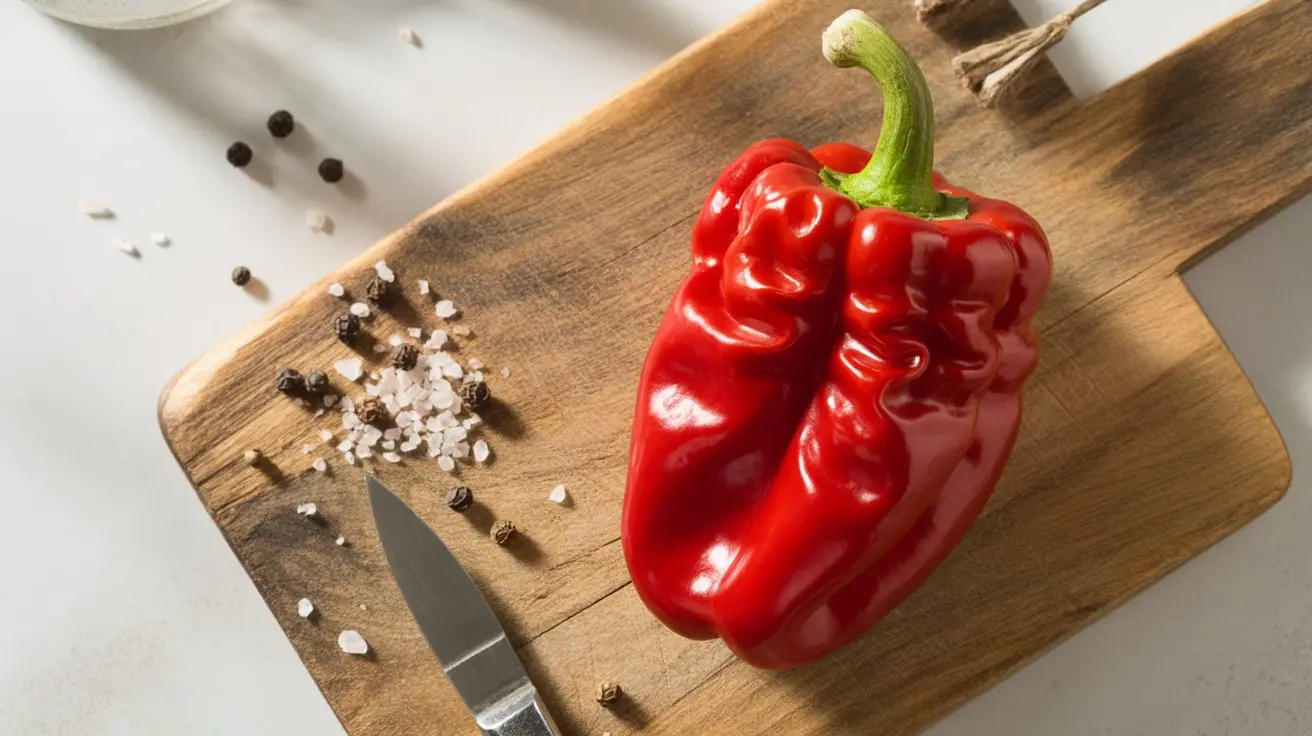
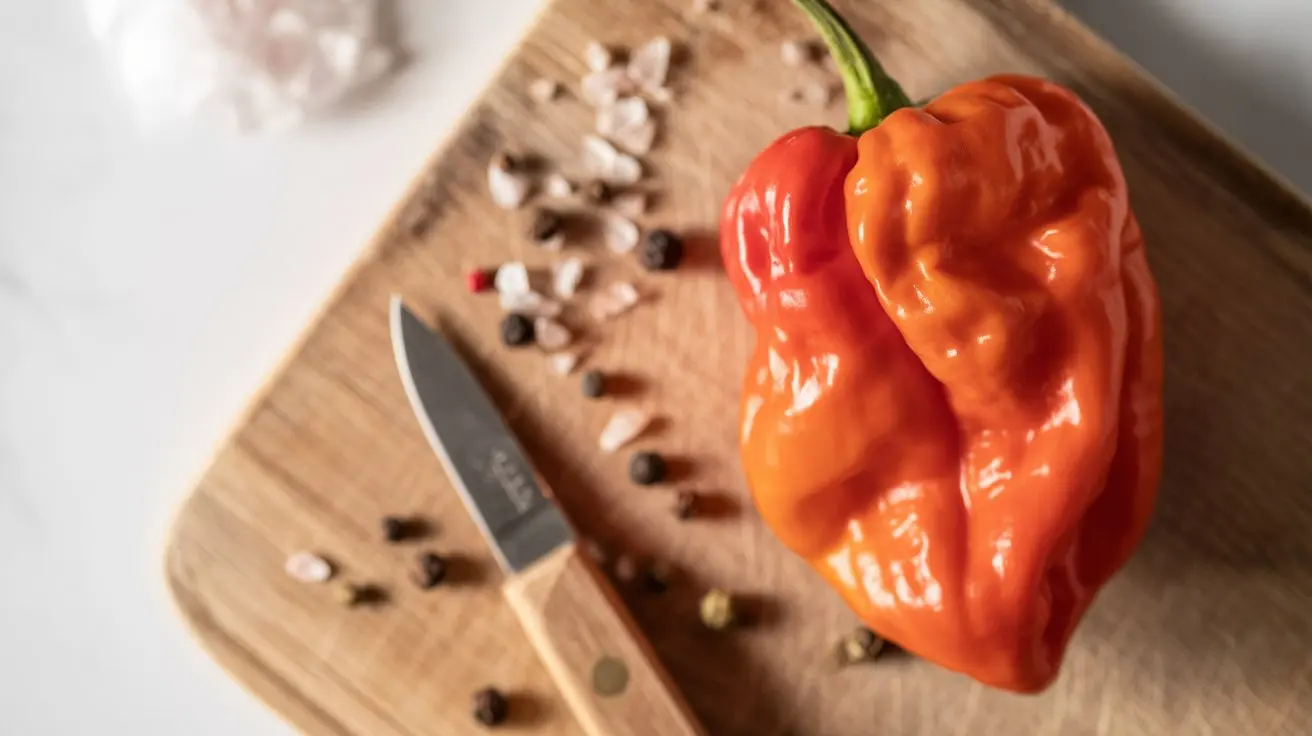
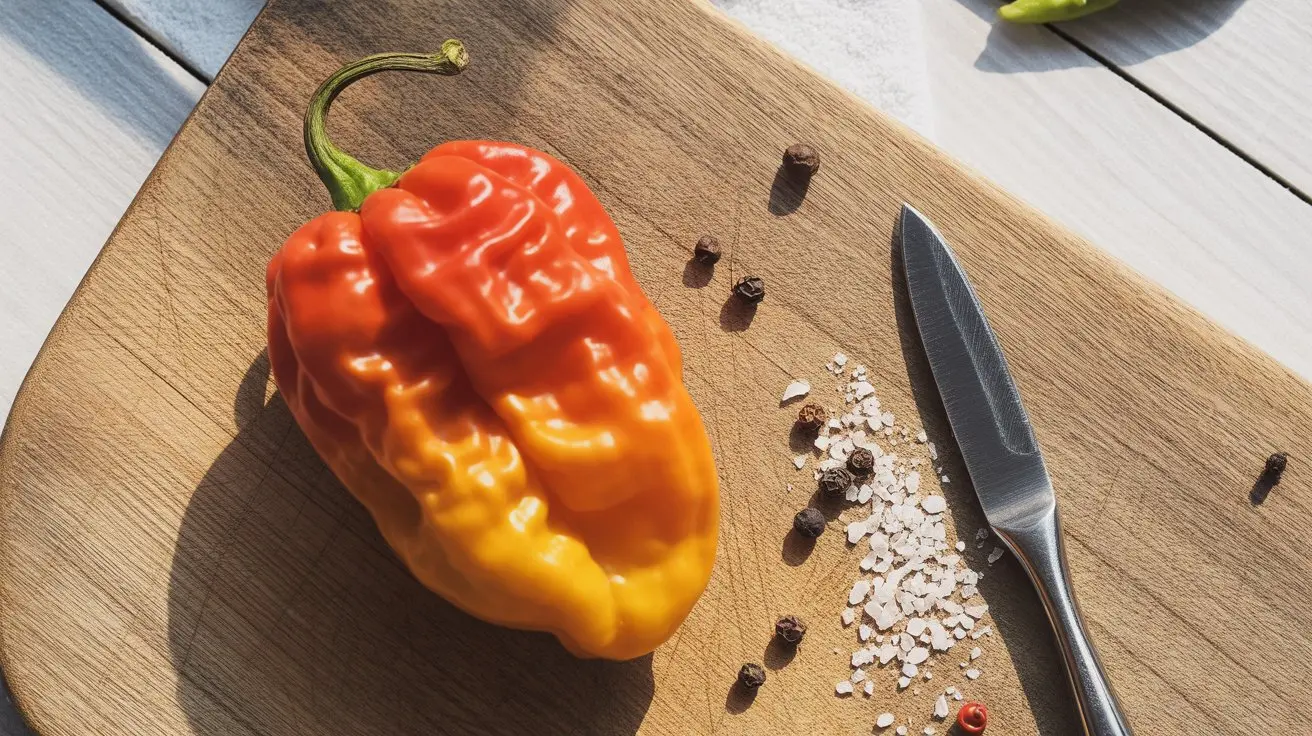
A pepper can replace the cooking function of 7 Pot Primo, but it cannot replace the named cultivar. Troy Primeaux describes Primo as a Louisiana line selected from a controlled Naga Morich and Trinidad 7 Pot cross, including the wrinkled red pod and pronounced tail that distinguish it.
That boundary matters when the name appears on a product label, competition entry, or seed packet. For a sauce, mash, powder, or cooked dish, choose the trait that affects the finished food instead.
What must stay recognizable?
Match lineage for a 7 Pot-style product, aroma for a fresh sauce, and intensity for a large cooked batch. Do not let a single Scoville number make all three decisions.
Why is there no exact heat conversion?
Primo's Peppers reports a peak result of 1,790,150 Scoville Heat Units for 7 Pot Primo.
That figure describes a tested sample near the upper end, not the heat of every pod sold under the name.
New Mexico State University explains that cultivar genetics, weather, growing conditions, maturity, and even fruit position can change capsaicinoid concentration. Two pods from overlapping published ranges can still behave very differently in the same recipe.
Use published heat ranges to identify the right neighborhood. Use trimmed weight, batch size, and a controlled correction to decide the amount.
Which 7 Pot Primo substitute fits the job?
7 Pot Brain Strain for the closest 7 Pot role
Closest MatchChoose Brain Strain when the recipe needs another red, wrinkled 7 Pot pepper with fruity superhot character.
Its common published range overlaps much of Primo's territory, and its flavor direction makes sense in fresh sauce or fermented mash.
The pod is usually broader and lacks Primo's selected long tail, so it cannot preserve the original cultivar's appearance or name. Begin below the original trimmed weight and use the full-batch method rather than promising a direct ratio.
Naga Morich for a bright aromatic sauce
Runner-UpNaga Morich is the stronger choice when fruit-forward aroma matters more than staying inside the 7 Pot family. Its Capsicum chinense character works in a smooth vinegar sauce, a fresh chile paste, or a mash where the pod's fragrance remains noticeable.
The flavor can read sharper and less rounded than Primo, while individual fruit still vary widely in heat.
Use it as a sensory match for the finished sauce, not as proof of the original pepper's lineage.
Trinidad Scorpion Butch T for extreme intensity
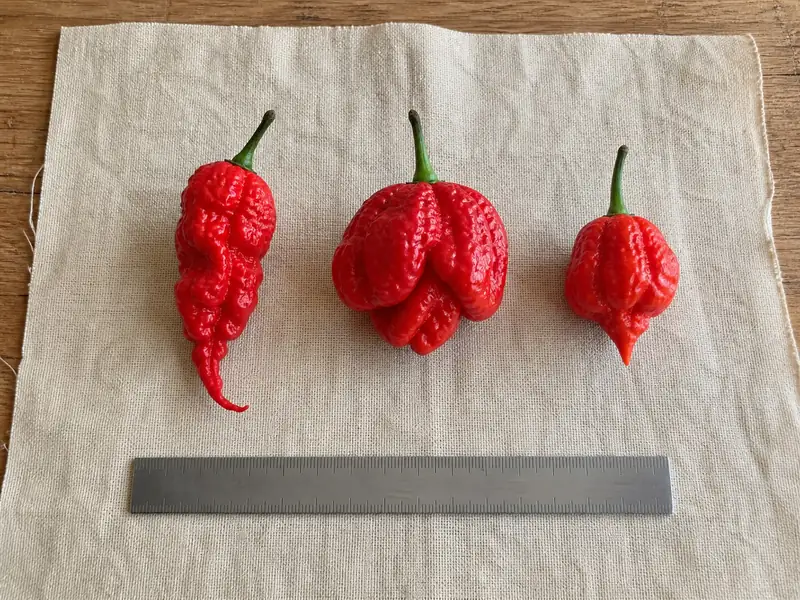
Also GreatButch T fits a large cooked batch where the main job is delivering intense superhot heat with a Trinidad pepper character. Guinness recognized the cultivar as a record holder in 2011, which makes its extreme bracket better documented than many grower-only claims.
Its sharper sting and scorpion profile can pull the sauce away from Primo's fruitier balance. It belongs in chili, cooked sauce, or a controlled mash where other ingredients carry the aroma.
7 Pot Barrackpore for a Trinidad 7 Pot direction
Barrackpore makes sense when a cook wants the broad flavor and heat direction of another Trinidad 7 Pot selection without requiring Primo's exact pod shape. It is especially useful in pepper-forward sauce where a full, tropical fruit note has room to show.
Published heat figures for Barrackpore often come from specialist seed sources rather than a single institutional test. Treat it as a lineage and flavor choice, then calibrate the actual batch by weight.
7 Pot Douglah for dark powders and rich sauces
Douglah earns a place when the product can use earthy, nutty depth along with very high heat. Its brown mature color and darker flavor work in cocoa-based rubs, mole-style sauces, smoked blends, and powders where a bright red finish is unnecessary.
That color and flavor are also the limitation. Douglah is a poor match for a vivid red sauce or a recipe that depends on Primo's cleaner fruit note.
How should you dose the replacement?
Begin with half of the original trimmed pepper weight when the replacement has comparable superhot intensity and the batch can be corrected later.
This is a conservative working start, not a claim that one cultivar is exactly twice as hot as another.
A fermented mash needs an even more cautious start because the pepper cannot be removed after mixing. Keep salt calculations tied to the total mash weight rather than changing them to compensate for heat.
- Remove stems and damaged tissue. Weigh the usable pepper, not the whole pod.
- Add the substitute to the full batch. A spoonful sample exaggerates heat because the pepper has less food to disperse through.
- Blend or cook completely. Capsaicin needs to spread before the first judgment is useful.
- Let the intended resting step finish. Hot sauce can taste sharper while warm, and powder takes time to hydrate.
- Correct once in a measured increment. Record the final gram weight if the recipe will be repeated.

Can powder replace a fresh pod?
Powder can provide 7 Pot-style heat, but it does not behave like a chopped pod.
Drying removes most of the water, changes the aroma, concentrates solids, and makes fine particles disperse through a sauce faster.
Match fresh pepper with fresh pepper whenever texture and fragrance matter. If powder is the only option, treat it as a recipe reformulation and restore liquid separately.
| Form | What it contributes | Best use | Main adjustment |
|---|---|---|---|
| Fresh chopped pod | Water, pieces, bright aroma | Salsa, relish, textured sauce | Match trimmed weight, then adjust heat |
| Fresh mash | Water, pulp, even fruit distribution | Fermentation and blended sauce | Keep the salt percentage tied to total mash weight |
| Coarse dried flakes | Dry solids and localized bursts | Oil, rubs, finishing blends | Allow time to hydrate before judging |
| Fine powder | Fast, even heat with little texture | Dry seasoning and large cooked batches | Start with a small weighed amount |
A teaspoon conversion is unreliable because grind size changes how densely powder packs into the spoon. A scale that reads tenths of a gram gives a more useful record for concentrated powder.

Which 7 Pot Primo swaps should you avoid?
- Carolina Reaper as an automatic closest match: it can supply extreme heat, but its sweeter profile and different selected lineage change both the flavor and the product claim. Use it only when those changes are acceptable.
- Orange habanero for a superhot product: habanero contributes useful floral fruit, yet it drops far below the intended extreme bracket. It works only when reducing heat is the goal.
- Capsaicin extract for a pepper substitution: extract raises heat without adding pod solids, natural aroma, color, or cultivar character. It solves a formulation problem rather than replacing 7 Pot Primo.
How do you handle the substitute safely?
NMSU identifies the inner placental tissue as the main source of capsaicinoids in the fruit. Removing it can change the distribution of heat, but it does not make the remaining flesh safe to handle barehanded.
Fine powder adds an inhalation path that a fresh pod does not. Open containers gently, work with moving air directed away from people, and avoid pouring powder from height.
- Separate the tools. Do not move the same unwashed board or spoon into another dish.
- Control the air. Use ventilation for powder and for high-heat cooking that can release irritating droplets.
- Label the result. Write the cultivar, form, and date on mash, powder, sauce, and frozen portions.
- Keep it contained. Store finished ingredients where children and unsuspecting cooks cannot mistake them for ordinary pepper products.
Substitution tip: When substituting 7 Pot Primo, start with less of a hotter substitute and add more to taste. For milder substitutes, increase the quantity.
Our swap ratio calculator gives precise conversion amounts, and the heat unit converter translates between Scoville and other scales.