

KnowThePepper
Trinidad Scorpion Butch T: HPLC-Tested at 1,463,700 SHU in 2011
The Trinidad Scorpion Butch T ranges around 800,000-1,463,700 SHU, with its record-tested specimen clocking 1,463,700 SHU in 2011. Treat it as a true superhot with aggressive chinense heat.
- Species: C. chinense
- Heat tier: Super-Hot (1M+ SHU)
- Comparison: 100-585x hotter than a jalapeño, depending on where the jalapeño falls in its 2,500-8,000 SHU range
What Is Trinidad Scorpion Butch T?
Before the Carolina Reaper's record-shattering capsaicin load arrived, the Trinidad Scorpion Butch T sat at the top of the heat world. The Australia-based Chilli Factory certified it at 1,463,700 SHU in 2011 through HPLC testing, a result that shocked even seasoned super-hot growers.
The pepper belongs to the Capsicum chinense pepper group, the botanical family responsible for most of the world's most intense varieties. Its wrinkled, bumpy exterior tapers into the characteristic scorpion tail, a shape it shares with the Trinidad Moruga Scorpion.
Flavor-wise, there's genuine fruit character underneath the fire. Initial contact brings a bright, almost citrusy sweetness before capsaicin floods every receptor in your mouth.
The burn builds slowly, peaks hard, and lingers for 20-40 minutes in most people.
At 1.46M SHU, it sits comfortably in the super-hot pepper intensity bracket - a category where cooking use requires dilution ratios measured in drops, not spoonfuls. Handlers working with fresh pods routinely wear gloves and eye protection.
The oils can cause skin irritation on contact, and capsaicin vapor from cooking can trigger respiratory discomfort in an unventilated kitchen.
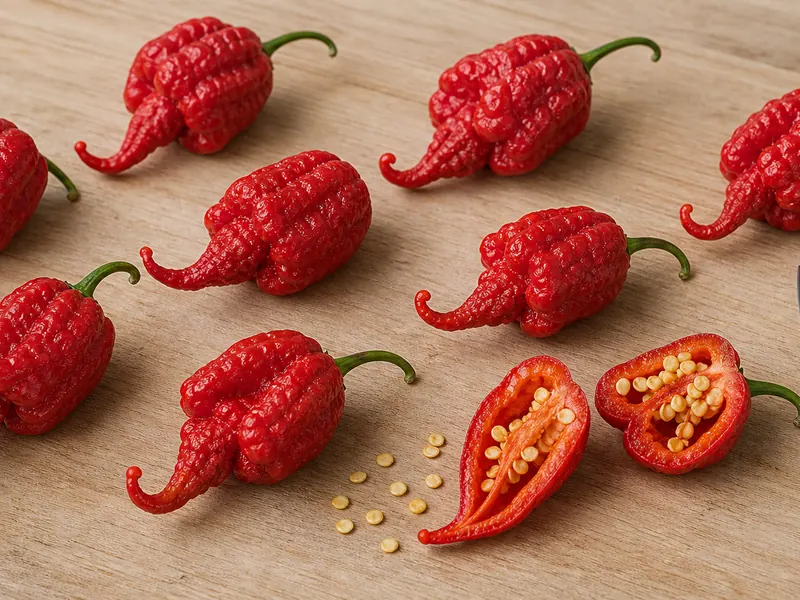
Where Did Trinidad Scorpion Butch T Originate?
Butch Taylor, a Mississippi-based hot sauce maker, developed this variety by selectively breeding Trinidad Scorpion peppers over multiple generations. The name reflects both his own and the pepper's Caribbean origin.
The Guinness certification happened in Australia in 2011, when the Chilli Factory grew and tested a batch that averaged 1,463,700 SHU - dethroning the fiery Bhut jolokia-lineage varieties that had dominated the record books for years.
The record stood until 2013, when the Carolina Reaper claimed the title. But the Butch T's two-year reign cemented Trinidad's reputation as ground zero for super-hot pepper genetics.
The island's warm, humid climate produces intense capsaicin expression that breeders worldwide now actively seek in their programs.
What Does Trinidad Scorpion Butch T Taste Like, and How Hot Is It?
The Trinidad Scorpion Butch T delivers 800K–1.5M Scoville Heat Units, placing it in the Super-Hot tier (1M+ SHU). That makes it roughly 100-585x hotter than a jalapeño, depending on where the jalapeño falls in its 2,500-8,000 SHU range.
Flavor notes: fruity and intense.
How Nutritious Is Trinidad Scorpion Butch T?
Like all the C. chinense pepper family super-hots, the Butch T is nutritionally dense relative to its small serving size. A single pod provides significant vitamin C - often exceeding 100% of daily recommended intake, along with vitamin A, vitamin B6, and potassium.
Capsaicin activates TRPV1 receptors. That receptor response explains why the heat feels intense and prolonged at these concentrations.
Calories per pod are negligible, fewer than 10 in most cases. The real nutritional story is the phytochemical density packed into a very small package.
How Do You Cook With Trinidad Scorpion Butch T?
Cooking with the Butch T means working in very small quantities. A single pod can heat 5-10 liters of sauce, depending on your audience's tolerance.
The fruity top notes are genuinely worth preserving, high-heat cooking destroys volatile aromatics, so adding the pepper late in a sauce or as a fermented mash tends to produce better flavor complexity.
For hot sauce production, fermentation is the preferred method among serious makers. A 2-3% salt brine ferment over 2-4 weeks mellows the sharpest heat edges while amplifying the fruity character.
Compare this approach with mexican dried chile trinity - the Butch T rewards patience in similar ways.
Fresh pod handling requires nitrile gloves minimum. The oils transfer to surfaces easily and are difficult to remove with water alone, capsaicin is oil-soluble, so dish soap or a dairy-based wash works better.
Dried and powdered, the Butch T becomes a shelf-stable heat source. The drying process concentrates both the capsaicin and the fruit flavor.
Understanding fresh vs dried peppers matters here, fresh delivers brightness, dried delivers depth.
Most professional hot sauce makers keep both forms on hand.
How Should You Buy and Store Trinidad Scorpion Butch T?
Fresh Butch T pods are rarely found in retail, specialty pepper vendors and online growers are the primary sources. When buying, look for firm, fully red pods with no soft spots or mold at the stem.
Store fresh pods in the refrigerator in a paper bag for up to 2 weeks. For longer storage, freeze whole pods without blanching, they retain heat and most of their flavor for up to 12 months.
Dried pods and powder keep well in airtight containers away from light and heat. Properly stored powder maintains potency for 1-2 years.
Seeds from reputable vendors like Baker Creek or specialist super-hot seed suppliers are the most reliable way to source this variety for growing.
What Is a Good Substitute for Trinidad Scorpion Butch T?
Compare substitutes for Trinidad Scorpion Butch T by form, flavor, and heat before choosing a ratio. Measured adjustments must account for the dish and the concentration of the replacement.
What Does Trinidad Scorpion Butch T Need to Grow Well?
The hardest part of growing the Trinidad Scorpion Butch T isn't germination, it's the long season. This variety needs 120-150 days from transplant to ripe pod, which means gardeners in USDA zones below 9 are racing against the first frost from the moment seedlings go in the ground.
Start seeds indoors 10-12 weeks before last frost. Soil temperature for germination should hold at 80-85°F - a heat mat is not optional for this species.
Germination typically takes 14-21 days.
The plants grow large, often reaching 3-4 feet in height, and benefit from staking once pods set. Consistent moisture matters more than irrigation volume, drought stress during pod development triggers premature ripening and reduces yield.
Calcium deficiency shows up as blossom end rot on the pods. A foliar calcium spray during flowering helps prevent this.
Compare the cultivation demands here with 7 Pot Primo - both varieties share similar long-season requirements and sensitivity to inconsistent watering.
Pods ripen from green through yellow-orange to deep red. Full red is peak heat and flavor.
The Apollo pepper's development in super-hot breeding shows how growers keep pushing these genetics further, but the Butch T remains a benchmark for anyone serious about growing record-tier varieties.
Trinidad Scorpion Butch T FAQ


- Guinness World Records - Hottest Chili 2011
- Chile Pepper Institute - NMSU Super-Hot Research
- HPLC Capsaicin Testing Methods - Journal of Agricultural and Food Chemistry
- Peppers - UC Small and Organic Farm Advisor, UC ANR
- Baker Creek Heirloom Seeds
-
Sourcing note: heat range is a widely cited figure, not an institutional measurement No university, government or research body publishes a Scoville measurement for this cultivar. The range given here is the figure growers and pepper references cite in common, and it has not been verified by a laboratory.
Species classification: C. chinense - based on published botanical taxonomy.