

KnowThePepper
Dorset Naga: A Productive British Super-Hot From Bangladeshi Naga Stock
The Dorset Naga is a British-bred super-hot clocking between 800,000-1,600,000 SHU - roughly half the heat of a Carolina Reaper on its hottest days. Developed in Dorset, England from Bangladeshi Naga stock, it delivers genuinely fruity heat with that characteristic wrinkled Naga skin.
Serious growers prize it for its productivity and relatively forgiving temperament compared to other peppers in the super-hot pepper range.
- Species: C. chinense
- Heat tier: Super-Hot (1M+ SHU)
- Comparison: 100-640x hotter than a jalapeño, depending on where the jalapeño falls in its 2,500-8,000 SHU range
What Kind of Pepper Is Dorset Naga?
The Dorset Naga was developed in the early 2000s by Joy and Michael Michaud at Sea Spring Seeds in Dorset, England, this C. chinense cultivar was selectively bred from Bangladeshi Naga Morich stock over multiple generations, a process that pushed heat and yield simultaneously.
At 900,000 to 1,500,000 SHU, it sits comfortably among the most intense peppers in the world. To put that in perspective, it reaches roughly half the upper range of a record-setting Carolina Reaper on a good growing season.
The heat comes fast and spreads across the entire mouth, with a distinctive fruity quality underneath that sets Naga-type peppers apart from purely hot varieties.
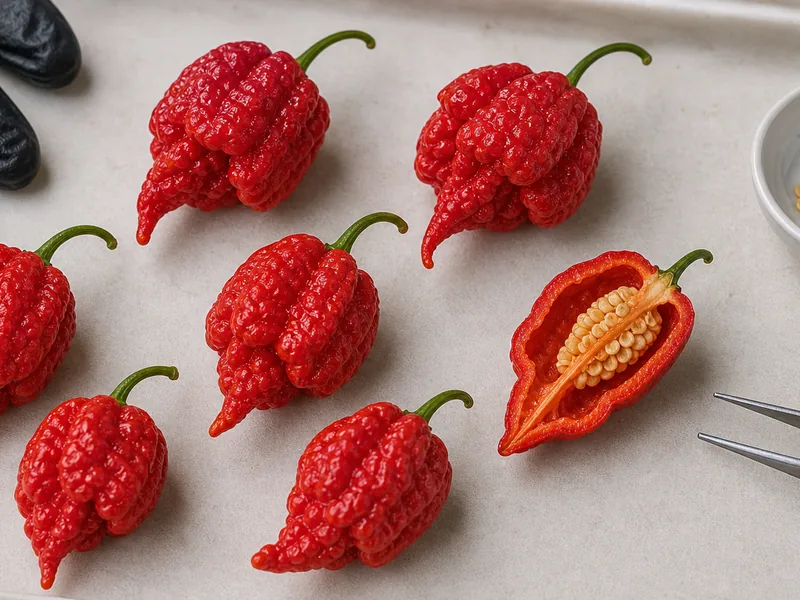
The pods themselves are small, wrinkled, and irregular, nothing like the smooth supermarket bell pepper. Colors shift from green through yellow to a deep red at full ripeness.
That characteristic Naga texture isn't cosmetic.
The wrinkled skin is denser and contributes to the pepper's concentrated flavor profile.
For growers, the Dorset Naga punches above its weight in productivity. Plants can carry heavy pod loads under the right conditions, making it one of the more rewarding super-hots to cultivate.
It belongs to the broader the broader C. chinense group, which includes most of the world's hottest peppers.
What Is the History of Dorset Naga?
The Dorset Naga's story begins not in South Asia but in a market stall in Bournemouth, England, where Joy Michaud purchased a Bangladeshi Naga Morich plant in the early 2000s. She and her husband Michael, experienced horticulturalists at Sea Spring Seeds, recognized something exceptional in that plant's combination of heat and fruit.
Over several growing seasons, they selected seeds from the hottest, most productive pods, classic selective breeding applied to a super-hot. By 2005, the result was formally named the Dorset Naga and entered commercial seed production.
In 2006, independent testing placed it briefly at the top of the Scoville scale, making it the world's hottest pepper at the time. That record has since been surpassed by varieties like the intensely hot Trinidad Moruga Scorpion and others, but the Dorset Naga remains a landmark cultivar in British pepper history and a fixture among the British pepper growing tradition.
How Spicy Is Dorset Naga, and How Does It Taste?
The Dorset Naga delivers 800K–1.6M Scoville Heat Units, placing it in the Super-Hot tier (1M+ SHU). That makes it roughly 100-640x hotter than a jalapeño, depending on where the jalapeño falls in its 2,500-8,000 SHU range.
Flavor notes: fruity and intense.
What's in Dorset Naga? Nutrition Facts
Like most C. chinense super-hots, the Dorset Naga is nutritionally dense relative to its tiny serving size. Capsaicin - the compound responsible for its receptor-level burn mechanism - has been studied for anti-inflammatory and metabolic effects, though realistic serving sizes limit practical intake.
Fresh pods are high in vitamin C, often exceeding bell peppers by weight.
They also contain vitamin A precursors, potassium, and small amounts of B vitamins. The documented health benefits of pepper consumption generally apply here, concentrated into a form most people use in very small quantities.
What Is Dorset Naga Best Used For?
Naga Jolokia curry is where the Dorset Naga shows its best side, the fruity undertones actually contribute something beyond pure punishment when balanced against coconut milk, turmeric, and slow-cooked protein. A single pod, deseeded, can season a pot for six people.
Hot sauce makers prize it for that same reason. The fruity intensity survives fermentation and vinegar-based processing better than many super-hots, which can taste flat once bottled.
A small batch Dorset Naga mash, just peppers, salt, and time, becomes a sauce base that outperforms most commercial products.
Handling protocol matters. Nitrile gloves are non-negotiable, and cutting boards need a thorough soap wash before anything else touches them.
The capsaicin load here is serious.
Touching your face mid-prep is a mistake you make exactly once.
Dried and powdered, it works in dry rubs for smoked meats where you want heat that builds slowly rather than hits immediately. Compare this approach to how cooks use Trinidad Scorpion Butch T - the Dorset Naga's fruit character opens it to more uses across both cooking stages.
Start with a quarter of what you think you need. Seriously.
How Do You Buy and Store Dorset Naga?
Fresh Dorset Naga pods are rarely found in standard supermarkets, specialty grocers, farmers markets, and online hot pepper retailers are the realistic sources. Sea Spring Seeds in Dorset sells both seeds and occasionally fresh pods directly.
Store fresh pods in the refrigerator in a paper bag for up to two weeks. For longer storage, freeze whole pods without blanching, they retain heat and flavor well.
Dried pods keep for 12 months in an airtight container away from light.
Powder made from dried pods should be used within 6 months before the fruity aromatics fade significantly.
What Can Replace Dorset Naga in a Recipe?
Compare substitutes for Dorset Naga by form, flavor, and heat before choosing a ratio. Measured adjustments must account for the dish and the concentration of the replacement.
Direct comparisons show where flavor, form, and preparation differ in the Dorset Naga vs Naga Morich and Dorset Naga vs Naga Viper matchups.
How Do You Grow Dorset Naga at Home?
The Dorset Naga rewards growers who treat it like the tropical plant it fundamentally is. Start seeds 10-12 weeks before your last frost date - this variety needs a long season to hit its full heat and pod count.
Germination is the first test. Soil temperature should stay between 28-32°C (82-90°F) for reliable sprouting.
A heat mat under a propagation tray is the practical solution for most climates.
Expect germination in 14-21 days. Slower than some varieties, but consistent.
Once seedlings show their second true leaf set, move them to individual pots.
The Dorset Naga develops a substantial root system, undersized containers restrict growth and reduce yield noticeably. Final container size of at least 5 gallons is the working minimum for outdoor growing.
In the UK, where this pepper originates, polytunnel or greenhouse cultivation is essentially required for a productive season.
In USDA zones 9-11, outdoor growing works well. The plant needs 6+ hours of direct sun and consistent moisture without waterlogging.
Feed with a balanced fertilizer through vegetative growth, then shift to a lower-nitrogen, higher-phosphorus formula once flowering begins. Overfeeding nitrogen at this stage produces lush foliage but suppresses pod set.
For pest management, consult a pepper pests and diseases before aphid or spider mite populations establish, prevention is far easier than control on a loaded plant. The Dorset Naga's growing habits share some similarities with Naga Morich, so growers familiar with that variety will find much that transfers.
Dorset Naga FAQ


- Dorset Naga - Sea Spring Seeds
- Sea Spring Seeds
- Capsicum chinense Jacq. - USDA GRIN Taxonomy
- Guinness World Records
-
Sourcing note: heat range is a widely cited figure, not an institutional measurement No university, government or research body publishes a Scoville measurement for this cultivar. The range given here is the figure growers and pepper references cite in common, and it has not been verified by a laboratory.
Species classification: C. chinense - based on published botanical taxonomy.