
British Peppers: Seven UK-Bred Superhots Explained
Britain's growing pepper scene has produced super-hot cultivars and a competitive chili culture. Greenhouse growing extends the season in cooler climates.

Notable Varieties
All British Peppers
Every variety in this collection, sorted by maximum Scoville heat rating. Click any card for the full profile with flavor notes, anatomy details, growing tips, and substitutes.
 Super-Hot
Dragon's Breath
 Super-Hot
Komodo Dragon Pepper
 Super-Hot
Dorset Naga
 Super-Hot
7 Pot Katie
 Super-Hot
Naga Viper
 Super-Hot
Bedfordshire Super Naga
 Super-Hot
Infinity Chili
Species Breakdown
The United Kingdom peppers span multiple Capsicum species. Each species has distinct characteristics, which the profiles below explain in detail.
What Makes This Pepper Collection British
This page groups seven peppers bred in England or the wider United Kingdom: Dragon’s Breath, Komodo Dragon, Dorset Naga, 7 Pot Katie, Naga Viper, Bedfordshire Super Naga, and Infinity Chili. It does not include every imported chile popular in British kitchens, because popularity in Britain and British breeding origin answer different questions.
All seven profiles are currently classified in the database as Capsicum chinense, the species branch associated with many aromatic, slow-maturing hot peppers. Open the profile card for the named breeder, lineage, heat evidence, and identity notes rather than assuming that every bumpy red pod is one of these cultivars.
Why Record-Era History Needs Careful Reading
Britain’s place in superhot history came through a sequence of breeder claims, laboratory results, and record announcements, not a permanent national title. Guinness World Records documented the Naga Viper as a former record holder, while the Infinity Chili profile preserves its own 2011 record-era measurement and breeder context.
The useful question is therefore not “which British pepper is the world’s hottest now?” Record organizations change leaders when a new verified result is accepted, so use the date, testing method, and named organization attached to a number before comparing it with a newer record.
The Seven Profiles Do Not Form One Lineage
Dorset Naga, Naga Viper, and Bedfordshire Super Naga share naga language in their names, but those names do not prove identical parentage. Infinity Chili, Komodo Dragon, Dragon’s Breath, and 7 Pot Katie need their own breeder and evidence trail.
Published maximums on this collection run from about 1.07 million to 2.5 million SHU, but a listed maximum is not a promise for every pod. Growing conditions, sample selection, and laboratory method affect measurements, and a pepper with a higher reported ceiling is not automatically the better ingredient.
| Profile | Published range | Identity cue |
|---|---|---|
| Dragon’s Breath | 2,480,000 to 2,500,000 SHU | Highest listed ceiling in this collection |
| Komodo Dragon | 1,400,000 to 2,200,000 SHU | England-bred named profile |
| Dorset Naga | 800,000 to 1,600,000 SHU | Dorset breeding history |
| 7 Pot Katie | 1,500,000 to 1,590,000 SHU | Separate 7 Pot-named line |
| Naga Viper | 900,000 to 1,382,118 SHU | Former Guinness record context |
| Bedfordshire Super Naga | 900,000 to 1,120,000 SHU | Bedfordshire-named profile |
| Infinity Chili | 1,067,286 SHU | 2011 record-era profile |
Protected Growing Is Part of the UK Decision
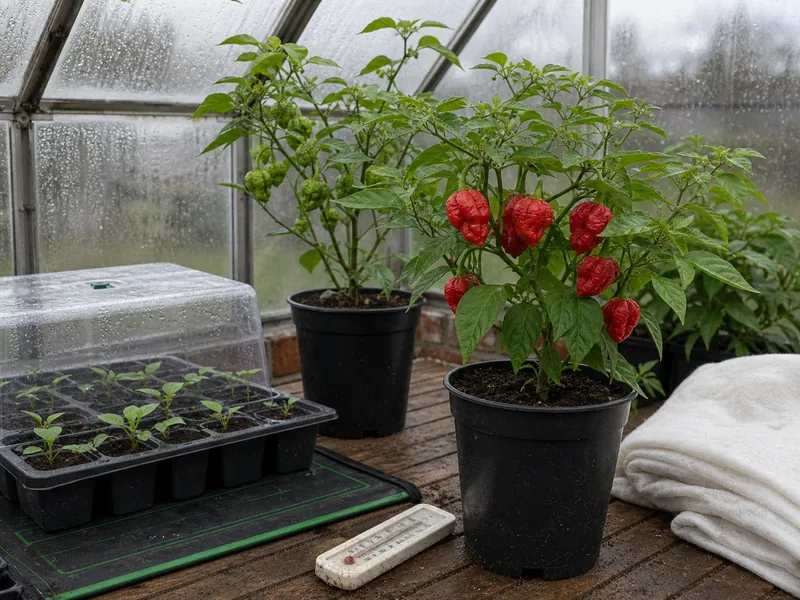
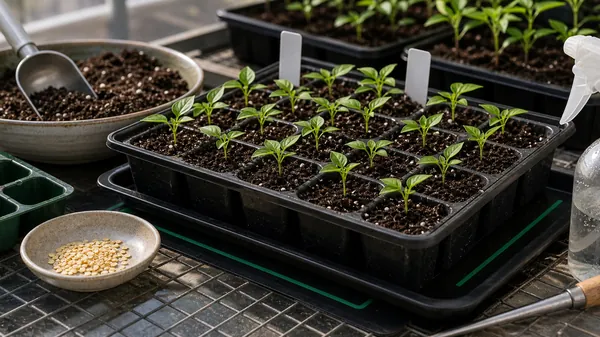
The Royal Horticultural Society advises sowing chillies indoors from late winter to mid-spring because they need a long growing season. RHS guidance also says peppers crop best in a greenhouse, polytunnel, conservatory, or coldframe, which is especially relevant for slow C. chinense superhots.
Start only as early as you can provide both warmth and strong light, then move one healthy plant into an adequately sized pot instead of crowding several roots together. The RHS warns that overcrowding raises humidity and fruit-rot risk, while an unheated greenhouse extends the season without guaranteeing enough warmth for every late cultivar.
| Stage | Decision | Why it matters |
|---|---|---|
| Late winter to mid-spring | Sow indoors with warmth and strong light | Superhots need a long season |
| Potting on | Give each plant root room and airflow | Crowding increases humidity and rot risk |
| Main season | Use a greenhouse, polytunnel, conservatory, or coldframe | Protection extends usable warmth |
| Late season | Watch forecast and pod maturity | Cold weather can stop ripening |
Choose by Provenance Before Pod Appearance
Wrinkled red superhot pods overlap heavily in shape, so a photograph alone cannot authenticate seed or fruit. Buy from a seller who names the cultivar and breeder line, keeps seed lots separate, and explains whether seed came from isolated plants or open pollination.
Treat vague labels such as “British superhot” or “record chilli” as incomplete. If exact identity affects a comparison or a growing project, keep the packet, record the source, and compare the mature plant and pods with the individual profile without turning appearance into proof.
Before buying British superhot seed
- Confirm the exact cultivar name and breeder line.
- Ask whether parent plants were isolated.
- Keep the packet and seller record.
- Do not accept a red wrinkled pod photo as proof of identity.
Use Tiny Measured Amounts and Protect Skin
These seven peppers sit far beyond ordinary cooking chiles in the published database, so they are poor one-for-one substitutes for jalapeño, cayenne, or Scotch bonnet. Add a very small measured portion to a large batch, keep it away from children and pets, and label any sauce or frozen portion clearly.
The RHS specifically recommends gloves when cutting very hot chillies because irritating juice persists on skin. Avoid touching eyes, ventilate the work area, wash tools separately, and never use a casual taste test to identify an unknown superhot pod.
Heat Level Distribution
How british peppers distribute across the Scoville scale. Click any tier to browse all peppers at that heat level.
Heat Range Comparison
Visual breakdown of where each variety falls on the Scoville scale. Wider bars show a larger documented SHU spread between individual pods.
The causes of pepper heat variation explain why pods from one cultivar do not always measure alike.
Related Comparisons
Side-by-side breakdowns of heat, flavor, and cooking uses. Each comparison covers Scoville ratings, pod anatomy, and substitution options.
 2.5M SHU
vs
2.7M SHU
2.5M SHU
vs
2.7M SHU
Dragon's Breath vs Pepper X: Claim vs Record
Pepper X is the documented winner because Guinness records its 2,693,000 SHU average. Dragon's Breath is tied to an unofficial 2.48… 2.5M SHU vs 2.2M SHUDragon's Breath vs Carolina Reaper: Evidence and Heat
Choose Carolina Reaper for a documented heat benchmark and a repeatable cooking product. Dragon's Breath carries a higher… 1.6M SHU
vs
1.5M SHU
1.6M SHU
vs
1.5M SHU
Dorset Naga vs Naga Morich: Selection or Original
Naga Morich is the original South Asian Naga-style pepper. Dorset Naga is a UK-selected line from that family, better for growers who… 1.6M SHU
vs
1.4M SHU
1.6M SHU
vs
1.4M SHU
Dorset Naga vs Naga Viper: Stable Naga or Hybrid
Dorset Naga is the better choice when you want a more stable Naga-style superhot with fruity heat and seed-saving value. Naga Viper is…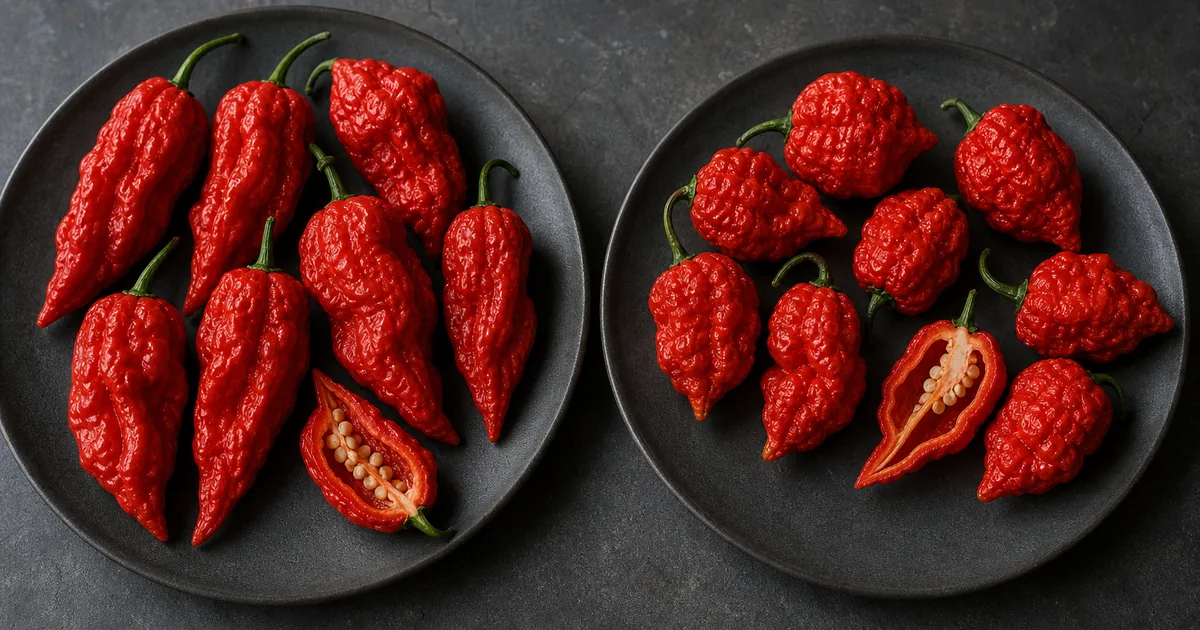 1M SHU
vs
1.4M SHU
1M SHU
vs
1.4M SHU
Ghost vs Naga Viper: Heat Evidence and Sauce Choice
Ghost Pepper is the better-documented and easier-to-source superhot for repeatable sauce. Naga Viper has a higher historical result…Browse all comparisons in our comparison hub, or use the pepper tools for calculators and finders.
Related Guides
Reference guides and recipes tied to the same pepper family, region, or use-case.


Explore Other Origins
Peppers evolved in the Americas and spread worldwide through the Columbian Exchange. Each region developed distinct varieties shaped by local cuisine and climate.
Frequently Asked Questions
Keep Reading
Jump into the wider database, heat tiers, comparisons, and substitute references without another card wall.