
Spanish Peppers for Frying, Roasting, Drying, and Paprika
Spanish peppers range from smoky pimentón de la Vera to mild Padrón peppers. Spain's regional varieties shape tapas, paella, and chorizo traditions.

All Spanish Peppers
Every variety in this collection, sorted by maximum Scoville heat rating. Click any card for the full profile with flavor notes, anatomy details, growing tips, and substitutes.
 Medium
Padrón Pepper
 Medium
Guindilla Pepper
 Medium
Smoked Paprika (Pimentón)
 Medium
Piquillo Pepper
 Medium
Ñora Pepper
 Mild
Mild
Pimento Pepper
 Mild
Mild
Ramiro Pepper
 Mild
Mild
Choricero Pepper
Species Breakdown
Spain peppers span multiple Capsicum species. Each species has distinct characteristics, which the profiles below explain in detail.
Eight Profiles Divide Into Four Preparation Paths
This collection displays eight Spanish pepper profiles: Padrón, Guindilla, Smoked Paprika or Pimentón, Piquillo, Ñora, Pimento, Ramiro, and Choricero. Every entry is filed under Capsicum annuum, with published ranges from 0 to 2,500 SHU.
The useful map is preparation rather than one national flavor. Padrón leads the quick-fry lane, Piquillo and Ramiro support roasting, Ñora and Choricero supply rehydrated flesh, Guindilla often enters fresh or preserved decisions, and pimentón is already a ground spice.
Padrón needs fast blistering and a warning about variable heat.
Piquillo, Ramiro, and Pimento divide by shape and sold form.
Round Ñora and long Choricero provide dried pepper flesh.
Pimentón requires a smoke, heat, origin, and label check.
Padrón Is the Fast Whole-Pod Frying Choice
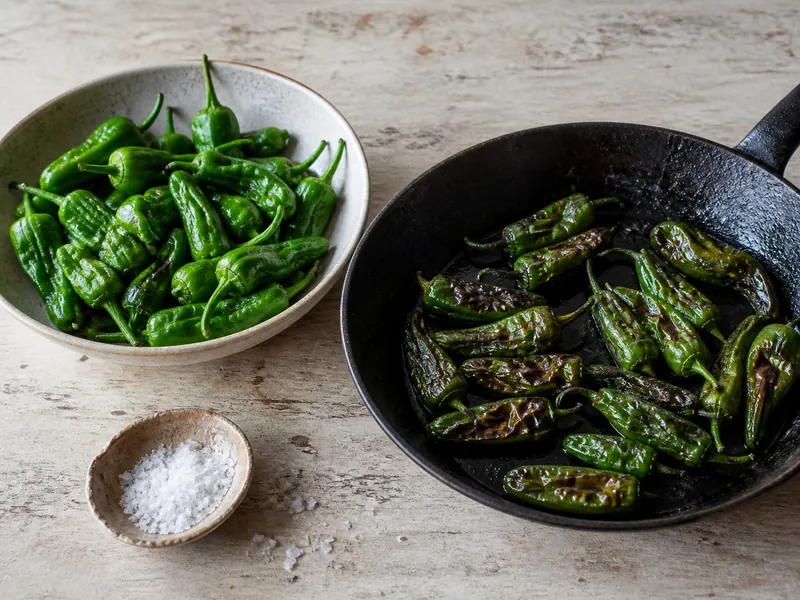
Padrón Pepper is the hottest profile displayed here at 500 to 2,500 SHU, though individual pods can vary. Its small size and thin wall support quick whole-pod frying until the skin blisters and the flesh softens.
Dry the surface before the pod meets oil because water encourages splatter and slows browning. Cook in a single layer, turn for scattered dark spots, and serve while the pepper remains tender rather than leaving it in the pan until the whole skin blackens.
The stem can act as a handle, but the pepper should still be checked for splits or trapped water. Heat-sensitive diners need a warning that a plate may not taste uniform even when the peppers look alike.
Piquillo, Ramiro, and Pimento Serve Sweet-Pepper Jobs
Piquillo sits at 500 to 1,000 SHU and is commonly encountered roasted and peeled, sometimes packed in a jar or tin. Its triangular red form and preserved texture make the container ingredients, drained weight, and intact pieces part of the purchase decision.
Ramiro Pepper occupies the 0 to 500 SHU lane and provides a long sweet-pod choice for roasting into strips. Pimento Pepper covers 100 to 500 SHU with a rounder sweet-pepper shape, so the two should not be chosen by color alone.
Fresh Ramiro needs firmness and sound skin, while preserved piquillo needs an intact seal and a label that identifies liquid, salt, and any acid. Drain before judging final seasoning because packing liquid changes both moisture and salinity.
Ñora and Choricero Need Rehydration, Then Scraping
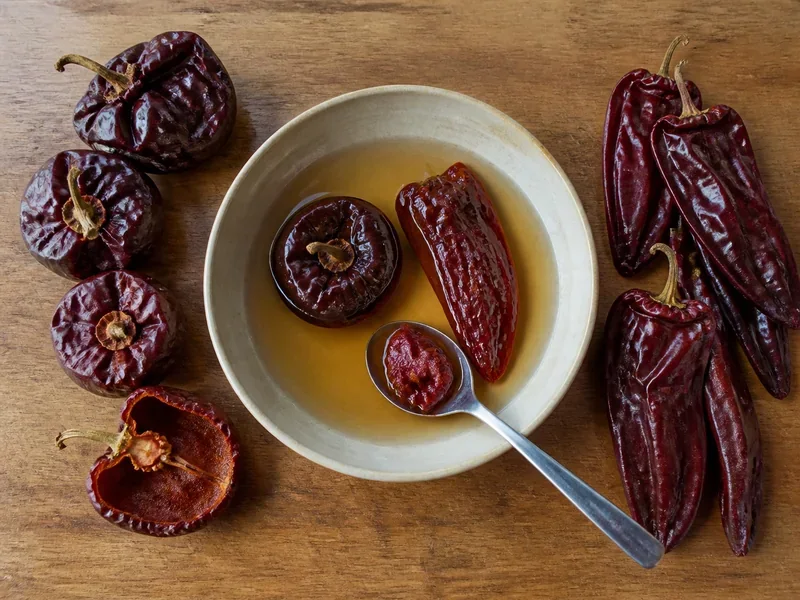
Ñora Pepper is the round dried-pod lane at 500 to 1,000 SHU. Choricero Pepper is longer and narrower at 175 to 300 SHU, so shape remains the first visible cue before soaking.
Remove the stem and loose seeds, cover the pod with warm water, and wait until the wall becomes flexible. Split it open and scrape the softened flesh from the skin, then add that pulp to the dish rather than blending a tough dry skin into the sauce.
The in-post image shows round Ñora and long Choricero before and after soaking. The spoon of scraped flesh demonstrates the shared process while the intact pods preserve the shape difference needed for identification.
| Profile | Visible shape | Published heat | Preparation |
|---|---|---|---|
| Ñora | Round | 500 to 1,000 SHU | Soak, split, and scrape |
| Choricero | Long | 175 to 300 SHU | Soak, split, and scrape |
Guindilla Requires a Fresh-or-Preserved Check
Guindilla Pepper spans 1,000 to 2,000 SHU in this inventory. The name may appear on fresh slender peppers or preserved peppers, so a recipe calling for one form does not automatically authorize the other.
A pickled product contributes acid, salt, and a softer texture that a fresh pod lacks. Taste the packing liquid separately, drain or rinse only when the recipe permits it, and reduce other salt before adding more.
Fresh guindilla can supply crispness and direct green-chile flavor, while a preserved pepper is ready for a garnish or acidic bite. Choose by the job in the dish rather than treating preservation as a storage detail.
Pimentón Is Chosen by Label, Smoke, and Heat Style
Smoked Paprika or Pimentón occupies the ground-spice lane at 250 to 1,000 SHU on this site. A named Spanish product can also carry sweet, bittersweet, or hot wording, so the exact package description matters more than the generic English word paprika.
Protected geographical names have formal product specifications. The European Commission eAmbrosia register is the authority for whether a label qualifies for a protected name, while a smoky aroma by itself cannot prove a region or production method.
Ground pimentón disperses immediately and can scorch when left in very hot dry fat. Stir it into a moist base or lower the heat before adding it, then keep the container airtight and away from light so color and aroma fade more slowly.
Padrón and Piquillo Are Not a Direct Swap
Padrón is a small whole frying pepper with variable heat, while Piquillo is a triangular red pepper commonly selected roasted and peeled. Their published ranges overlap, but wall, preservation, moisture, and serving format create different results.
If a substitute is unavoidable, match the required physical role first. A small fresh frying pepper should blister whole, while a roasted preserved substitute must provide a broad tender piece that can be filled, layered, or sliced.
This same rule prevents dried Ñora, Choricero pulp, and pimentón powder from being exchanged at equal volume. Whole pod, scraped pulp, and powder distribute flavor through a dish at different rates and concentrations.
Buy the Exact Form and Preserve Its Identity
Fresh peppers should be firm and free of wet soft spots, following general handling guidance from University of Minnesota Extension. Dried Ñora and Choricero should be dry without mold or musty odor, while jars and tins need sound seals and readable ingredient lists.
Record the complete product or cultivar name when a recipe or growing note depends on identity. Words such as Spanish pepper, paprika, or guindilla describe a broad lane and cannot replace the full label.
Store dried pods and powder airtight, cool, dark, and dry. Refrigerate fresh peppers, follow the opened-container instructions on preserved products, and discard any jar that leaks, bulges, or releases an abnormal odor.
Check the form before checkout
- Fresh pod is firm and correctly named.
- Dried pod is clean, dry, and free of mold.
- Jar or tin has an intact seal and readable ingredients.
- Powder names smoke, heat style, origin, and best-by date.
Heat Level Distribution
How spanish peppers distribute across the Scoville scale. Click any tier to browse all peppers at that heat level.
Heat Range Comparison
Visual breakdown of where each variety falls on the Scoville scale. Wider bars show a larger documented SHU spread between individual pods.
The causes of pepper heat variation explain why pods from one cultivar do not always measure alike.
Related Comparisons
Side-by-side breakdowns of heat, flavor, and cooking uses. Each comparison covers Scoville ratings, pod anatomy, and substitution options.
 2.5K SHU
vs
200 SHU
2.5K SHU
vs
200 SHU
Padron vs Shishito: Two Blistering Tapas Peppers
Padrón and shishito peppers occupy the same cooking niche, small, blister-friendly, mostly mild, yet they come from opposite ends of… 500 SHU
vs
1K SHU
500 SHU
vs
1K SHU
Pimento vs Piquillo: Sweet Jar or Roasted Strip?
Choose pimento for mild sweetness in cheese spreads, olive stuffing, relishes, and recipes that need diced red pepper to disappear… 650 SHU
vs
1K SHU
650 SHU
vs
1K SHU
Peppadew vs Piquillo: Brined or Roasted?
Peppadew is the sweet-brined, crisp choice for cold stuffed bites and tangy accents. Piquillo is the flame-roasted, soft choice for… 300 SHU
vs
1K SHU
300 SHU
vs
1K SHU
Choricero vs Nora: Sweet Spanish Dried Peppers
Both the choricero and the ñora are dried Spanish peppers with zero measurable heat, but they play distinctly different roles in the…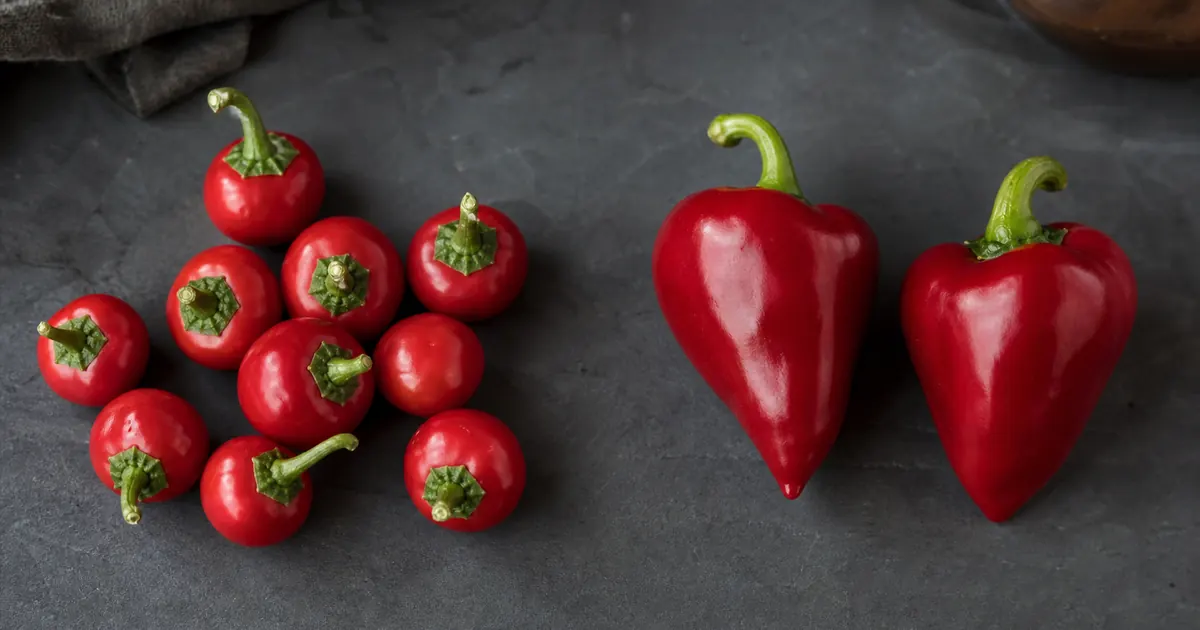 500 SHU
vs
500 SHU
500 SHU
vs
500 SHU
Cherry Pepper vs Pimento: Which One Fits the Recipe?
Cherry pepper is the better whole, pickled, or stuffed bite, while pimento is the better soft red pepper for cheese spreads, olives…Browse all comparisons in our comparison hub, or use the pepper tools for calculators and finders.
Related Guides
Reference guides and recipes tied to the same pepper family, region, or use-case.


Explore Other Origins
Peppers evolved in the Americas and spread worldwide through the Columbian Exchange. Each region developed distinct varieties shaped by local cuisine and climate.
Frequently Asked Questions
Keep Reading
Jump into the wider database, heat tiers, comparisons, and substitute references without another card wall.