
Cherry Pepper vs Pimento: The Jar Matters More Than Heat
Cherry pepper is the better whole, pickled, or stuffed bite, while pimento is the better soft red pepper for cheese spreads, olives, and roasted mixtures. Check the exact cultivar or jar because cherry peppers can be sweet or hot.

- Name signal: Small round cherry form vs Sweet pimento type, often heart-shaped or flattened
- Typical jar form: Whole, stuffed, sliced, or ringed vs Diced, stripped, or roasted
- Heat caution: Sweet and hot cultivars exist vs Named market types are usually sweet
- Texture job: Stays visible or holds filling vs Softens and distributes through a mixture
- Best-known uses: Antipasto and stuffed peppers vs Pimento cheese and olive stuffing
Cherry Pepper
MildPimento Pepper
MildQuick Comparison
| Attribute | Cherry Pepper | Pimento Pepper |
|---|---|---|
| Name signal | Small round cherry form | Sweet pimento type, often heart-shaped or flattened |
| Typical jar form | Whole, stuffed, sliced, or ringed | Diced, stripped, or roasted |
| Heat caution | Sweet and hot cultivars exist | Named market types are usually sweet |
| Texture job | Stays visible or holds filling | Softens and distributes through a mixture |
| Best-known uses | Antipasto and stuffed peppers | Pimento cheese and olive stuffing |
Is a Cherry Pepper the Same as a Pimento?
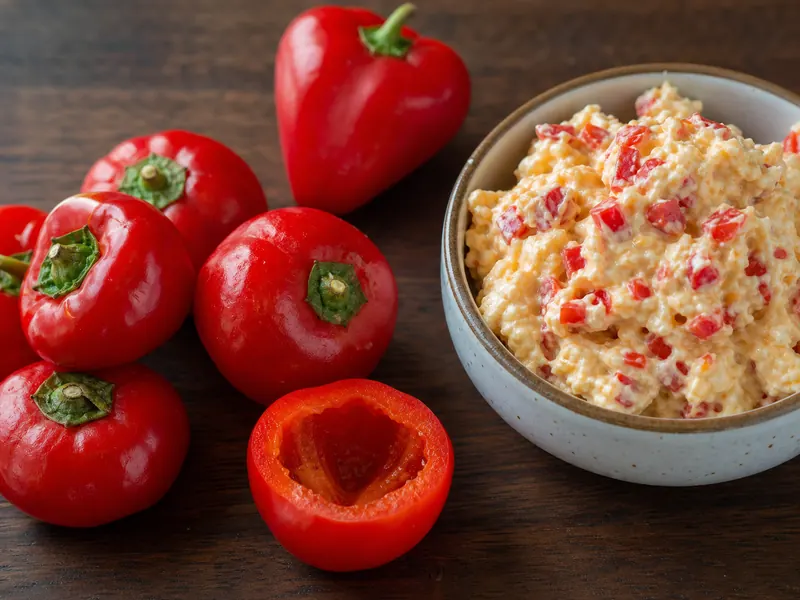
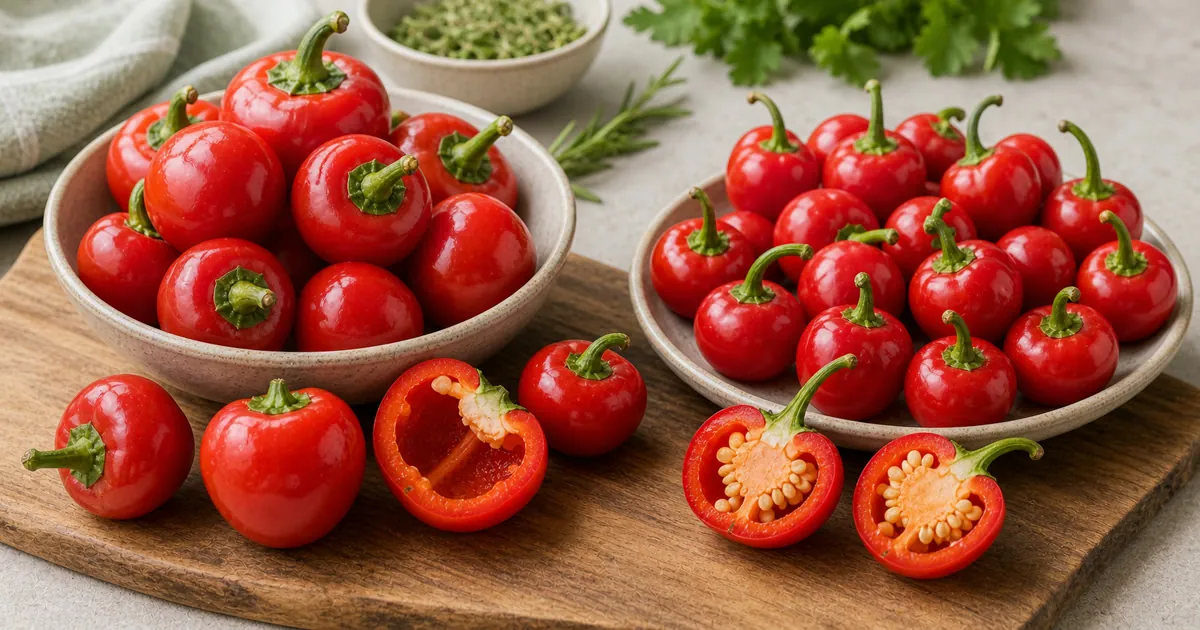
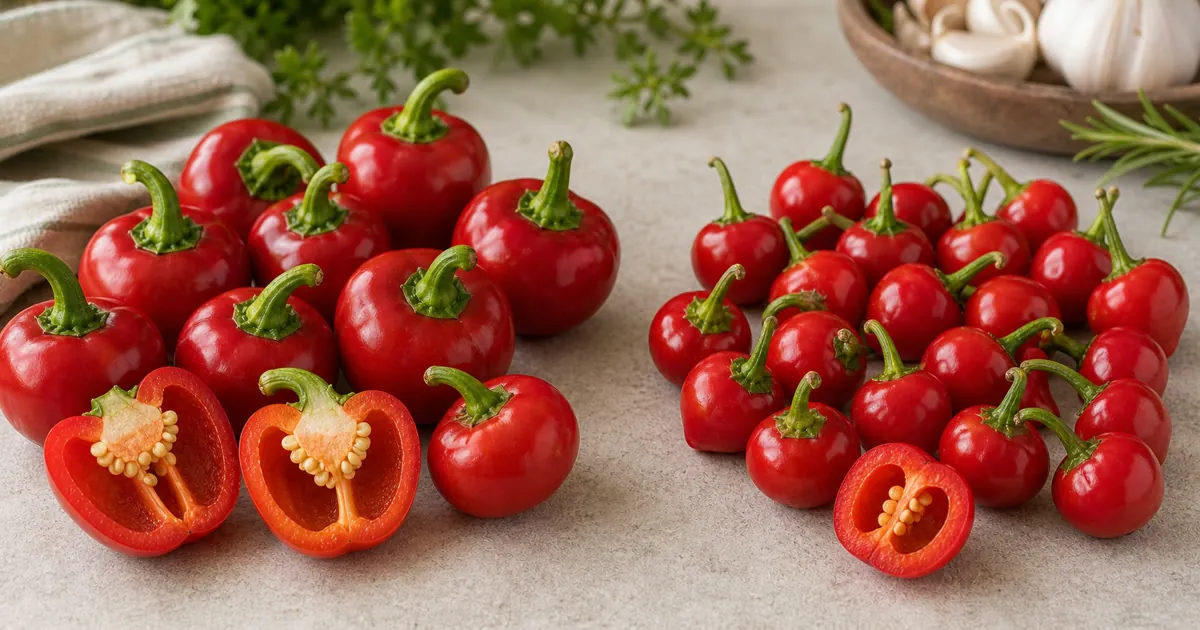
Cherry pepper and pimento are not dependable one-to-one names. Both describe Capsicum annuum peppers, but cherry usually points to a small round form while pimento or pimiento usually points to a sweet, thick-fleshed type that may be heart-shaped, flattened, or round.
Cornell Cooperative Extension catalogs the groups separately and also shows why the boundary can blur. Its Pimento entry is a 3 1/2-inch, round, smooth, heart-shaped pepper, while Tangerine Pimiento is round to slightly flattened and Topepo is a round pimento type.
The cherry category varies too. Cornell lists Super Sweet Cherry as a sweet 1 3/4-inch fruit, yet its catalog also includes hot cherry types such as Cherry Bomb and Baby Pepper Chilli.
That overlap explains conflicting labels in stores and seed catalogs. A round red pod can belong to a sweet cherry line, a hot cherry line, or a pimento-type cultivar, so the common name alone does not settle flavor, heat, or texture.
For a recipe, the purchased product is more useful than a taxonomic argument. Whole pickled cherry peppers and drained diced pimentos behave differently even when both peppers are red, thick-walled, and mild.
Start with the preparation named by the recipe. Whole, stuffed, rings, diced, roasted, sweet, and hot each reveal more than the broad name on the front of the jar.
Shape And Texture
Shape matters because it controls how much pepper wall reaches each bite. A small round cherry pepper creates a compact cavity and a high wall-to-filling ratio, while a larger pimento provides broad pieces that soften readily after roasting or canning.
Cornell gives useful cultivar anchors rather than pretending that every fruit is identical. Super Sweet Cherry reaches about 1 3/4 inches, its standard Pimento entry reaches 3 1/2 inches, and Pimiento L bears thick-walled 3-inch, heart-shaped fruit.
Those measurements predict cooking behavior. The smaller cherry form can remain recognizable as a stuffed bite, a pickled ring, or an antipasto piece, while pimento flesh can be chopped finely enough to distribute through cheese, sauces, rice, or fillings.
Wall thickness is not exclusive to either name. Cornell describes medium- to thick-walled sweet cherry cultivars and several thick-walled pimento cultivars, so you still need to inspect the exact pepper rather than treating one label as crisp and the other as soft by nature.
Processing creates much of the texture people associate with the jars. Vinegar firms the identity of a pickled cherry pepper through acid and brine, while roasting and canning make pimento flesh pliable and easy to dice.
The practical distinction is therefore physical and commercial. Choose the shape and pack that can perform the recipe's job.
Is a Cherry Pepper Hotter Than a Pimento?
Pimento is usually the safer choice when a dish needs sweet red pepper flavor with little heat. Cornell classifies its named Pimento, Pimiento L, Super Red Pimento, and Round of Hungary entries as sweet types.
Cherry pepper does not promise the same heat from one product to the next. Cornell's catalog includes sweet cherry cultivars and explicitly hot cherry cultivars, which makes a universal cherry-versus-pimento Scoville ratio misleading.
The current profiles place mild cherry pepper and pimento in the same 100 to 500 SHU reference band. Treat that overlap as a description of the mild products, not as permission to ignore a jar marked hot.
Heat also changes with the cultivar and processed product. A hot cherry jar can carry a noticeable capsaicin bite, while a sweet cherry jar may function much closer to pimento in a chopped filling.
Pimento's cooking value comes from sweet flesh, deep red color, and a shape suited to roasting or processing. Cornell specifically describes Tangerine Pimiento for fresh eating or roasting, and its pimento listings repeatedly identify thick walls and sweet flavor.
Cherry peppers often bring a brighter contrast because they are sold in vinegar. That acid can be more important than heat in a sandwich, antipasto plate, relish, or cheese filling.
Taste the packing liquid before substituting a jarred product. If it is sharp, garlicky, sweetened, or hot, those seasonings enter the dish along with the pepper.
Culinary Uses
Use whole cherry peppers when the pepper itself should be a serving unit. Their small round cavity suits cheese, tuna, breadcrumbs, chopped meat, or other compact fillings that can be eaten with the surrounding wall.
Use sliced or quartered pickled cherry peppers when a dish needs visible sweet-acid bites. Antipasto, sandwiches, pizza, salads, and pan sauces can use both the pepper and a controlled amount of its brine.
Use pimento when red pepper should become part of a mixture rather than hold it. Furman University's pimento cheese recipe combines 4 ounces of diced pimentos with 1 pound of sharp cheddar, showing the familiar drained, chopped role.
Princeton Campus Dining uses equal weights of jarred pimentos and sharp cheddar in another version, which proves there is no single mandatory ratio. Both named recipes drain and chop the pimentos before folding them into the cheese mixture.
Roasting also favors a fleshy pimento cultivar. Cornell describes Tangerine Pimiento for roasting and Super Red Pimento as extra thick-walled, traits that supply soft red flesh without depending on a pickling brine.
Pimento strips fit green olives because they bend into a narrow cavity. A whole cherry pepper solves the opposite problem by becoming the cavity itself.
The same distinction applies to sauces. Chopped pimento can melt into a smooth or chunky base, while a pickled cherry pepper keeps a clearer vinegar note and a firmer visible bite.
When the dish needs both, use them deliberately. Pimento can sweeten a cheese filling while a whole cherry pepper carries that filling, and neither ingredient has to imitate the other.
Match the pepper to the physical task
- Whole stuffed bite: choose a round cherry pepper with an intact cavity.
- Pickled rings: choose a firm cherry product that keeps a visible edge.
- Cheese spread: choose drained diced pimento for soft red pieces.
- Olive center: choose flexible pimento strips.
- Roasted mixture: choose a fleshy sweet pimento cultivar or another specified roasted pepper.
Which Should You Buy, Cherry Pepper or Pimento?
Buy cherry peppers for whole stuffing, pickled rings, antipasto, sandwiches, and distinct pepper bites. Confirm whether the label says sweet or hot because cherry describes a form more reliably than one heat level.
Buy pimentos for pimento cheese, olive stuffing, roasted red pepper mixtures, rice, sauces, and soft fillings. Diced, drained pimentos are usually the most direct match when a recipe names the ingredient.
Fresh peppers require a different choice from jarred peppers. A fresh sweet cherry cultivar can be close to a small pimento type, while a hot pickled cherry product can introduce both capsaicin and vinegar.
If the recipe expects a whole edible cup, pimento pieces cannot reproduce the structure. If the recipe expects soft red dice throughout a spread, a whole cherry pepper adds unnecessary cutting and may add brine.
The answer is short once the product is visible. Choose cherry for a pepper that stays a bite and pimento for pepper that joins the mixture.
Audit the jar before it reaches the bowl
- Whole or stuffed: preserves the cherry pepper as a serving piece.
- Sliced or rings: distributes pepper and brine across many bites.
- Diced and drained: fits pimento cheese and other mixtures with controlled moisture.
- Roasted: signals soft flesh and may carry less acid than a pickle.
- Hot: requires tasting before the full amount goes into a mild dish.
Substitution
Cherry pepper can replace pimento when the pepper will be chopped into a spread, sauce, rice dish, or filling. Choose a sweet product, drain it well, and cut it to the same size the recipe expects.
Taste before adding the recipe's other acid. Pickled cherry peppers may already carry enough vinegar to make lemon juice, pickle brine, or hot sauce excessive.
For pimento cheese, start with the recipe's stated drained amount rather than a universal pepper ratio. University recipes vary substantially in their pepper-to-cheese proportions, so texture and seasoning should follow the specific formula.
Pimento can replace cherry pepper when the recipe needs chopped red pepper rather than a whole pod. It works in fillings, sauces, relishes, and roasted mixtures where structural strength is irrelevant.
Pimento is a poor replacement for a whole stuffed cherry pepper. The cut or flattened product cannot become a stable edible cup, and even a small round pimento cultivar may have a different cavity and wall shape.
If only hot cherry peppers are available for a mild pimento recipe, do not chase an exact Scoville conversion. Use less pepper, add another mild roasted red pepper for bulk if the recipe can accept it, then adjust after the mixture rests.
If only sweet pimento is available for a hot cherry recipe, preserve the intended texture with pimento and add heat separately. A measured hot sauce or ground chile can restore heat without pretending the pimento itself is pungent.
The clean substitution order is form, packing liquid, cut size, then heat. Correcting in that order protects the dish's structure before fine-tuning flavor.
Refrigeration and shelf-stable canning are different jobs
UMN Extension says fresh peppers keep for a week or more in the refrigerator, although long cold storage can pit the skin. Follow the commercial jar's label after opening rather than assigning every product one storage life.
USDA says perishable foods should return to a refrigerator at 40°F or below within 2 hours, or within 1 hour above 90°F. That rule applies to homemade cheese spreads and stuffed peppers containing perishable fillings.
The National Center for Home Food Preservation warns that peppers are low-acid vegetables. For shelf-stable pickles, use a tested recipe with the specified 5% vinegar, food-to-liquid proportions, jar size, and altitude-adjusted processing time.
Cherry Pepper vs Pimento Pepper FAQ
- Cornell Cooperative Extension - Vegetable Varieties for Gardeners: Peppers
- Cornell Cooperative Extension - Super Sweet Cherry Pepper
- Cornell Cooperative Extension - Super Red Pimento Pepper
- Furman University - Pimento Cheese Recipe
- Princeton Campus Dining - Pimento Cheese
- University of Minnesota Extension - Growing Peppers
- USDA FSIS - Keep Food Safe
- National Center for Home Food Preservation - Pickled Hot Peppers