Chipotle or Ancho? Choose Smoke, Heat, or Sauce Body
Choose chipotle when the dish needs wood smoke and a sharper chile edge. Choose ancho when it needs mild dried-fruit depth, dark color, and a thicker puree. Chipotle is a smoke-dried ripe jalapeno at roughly 2,500-8,000 SHU in this comparison, while New Mexico State University lists ancho, the dried ripe poblano, at 1,000-2,000 SHU. Format changes the swap because a dry chipotle pod, powder, and canned chipotle in adobo contribute different amounts of liquid, acid, salt, and body.

Chipotle
MediumAncho Pepper
MediumQuick Comparison
| Attribute | Chipotle | Ancho Pepper |
|---|---|---|
| Scoville evidence | 2.5K-8K SHU | 1K-2K SHU |
| Heat Tier | Medium | Medium |
| vs Jalapeño | 1x hotter | n/a |
| Flavor | smoky and sweet | sweet, raisin-like, earthy, lightly cocoa-like |
| Species | C. annuum | C. annuum |
| Origin | Mexico | Mexico |
What Are Chipotle and Ancho Made From?
Chipotle is the smoke-first choice, while ancho is the body-first choice.
The United States Department of Agriculture describes chipotle as a ripe red jalapeno preserved by smoke-drying, while New Mexico State University identifies ancho as the dried form of a ripe poblano.
Those starting peppers explain the visual difference.
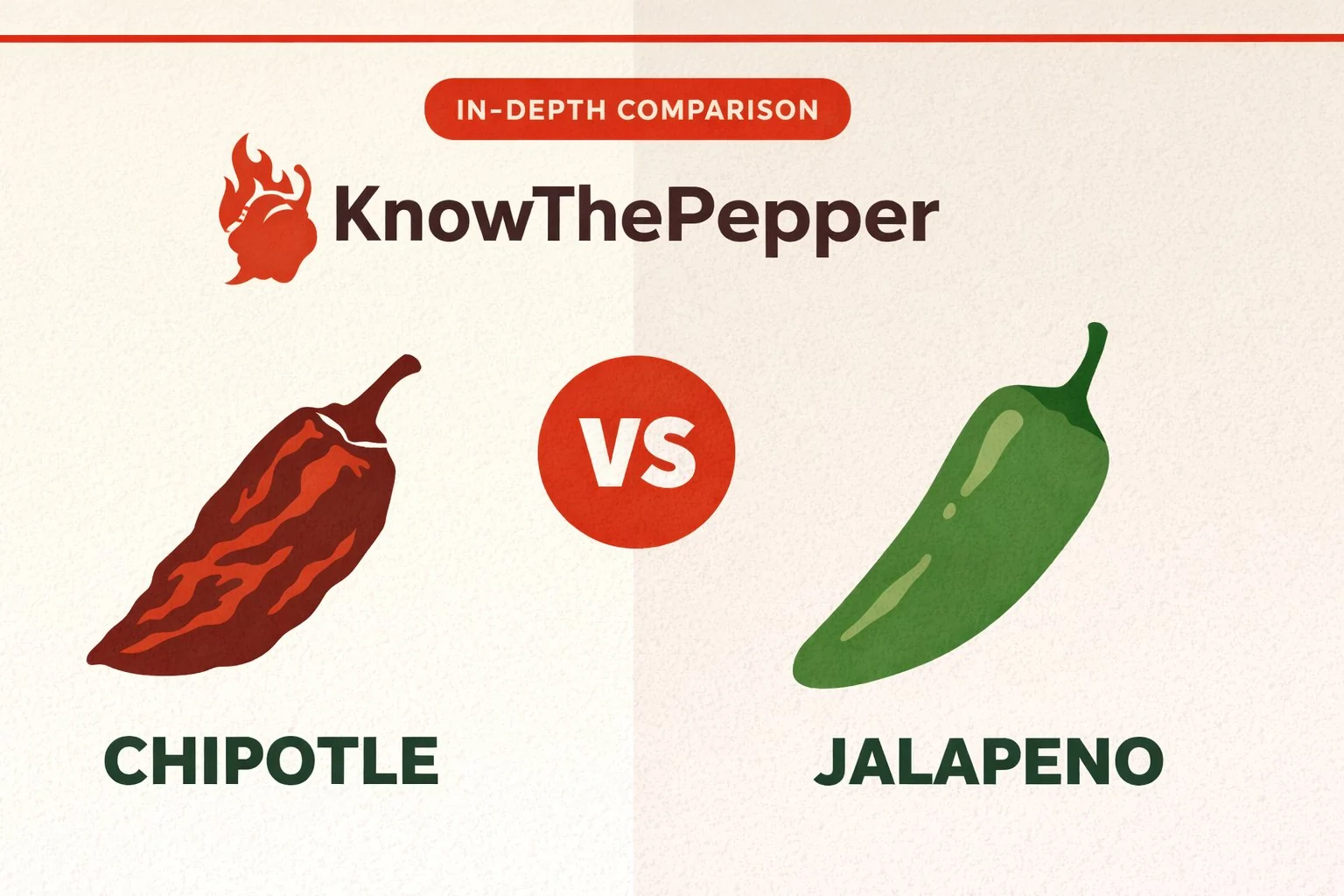
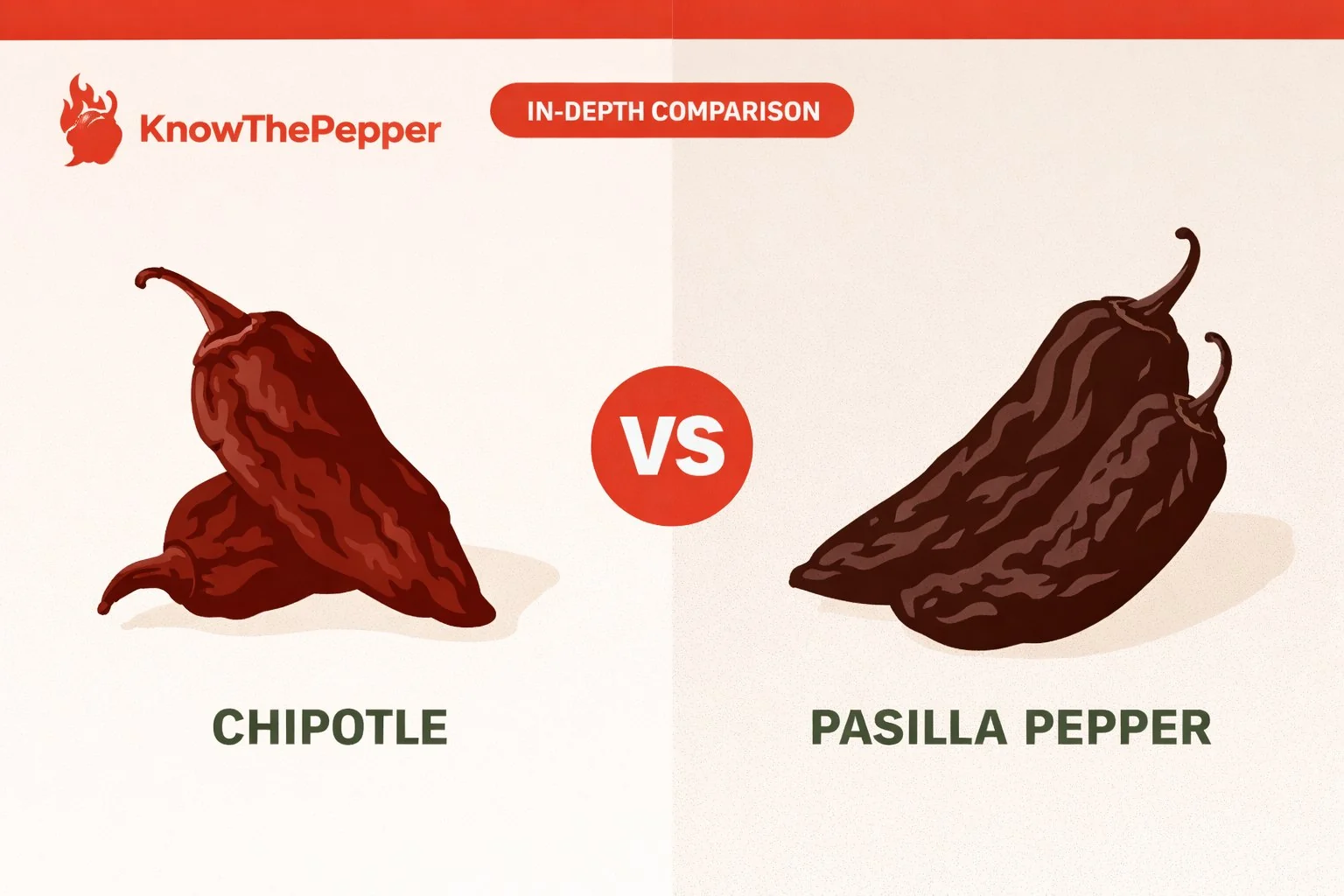
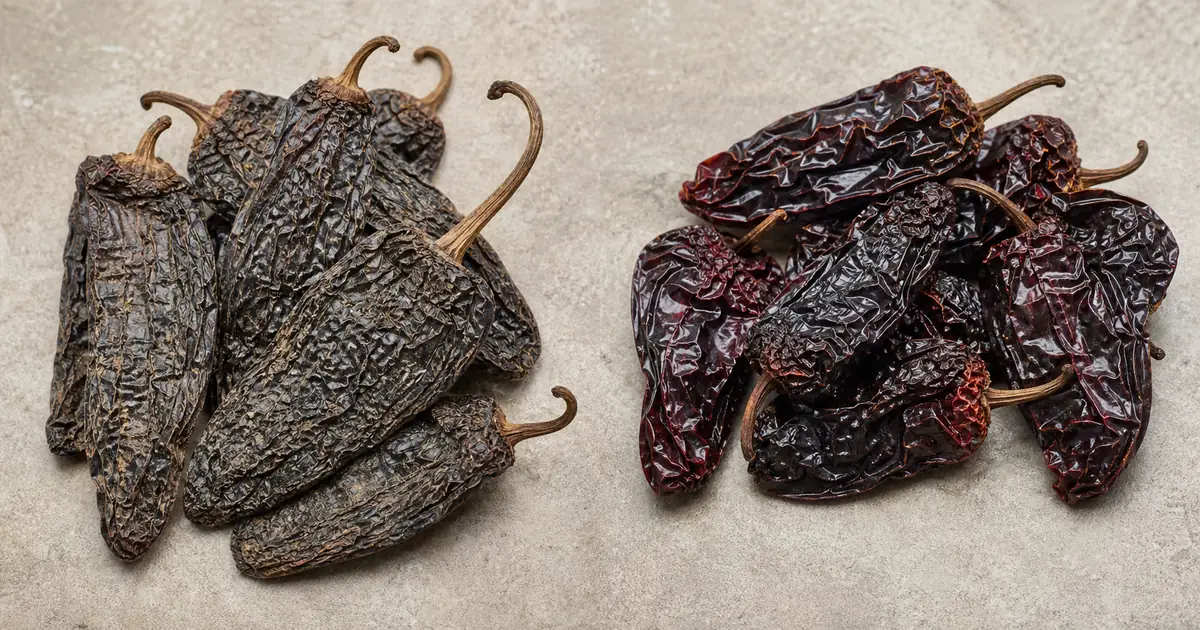
A whole chipotle is usually narrow and compact, while an ancho opens into a broad, heart-shaped pod with enough flesh to become a substantial puree after soaking.
Fast decision. Choose chipotle when the finished food should clearly taste smoky and moderately hot.
Choose ancho when a sauce needs dark chile flavor, gentle heat, and enough softened flesh to build texture.
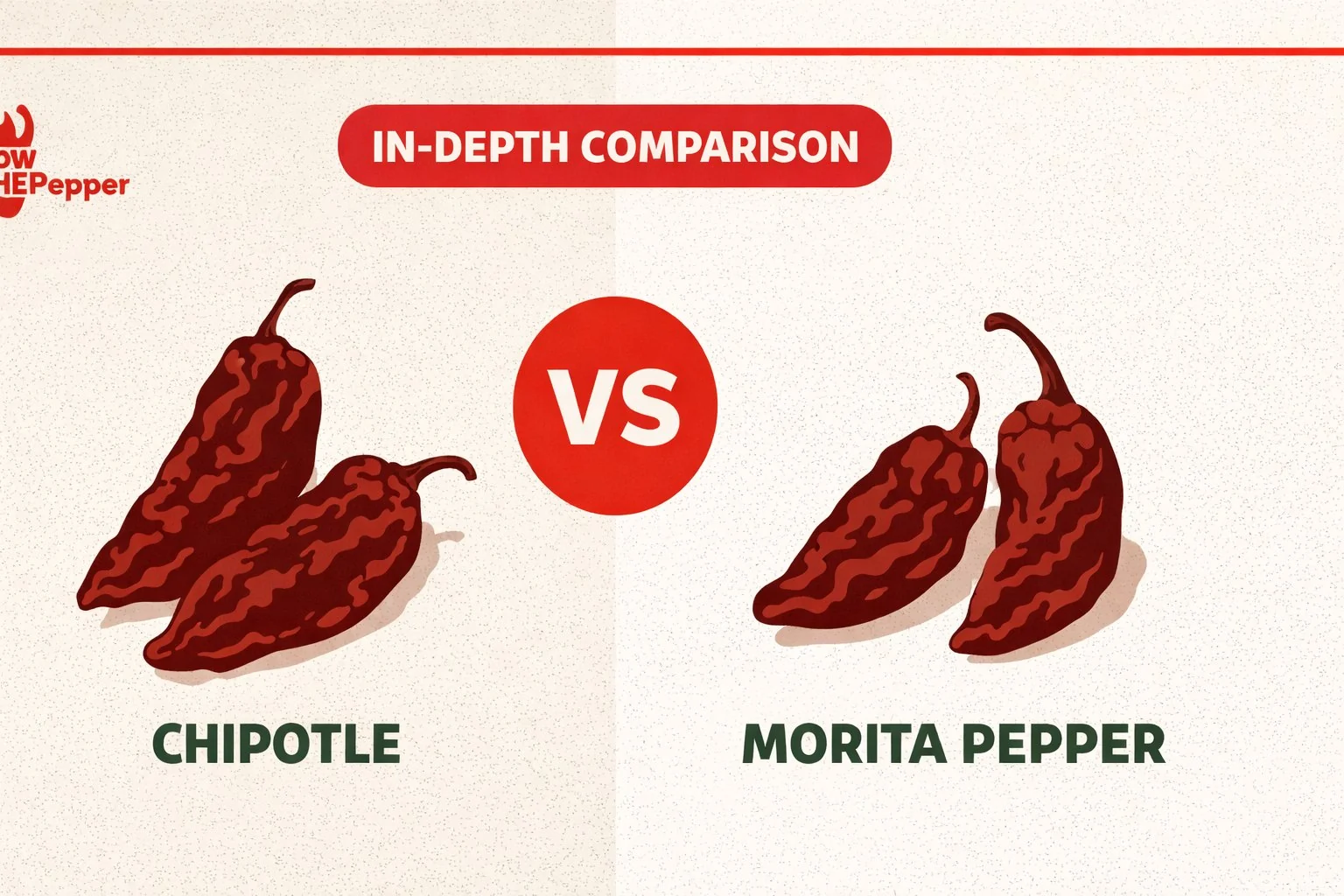
The names also describe families of forms rather than one interchangeable package. A dried morita chipotle, a tan meco chipotle, ground chipotle powder, and a can of chipotle in adobo all start from smoked jalapeno but do not contribute the same moisture or seasoning.
Is Chipotle Hotter Than Ancho?
Chipotle is usually hotter than ancho.
The canonical range used for this comparison is about 2,500-8,000 Scoville heat units, while New Mexico State University lists ancho at 1,000-2,000 SHU.
The top of the chipotle range is four times the top of the NMSU ancho range, but that ratio is a boundary rather than a recipe conversion.
Within that boundary, pod size, seed and membrane content, batch variation, and the amount of chile flesh all change how a measured spoonful behaves.
Start a chipotle-for-ancho correction at one quarter of the ancho amount when the ingredient is powder.
After that measured start, stir it through the full dish, simmer for 5 minutes, and increase in 1/8-teaspoon steps only if the sauce still needs heat and smoke.
Whole pods require a different comparison because one broad ancho supplies much more softened flesh than one narrow chipotle. Matching the number of pods can leave the sauce both hotter and thinner than intended.
How Do Chipotle and Ancho Taste Different?
Chipotle concentrates the aroma of smoke in a small amount of chile, so it can dominate a mild sauce before the sauce gains much body. The USDA petition describes the finished pepper as smoky and slightly sweet, which supports using it as an accent rather than an automatic base.
New Mexico State University describes ancho as mild with sweet, smoky, and dried-fruit notes. Its smoke is a background impression from the dried chile rather than the defining wood-smoke treatment that gives chipotle its identity.
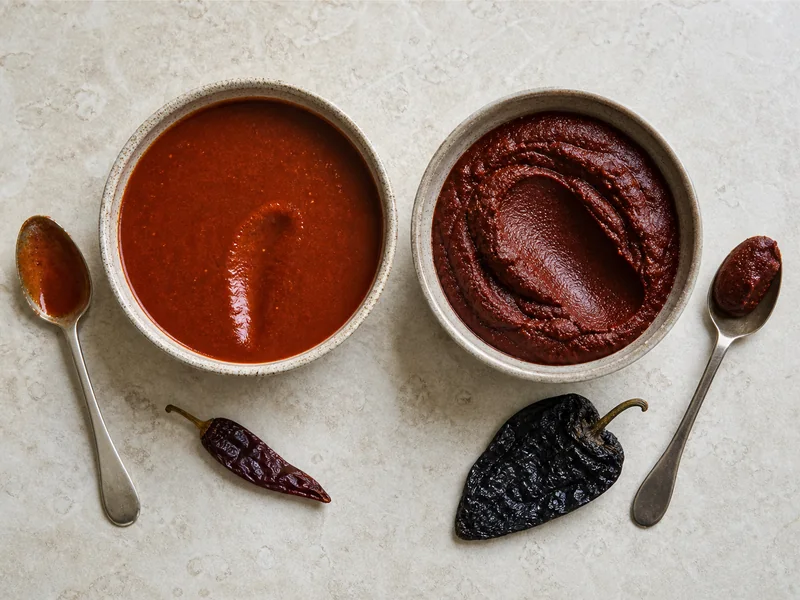
After soaking, ancho flesh blends into a thick, brick-red puree that can carry toasted spice, stock, nuts, or seeds. A soaked chipotle makes a darker and leaner puree, so the cook usually gets more smoke and heat from less physical chile.
Choose by the missing axis when the sauce is already partly built.
Add chipotle when it has the right texture but lacks a smoky edge, and add ancho when it needs dark fruit, color, and viscosity without a large rise in heat.
Which Chipotle Form Does the Recipe Mean?
A recipe that says chipotle must still identify the form.
A dry pod contributes chile and smoke, powder disperses quickly without adding water, and chipotle in adobo arrives with a seasoned sauce that may contain tomato, vinegar, garlic, salt, and sugar.
Canned adobo therefore changes acidity, salinity, moisture, and texture at the same time. Drain-and-count substitutions hide those changes, so measure the chopped chile and adobo sauce separately whenever the balance matters.
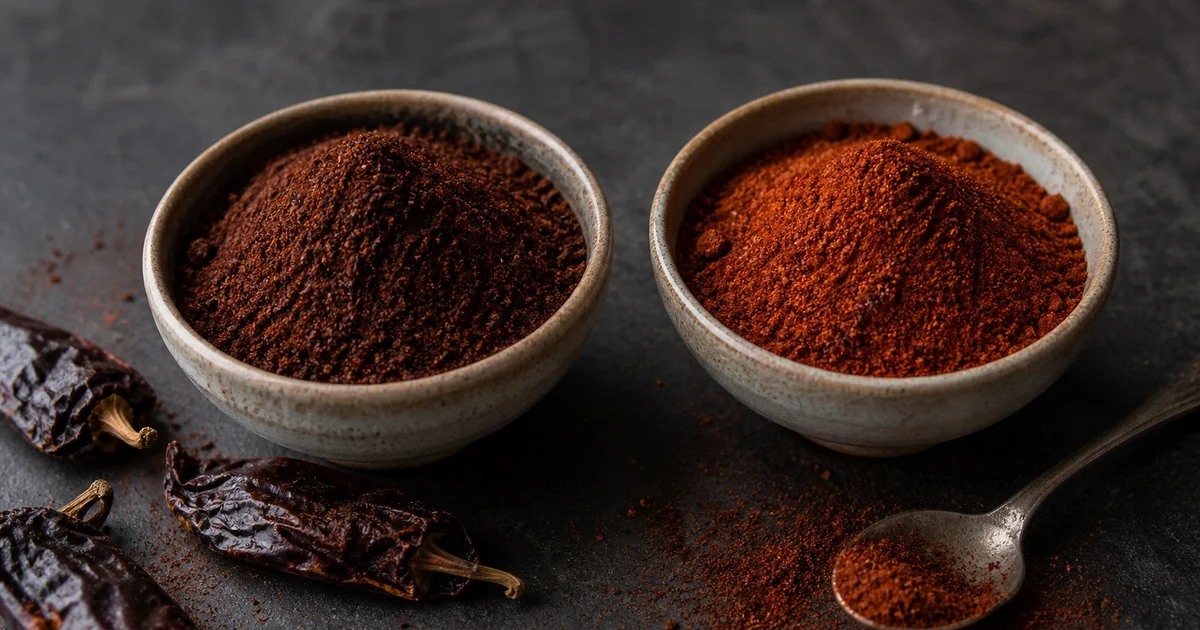
Ancho is sold mainly as whole pods or powder. Whole pods create the smoothest body after soaking and blending, while powder works faster in a dry rub or a liquid that already has enough structure.
| Form in hand | What it adds immediately | What the cook must check |
|---|---|---|
| Whole dried chipotle | Smoke, heat, and a little chile flesh | Soak time and final heat |
| Chipotle powder | Concentrated smoke and heat without liquid | Even dispersion and scorching |
| Chipotle in adobo | Smoke, heat, acid, salt, and wet sauce | Recipe liquid and seasoning |
| Whole ancho | Mild heat, dark fruit, color, and puree body | Stem, seeds, skin texture, and soaking |
| Ancho powder | Mild chile flavor and color | Hydration and whether the sauce still needs body |
Do not treat a tablespoon of adobo puree as a tablespoon of dry powder. The wet ingredient is less concentrated by volume and carries several flavor decisions that the powder does not.
Open The Pods And Build The Puree Deliberately
Whole ancho and whole chipotle use the same basic preparation sequence, but the stopping point differs.
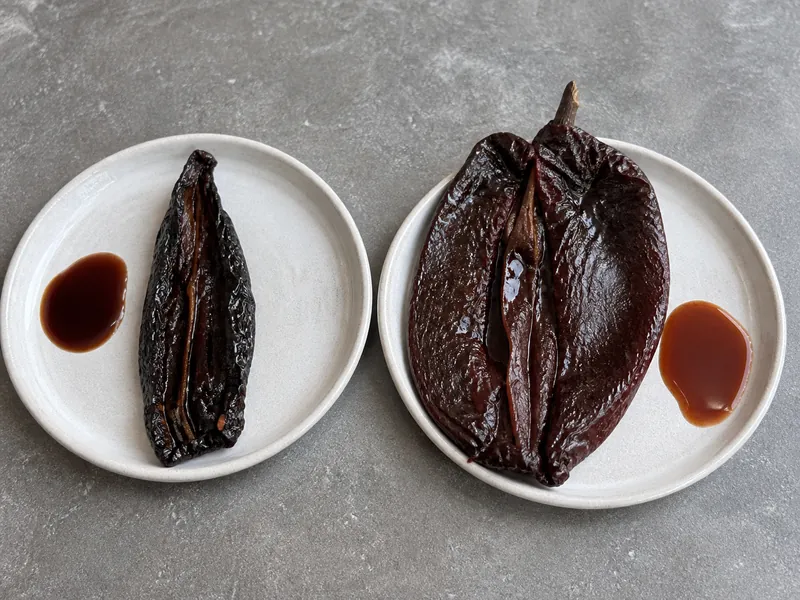
Ancho should become pliable enough to lie nearly flat, while chipotle may remain firmer and needs more blending time because its flesh is thinner.
- Remove stems, open each pod, and shake out loose seeds.
- Press the pods on a dry skillet over medium heat for 5-10 seconds per side, stopping when the aroma rises.
- Cover with hot water and soak for 15-20 minutes.
- Blend with fresh water, stock, or measured soaking liquid until smooth.
- Strain only when the dish needs a fine texture or the skins remain noticeable.
Brief heat wakes the aroma, but a black patch introduces bitterness that soaking cannot remove. Discard a scorched pod rather than blending it into the whole batch.
The soaking liquid can taste bitter or smoky depending on the pod and toast. Taste one cooled teaspoon before adding it, then use fresh stock or water when the liquid would push the sauce away from its intended flavor.
When Should You Use Chipotle or Ancho?
The correct chile depends on the work left in the dish. New Mexico State University names ancho for sauces, stews, marinades, and mole, while chipotle earns its place when those foods also need a distinct smoked-jalapeno note.
| Dish or task | Better first choice | Reader-facing reason | Starting move |
|---|---|---|---|
| Mole-style or enchilada sauce | Ancho | Broad chile flesh builds a mild, dark base | Puree 2 soaked anchos into the sauce base |
| Black beans or braised beef | Chipotle | Sturdy food can distribute smoke and heat | Add 1 chopped adobo chile to 4-6 servings |
| Tamale filling or pozole broth | Ancho | Dried-fruit depth supports the base without controlling the heat | Add strained ancho puree, then season |
| Mayonnaise, crema, or yogurt dip | Chipotle | A small amount spreads smoke through fat | Start with 1 teaspoon adobo sauce per cup |
| Dry rub | Either by goal | Chipotle supplies heat and smoke, while ancho supplies color and mild depth | Use powder and mix through the full rub |
| Salsa with roasted tomato | Both | Ancho gives body while chipotle provides a smoky finish | Start with 2 anchos and 1 chipotle |
Long simmering does not erase chipotle smoke. It integrates the aroma into beans or meat, while ancho gradually gives up color and body, so tasting near the end still matters.
For pale dairy sauces, start with chipotle adobo sauce rather than a whole chopped pod when a smooth texture matters. For a dark braise, whole rehydrated chile puree is usually easier to balance because its amount can be measured before it enters the pot.
Can Chipotle and Ancho Replace Each Other?
A controlled substitution separates heat, smoke, and body before one chile replaces the other.
For that reason, a direct one-for-one swap is least reliable when whole pods or canned adobo are involved.
| Missing ingredient | Controlled starting replacement | Check after mixing | Next correction |
|---|---|---|---|
| 1 teaspoon ancho powder | 1/4 teaspoon chipotle powder plus 3/4 teaspoon sweet paprika | Heat and smoke after 5 minutes | Add more paprika for color, not more chipotle |
| 1 teaspoon chipotle powder | 1 teaspoon ancho powder plus 1/8 teaspoon smoked paprika | Smoke before heat | Add a pinch of cayenne only if heat is missing |
| 1 whole ancho | 1/2 rehydrated chipotle plus 2 tablespoons roasted tomato puree | Sauce body and heat | Add tomato puree before adding more chile |
| 1 chipotle in adobo | 1/2 soaked ancho plus 1/4 teaspoon smoked paprika | Salt, acid, and smoke | Add vinegar and salt separately |
Because products and batches vary, these are starting corrections rather than universal equivalents.
The chipotle substitute and ancho substitute guides handle cases where another chile or pantry ingredient makes a closer match.
When the recipe depends on canned adobo, preserve its wet contribution deliberately. Blend the replacement with one tablespoon of tomato puree and a measured splash of vinegar, then adjust salt only after the sauce has simmered.
Can You Use Chipotle and Ancho Together?
Ancho and chipotle work well together because they do different jobs. Begin with 2 whole anchos to 1 whole chipotle for a sauce where ancho should provide the foundation and chipotle should remain an accent.
Blend the soaked anchos first and reserve the chipotle. Add half of the chipotle puree, simmer for 5 minutes, then decide whether the remaining half improves the sauce or only makes the smoke louder.
Keep one adjustment in reserve. Extra ancho can rebuild body after too much stock, but it cannot remove excess chipotle smoke.
Holding back the chipotle protects the part of the balance that is hardest to reverse.
For a dry seasoning, use a gentler 4:1 ancho-to-chipotle powder ratio. Mix the powders before they touch the food so one bite does not receive most of the chipotle.
How Do You Choose Good Ancho and Chipotle Pods?
Buy whole ancho pods that bend without breaking and show a deep red-brown surface rather than dusty gray patches. New Mexico State University's description of ancho as dark reddish-brown to almost black helps distinguish normal dark color from visible mold or pale damage.
Choose dried chipotles with an intact smoky aroma and no damp or musty smell. Morita is typically darker and more flexible, while meco is usually tan and more heavily smoked, so color alone does not rank quality across the two forms.
For cans, read the ingredient line before planning the sauce. A can with more tomato, vinegar, sugar, or salt can require a different correction even when the number of chipotle pods is the same.
Store dry pods and powders tightly closed in a cool, dark cabinet away from steam. Refrigerate opened chipotle in adobo in a covered container and follow the maker's storage direction, because the wet product does not share the shelf behavior of a dry chile.
Choose for the next cooking step. Whole ancho is the flexible purchase for a puree, chipotle powder is efficient for a rub, and canned chipotle is the fast option when the recipe can accept its seasoned liquid.