De Arbol vs Japones: Salsa Flavor or Clean Oil Heat
Chile de arbol and japones share a 15,000 to 30,000 SHU band, but their best jobs differ. Choose de arbol for chile-forward Mexican salsa and japones for cleaner heat in oil, broth, flakes, or stir-fries.

Chile de arbol and japones usually share a 15,000 to 30,000 SHU range. Choose de arbol when salsa needs a sharp Mexican dried-chile voice, and japones when oil, broth, or stir-fry aromatics should stay in front.
- Market identity: Mexican chile de arbol vs Commercial Japanese chile
- Scoville evidence: 15,000 to 30,000 SHU vs 15,000 to 30,000 SHU
- Wall and shape: Thin, slender red pod vs Similar, often thicker-walled
- Flavor job: Sharp dried-chile presence vs Cleaner background heat
- Best technique: Brief dry toast, then salsa vs Warm oil infusion or flakes
- Best first dish: Salsa roja vs Chile oil or stir-fry
De Arbol
HotJapones Pepper
HotQuick Comparison
| Attribute | De Arbol | Japones Pepper |
|---|---|---|
| Market identity | Mexican chile de arbol | Commercial Japanese chile |
| Scoville evidence | 15,000 to 30,000 SHU | 15,000 to 30,000 SHU |
| Wall and shape | Thin, slender red pod | Similar, often thicker-walled |
| Flavor job | Sharp dried-chile presence | Cleaner background heat |
| Best technique | Brief dry toast, then salsa | Warm oil infusion or flakes |
| Best first dish | Salsa roja | Chile oil or stir-fry |
Are De Arbol and Japones the Same Chile?
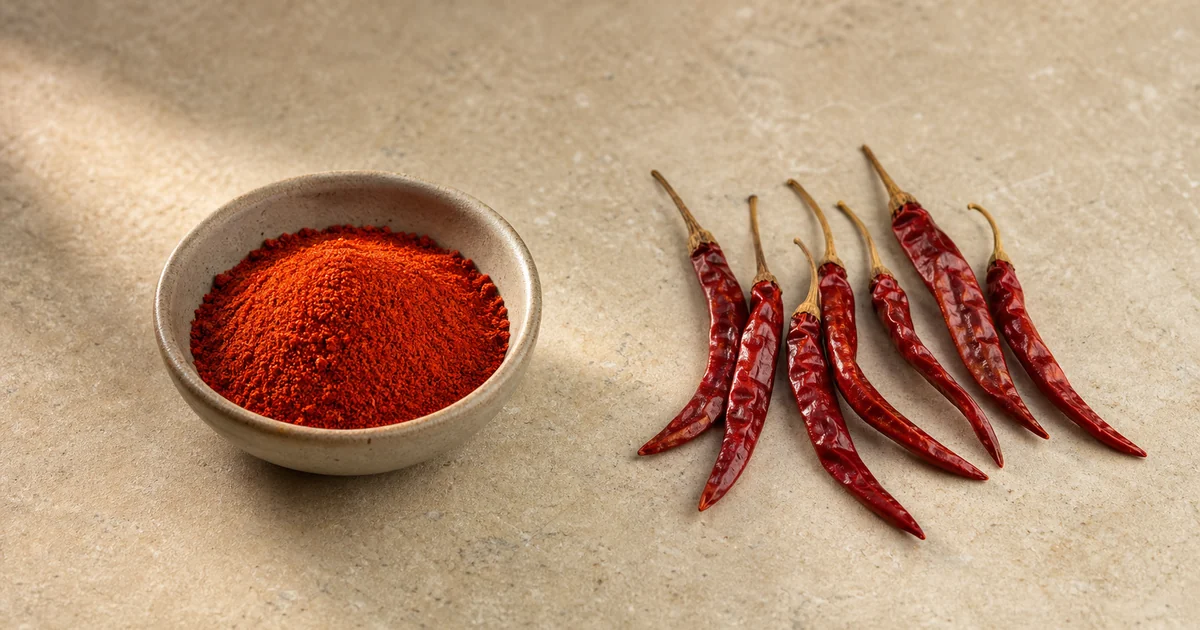
Chile de arbol and japones are similar-looking trade chiles, not guaranteed synonyms. Bon Appetit describes de arbol as a slender dried chile about three inches long, while McCormick's El Guapo line says Japanese chiles resemble arbol but tend to have thicker, meatier walls.
Both are usually sold as narrow red dried pods, so color and length alone rarely settle the purchase.
Compare wall thickness, stem shape, package origin, and the exact product name before assuming the bags contain the same chile.
De arbol is the Mexican ingredient with the clearer cooking identity. The New Mexico State University Chile Pepper Institute publishes a chile de arbol salsa, and Culinary Institute of America teaching material describes its sharp dried-chile flavor in Mexican cooking.
Japones is often a market category rather than a tightly documented cultivar name.
McCormick describes the commercial Japanese chile as fiery, minimally flavored, and useful toasted and crushed into flakes, which is more useful to a cook than an unsupported origin story.
If a loose-bin sign is the only identification, ask to see the supplier label. The package evidence outranks appearance because the same thin red silhouette is shared by several Capsicum annuum chiles.
Which Is Hotter, De Arbol or Japones?
The usual published figures do not create a useful heat winner. Both KnowThePepper profiles use 15,000 to 30,000 SHU, so their stated bands fully overlap.
A shared range does not mean every pod delivers the same burn. New Mexico State University's Circular 706 explains that genotype, weather, growing conditions, and fruit maturity affect capsaicinoid concentration before a laboratory measures it.
Drying changes water content and makes dose comparisons sensitive to weight.
A spoonful of crushed thin-walled pods can contain a different mass from the same spoonful of thicker pieces, even when both products carry the same SHU label.
For controlled heat, weigh the stemmed chile and add the prepared flakes, puree, or infused oil in stages. Treat the actual bag as the variable, especially when a new brand tastes much stronger than the previous one.
Seeds are not the primary capsaicin factory, although their contact with the inner tissue can make them hot.
Removing seeds changes texture and usable weight, while removing pale inner tissue has the more direct effect on capsaicin load.
No heat winner on the published range
Both profiles span 15,000 to 30,000 SHU. Dose the actual bag by prepared weight and taste the finished base before adding more.
How Do De Arbol and Japones Taste Different?
De arbol is the better choice when the dried chile itself should remain recognizable. Culinary Institute of America material describes a hot, sharp dried-chile character, and the pod can gain a lightly toasted or nutty direction when heated without scorching.
Commercial japones is commonly chosen for a cleaner heat contribution. McCormick describes Japanese chile as having minimal flavor, which lets garlic, ginger, sesame, scallion, broth, or meat remain the leading aroma.
That difference becomes smaller inside a heavily seasoned blend.
Tomato, vinegar, roasted garlic, peanuts, sesame, or several other chiles can cover the quieter distinctions between two small hot red pods.
The difference becomes larger in a simple preparation. A salsa based on chile, tomato, and garlic exposes de arbol's sharp dried-chile voice, while a plain infused oil exposes whether japones stays behind the aromatics.
Neither chile is automatically smoky.
Drying, roasting, and product handling can create toasted or smoke-like impressions, but the product name by itself does not prove that the pods were smoke-dried.
Burning erases useful flavor evidence. Once the skin turns black and the aroma becomes acrid, bitterness can dominate either chile and make a careful comparison impossible.
Do not confuse toast with smoke
A brief toast can create nutty or roasted aromas. It does not prove either commercial chile was smoke-dried.
Which Dishes Suit De Arbol and Which Suit Japones?
Use de arbol for salsa roja, salsa taquera, salsa macha, adobo, or a Mexican sauce that needs an identifiable hot dried chile. NMSU's published chile de arbol salsa supports that role directly rather than treating the pod as generic heat.
Use japones for crushed flakes, oil infusions, broths, and stir-fries when other aromatics should lead. McCormick specifically recommends toasting and crushing Japanese chiles for red pepper flakes.
For salsa, de arbol gives the clearer starting point because the chile flavor is part of the dish's identity.
Japones can make a hot salsa, but its quieter profile may leave the result tasting more like tomato, acid, and garlic than chile de arbol.
For chile oil, japones often gives the cleaner base. De arbol also infuses oil, but it can push the flavor toward a Mexican salsa-macha direction when nuts, seeds, and garlic join the oil.
Whole pods in a stir-fry behave differently from ground chile in a sauce.
The hot fat extracts capsaicin quickly, while leaving the pods whole limits the amount of chile solids spread through the dish.
For broth, begin with one small broken pod or a measured pinch of flakes and remove whole pieces before serving if diners may bite into them. A pod eaten directly delivers a much more concentrated dose than the broth around it.
| The dish needs | Better first choice | Cooking reason |
|---|---|---|
| A chile-forward Mexican salsa | De arbol | The sharp dried-chile flavor remains part of the sauce. |
| Clean heat behind garlic or ginger | Japones | Its quieter flavor leaves the aromatics in front. |
| Crushed red chile flakes | Japones | McCormick recommends toasting and crushing the pods. |
| A swap inside a strong blend | Either, by weight | Other ingredients reduce the visible flavor difference. |
Verdict
Choose de arbol when the dish needs sharp Mexican dried-chile flavor, especially salsa roja, salsa macha, adobo, or a tomato-based table sauce. Its identity matters most when the ingredient list is short.
Choose japones when the job is clean heat behind garlic, ginger, sesame, scallion, broth, or stir-fry aromatics. It is also the more direct pick when the package recommends crushing the pods into flakes.
Keep both only if those two cooking paths appear regularly in your kitchen.
Their heat overlap is real, but their best uses separate when the chile is one of the main flavors.
If the dish already contains several chiles or strong aromatics, use whichever fresh, correctly labeled bag you have. In that setting, condition and measured dose can matter more than the subtle flavor distinction.
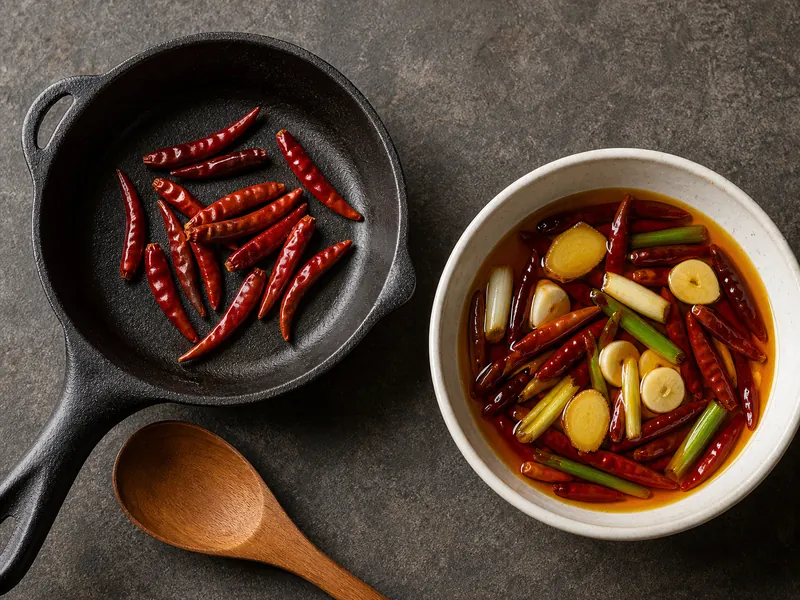
How to Toast the Pods and Infuse Chile Oil
For de arbol salsa, open a window or use ventilation before heating the pods because airborne chile compounds can irritate the nose and throat.
Move the pods continuously in a dry pan and stop as soon as they become fragrant and deepen slightly in color.
Black spots and an acrid smell mean the toast went too far. Discard scorched pods rather than blending their bitterness into the entire salsa.
For japones oil, begin with warm oil and watch the chile rather than chasing a fixed minute count. The oil should carry chile aroma and color without smoking, and the pods should not blacken.
Whole pods release heat more slowly than crushed flakes because less inner surface meets the oil. Crushing before infusion speeds extraction but also spreads small hot particles through the finished condiment.
Water and hot oil react violently, so dried pods and tools must be dry before infusion.
If the method includes fresh garlic, scallion, or another wet aromatic, follow a tested recipe with safe temperature and storage instructions rather than improvising a shelf-stable oil.
Taste a cooled sample, not a spoonful taken directly from hot oil. Heat can mask intensity, and hot fat can cause a burn before the capsaicin level is clear.
Buying And Storage
Choose a package with an intact seal, a readable ingredient list, and a specific chile name.
Avoid a product labeled only hot red pepper when the recipe depends on de arbol or japones identity.
Good pods should retain an even red to deep-red color and a clean chile aroma. Reject bags with visible moisture, mold, webbing, insects, or a stale dusty smell.
Thin dried chiles may be crisp rather than leathery, so flexibility is not the only freshness test. Aroma, intact skin, clean storage, and a recent packing date give a stronger combined signal.
Store the pods airtight in a cool, dark, dry cupboard and keep the two bags labeled.
Light fades color, moisture invites spoilage, and unlabeled thin red pods become nearly impossible to distinguish later.
Buy the amount that matches how you cook. De arbol earns pantry space for frequent salsa making, while japones earns it for chile oil, flakes, broth, and stir-fry use.
Substitution
Bon Appetit explicitly names dried japones as a substitute when chile de arbol is unavailable. Begin at 1:1 by stemmed weight because their common heat bands overlap and pod count hides differences in size and wall thickness.
When japones replaces de arbol in salsa, preserve the same measured chile dose before changing anything else. After blending and simmering, decide whether the sauce needs more chile character rather than automatically adding smoke, sugar, or acid.
When de arbol replaces japones in oil or broth, start below the full amount if the batch has a forceful aroma or heat. Add more infused oil or broth gradually so de arbol does not cover the garlic, ginger, sesame, or scallion that should lead.
Match the form before applying the ratio. Whole dried pod replaces whole dried pod by prepared weight, flakes replace pure flakes by weight, and a seasoned commercial blend does not replace plain chile powder at the same measure.
A de arbol substitute cannot preserve the name of a traditional chile de arbol salsa. It can preserve heat and function, but the ingredient change should remain clear when the dish's identity matters.
A japones substitute is more forgiving when the chile serves as background heat. The swap is least visible in a strongly aromatic oil, broth, or mixed chile blend and most visible in a simple two-ingredient infusion.