
Chile de Arbol or Serrano: Fresh Bite or Dried Heat?
Choose fresh serrano for green bite, juice, and crunch. Choose dried chile de arbol for concentrated red heat, brief toasting, chile oil, and pantry stability. Their heat ranges overlap, so moisture and extraction method decide the better pepper before Scoville rank does.

De Arbol
HotSerrano Pepper
HotQuick Comparison
| Attribute | De Arbol | Serrano Pepper |
|---|---|---|
| Scoville evidence | 15K-30K SHU | 10K-23K SHU |
| Heat Tier | Hot | Hot |
| vs Jalapeño | 4x hotter | 3x hotter |
| Flavor | smoky and nutty | bright and crisp |
| Species | C. annuum | C. annuum |
| Origin | Mexico | Mexico |
Which Is Hotter, Chile de Arbol or Serrano?
Chile de arbol usually reaches higher, but the ranges overlap. The canonical pepper records place de arbol at 15,000 to 30,000 SHU and serrano at 10,000 to 23,000 SHU, so a hot serrano can exceed a mild de arbol pod.
That overlap makes a pod-count ratio unreliable because the pods are different ingredients before heat enters the calculation. De arbol is commonly dried, light, and concentrated, while serrano is usually fresh and carries water, green flesh, and more weight per pod.
NMSU explains that heat classifications are broad and that genetics set a relative level while measurements still vary among fruit. Use the ranges to plan a cautious dose, then let form and dish role decide whether either pepper belongs in the recipe.
In a raw salsa, fresh serrano distributes juice and small pieces of crisp flesh with the burn. In an oil, powder, or rehydrated red sauce, de arbol distributes dried chile solids and capsaicinoids without bringing fresh-pepper water.
Start with less dried de arbol than fresh serrano by volume because a spoonful of crushed dry chile is more concentrated than a spoonful of diced fresh pepper. Weighing cleaned chile is more useful for a controlled swap, but it still cannot correct the missing fresh texture or dried aroma.
How Do Chile de Arbol and Serrano Taste Different?
The NMSU Chile Pepper Institute describes chile de arbol as a small, thin Mexican Capsicum annuum with a bold smoky flavor that is popular dried or powdered. Brief heat in a pan or oil can bring out a toasted, nutty edge, while excessive heat turns the thin skin bitter before the rest of a sauce can hide it.
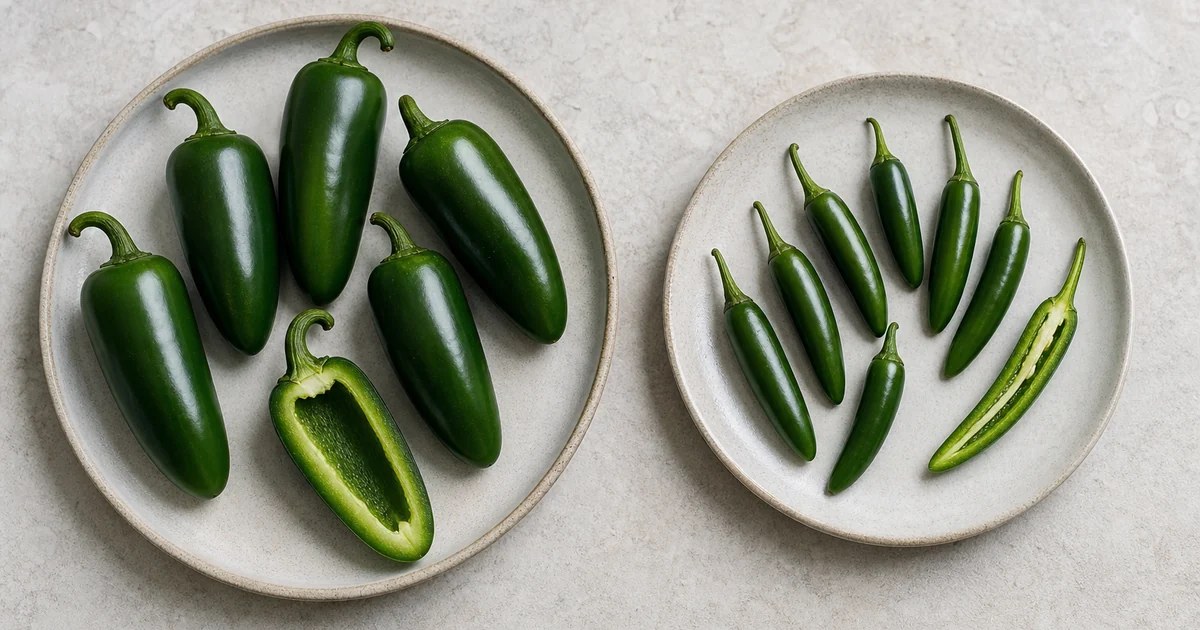
Serrano is also Capsicum annuum, but its familiar market form is fresh. Its flavor is bright, green, crisp, and lightly grassy, so cutting the pod releases aroma, juice, and heat at the same time.
Moisture is the practical flavor divider. Fresh serrano lightens tomatillo, avocado, onion, cilantro, and lime, while dried de arbol deepens tomato, garlic, oil, nuts, and other dried chiles.
Neither flavor is a neutral heat source. De arbol can make a raw green salsa taste dry and red-chile-led, while serrano can make a concentrated red salsa greener and thinner even when the heat lands in the right range.
Red serranos exist, and chile de arbol can also be used fresh, but those less common forms need explicit recipe context. This comparison uses the forms most shoppers encounter, which are fresh serrano and dried de arbol.
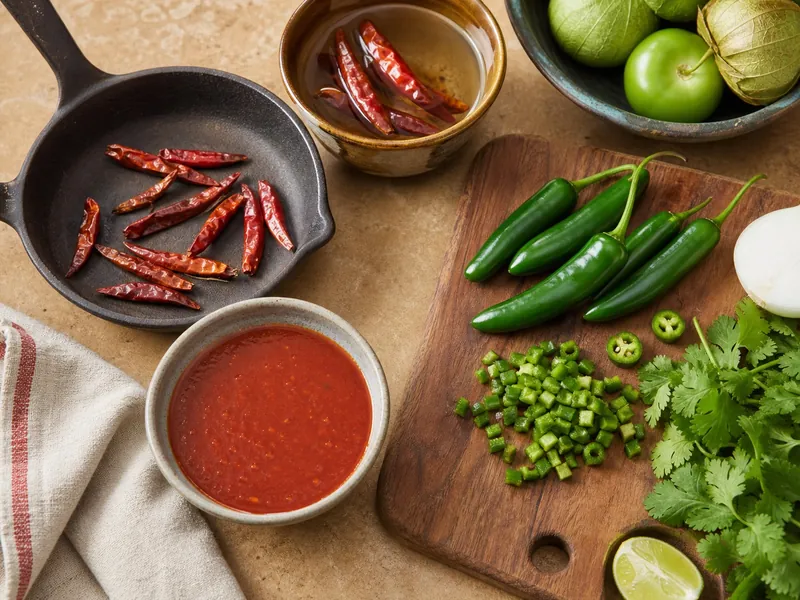
Form changes the flavor delivery
Fresh serrano releases juice, crisp flesh, green aroma, and heat together. Dried de arbol needs oil, water, or sauce liquid to extract its concentrated red-chile character.
Which Dishes Suit Dried de Arbol and Which Suit Fresh Serrano?
Choose dried chile de arbol for salsa roja, chile oil, dried-chile marinades, table sauces, powders, and recipes that need red heat without fresh pepper pieces. NMSU specifically identifies the pepper as popular in Mexican cooking, used dried or powdered, and suitable for a chile de arbol marinade.
A quick dry toast should stop when the pods become fragrant and slightly flexible. If they darken aggressively or smoke, remove them from the pan because burnt de arbol contributes a harsh bitterness that soaking does not reverse.
For a blended red salsa, soften the toasted pods in hot water or simmer them with the tomato base as the recipe directs. Blend the chile with enough liquid to extract flavor, then strain only when the sauce needs a smoother finish.
Choose fresh serrano for salsa verde, pico de gallo, guacamole, ceviche-style mixtures, taco garnish, eggs, and cooked sauces that still benefit from a green chile note. Dice it for even raw distribution, slice it for visible bites, or char it with tomatillo when the sauce needs roasted depth without becoming a dried-red-chile salsa.
Serrano contains water, so it cannot enter hot oil like a fully dried chile without changing the process. Moisture can spit in hot oil and shortens the storage life of an infusion, which makes dried de arbol the better ingredient for chile oil and shelf-stable dry seasoning.
The common salsa failure points to the wrong form. A watery red salsa often received too much fresh pepper or insufficient reduction, while a bitter de arbol salsa often received too much pan heat rather than too much SHU.
For pico de gallo, serrano also provides visible fresh texture that powder or crushed de arbol cannot replace. For a smooth red table salsa, de arbol can supply concentrated heat without leaving green pieces in the blend.
Diagnose the salsa before adding more chile
A thin red salsa often needs less fresh-pepper water or more reduction. A bitter de arbol salsa needs gentler pan timing because more tomato cannot fully undo burnt chile skin.
Verdict
Choose serrano when the dish needs fresh green bite, juice, and crisp texture. It is the natural fit for raw salsa, pico de gallo, guacamole, garnish, and cooked green sauce where the chile should remain part of the fresh produce base.
Choose chile de arbol when the dish needs dried red concentration, toast, or oil extraction. It is the stronger fit for salsa roja, chile oil, dried marinades, powder, and a pantry chile that can be measured without adding fresh water.
Heat does not settle the choice because their SHU ranges overlap. The deciding question is whether the recipe was designed around fresh chile flesh or around a dried pod that releases flavor through toasting, soaking, simmering, or oil.
Keep both if these foods appear often in your kitchen because the products solve opposite pantry jobs. Serrano is a perishable fresh ingredient, while flexible dried de arbol pods remain ready for red sauces and infusions.
If the recipe names one pepper in a traditional salsa, use that pepper first. A substitute is most successful in a cooked mixed sauce where you can correct water, color, brightness, and dried flavor before serving.
Buying And Storage
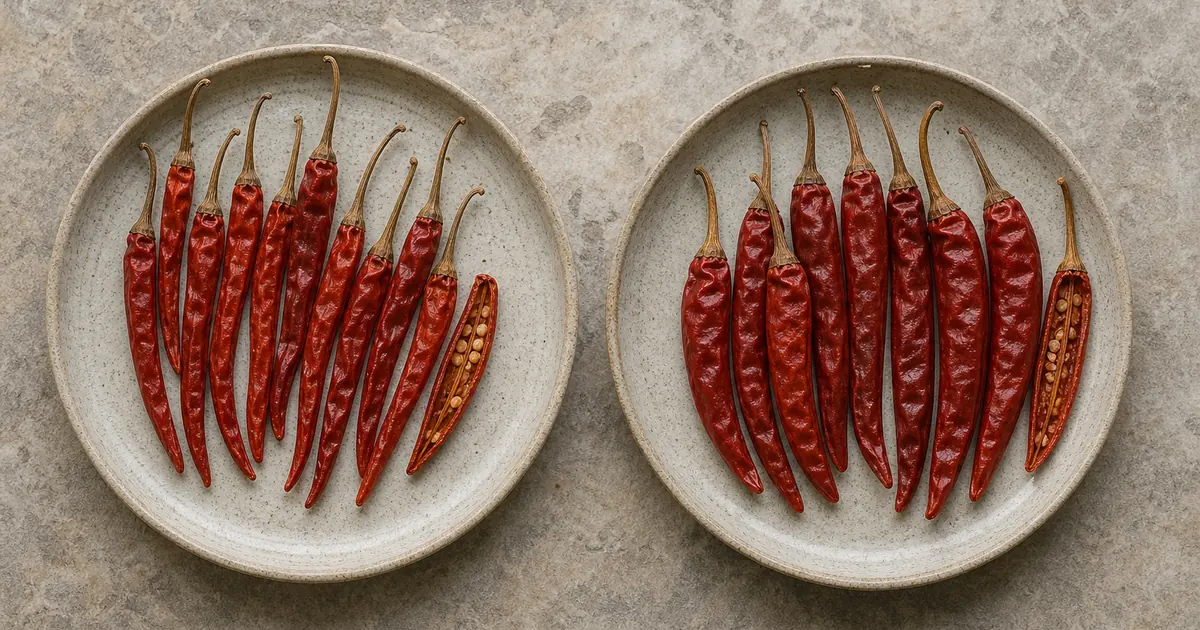
Buy dried de arbol as small, thin, intact red pods with firm woody stems, the visual traits NMSU uses to identify the chile. Choose flexible pods with a clean dried-chile aroma and avoid packages with gray dust, mold, insect damage, or many nearly black brittle pieces.
Store whole dried pods airtight away from light and stove heat. Grind only what you expect to use soon because crushed chile exposes more surface area and loses aroma faster than intact pods.
Buy serranos with firm glossy skin, a crisp stem, and no wet breaks or soft sunken patches. UC Davis connects fresh chile firmness directly with water loss, so wrinkling signals that the pod has already lost part of the texture this comparison values.
Refrigerate fresh serranos unwashed and keep them away from raw meat juices. Freeze surplus pods for cooked sauces if needed, but expect the thawed flesh to soften and stop treating it as a substitute for fresh pico de gallo texture.
Substitution
A direct pod-for-pod swap fails because one dried de arbol can weigh far less than one fresh serrano. For an ordinary cooked sauce, begin with half the named chile by cleaned weight, disperse it through the sauce, and correct heat only after fixing the form difference.
When using serrano as a chile de arbol substitute, reduce another liquid or cook the sauce long enough to remove unwanted water. The sauce may also need toasted dried chile from another mild variety if de arbol supplied red color and dried aroma as well as heat.
When using chile de arbol as a serrano substitute, use a small amount and restore fresh brightness only when the dish needs it. Lime, cilantro, tomatillo, or another mild fresh green chile can restore part of the missing profile, but crushed de arbol cannot recreate serrano crunch in pico de gallo.
Do not use fresh serrano as a shortcut in chile oil because its water changes both cooking behavior and keeping quality. Do not use dry de arbol as a full substitute in raw salsa when visible fresh chile texture is one of the dish's jobs.
UC Agriculture and Natural Resources separates reasonable dried-seasoning changes from safety-controlled fresh-pepper amounts in tested preservation recipes. Follow the published pepper weight, acid, jar size, and process for canning rather than applying this cooking swap to a shelf-stable product.
Match moisture before heat
Correct water, texture, color, and fresh or dried flavor first. Only then adjust the pepper amount, because an SHU match cannot repair the wrong ingredient form.
De Arbol vs Serrano Pepper FAQ
- Chile de Arbol - New Mexico State University Chile Pepper Institute
- Measuring Chile Pepper Heat - New Mexico State University Extension
- Pepper Substitutions - University of California Agriculture and Natural Resources
- Peppers - University of California Agriculture and Natural Resources
- Chiles Postharvest Facts - University of California Davis
- Hot Pepper - Purdue Extension FoodLink