
Chipotle vs Morita Pepper: Is Morita Just a Fruitier Chipotle?
Chipotle and morita are both smoke-dried jalapeños, but they diverge in color, texture, smoke intensity, and how Mexican cooks use them. Understanding the distinction helps you choose the right one for adobo sauces, braises, and dry rubs without muddying the flavor you're after.

Chipotle
MediumMorita Pepper
HotQuick Comparison
| Attribute | Chipotle | Morita Pepper |
|---|---|---|
| Scoville evidence | 2.5K-8K SHU | 2.5K-10K SHU |
| Heat Tier | Medium | Hot |
| vs Jalapeño | 1x hotter | 1x hotter |
| Flavor | smoky and sweet | smoky and fruity |
| Species | C. annuum | C. annuum |
| Origin | Mexico | Mexico |
Is Morita Hotter Than Chipotle?
Both chipotle and morita start as Capsicum annuum jalapeños, which sit in the 2,500-8,000 SHU range on the Scoville measurement index. After drying and smoking, the heat concentrates slightly, landing chipotles and moritas in a similar 5,000-10,000 SHU band, roughly one-third to one-half the heat of a serrano pepper.
The practical difference isn't really about raw SHU numbers. It's about how the heat arrives.
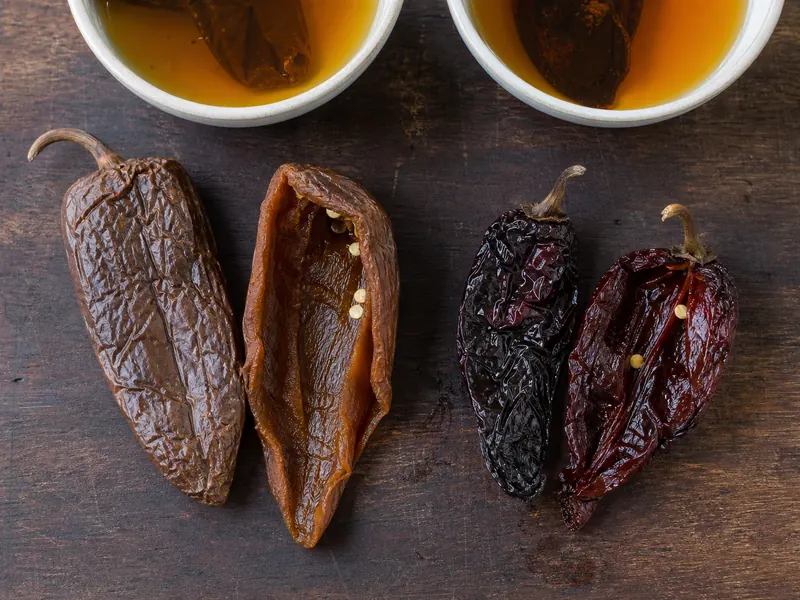
Chipotle meco (the tan, tobacco-colored variety) tends to deliver a slower, drier burn that lingers in the back of the throat. Morita - the smaller, darker, purplish-red chipotle, hits a touch faster and feels slightly brighter because it's smoked for less time, leaving more residual moisture and fruit character intact.
For context, both peppers occupy the medium-hot SHU zone comfortably, hot enough to matter in a dish but not so aggressive that they dominate. A tablespoon of chipotle powder in a pot of chili is noticeable.
A tablespoon of morita paste in the same pot carries that heat plus a jammy sweetness the meco version lacks.
Neither pepper approaches serrano territory in raw heat, but the smoke amplifies perceived intensity. First-time users often rate chipotles hotter than they measure because the smoke compounds the sensation, a phenomenon tied to how capsaicin chemistry interacts with oral receptors.
How Do Chipotle and Morita Taste Different?
Strip away the smoke and you'd have two nearly identical jalapeños.
Add the smoke back, and they become distinct ingredients.
Chipotle meco - the more common export variety, spends significantly longer over mesquite or pecan wood. The result is a dry, leathery pod with deep tobacco, coffee, and earthy chocolate notes.
The fruit character of the original jalapeño is almost entirely gone.
What remains is savory, complex, and assertively smoky. It's the pepper you reach for when you want smoke to be a primary flavor, not a background note.
Morita takes a shorter smoke bath, typically over fruit woods. The skin stays supple and slightly tacky.
Flavor-wise, moritas retain a fruity, almost raisin-like sweetness alongside the smoke, think dried cherry meets campfire. They're more versatile in dishes where you want smoke as a supporting player rather than the lead.
Aroma tells the story quickly.
Hold a chipotle meco close and the smoke hits hard, almost meaty. A morita smells sweeter, fruitier, with smoke riding underneath the fruit rather than over it.
In cooking, this translates directly: meco chipotles excel in long-cooked braises, dry rubs, and smoked salsas where intensity is welcome.
Moritas shine in adobo sauces, enchilada bases, and marinades where you want complexity without overpowering the protein. Comparing these two is a different exercise than the smoky depth vs. mild earthiness side-by-side of ancho and chipotle, but the principle is similar, smoke level and fruit character are the deciding variables.
Culinary Uses
The good news: these peppers are largely interchangeable in a pinch, but knowing when each one excels saves you from muddying a sauce.
Chipotle meco is the workhorse of Tex-Mex and northern Mexican cooking. It's the pepper behind canned chipotles en adobo (though most canned versions use moritas, confusingly labeled as chipotles).
Whole mecos rehydrate well for salsas and moles.
Ground, they make an excellent dry rub base for brisket, pork shoulder, or grilled corn. Their low moisture content means they store almost indefinitely in an airtight jar.
Morita is the preferred chipotle in many central Mexican kitchens.
Its softer texture blends more smoothly into sauces, making it ideal for chipotle vs. guajillo-style red sauce comparisons where body and fruit matter as much as heat. Moritas work beautifully in adobo, in bean dishes, and anywhere you'd use a chipotle but want a slightly more approachable, rounded result.
Substitution ratio: Use moritas and chipotles 1:1 by count. If swapping meco for morita in a recipe, consider adding a small amount of smoked paprika to compensate for the lost smoke depth.
Rehydration: Both peppers rehydrate in 15-20 minutes in hot water.
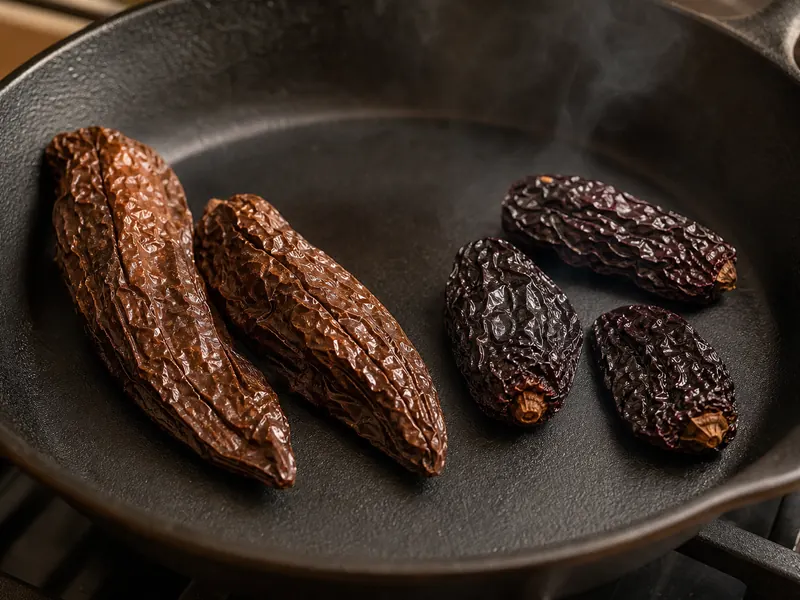
Toast them briefly in a dry skillet first, 30 seconds per side, to wake up the volatile aromatics before soaking.
For dishes where these peppers feel too smoky, the earthy, less smoky character of pasilla vs. chipotle comparison is worth reading, pasilla offers a gentler alternative in mole and sauce applications. If you're sourcing fresh, moritas appear at Mexican grocers year-round.
Mecos are more seasonal and sometimes require specialty ordering.
If smoke tastes too heavy, add tomato or orange juice rather than more sugar. Morita's fruit responds better to acidity, while generic chipotle usually needs dilution.
Which Should You Choose, Chipotle or Morita?
Choose chipotle meco when smoke is the point, dry rubs, long braises, smoked salsas, or any dish where you want that deep, tobacco-forward complexity to carry the flavor profile. It's the bolder, more assertive option.
Choose morita when you want smoke as a supporting note rather than the headline.
Its retained fruit character and softer texture make it more adaptable in sauces, adobos, and dishes where balance matters. Most canned chipotles en adobo actually use moritas, so if you're replicating that flavor, morita is technically the more accurate choice.
For heat-sensitive cooks, morita's slightly brighter, fruitier profile is easier to work with, the smoke doesn't compound as aggressively. For barbecue applications and dry seasonings, meco wins on intensity and shelf stability.
Both peppers reward the seed-starting and cultivation effort if you want to smoke your own, they're simply dried jalapeños at different stages and smoke durations.
Use chipotle when smoke is the first job.
It is the better pick for barbecue sauce, beans, chili, dry rubs, and canned adobo-style sauces where tomato, vinegar, and smoke can lead.
Use morita when fruit and smoke need to stay balanced. It is the better pick for salsa morita, chicken tinga, tomato salsa, and short-cooked chile sauces.
Do not treat every chipotle form as equal. Choose canned chipotle for wet adobo flavor, powder for fast smoke, and morita for a sweeter dried-pod sauce.
Dishes That Suit Each Pepper
Choose chipotle smoked-jalapeno profile when the recipe needs a broad smoked jalapeno flavor that can anchor beans, barbecue sauce, chili, adobo, and slow braises.
Chipotle is the better general-purpose label in U.S. grocery stores because cans in adobo, dried pods, and powder are all easy to find. Its smoke is the main signal.
Choose morita smoked-chile profile when the dish needs a sweeter, softer, redder smoked jalapeno.
Moritas are usually smoked for less time than the darker meco style, so they keep more berry-like fruit and a more flexible texture after soaking. They are excellent in salsa morita, tomato salsa, chicken tinga, and short-cooked sauces where too much smoke would flatten the fruit.
For a salsa, use morita first.
For baked beans, dry rubs, and long braises, use chipotle powder or canned chipotle in adobo first. For chile morita salsa, the smaller morita form is not just a label.
It controls the sauce color and sweetness.
Can You Substitute Morita for Chipotle?
Morita is a type of chipotle, so the swap is closer than most dried chile comparisons.
The problem is specificity: a recipe that says chipotle might mean canned chipotle in adobo, dried chipotle meco, chipotle powder, or morita. Those forms carry different moisture, smoke, vinegar, and tomato levels.
Use 1 dried morita for 1 dried chipotle when the recipe soaks and blends the chile.
Use 1 teaspoon chipotle powder for about 1 soaked morita only when dry texture is acceptable. For canned chipotle in adobo, start with one chopped pepper plus a teaspoon of sauce, then reduce other liquid in the recipe.
Morita gives fruit and smoke.
Generic chipotle gives smoke first. That is the deciding line.
Buying And Prep Notes
Chipotle is a broad store label, so identify the form before choosing a replacement. Canned chipotles in adobo bring tomato, vinegar, garlic, and moisture.
Dried chipotles bring smoke and leathery fruit. Chipotle powder brings the fastest smoke but no body.
Morita is usually sold dried, small, and dark red to purple-brown.
Good pods should smell smoky and fruity, not dusty. They soften faster than large, very dark chipotles, which is why morita is easier to use in quick salsa.
For soaking, cover dried moritas with hot water for 15-20 minutes.
Larger chipotles may need 25-30 minutes and more straining. Save a little soaking liquid only if it tastes clean.
Bitter soaking water can make the whole salsa taste tired.
If the recipe calls for canned chipotle and you only have morita, blend soaked morita with tomato, a touch of vinegar, garlic, and salt. If the recipe calls for morita and you only have canned chipotle, reduce other acid and liquid so the sauce does not become thin.
Treating Chipotle as One Fixed Ingredient
The common mistake is reading chipotle as one fixed ingredient.
Canned chipotle in adobo, dried chipotle, chipotle powder, and morita do not add the same moisture or acidity. Before swapping, identify whether the recipe needs smoke, sauce, powder, or a soaked dried chile.
How Much Morita Replaces One Chipotle?
Use 1 soaked morita for 1 dried chipotle in blended salsa. For canned chipotle in adobo, replace one pepper with one soaked morita plus tomato, vinegar, garlic, and salt so moisture and acidity stay close.
Chipotle vs Morita Pepper FAQ
- Varieties & Plant Breeding - Chile Pepper Institute, NMSU
- Capsicum annuum L. - USDA GRIN Taxonomy
- Diana Kennedy, The Art of Mexican Cooking - Chipotle Distinctions