Chipotle Meco Salsa With Deep Smoke and Spoonable Body
Four dried chipotle meco chiles, one roasted Roma tomato, onion, garlic, and one tablespoon of 5% cider vinegar make about 1 1/2 cups of thick salsa. Toast only until fragrant, soak until the chile shoulder folds, then blend with liquid one tablespoon at a time until the salsa falls in a slow ribbon.
This chipotle meco salsa turns four tan, fully dried smoked jalapenos into about 1 1/2 cups of thick table salsa in 35 minutes, with roasted tomato supplying enough body for the blender while the chile controls the flavor.
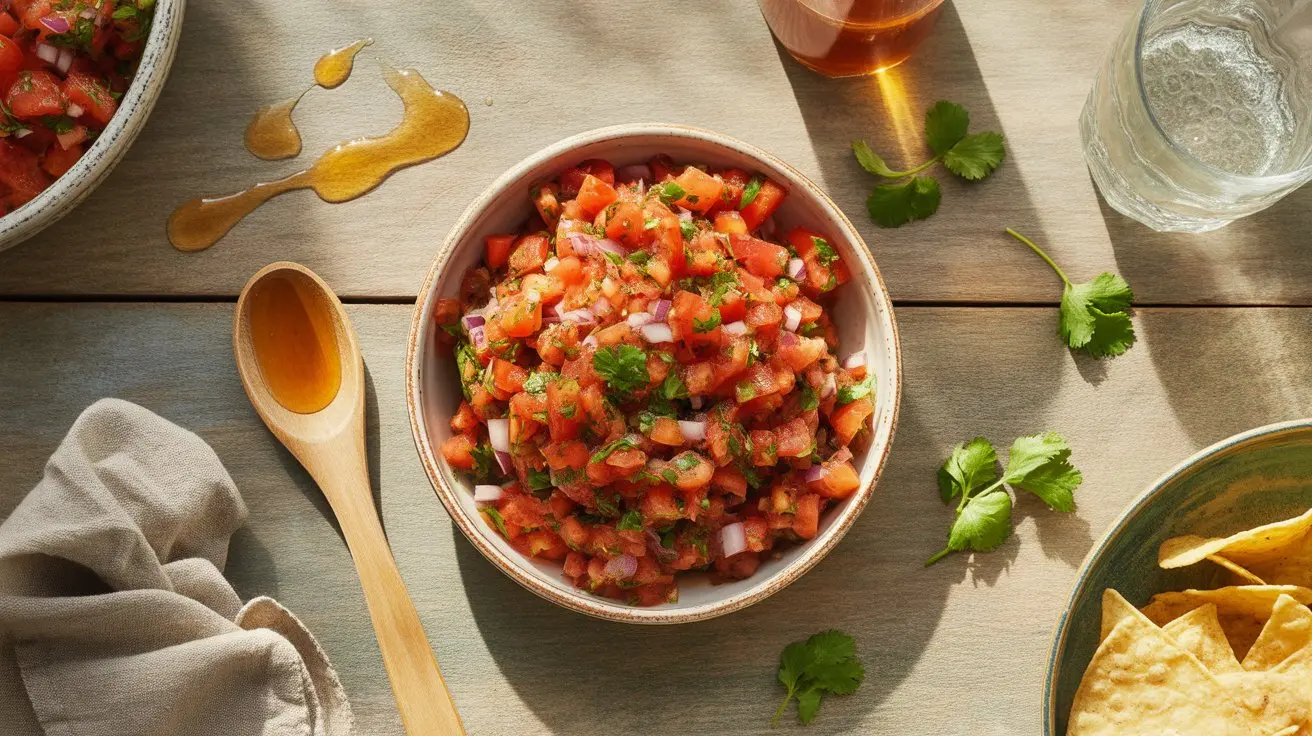
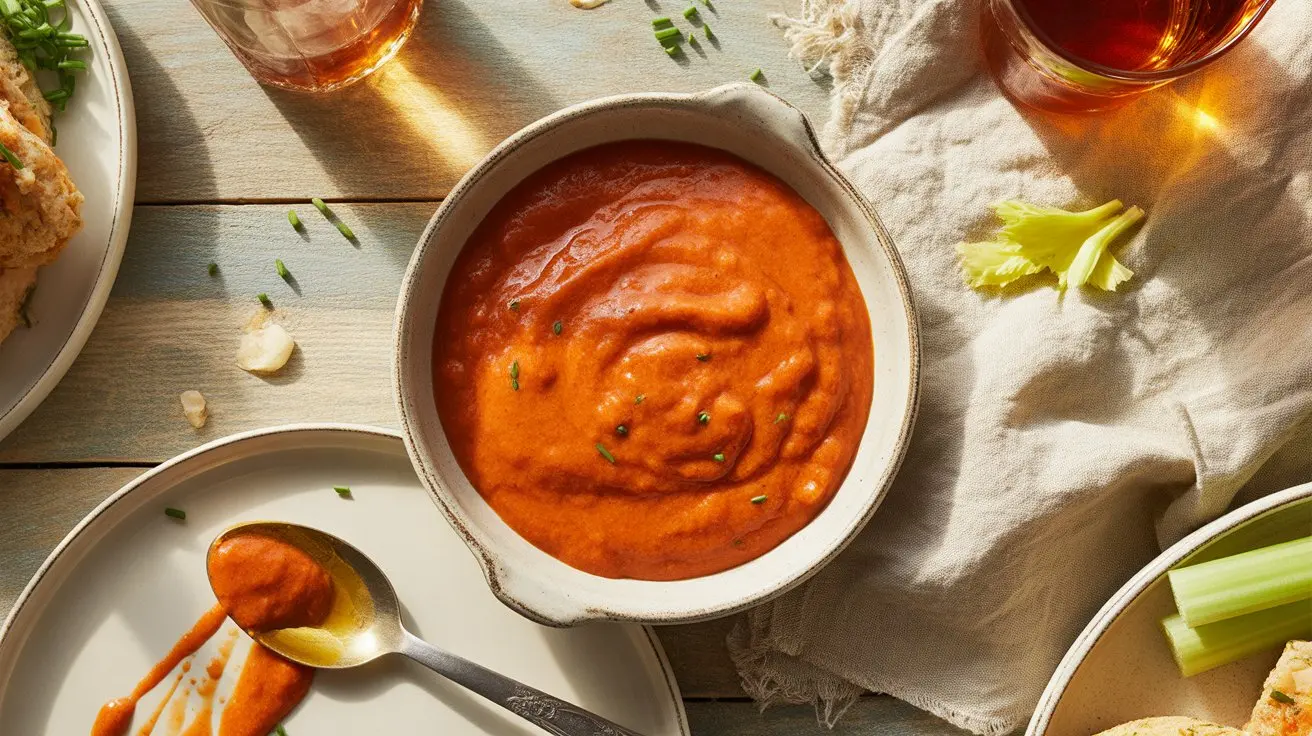
The finished salsa should fall from a spoon in a slow ribbon, then hold its place on a taco. Its smoke is deeper and drier than a salsa made with morita or canned chipotles in adobo.
Use the physical cues in the method when pod thickness or blender power changes the clock. The chile should smell fragrant rather than acrid, its shoulder should fold after soaking, and the blended surface should briefly keep the trail of a spoon.
Confirm the Chile Before Heating the Pan
Chipotle meco is a ripe jalapeno that has been smoke-dried until firm and tan to gray-brown. A USDA National Organic Standards Board petition describes chile meco as grayish tan with a rich smoky flavor, which gives cooks a more dependable identity check than the word “chipotle” on a bin label.
Look for a dry, dusty-looking surface and a rigid or leathery pod, while morita is usually dark burgundy, shinier, and more pliable.
- Choose meco when the salsa needs assertive smoke beside grilled beef, beans, potatoes, or eggs.
- Choose morita when a fruitier red-chile note matters more than a dry smoked finish.
- Reject the pod when it has fuzzy growth, damp patches, or a musty odor that is distinct from clean wood smoke.
Do not judge a dried meco by smoothness or bright color. The better test is whether the pod smells clearly of chile and smoke and still has enough flesh to soften in hot water.
When Meco Is Missing, Change the Method Too
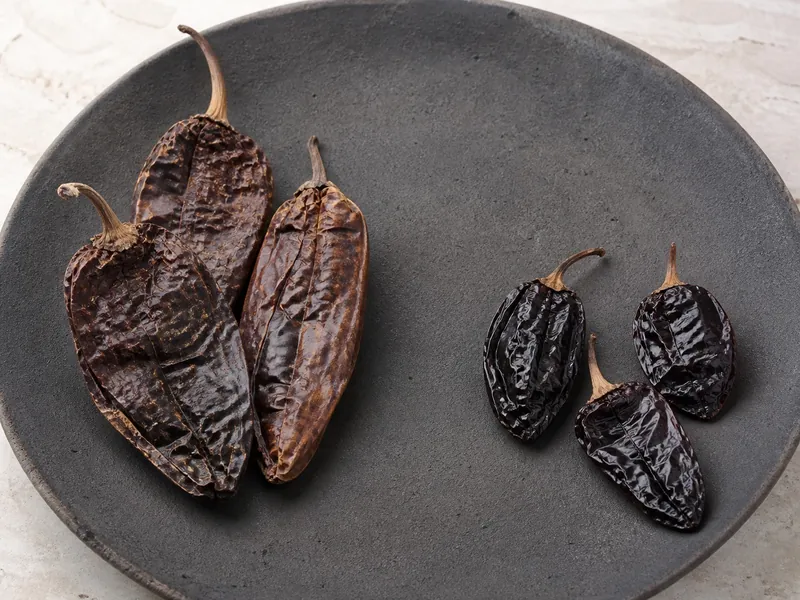
Whole morita is the closest practical replacement because it is also a smoke-dried ripe jalapeno, but its softer flesh and fruitier character make a different salsa.
Use four morita pods, begin with 1 tablespoon of blending liquid, and add more only when the puree stalls. The reduced starting liquid accounts for the moisture that a pliable morita often retains.
Canned chipotles in adobo need a larger method change because Goya lists prepared tomato puree and vinegar in the surrounding sauce. Begin with two drained chiles, roast the fresh vegetables as written, and hold back this recipe's vinegar until a cooled taste proves it is needed.
The canned version will be softer, sweeter, and easier to blend, so it should be judged as a useful shortcut rather than a flavor match for dry meco.
Chipotle powder can strengthen smoke in an existing salsa, but it cannot supply the hydrated chile flesh that builds this recipe's body. Using powder as the only chile requires a different liquid ratio and belongs to a separate formula.
Build the Batch Around Four Meco Chiles
The formula uses four meco chiles to one Roma tomato. That ratio gives the blender moisture and rounds the smoke without turning the result into ordinary roasted tomato salsa.
The batch at a glance
Yield: about 1 1/2 cups. Time: 20 minutes of preparation and 15 minutes of cooking and blending.
Core tools: dry skillet, heatproof bowl, blender, tongs, and a small saucepan. Add a medium sieve only when the chile skins remain coarse after a full blend.
Stem the pods before measuring and remove loose seed clumps, but leave the membranes intact so the first batch preserves the intended yield and heat.
One tablespoon of 5% acidity apple cider vinegar brightens this refrigerator salsa. It does not make the custom formula safe for shelf canning, so keep the storage method separate from a tested canning recipe.
Wake the Smoke Without Scorching It
Heat a dry skillet over medium-low, then press each chile against the pan for 10 to 20 seconds per side. Move it as soon as the smoke aroma becomes fuller because a black blister, sharp smoke, or acrid smell means the surface has gone too far.
Toast in a single layer even when that requires two rounds because the brief direct contact leaves little time to rescue one pod while another burns.
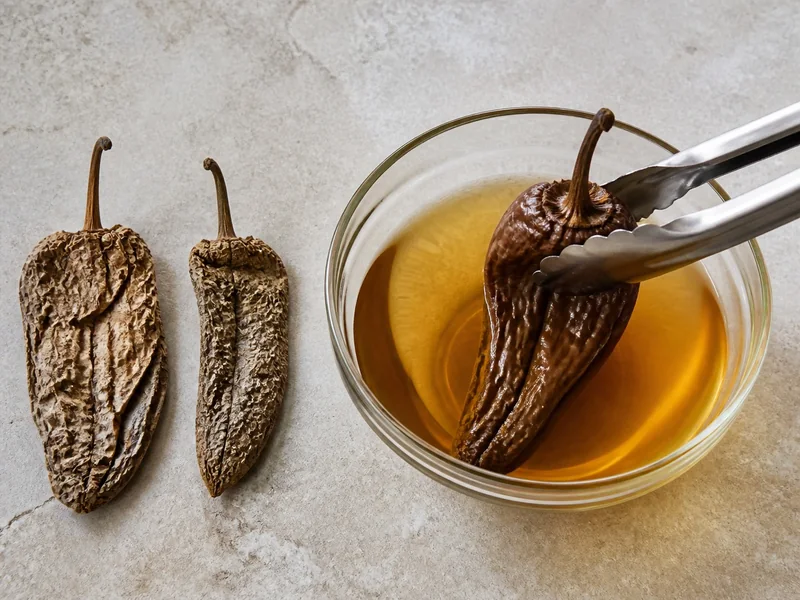
Cover the toasted chiles with just-boiled water and begin checking at 20 minutes. The thick shoulder near the stem should fold without cracking, while the inner flesh should scrape easily with the edge of a spoon.
Taste a cooled drop of soaking liquid before it enters the blender. Keep it when it tastes clean and smoky, but use fresh warm water when the sample is harsh or distinctly bitter.
A pod that still snaps needs another five minutes submerged under a small plate rather than more blender speed.
Roast a Base That Stays Behind the Chile
Roast the tomato halves, onion wedge, and unpeeled garlic until their cut surfaces brown and the tomato begins to soften. Peel the garlic after roasting so its papery skin does not become grit.
The roasted vegetables contribute sweetness, moisture, and body in modest quantities because a second tomato would enlarge the bowl while pushing meco smoke into the background.
Brown sugar is an optional correction of no more than 1/2 teaspoon. Add it only when a cooled taste has a rough bitter edge, since automatic sweetness can make the salsa resemble barbecue sauce.
Cumin, cilantro, and lime are deliberately absent from the base formula. A cook can add one of them at the table, but starting without those strong signals makes it easier to judge the meco itself.
Blend Until the Salsa Falls in a Slow Ribbon
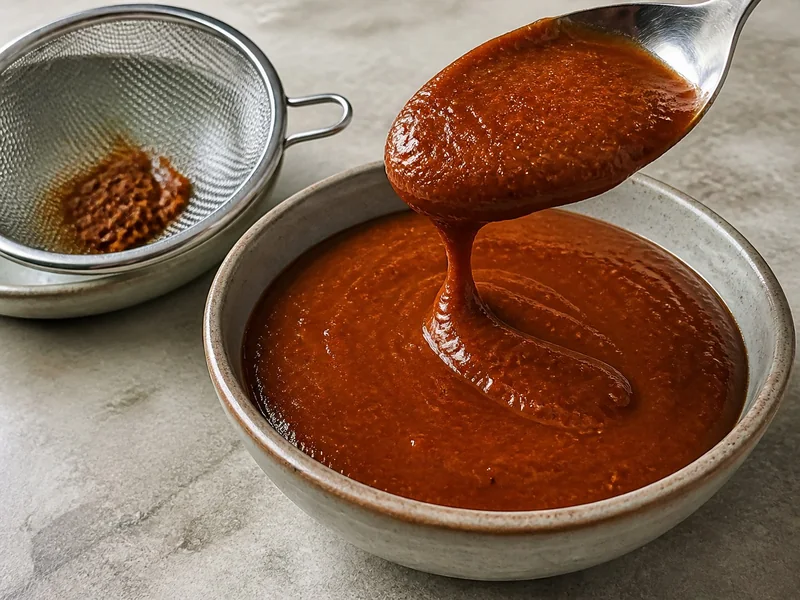
Add the softened chiles, roasted vegetables, vinegar, salt, and 2 tablespoons of clean soaking liquid or warm water to the blender. Pulse first so the dry skins reach the blades, then blend continuously until no large chile pieces remain.
Stop and scrape the jar when a dry ring forms above the blades, adding liquid one tablespoon at a time only when the puree refuses to circulate.
The target is a slow ribbon that briefly marks the salsa surface before settling. A spoonful should spread under light pressure but should not run across a flat plate.
For tough skin flecks, blend another 30 seconds before using a sieve, which creates a polished texture at the cost of some chile solids and yield.
When the salsa becomes too thin, simmer it in a small saucepan for two to four minutes while stirring. Reduction restores body without adding another ingredient that would compete with the smoke.
Correct One Flavor Axis at a Time
Cool one teaspoon before judging the batch because steam makes aroma seem stronger and hot salsa looks thinner. Make one measured correction, stir fully, and taste again.
| What you notice | Likely cause | Measured correction |
|---|---|---|
| Harsh or ashy smoke | A scorched pod or bitter soaking liquid | Blend in 2 tablespoons roasted tomato, then reassess. Discard a severely burnt batch. |
| Flat flavor | Salt or acidity is too low | Add 1/8 teaspoon salt first, then up to 1 teaspoon vinegar if needed. |
| Heat overwhelms the food | The pod batch is unusually hot | Add 2 tablespoons roasted tomato and serve a smaller spoonful. |
| Smoke feels heavy | The salsa lacks a fresh high note | Stir 1 teaspoon lime juice into the portion being served. |
| Salsa tastes sweet | Too much sugar or tomato | Add 1 teaspoon vinegar and a pinch of salt, then stop before it becomes sharp. |
Salt is the better first test for a dull batch because extra meco increases smoke and heat together.
Choose the Finish for the Food
Leave the salsa thick and unstrained for refried beans, roasted potatoes, mushrooms, or grilled steak. Those foods can carry the dense chile solids and reward a concentrated spoonful.
For tacos and fried eggs, pass the salsa through a medium sieve or loosen it with one tablespoon of warm water. The smoother finish spreads across a bite instead of landing as one intensely smoky patch.
For chips, stir in warm water by the teaspoon until the salsa releases from the bowl and lifts cleanly without breaking the chip.
If the meal needs sweet glaze, a pourable hot sauce, or a green tart salsa, use a recipe built for that job. Adding honey, large amounts of vinegar, or tomatillo here changes the central answer this meco salsa is meant to provide.
Refrigerate This Custom Batch
Transfer the cooled salsa to a clean covered container and refrigerate it promptly. University of Minnesota Extension advises keeping an untested salsa recipe in the refrigerator for up to one week or freezing it rather than treating it as shelf stable.
Freeze extra salsa in small portions, then stir and readjust the thawed texture because University of Minnesota Extension notes that freezing softens salsa.
This formula is not a canning recipe. The National Center for Home Food Preservation explains that salsa proportions, acidity, consistency, and process time must be research-tested together, so an extra spoonful of vinegar cannot validate this custom batch for a pantry shelf.
Discard the salsa when mold, bubbling, a swollen container, or an off odor appears. Taste is not a safe way to test visibly spoiled food.
Chef's Tip
The soaking liquid is optional. Taste a cooled drop and use fresh warm water when it is harsh or bitter.
Ingredients
-
4 dried chipotle meco chilesstemmed
-
1 1/2 cups just-boiled waterfor soaking
-
1 Roma tomatohalved
-
1/4 medium white onion
-
2 garlic clovesunpeeled
-
1 tablespoon apple cider vinegar labeled 5% acidity
-
3/4 teaspoon kosher salt
-
1/2 teaspoon brown sugaroptional
-
Warm water as neededfor texture
Full Recipe Instructions
Toast the stemmed…
Toast the stemmed meco chiles in a dry skillet over medium-low heat for 10 to 20 seconds per side, removing each one as soon as its smoky aroma strengthens.
Cover the toasted…
Cover the toasted chiles with just-boiled water for about 20 minutes. Continue soaking until the thick shoulder folds without cracking, then taste a cooled drop of the liquid before reserving it.
Roast the tomato,…
Roast the tomato, onion, and unpeeled garlic in the skillet or under a broiler until softened and browned. Peel the garlic.
Blend the softened…
Blend the softened chiles, roasted vegetables, vinegar, salt, optional sugar, and 2 tablespoons of clean soaking liquid or warm water. Add more liquid one tablespoon at a time only as needed.
Stop when the…
Stop when the salsa falls in a slow ribbon and holds on a spoon. Blend longer or strain for a smoother finish, or simmer for two to four minutes if the batch is too thin.
Cool the salsa,…
Cool the salsa, transfer it to a clean covered container, and refrigerate promptly for up to one week.