Roasted Hatch Chile Salsa Led by Peeled Green Chile and Its Saved Juice
This roasted green chile salsa should lead with peeled Hatch chile, not tomato or tomatillo. The method focuses on blistering, steaming, peeling, saved chile juice, texture control, and serving choices that keep the salsa separate from generic salsa verde.
This salsa should lead with peeled roasted Hatch chile, not tomato, tomatillo, or generic green sauce. The method is built around blistering, steaming, peeling, and saving enough chile juice to keep the bowl loose.
Hatch chiles vary widely by cultivar and harvest, so the best version tastes the batch in front of you instead of assuming one fixed heat level. NMSU Chile Pepper Institute materials are the right reference point for New Mexico chile variability.
Hatch season batches can vary from mild to quite hot. Taste a tiny piece after peeling and before committing to tomato, tomatillo, or lime.
If the chiles are mild and sweet, use less tomato so the chile stays in front. If they are sharp and hot, tomato can round the bowl.
Roast the garlic in its skin to keep it sweet. Bare garlic can burn before the chiles are ready.
Peelable Roast
The roast is successful when the skin blisters and separates from the flesh. It is not about blackening every inch.
Use a hot broiler, grill, or open flame and turn the chiles until most sides blister. The flesh should soften but not collapse into mush.
If the skins only wrinkle, the heat was too low. If the flesh leaks heavily and tears, the roast went too long.
Tomato or tomatillo can roast beside the chiles, but the chile should remain the main ingredient by volume and flavor.
A covered bowl works better than a sealed plastic bag because it catches juice without pressing plastic against hot chile skins. Ten minutes is enough for most batches.
Peeling does not need to be perfect. Remove papery sheets and bitter black patches, but keep small roasted freckles because they carry flavor.
If the chiles are very juicy, separate flesh from liquid before chopping. Add the liquid back only after texture is set.
Steam And Peel
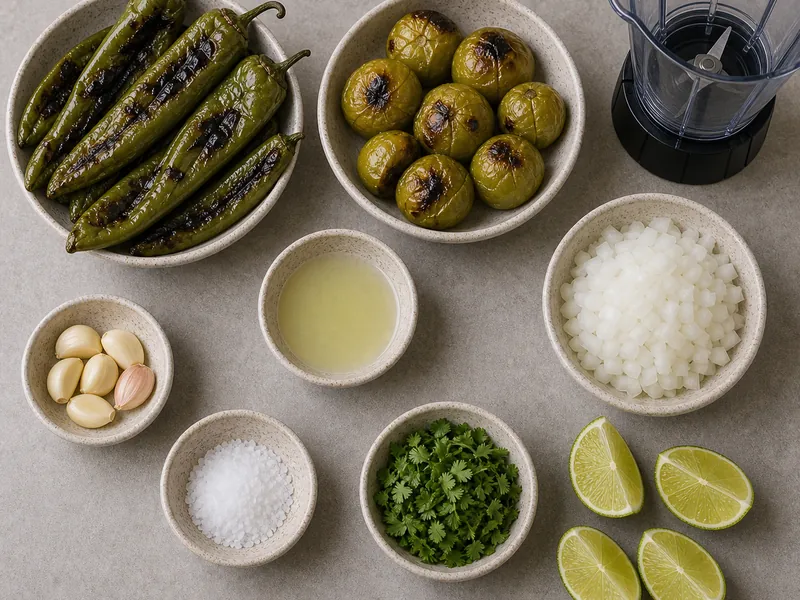
After roasting, cover the chiles for about 10 minutes. Steam loosens the skins and makes peeling easier.
Peel with your fingers or a towel, but do not rinse the chiles under running water. Rinsing washes away roasted flavor and chile juice.
Save the liquid that collects in the bowl. It is the best thinner for the salsa because it tastes like the chile instead of plain water.
Discard papery black skin and tough stems. A few roasted flecks are fine.
Loose burnt skin is not.
Tomato Or Tomatillo
If the Hatch chiles taste grassy and sharp, tomato adds softness and sweetness. If they taste mild and full, molcajete-style salsa verde is a better model for keeping texture rough.
If they taste rich and mild, tomatillo can add needed acid.
Do not use both heavily. The more tomato and tomatillo you add, the less the salsa tastes like Hatch chile.
Onion and garlic should stay in the background. A quarter onion and one garlic clove are enough for a two-cup batch.
For a chile-forward bowl, chop part of the roasted Hatch by hand and blend only the rest with the roasted vegetable base.
The chop size should match the food. Breakfast eggs like small soft pieces.
Burgers can handle larger roasted strips.
For chips, fold chopped chile into a lightly blended base so every scoop gets both sauce and flesh. Pure chopped chile can fall off chips.
For tacos, keep the pieces smaller and the liquid a little looser. The salsa should spread into the filling instead of sitting in a cold pile.
Chopped Texture
A fully blended Hatch salsa can taste good, but it often loses the roasted chile character. Folding in chopped chile gives the salsa soft pieces that remind the reader what they are eating.
For tacos, chop finer so the salsa spreads. For chips, leave larger pieces so the roasted flesh is obvious.
For eggs or burgers, keep it spoonable and slightly thicker. The salsa should sit on the food without running off the plate.
If the batch gets too thick after chilling, loosen it with reserved chile juice first, then water only if needed.
Not Salsa Verde
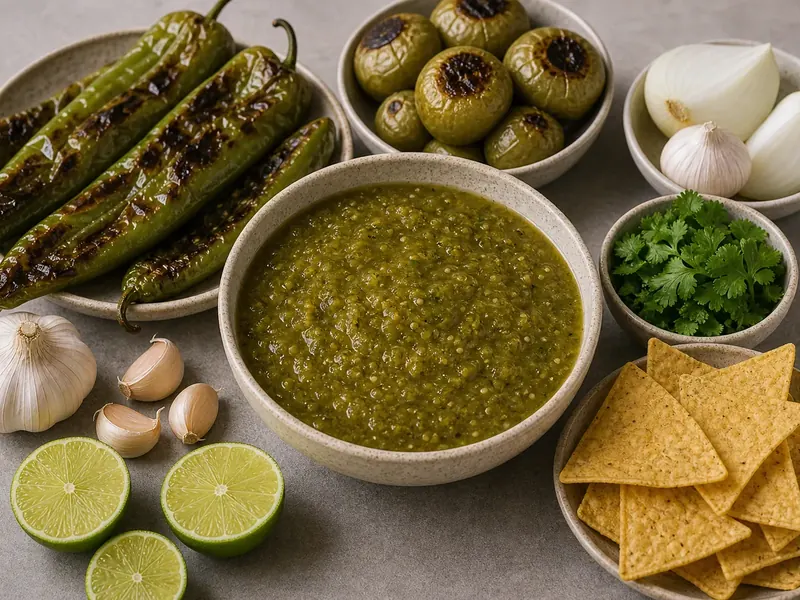
Roasted jalapeno salsa verde is tomatillo-led and jalapeno-driven. This salsa is Hatch-led and should taste like roasted green chile flesh.
Roasted tomato tomatillo salsa balances two fruits. Hatch salsa uses tomato or tomatillo as support, not as the headline.
Green enchilada sauce is smoother and more sauce-like. This recipe is a table salsa with visible roasted chile texture.
Thawed chiles may already be peeled, but check for tough skin anyway. One strip of skin can make an otherwise soft salsa feel stringy.
If frozen chiles taste watery, simmer the tomato or tomatillo base briefly before folding in the chopped chile. That restores body without cooking the chile twice.
If sack-roasted chiles taste smoky enough on their own, keep garlic and onion lighter. Extra aromatics can crowd the roasted green chile.
Frozen Hatch
Frozen Hatch chiles are convenient, but they release more liquid after thawing. Drain and save that liquid before blending.
Sack-roasted chiles can vary in peel quality. Remove loose black skin, but do not over-clean them until the roasted character disappears.
If thawed chiles taste flat, roast the tomato or tomatillo harder for sweetness and add lime at the end. Do not solve flatness with more onion.
For freezer storage before salsa making, freezing chiles and bell peppers is the better reference than this recipe page.
Serving Temperature
Warm roasted Hatch salsa tastes sweeter and less acidic. Cold salsa tastes sharper but can seem less aromatic, so the final salt and lime check depends on service temperature.
Add cilantro after the salsa cools slightly. Hot salsa wilts it fast and can make the herb taste dull before the chile has a chance to lead.
- Serving warm: use lime lightly and keep chopped roasted chile visible.
- Serving cold: retaste after chilling because salt and acid usually need a small bump.
- Breakfast burritos: keep the salsa thicker so egg and potato hold it.
- Chips: cool fully before the last salt check and drain only if the bowl looks loose.
Fresh Hatch chiles should smell green and a little sweet before roasting. Tired pods smell grassy, and no amount of lime will rebuild that chile aroma.
If the bowl tastes like tomatillo salsa, fold in more chopped Hatch. If it tastes like chopped chile with no sauce, blend a small portion with tomato or tomatillo support and stir it back.
USDA FoodData Central frames the texture correctly: the vegetables are low-fat, so body comes from roasted flesh and reduced moisture rather than oil.
Handling Forms
Fresh Hatch gives the cleanest control because you decide the roast and peel. Sack-roasted or frozen chile can still make a strong salsa, but it arrives with moisture and smoke decisions already made.
- Fresh pods: roast similar sizes together so small chiles do not overcook before large ones blister.
- Sack-roasted chile: taste before adding tomato or tomatillo because the roast may already be smoky.
- Frozen chile: thaw in a strainer and save the liquid, then add it back only if the salsa needs looseness.
- Very mild chile: add roasted jalapeno only if the Hatch flavor still leads after tasting.
- Very hot chile: serve a mild bean, egg, or dairy dish nearby instead of weakening the whole bowl.
This handling choice is the main recipe boundary. Jalapeno salsa verde is about tomatillo and medium green heat.
This recipe should make roasted Hatch chile the center of the bowl.
Hatch labels can say mild, medium, hot, or extra hot, but the eating heat still varies by farm and roast batch. We start with the chile flavor, then decide how much tomato, tomatillo, or lime it can carry.
Peeling should be practical, not obsessive. Remove papery blistered skin, but leave tiny roasted bits when they taste sweet instead of burnt.
- Loose salsa: chop in more roasted chile before adding tomato.
- Flat aroma: fold in a saved spoonful of chopped chile right before serving.
- Harsh smoke: add tomato support and retest salt before adding lime.
Use saved chile juice carefully. A spoonful can restore roast flavor after refrigeration, but too much turns the salsa into chopped chile in broth.
For a buffet, use a shallow bowl. Deep bowls trap steam, and trapped steam softens roasted chile texture faster than room-temperature holding.
For nachos, drain the serving portion rather than the whole batch. For burritos, keep more juice because rice, beans, and potatoes will absorb the roasted chile liquid.
Storage Fixes
Serve roasted Hatch salsa in a shallow bowl when it is still slightly warm. The aroma stays clearer, and the chile pieces do not steam themselves soft.
Serve the salsa beside the dish before changing the full bowl. Hatch chile can taste mild on a spoon and much stronger against eggs, beans, or roasted meat.
For a cleaner green color, fold in cilantro after the salsa cools rather than blending it into the hot chile base.
For repeat batches, note whether the chiles were fresh, frozen, or sack-roasted. That starting point explains more flavor change than small lime adjustments.
This is a refrigerator salsa, not a tested canning formula. The National Center for Home Food Preservation treats salsa canning as ratio-sensitive, so do not guess a pantry process.
Refrigerate and use within 4 to 5 days. Freeze small portions if you have a large roasted-chile batch.
Watery salsa needs drained chile pieces and a shorter blend. Bitter salsa usually means too much burnt skin made it into the bowl.
Flat salsa usually needs salt first, then lime. If it still tastes thin, fold in more chopped roasted Hatch instead of adding more tomato.
Chef's Tip
Do not rinse peeled Hatch chiles unless they are very ashy. Rinsing washes away roasted flavor.
Ingredients
-
6 fresh Hatch chiles
-
1 medium tomato or 3 tomatillos
-
1/4 white onion
-
1 garlic cloveunpeeled for roasting
-
2 tablespoons chopped cilantro
-
1 tablespoon fresh lime juice
-
3/4 teaspoon kosher salt
-
1 to 2 tablespoons reserved chile juice or water
Full Recipe Instructions
Roast Hatch chiles…
Roast Hatch chiles until blistered, then cover 10 minutes to steam.
Peel the chiles,…
Peel the chiles, remove stems and seeds as desired, and save any chile juices.
Roast tomato or…
Roast tomato or tomatillos, onion, and unpeeled garlic until softened, then peel the garlic.
Pulse half the…
Pulse half the chiles with the roasted vegetables, lime, salt, and chile juice until spoonable.
Chop the remaining…
Chop the remaining chiles and fold them in with cilantro before serving.