
Choosing Indian Peppers by Color, Heat, Region, and Whether Fresh or Dried
India is the world's largest producer and consumer of chili peppers. Varieties range from the everyday green chili to the legendary Bhut Jolokia (Ghost Pepper).

All Indian Peppers
Every variety in this collection, sorted by maximum Scoville heat rating. Click any card for the full profile with flavor notes, anatomy details, growing tips, and substitutes.
 Super-Hot
Ghost Pepper
 Super-Hot
Bhut Jolokia Chocolate
 Super-Hot
Bhut Jolokia Yellow
 Super-Hot
Bhut Jolokia White
 Hot
Hot
Kanthari Chili
 Hot
Hot
Teja Chili
 Hot
Hot
Reshampatti Chili
 Hot
Hot
Guntur Chili
 Hot
Hot
Jwala Pepper
 Hot
Hot
Sanam Chili
 Hot
Hot
Byadgi Chili
 Medium
Kashmiri Chili
Species Breakdown
India peppers span multiple Capsicum species. Each species has distinct characteristics, which the profiles below explain in detail.
The Twelve Profiles Fall Into Four Practical Lanes
This collection contains 12 published profiles: Ghost Pepper, three colored Bhut Jolokia variants, Kanthari, Teja, Reshampatti, Guntur, Jwala, Sanam, Byadgi, and Kashmiri chile. The inventory spans color-focused dried chiles, pungent commercial dried pods, fresh green cooking chiles, and an extreme-heat Bhut branch.
India’s Spices Board describes green, ripe, and dried fruit as commercial chilli forms and lists named varieties with different color and pungency traits. That official distinction is more useful than treating “Indian chilli” as one flavor or one heat level.
Kashmiri and Byadgi build red color at lower heat than the hotter dried group.
Guntur, Teja, Reshampatti, and Sanam require cultivar-level dosage.
Jwala and Kanthari differ in pod size, range, and regional use.
Ghost and colored Bhut Jolokia profiles need isolation and tiny amounts.
Kashmiri and Byadgi Lead With Red Color
Kashmiri Chili has the lowest published range on this page at 1,000 to 2,000 SHU, making it the first profile to inspect when vivid red color matters more than aggressive heat. Byadgi Chili reaches 8,000 to 15,000 SHU in the site profile, while the Spices Board highlights Byadgi for deep color and low pungency in commercial selection.
These two names are not universal labels for any bright red powder. Buy the named whole pod or a package with clear origin and ingredient information, because blends can change heat, color strength, and the amount a recipe needs.
Guntur, Teja, Reshampatti, and Sanam Build Dry Heat
Guntur Chili, Teja Chili, Reshampatti Chili, and Sanam Chili occupy the hotter dried-chile lane. Their published ranges run from roughly 25,000 to 100,000 SHU, wide enough that a one-for-one swap can double or triple the intended heat.
The Government of India’s Spices Board identifies Guntur Sannam as a thick-skinned, hot red chile associated with districts in Andhra Pradesh and maintains a processing and quality-testing presence at Guntur. Use the exact profile and package name to choose dosage instead of relying on “red chilli” alone.
| Reader goal | Profiles to compare | Published heat lane |
|---|---|---|
| Strong red color | Kashmiri, Byadgi | 1,000 to 15,000 SHU |
| Hot dried-chile flavor | Sanam, Guntur, Reshampatti, Teja | 25,000 to 100,000 SHU |
| Fresh green chile | Jwala, Kanthari | 20,000 to 100,000 SHU |
| Extreme measured heat | Ghost and Bhut variants | 800,000+ SHU |
Jwala and Kanthari Serve Different Fresh-Chile Traditions
Jwala Pepper is the slender green-to-red branch at 20,000 to 30,000 SHU, suitable for readers looking for a fresh chile that can be sliced or cooked whole. Kanthari Chili is a smaller, hotter bird-chile path at 50,000 to 100,000 SHU, so pod size does not mean a mild result.
Regional availability and recipe tradition should decide between them. A small Kanthari pod and a longer Jwala pod distribute differently through a dish, even before their heat ranges are considered.
Bhut Jolokia Is an Extreme-Heat Branch of Its Own
Ghost Pepper, also called Bhut Jolokia, sits at 855,000 to 1,041,427 SHU in the published profile. The Chocolate, Yellow, and White Bhut Jolokia profiles remain separate cultivar-color records, not permission to assume that color alone predicts an exact heat value.
Guinness World Records notes that Bhut Jolokia can reach one million SHU or more, which places it far outside the dosage used for Kashmiri, Byadgi, or Jwala. Keep ghost peppers physically separate, label them, wear gloves, and add only a tiny measured amount to a large batch.
Choose Color and Heat With Separate Measurements
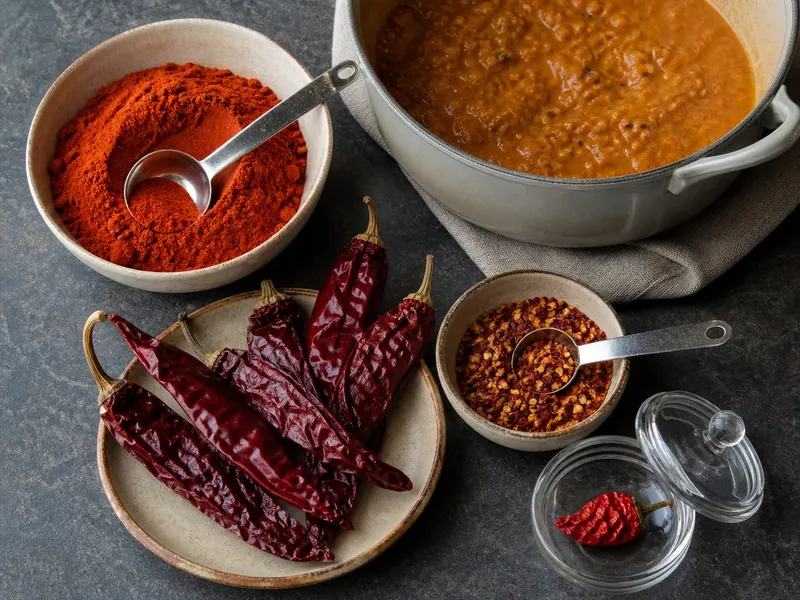
A recipe may need enough Kashmiri or Byadgi material to build red color while requiring a much smaller quantity of Teja, Guntur, or ghost pepper for heat. The in-post photograph makes this separation visible by keeping the color powder, hotter crushed chile, dried pods, and isolated ghost pepper in distinct containers.
Do not replace tablespoons of a color chile with tablespoons of a hotter powder. Start from the profile ranges and the package form, reduce the hotter ingredient sharply, and adjust the finished batch only after the heat has dispersed.
Verify the Name Before Claiming Regional Identity
The Spices Board lists Guntur Sannam Chilli and Byadgi Chilli among India’s registered geographical-indication spices. That status applies to products meeting the official name and specification, not to every anonymous dried chile that resembles the pod.
For whole dried peppers, inspect intact shape, color, dryness, and mold. For powder, read the ingredient and origin statement and keep it airtight, cool, dark, and dry. When the seller provides only “Indian red chilli,” use it as a general ingredient and do not assign a protected or cultivar identity.
Before buying dried Indian chile
- Look for the full named variety or GI name.
- Confirm whole pod, flakes, powder, or blend.
- Reject moisture, mold, and musty odor.
- Store airtight, cool, dark, and dry.
Heat Level Distribution
How indian peppers distribute across the Scoville scale. Click any tier to browse all peppers at that heat level.
Heat Range Comparison
Visual breakdown of where each variety falls on the Scoville scale. Wider bars show a larger documented SHU spread between individual pods.
The causes of pepper heat variation explain why pods from one cultivar do not always measure alike.
Related Comparisons
Side-by-side breakdowns of heat, flavor, and cooking uses. Each comparison covers Scoville ratings, pod anatomy, and substitution options.
 2.2M SHU
vs
1M SHU
2.2M SHU
vs
1M SHU
Carolina Reaper vs Ghost: Twice the Burn
The Carolina Reaper tops the Scoville scale at 1,400,000-2,200,000 SHU, making it one of the most intense peppers ever measured. The… 1M SHU
vs
2M SHU
1M SHU
vs
2M SHU
Ghost Pepper vs Moruga Scorpion: Heat and Sauce Use
Choose Ghost Pepper when you want a widely available superhot with smoky background heat and a slower burn. Choose Trinidad Moruga… 1M SHU
vs
350K SHU
1M SHU
vs
350K SHU
Ghost vs Scotch Bonnet: Heat Limit or Jerk Flavor
Ghost pepper heat is the choice when the recipe is built around superhot intensity. Scotch bonnet flavor is the better choice for…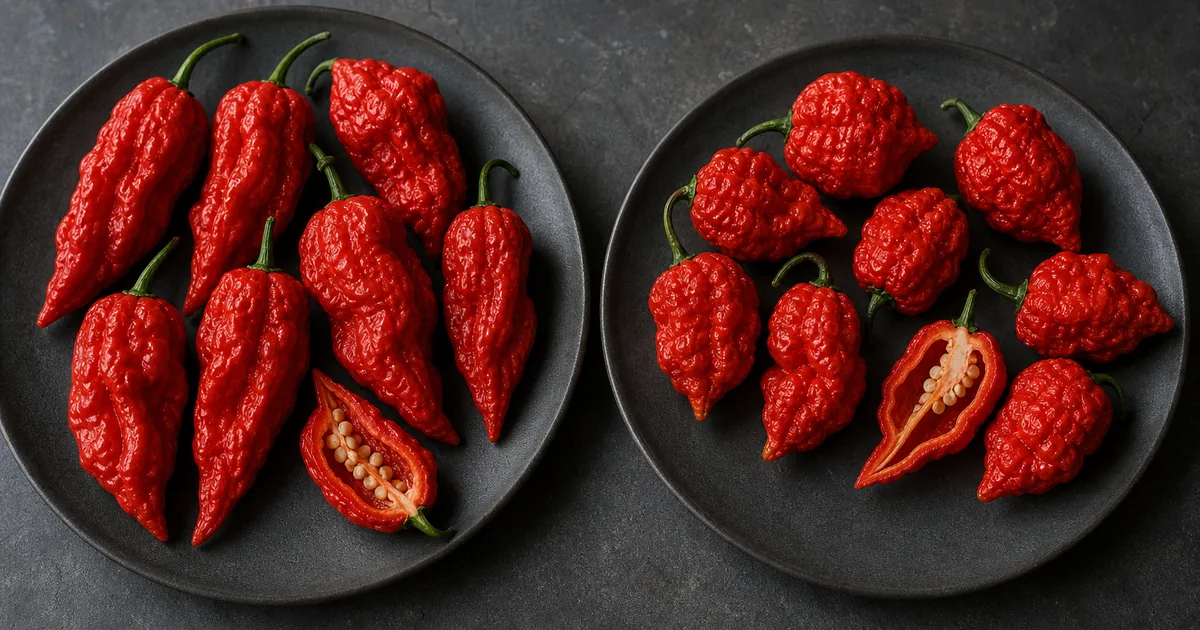 1M SHU
vs
1.4M SHU
1M SHU
vs
1.4M SHU
Ghost vs Naga Viper: Heat Evidence and Sauce Choice
Ghost Pepper is the better-documented and easier-to-source superhot for repeatable sauce. Naga Viper has a higher historical result… 1M SHU
vs
1.5M SHU
1M SHU
vs
1.5M SHU
Ghost Pepper vs Naga Morich: Same Pepper or Not?
Ghost Pepper and Naga Morich are closely related, but not automatic synonyms in careful source use. Bhut Jolokia has a published mean… 350K SHU
vs
1M SHU
350K SHU
vs
1M SHU
Habanero vs Ghost Pepper: 350K vs Past 1M SHU
The habanero sits between 100,000 and 350,000 SHU, making it one of the most recognizable hot peppers in kitchens worldwide. The ghost…Browse all comparisons in our comparison hub, or use the pepper tools for calculators and finders.
Related Guides
Reference guides and recipes tied to the same pepper family, region, or use-case.


Explore Other Origins
Peppers evolved in the Americas and spread worldwide through the Columbian Exchange. Each region developed distinct varieties shaped by local cuisine and climate.
Frequently Asked Questions
Keep Reading
Jump into the wider database, heat tiers, comparisons, and substitute references without another card wall.