
Ghost Pepper vs Naga Morich: Closely Related, Not Automatic Synonyms
Ghost Pepper and Naga Morich are closely related, but not automatic synonyms in careful source use. Bhut Jolokia has a published mean of 1,001,304 SHU, while research places both peppers among the highest-capsaicinoid Capsicum chinense accessions. Choose by traceable identity, regional use, product form, and measured dose rather than declaring a universal heat winner.

Ghost Pepper
Super-HotNaga Morich
Super-HotQuick Comparison
| Attribute | Ghost Pepper | Naga Morich |
|---|---|---|
| Scoville evidence | 855K-1M SHU | 1M-1.5M SHU |
| Heat Tier | Super-Hot | Super-Hot |
| vs Jalapeño | 130x hotter | 188x hotter |
| Flavor | smoky and sweet | fruity and intense |
| Species | C. chinense | C. chinense |
| Origin | India | Bangladesh / Northeast India |
Which Is Hotter, Ghost Pepper or Naga Morich?
The strongest verified comparison does not support a simple claim that Naga Morich is always hotter. Bosland and Baral reported a mean of 1,001,304 SHU for Bhut Jolokia, the measurement that established the Ghost Pepper's record-era reputation.
Recent peer-reviewed Capsicum chinense research places both Bhut Jolokia and Naga Morich among the accessions with the highest capsaicinoid concentrations. That evidence confirms that both belong in the super-hot class, but it does not turn every retail pod into a fixed number or prove that one name wins across every accession and harvest.
The canonical pepper records list Ghost Pepper at 855,000 to 1,041,427 SHU and Naga Morich at 1,000,000 to 1,500,000 SHU. Treat those ranges as planning context, then use a laboratory result tied to the actual product when a precise heat claim matters.
Cultivar, accession, environment, maturity, drying, and sampling can all change the concentration reported for a batch. A powder can also feel more concentrated by volume than a fresh pod because water has been removed, so comparing one teaspoon with one whole fruit confuses form with genetics.
For cooking, both peppers require the same first rule. Begin with a weighed micro-batch, disperse it through the full sauce or dish, and increase only after the pepper is evenly distributed.
Do not use a record number as a serving recommendation. The published measurement describes pungency in a sample, while the safe and useful dose depends on the product form, total batch size, diners, and whether the sauce will concentrate during cooking.
Record heat is not a batch certificate
The 1,001,304 SHU Bhut Jolokia result belongs to a measured research sample. Use a current lot certificate for a precise product claim, and use a weighed test batch for cooking.
How Do Ghost Pepper and Naga Morich Taste Different?
Ghost Pepper is valued for more than record heat. Research on Northeast Indian germplasm describes Bhut Jolokia or Naga King chilli as notable for a distinct aroma and high pungency, which explains why regional cooking did not treat it as a novelty extract.
Naga Morich is also a Capsicum chinense super-hot with a strongly aromatic fruit profile, but retail descriptions often overstate a clean sensory split. A Metabolites study of Capsicum chinense accessions found wide variation in flavor volatiles, so a named accession and actual batch deserve more trust than a universal claim that one is smoky and the other is citrusy.
In practical cooking, Ghost Pepper commonly reads as ripe fruit followed by a deeper savory heat, especially in dried powder, paste, or long-cooked sauce. Naga Morich is often chosen for a brighter aromatic lift in fresh mash, pickle, chutney, or mustard-forward condiment, but those are useful tendencies rather than laboratory identity tests.
Fermentation, smoke, vinegar, mustard oil, tomato, fruit, and drying can move the finished flavor more than the small sensory difference between two raw pods. Compare like with like before assigning the result to cultivar, such as fresh red pod against fresh red pod or unseasoned powder against unseasoned powder.
The heat quickly limits direct sensory comparison for most cooks. Smell the product and evaluate the finished diluted food, rather than biting raw pods to chase a flavor description.
A regional recipe can make the name itself important even when the flavor gap is subtle. If the dish calls for Naga Morich from a Bangladeshi source, replacing it with a generic Ghost Pepper powder may preserve extreme heat while losing the ingredient provenance the recipe intended.
Compare like forms
Fresh pod, dried pod, pure powder, mash, and finished sauce can taste different before cultivar enters the question. Compare the same form and read every ingredient list.
How Are Ghost Pepper and Naga Morich Used in Cooking?
Government of India sources describe Naga or Bhut Jolokia as part of traditional Naga cuisine and as an ingredient for sauce, paste, powder, spice blends, and seasonings. Those uses show the correct scale of the ingredient because a very small amount is dispersed through a larger preparation.
Choose Ghost Pepper for a Northeast Indian bhut jolokia recipe, a broad super-hot sauce, curry, paste, powder, or seasoning in which its recognized name and deeper cooked profile fit. Dried powder is convenient for controlled distribution, but it can become airborne and should never be shaken casually over a hot pan.
Choose Naga Morich when a Bangladeshi or regional recipe names it, especially for mash, pickle, chutney, fish, mustard oil, onion, citrus, or a small-dose condiment where its aromatic identity is part of the dish. The ingredient should support the regional base rather than replace every other chile with raw heat.
Fresh pod, dried pod, powder, sauce, and mash are not equivalent. A commercial sauce includes acid, salt, sweetener, fruit, stabilizers, or other chiles according to its label, while pure powder contributes concentrated dry pepper without the water or seasoning of a finished sauce.
For a fresh pod, trim a tiny piece by weight and blend it into a measured amount of base. For dried powder, use a precision scale that can register the planned amount because a kitchen teaspoon is too coarse for repeatable dosing at this heat level.
For fermentation, follow a tested salt and food-safety process rather than inventing a room-temperature schedule around the pepper. Super-hot pungency does not protect a mash from unsafe fermentation or replace control of salt, acidity, temperature, oxygen exposure, and spoilage.
For curry, stew, or sauce, add the pepper early only when the full batch can dilute it and the cooking process will not reduce the liquid too far. A sauce that loses half its water can deliver a much stronger concentration than the same weighed dose in its starting volume.
Dairy, coconut milk, fat, starch, fruit, or sugar can change how a dish carries heat, but none removes capsaicin from an overloaded batch. Dilution with more complete sauce base is more predictable than adding one balancing ingredient and hoping the original dose disappears.
Verdict
Choose Ghost Pepper when the recipe names Bhut Jolokia, when Northeast Indian provenance matters, or when a familiar super-hot powder or sauce fits a broad cooked application. It is also the easier name to verify across established spice and sauce markets, provided the seller identifies the cultivar and form.
Choose Naga Morich when the recipe or cook specifically wants the Bangladeshi or regional accession and its aromatic role in mash, pickle, fish, mustard-forward condiment, or chutney. Its name is a flavor and provenance cue, not proof that every pod is hotter than Ghost Pepper.
For heat alone, neither pepper deserves a casual one-pod rule. Match the actual form and trimmed weight, make a small test portion, and let the finished diluted food decide whether more is useful.
For most cooks, product quality matters more than a theoretical cultivar winner. A fresh correctly labeled Ghost Pepper is a better ingredient than stale anonymous Naga powder, and a traceable Naga Morich is a better regional choice than generic sauce marketed only as extreme.
Do not choose either pepper for a challenge, garnish, or surprise dose. The cooking value comes from controlled aroma and pungency across a real dish, not from maximizing pain.
The name on the bag is not enough
Look for cultivar, region, grower or processor, form, and lot information. Generic naga or ghost labeling cannot authenticate a pod, powder, sauce, or seed line.
What Names Do Ghost Pepper and Naga Morich Go By?
Ghost Pepper usually refers to Bhut Jolokia from Northeast India, also called Bhoot Jolokia, Naga King chilli, Naga Mircha, or related local names. India's national portal describes Naga Mircha from Nagaland as Naga King chilli and also known as Bhut Jolokia, which shows how official common names can overlap.
Naga Morich is generally associated with Bangladesh and adjoining Northeast India and is treated as a named Capsicum chinense accession in current research. That does not mean every market or seed seller uses the same boundary, especially when transliterated words such as Morich, Mircha, Jolokia, and Naga appear on labels.
NCBI currently lists Bhut Jolokia or Naga King Chili under Capsicum chinense x Capsicum frutescens, while other research and crop records use Capsicum chinense. The taxonomic history is another reason to avoid claiming that one casual label proves exact genetics.
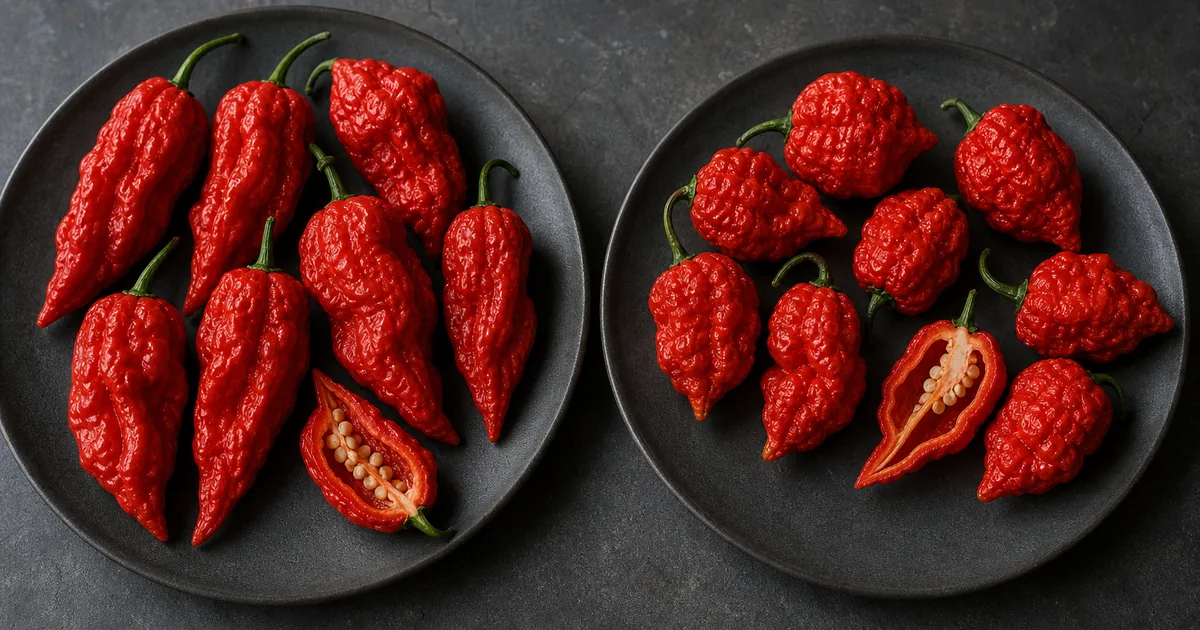
Pod appearance helps only when provenance is already credible. Both can ripen red, develop wrinkled super-hot skin, and vary in elongation or shoulder shape, so a photograph cannot authenticate seed lineage or a ground powder.
The practical answer is that the names are related, regionally entangled, and not perfect synonyms in careful cooking or accession use. Treat traceable Naga Morich and Bhut Jolokia as distinct products, while recognizing that informal trade labels may collapse them.
What Should a Ghost Pepper or Naga Morich Label Show?
Buy fresh or dried pods from a grower or spice seller that names the cultivar, country or region, harvest or packing date, and product form. A bag labeled only naga, ghost, king chilli, or super-hot does not provide enough identity for a comparison recipe.
For powder, check whether the ingredient list contains only the named chile or a blend with salt, paprika, cayenne, extract, smoke flavor, or another pepper. A blended seasoning cannot support a cultivar heat or flavor claim even when the front label uses one famous name.
For sauce or mash, read the full ingredient order and heat statement. The pepper may be a minor component behind vinegar, fruit, tomato, or another chile, so bottle heat cannot be converted back into pod SHU or a one-for-one fresh substitution.
For seed, use a supplier that documents the parent stock and isolation practice. Super-hot Capsicum can cross in hobby gardens, and a seed packet name does not guarantee that the eventual pods match a preserved accession.
When laboratory precision matters, require a current certificate for the specific lot instead of copying a world-record number. For ordinary cooking, traceable identity, fresh aroma, intact packaging, and a measured test batch are enough to make a sound choice.
Substitution
Ghost Pepper and Naga Morich can substitute for each other in a diluted cooked sauce when regional identity is not the main point. Start with equal trimmed weight at no more than the original planned dose, make a small test portion, and adjust the full batch only after the heat is evenly dispersed.
Do not substitute a spoon of powder for a spoon of fresh chile. Convert the recipe around actual weight and product concentration, because drying removes water and a commercial powder may contain a blend.
When using Ghost Pepper as a Naga Morich substitute, keep the mustard oil, fish, onion, citrus, pickle spices, or other regional structure that made the recipe distinctive. The replacement should supply compatible super-hot pepper, not rewrite the dish into a generic novelty sauce.
When using Naga Morich as a Ghost Pepper substitute, expect the actual accession and form to control the result. A bright fresh mash may shift a dark cooked sauce more than an unseasoned dried powder would, even if both products carry a Naga label.
For a recipe whose title, provenance, or market identity depends on one pepper, do not promise equivalence. Use the named product or disclose the substitution because the overlap between common labels does not erase cultivar and regional differences.
Never scale these by handfuls
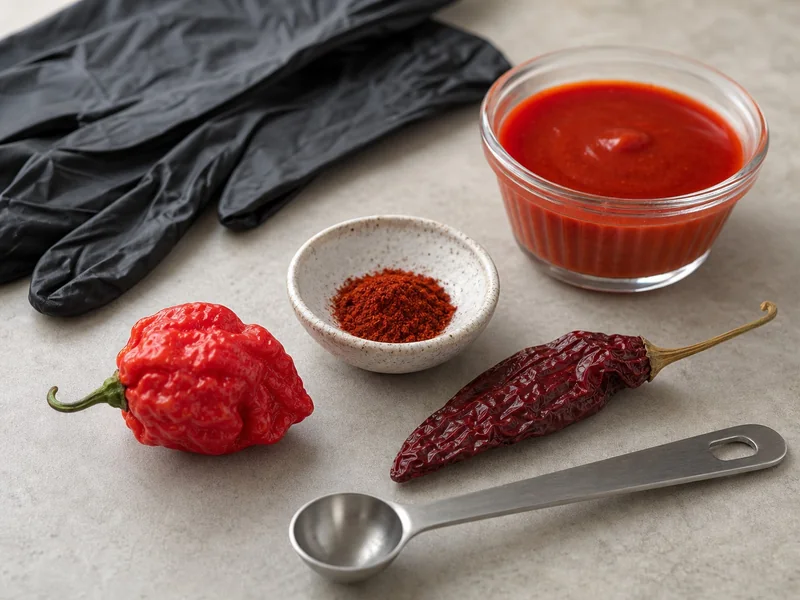
Use trimmed weight, a small test portion, gloves, clean tools, and ventilation. Avoid airborne powder and keep the measured pepper away from shared food until the dose is confirmed.
Ghost Pepper vs Naga Morich FAQ
- Bhut Jolokia Pungency Measurement - Bosland and Baral via PMC Review
- Capsaicinoids in Bhut Jolokia - PubMed
- Capsicum chinense Flavor and Pungency Accessions - PMC
- Ghost Pepper Germplasm from Northeast India - PMC
- NCBI Taxonomy for Bhut Jolokia and Naga King Chili
- Naga Mircha - National Portal of India
- Nagaland Food Processing Profile - Government of India