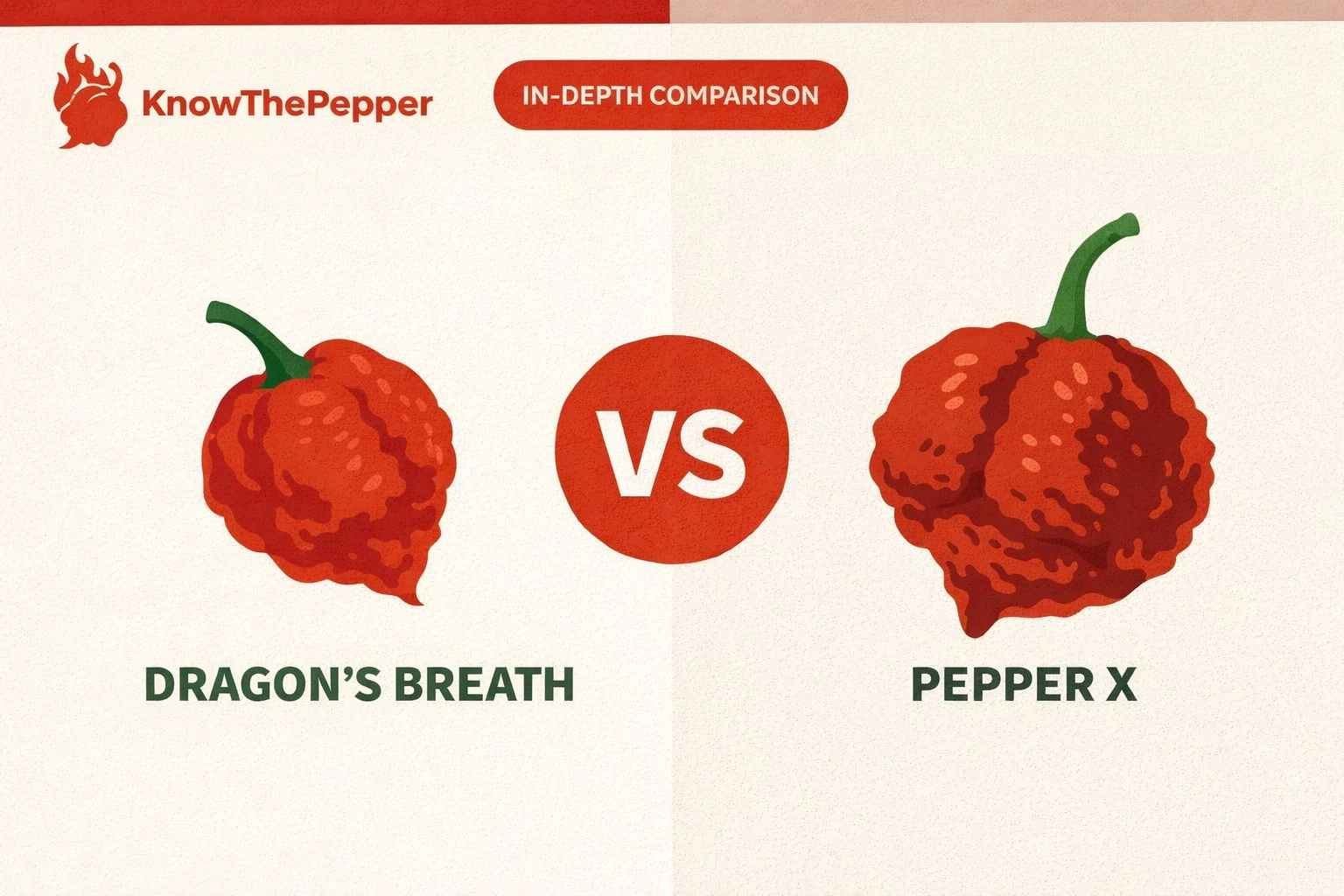
Dragon's Breath vs Carolina Reaper: Claim vs Record
Choose Carolina Reaper for a documented heat benchmark and a repeatable cooking product. Dragon's Breath carries a higher 2.48-million-SHU claim, but the public evidence does not support treating that figure as a verified cultivar average.

Dragon's Breath has a reported 2.48-million-SHU claim, while Carolina Reaper has a Guinness-confirmed average of 1,569,300 SHU from Winthrop University testing. The first number is a reported high claim and the second is a documented cultivar average, so they should not be treated as equivalent measurements.
- Species: Both are C. chinense
Dragon's Breath
Super-HotCarolina Reaper
Super-HotQuick Comparison
| Attribute | Dragon's Breath | Carolina Reaper |
|---|---|---|
| Scoville evidence | 2.48M SHU reported claim | 1.4M-2.2M SHU documented range |
| Heat Tier | Super-Hot | Super-Hot |
| vs Jalapeño | 313x hotter | 275x hotter |
| Flavor | extremely intense | fruity and sweet |
| Species | C. chinense | C. chinense |
| Origin | United Kingdom | USA |
Which Is Hotter, Dragon's Breath or Carolina Reaper?
Dragon's Breath has the higher headline number, but Carolina Reaper has the stronger public heat record.
The Dragon's Breath figure of 2.48 million SHU came from 2017 reports about a Welsh plant grown by Mike Smith. CBS reported at the time that the growers were still waiting for Guinness confirmation, and Guinness does not list the cultivar as a record holder.
Guinness World Records confirmed Carolina Reaper at an average of 1,569,300 SHU in 2013. Its 2023 Pepper X announcement rounded the previous holder's average to 1.64 million SHU, while the practical Reaper range used by KnowThePepper reaches 2.2 million.
Those figures describe different evidence, so subtracting 1.57 million from 2.48 million does not produce a dependable heat advantage.
A cultivar average summarizes multiple tested specimens under a stated record process. The public Dragon's Breath claim does not disclose an equivalent sample, average, laboratory report, or spread between pods.
Treat both peppers as extreme superhots, while treating the Dragon's Breath number as a reported result rather than a verified cultivar average.
How Strong Is the Evidence Behind Each Heat Number?
The deciding question is what each number can support after the headline is removed. New Mexico State University identifies high-performance liquid chromatography as the most accurate method for objective chile heat analysis.
| Evidence check | Dragon's Breath | Carolina Reaper |
|---|---|---|
| Public number | Reported at 2.48 million SHU | 1,569,300 SHU certified average in 2013 |
| Measurement context | No public sample set or cultivar average located | Guinness names the record and average |
| Current Guinness status | Never listed as the official holder | Former holder, replaced by Pepper X in 2023 |
| Meaning for buyers | The number cannot authenticate a seed or product | The cultivar has a documented benchmark, but each product still varies |
| Best supporting proof | Seller lineage, current pod photos, and batch test | Named producer, ingredient form, lot details, and dose guidance |
An HPLC result for one sample would describe that sample, not every seed packet carrying the same name.
That limit matters because genetics, environment, fruit position, maturity, and sample preparation can change capsaicinoid concentration. NMSU's measurement guidance explains why an objective lab method is better than tasting, while it does not turn one test into a permanent value for every pod.
For comparison shopping, documentation quality is more useful than a maximum printed without its test conditions.
The certified average also does not promise that every Carolina Reaper pod will measure 1,569,300 SHU. It gives the named cultivar a traceable reference point that Dragon's Breath lacks in public documentation.
For a finished food, the relevant measurement belongs to the product batch after drying, dilution, fermentation, and blending. A pepper record cannot replace a maker's lot test because the final sauce may contain several peppers and a large base.
This evidence hierarchy keeps the comparison honest without assuming that an official record makes every Reaper product identical.
What Do Dragon's Breath and Carolina Reaper Taste Like?
Carolina Reaper is the better choice when flavor needs a documented starting point instead of a seller description.
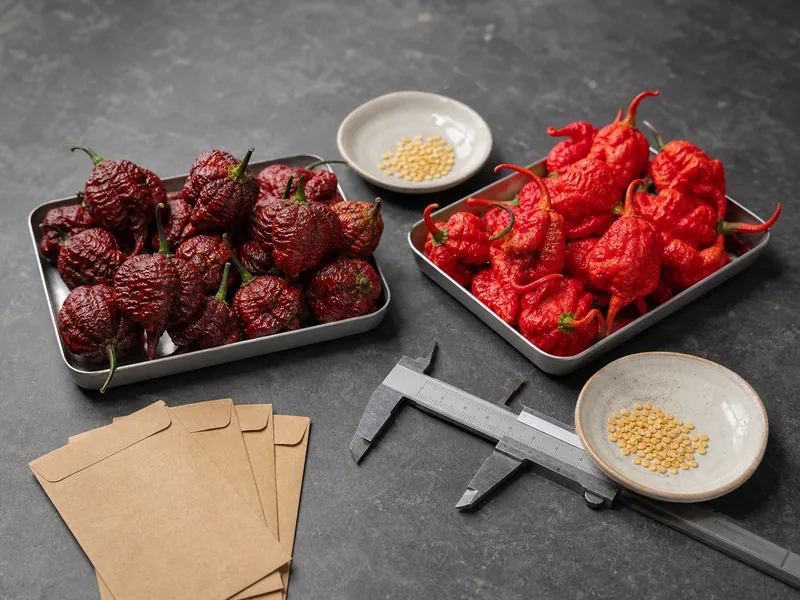
Guinness described the Reaper as fruity and sweet when it confirmed the 2013 record. That description fits the named cultivar, although heat, ripeness, processing, and dilution still change what reaches the finished sauce.
Published Dragon's Breath coverage concentrates on the 2.48-million-SHU claim and gives little repeatable flavor evidence.
A seed vendor may describe a pod as fruity, floral, bitter, or smoky, but that language cannot establish that the plant matches the 2017 material. A sauce label also reflects vinegar, fruit, sugar, salt, fermentation, and other peppers more than the name on its front.
Choose the Reaper for a recognizable sweet-fruity superhot note, and choose Dragon's Breath only when the specific grower or maker provides enough detail to judge that batch.
Which Is Easier to Cook With, Dragon's Breath or Carolina Reaper?
For cooking, product form matters more than the disputed gap between the two headline numbers. A fresh pod, dried powder, mash, and finished sauce can deliver very different concentrations even when they carry the same cultivar name.
Carolina Reaper has the practical advantage because named powders, mashes, and sauces are widely sold with ingredient lists and serving guidance.
Dragon's Breath makes more sense as a specialty purchase from a grower or maker who documents the source material. A novelty label with no dose, batch, or ingredient detail gives the cook no reliable way to reproduce the result.
Use either pepper only where extreme heat is intentional, such as a measured hot sauce batch or a highly diluted condiment.
Raw garnish, casual chopping, dry pan toasting, and food challenges remove the controls that make a superhot product manageable. Poison Control notes that capsaicin can irritate skin, eyes, the digestive tract, and the respiratory tract, so the cooking method should reduce splashes, dust, and fumes.
For most home kitchens, a labeled finished sauce gives better control than a whole pod because the maker has already dispersed the pepper through a known product volume.
Is There a Swap Ratio Between Dragon's Breath and Carolina Reaper?
There is no defensible one-to-one Dragon's Breath to Carolina Reaper ratio because the public numbers do not describe equivalent samples.
| Product form | What to measure | Best starting control |
|---|---|---|
| Finished sauce | Manufacturer serving size and batch | Add the labeled serving to the full dish, then wait before adjusting |
| Powder | Mass or a dedicated small measuring spoon | Mix into a large liquid base instead of sprinkling over one serving |
| Mash or puree | Net weight and pepper percentage when supplied | Disperse a measured amount through the complete sauce |
| Fresh pod | Pod mass and verified identity | Avoid using a new specimen as the first dosing test for a shared meal |
A label that gives no serving guidance, pepper percentage, or batch information leaves too much uncertainty for precise dosing. In that case, selecting a better documented product is safer than inventing a ratio from SHU claims.
Record the product name, form, batch, amount, and finished volume when a recipe needs to be repeated.
Capsaicin does not disappear when more vinegar, sugar, or salt enters the pot. Increasing the unsalted base lowers the concentration, while dairy or sweetness may change perception without removing the compound.
The best comparison is therefore dose control within the product you actually bought, not a whole-pod conversion between cultivar names.
Timing also affects dose control because capsaicin heat can continue building after the first taste. Add once, mix thoroughly, pause, then evaluate a small portion before changing the batch.
Scaling should use the same product and the same finished-volume ratio. Doubling a recipe while switching from sauce to powder changes two variables, so the earlier result no longer predicts the second batch.
Fresh pods create the widest uncertainty because mass, internal tissue, maturity, and individual heat can vary within one harvest. If a whole pod is the only available form, reserve it for a controlled small batch rather than converting it from another cultivar by count.
A written dose record turns an extreme ingredient into a repeatable process, while a headline SHU comparison does not.
How Can You Tell Which Pepper You Are Buying?
Buy Carolina Reaper when traceable identity and repeatable product form matter, then consider Dragon's Breath when provenance is part of the purchase.
A seed name is a claim about genetics, while a bottle name may describe flavor or marketing rather than its only pepper. Neither label proves the 2017 Dragon's Breath material without supporting information.
Check these details before paying a premium:
- The seller names the grower, breeder, or seed line.
- Recent photographs show pods from the offered plants rather than a generic stock image.
- Seed listings explain isolation or controlled pollination practices.
- Food products disclose pepper form, full ingredients, net amount, and serving guidance.
- A claimed heat result identifies the laboratory, test method, sample, and date.
A certificate for one sauce lot does not establish the heat of seeds from another source. It does give that sauce buyer more useful evidence than an unattributed number copied across product pages.
For an authenticated superhot ingredient, Carolina Reaper offers the shorter evidence chain from cultivar name to product. Dragon's Breath remains a specialty choice whose value depends on what the individual seller can prove.
Seed buyers and food buyers need different proof because a seed listing should document lineage and isolation, while a sauce listing should document ingredients, quantity, serving guidance, and the company responsible for the batch.
Photographs help with consistency but cannot prove heat or genetics on their own. A wrinkled red pod with a pointed tail may resemble a Reaper, and a small bumpy pod may be sold as Dragon's Breath, yet appearance does not substitute for provenance.
Price should follow evidence rather than the most dramatic number. Paying more makes sense when the seller supplies information that lets you identify, dose, or reproduce the purchase.
Safe Handling Sequence
Handle both peppers according to the product form and exposure risk, since uncertainty about the exact SHU does not reduce capsaicin irritation.
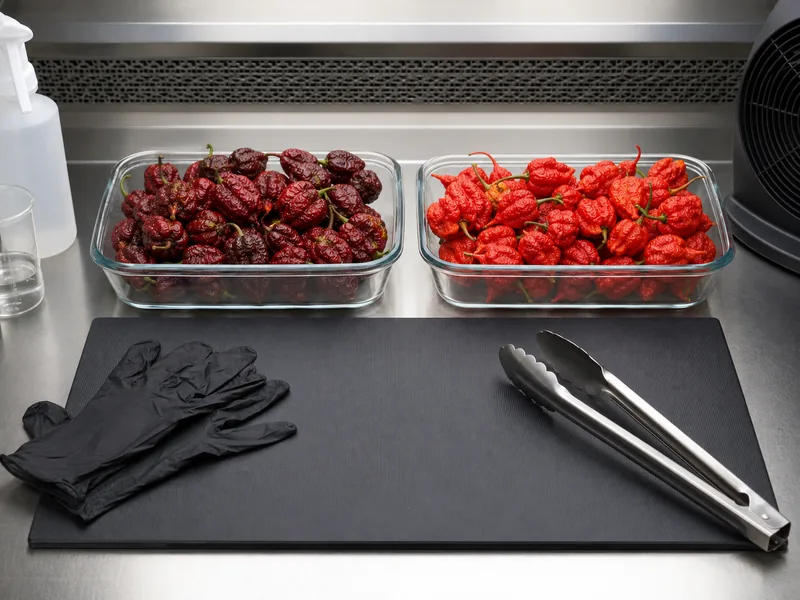
- Put on intact nitrile gloves before opening fresh pods, powder, or mash.
- Keep dry powder low in its container and avoid creating airborne dust.
- Ventilate the workspace and avoid heating either pepper in a dry pan.
- Use dedicated measuring tools, then wash tools and work surfaces with detergent.
- Keep hands away from the face and store the product where children or pets cannot reach it.
- Label leftovers with the pepper, product, and date so they cannot be mistaken for a mild sauce.
Poison Control recommends gloves, fresh air during preparation, and avoiding contact with the face and eyes. Its guidance also says to irrigate an exposed eye with water for 15 minutes and seek expert help for breathing trouble or chest discomfort.
Do not taste an undiluted powder, mash, or fresh fragment to estimate strength.
A measured addition to a large base limits exposure and gives the cook time to stop. That sequence protects the dish from an irreversible dose while reducing the chance of transferring residue to another person or surface.
Verdict
Choose Carolina Reaper for a documented benchmark, recognizable cultivar identity, and products that are easier to dose consistently.
Choose Dragon's Breath when you specifically want that named specialty cultivar and the seller supplies lineage or batch evidence. Its reported 2.48-million-SHU result may exceed the Reaper's certified average, but the two figures do not support a clean multiplier.
The practical winner is the product with the clearest identity, form, test context, and serving guidance.