Save Pepper Seeds From Fully Ripe Pods and Store Them Below 40°F
Save pepper seed from fully ripe pods on open-pollinated plants, dry it below 8 percent moisture and hold it below 40 F. Isolation distance is disputed across sources and always further than a home garden allows, so bagging the flower is the reliable route. Test germination before you commit a tray to stored seed.
Why saving pepper seeds is worth the effort
Seed saving often starts with a plant worth keeping, a variety that's hard to find or no longer sold, one that produced the most consistently fiery, thin-walled fruits of any packet tried. Slice open a ripe pod, scrape the seeds onto a paper plate, and let them dry.
That lineage carries forward from there.
Seed saving is one of those skills that sounds complicated until you actually do it, and then you wonder why you ever bought new seeds every spring.
Which peppers are worth saving seed from?
Not all peppers are equally good candidates for seed saving. The best results come from open-pollinated or heirloom varieties, these reproduce true to type, meaning the offspring will closely match the parent plant.
Hybrid varieties (usually labeled F1 on seed packets) are a different story. Seeds from F1 hybrids can germinate, but the resulting plants often revert to unpredictable traits from the parent lines.
If you grow hybrids, buy fresh seed each year.
The label is what tells you, not the variety name. Anything sold as open-pollinated or heirloom will come true, and anything marked F1 will not, whatever it tastes like.
How much do peppers actually cross?
Peppers are primarily self-pollinating, which works in your favor. The flower structure means pollen typically fertilizes the same flower before insects have a chance to transfer it elsewhere.
That said, cross-pollination does happen, especially when multiple varieties grow within 30 to 50 feet of each other and bees are active. The cross won't affect the flavor of this season's fruit, but it will affect the seeds inside.
Plant the next generation from those seeds and you might get something unexpected.
If you're growing several varieties and want to preserve genetic purity, the simplest method is bagging individual flowers before they open. Use small mesh bags or row cover material secured with a twist tie.
Once the flower self-pollinates and the petals drop, remove the bag. Mark that fruit, those are your seed-saving specimens.
How ripe should a pepper be for seed saving?
Seed quality starts with fruit selection. Pick from the healthiest, most vigorous plants in your garden, not just any pepper that happens to be ripe.
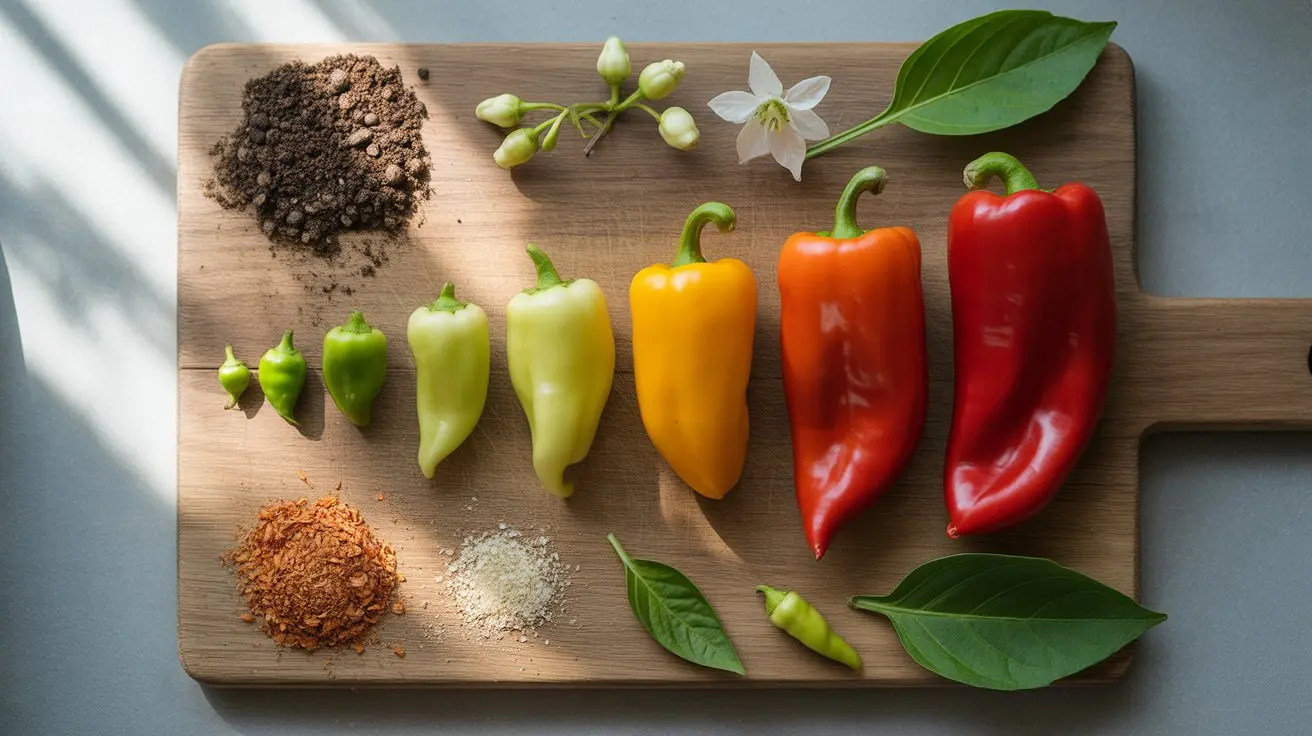
The fruit itself needs to be fully mature. For most peppers, this means red, orange, yellow, or brown, whatever the fully ripe color is for that variety.
Green peppers harvested early contain immature seeds with low germination rates.
Leave your seed-saving fruits on the plant as long as possible, even past the point where you'd normally harvest for eating.
Peppers usually picked before full colour are the ones that catch growers out. Aleppo and Maras are both harvested while still firm for cooking, and seed taken at that stage is not mature.
If frost is coming before your selected fruits fully ripen, pull the entire plant and hang it upside down indoors, and the fruits will continue ripening off the vine.
How to extract and clean the seeds
Wear gloves for hot varieties, because capsaicin concentrates in the placental tissue around the seeds, and the oils transfer easily to skin and eyes.
- Slice the pepper lengthwise and use a spoon or your fingers to scrape seeds into a bowl.
- Separate seeds from the white placental membrane as much as possible, the membrane can harbor mold during drying.
- For a quick rinse, place seeds in a small strainer and run cool water over them, gently rubbing to remove any remaining flesh.
- Spread seeds in a single layer on a ceramic plate, glass dish, or wax paper. Avoid paper towels, seeds stick and you'll tear them trying to remove them.
- Label immediately. It's shockingly easy to mix up varieties once they're out of the fruit.
The Calabrian Chili produces seeds that are particularly sticky from the oil content, rinse those extra thoroughly before drying.
How long do pepper seeds need to dry?
This step is where most first-time seed savers go wrong. Seeds need to be completely, thoroughly dry before storage, not just surface dry, but dry all the way through.
Spread seeds in a single layer and let them dry at room temperature for 1 to 2 weeks. Stir or flip them every day or two so they dry evenly.
A spot with good airflow and low humidity works best, avoid anywhere with temperature swings or condensation.
Colorado State gives a faster route, drying seed at 100 °F for six hours, which a dehydrator on its lowest setting will hold. Stay at that figure rather than above it.
An oven is the wrong tool even on its lowest setting, because most will not run that low and seed does not survive the overshoot.
The snap test tells you when they are ready, because a properly dried pepper seed snaps cleanly when bent rather than flexing.
Seeds that bend still carry moisture and will mould in storage.
How should you store pepper seeds?
Moisture and heat are what kill stored seed, and Colorado State Extension gives both targets. Keep seed below 8 percent moisture and hold it below 40 °F.
Hit both and the payoff is real. Colorado State puts a 10-year storage life within reach for many seeds dried under that 8 percent figure.
The classic home setup is small paper envelopes inside an airtight glass jar, with a silica gel desiccant packet to absorb any residual moisture. Label each envelope with variety name, harvest year, and any notes about the plant's performance.
Storage location matters more than most people realize. A kitchen cabinet near the stove is one of the worst spots, temperature fluctuates every time you cook.
A cool closet, a basement shelf or the refrigerator all work better.
For long-term storage beyond 3 years, the freezer is genuinely effective if seeds are completely dry before freezing (any residual moisture will expand and rupture cells).
Viability varies by species.
Capsicum annuum seed typically holds for 2 to 5 years in good conditions.
the wider Capsicum chinense species group seeds, the species that includes habaneros and many Caribbean varieties, often store for 3 to 5 years. the frutescens pepper species, which includes Tabasco and many small-fruited varieties, tends toward the shorter end of that range.
How do you test pepper seed germination?
Before committing a full tray to seeds you've stored for a few years, run a germination test. It takes about two weeks and tells you exactly what to expect.
- Count out 10 seeds from the stored batch. More is fine and makes the percentage easier to read.
- Dampen a paper towel so it is moist rather than dripping, lay the seeds along it and fold it over them.
- Seal the towel in a plastic bag or container.
- Keep it somewhere warm. Illinois Extension puts around 70 °F as enough to speed germination along, and the top of a refrigerator usually does it.
- Start checking after a week. Illinois Extension notes many seeds germinate within 7 to 10 days.
Illinois Extension reads the result in three bands. Everything germinating means sow as normal, 70 to 90 percent means the seed is still usable if you sow a little heavier, and under 50 to 60 percent means it is probably time to buy new.
Those bands matter more for pepper than for most crops, because a patchy pepper start is hard to catch up from in a short season.
This test also reveals whether seeds are dormant versus dead. Dormant seeds sometimes need a longer warm soak or a brief cold stratification period before they'll break.
Dead seeds won't sprout regardless of conditions.
How far apart do varieties need to be?
Further than most gardens can manage, and the published figures do not agree with each other.
The UC Master Gardeners seed distance chart puts peppers at 500 feet and lists them as both self- and cross-pollinating, with the note that some varieties cross more readily than others. Other extension guidance for home savers lands nearer 100 feet.
Nothing found puts it as low as the 30 to 50 feet that circulates widely, including in the earlier version of this page.
Treat the spread as the real answer. Distance alone is a probability play, not a guarantee, which is why the number moves depending on how much crossing the source is willing to accept.
| Method | What it costs you | How reliable |
|---|---|---|
| Distance | Space most home gardens do not have | Partial, and the required figure is disputed |
| Timing | Staggered planting, so varieties flower apart | Partial, and hard to control in a long season |
| Bagging or caging | A few minutes per flower, and some fiddling | The only one that does not depend on distance |
For a home garden the bag is the honest answer. Cover the flower before it opens, let it self-pollinate, then mark that fruit as your seed pod and let everything else be dinner.
Labelling and record-keeping
This sounds tedious. It is, a little.
But a well-kept seed journal pays off every single season.
At minimum record the variety name, the harvest year, the source of the original seed, the isolation method used, and any notable plant characteristics (disease resistance, early maturity, unusual fruit size). A simple notebook works.
A spreadsheet works better if you grow many varieties.
Photograph your plants and fruits at harvest time. Memory is unreliable when you're managing 15 varieties, and a photo of the fruit next to a ruler is worth more than any written description when you're trying to identify a mystery packet three years later.
Fitting seed saving into the season
The easiest way to build seed saving into your routine is to designate seed-saving plants early in the season, before the first harvest. Mark them with a stake or flag so you're not tempted to pick from them for eating.
For a full walkthrough of starting those saved seeds the following spring, growing peppers from seed covers timing, soil temperature, and hardening off in detail.
Understanding the heat character of what you're saving also helps you make better selection decisions year to year. The Scoville unit definition and measurement scale is worth knowing if you're selecting for heat intensity across generations, it gives you a framework for comparing what you're getting from saved seed versus the original.
Milder varieties are the easiest place to start, because the selection pressure is lower. You are keeping flavour and form consistent rather than trying to hold extreme heat genetics steady across generations.
For anyone curious about why heat levels can shift across generations of saved seed, the capsaicin explains the underlying biology clearly, and makes the selection process feel less like guesswork.
Common mistakes
Harvesting seeds too early is the most frequent error. Green or underripe peppers have immature seeds that look fine but germinate poorly.
Always wait for full color change.
Storing seeds in plastic bags without desiccant is the second most common problem. Plastic traps residual humidity.
Paper envelopes inside sealed glass jars with silica gel is the correct setup.
Skipping labels seems harmless until you have six envelopes of small, identical-looking seeds and no memory of which is which. Label before you even start extracting.
Finally, don't save from only one plant. Pull seeds from two or three of your best specimens to maintain genetic diversity.
Single-plant seed lines can become inbred over many generations, showing reduced vigor and increased susceptibility to disease.
Save Pepper Seeds From Fully Ripe Pods and Store Them Below 40°F FAQ
- Storing Vegetable and Flower Seeds - Colorado State University Extension
- Are my seeds still good? Testing seed germination - Illinois Extension
- Seed Distance Chart - UC Master Gardeners of Placer County