Aji Charapita Hot Sauce: Keep the Citrus, Control the Heat
Aji charapita hot sauce works best as a tiny, bright bottle that protects the pepper's citrus-tropical aroma. Use a gentle cook, carrot for body, late-added pods, measured vinegar, and small-bottle storage so the sauce tastes like aji charapita instead of sharp yellow vinegar.
Aji Charapita hot sauce works best as a small, refrigerated batch that keeps the pepper's citrus aroma ahead of the vinegar. This version makes about 1 cup with a softened vegetable base, a brief pepper simmer, and enough acid for a bright finish.
Soften the carrot, yellow bell pepper, onion, and garlic first, then cook the tiny pods for only 2 to 3 minutes. Divide the vinegar between the pan and blender so you can control the final edge instead of correcting an over-acidified bottle.
Why Aji Charapita Needs a Small Batch
Aji Charapita is commonly published at 30,000 to 50,000 SHU, and that figure is a widely repeated range rather than a laboratory result for the pods in your hand.
Treat it as a starting expectation. The sauce will be clearly hot, and the pod's citrus and tropical aroma is what gives it a different job from a generic yellow pepper sauce.
Pod-to-pod heat drifts more in a rare cultivar than in a supermarket chile, which is why every instruction below tells you to taste rather than to count pods.
Use fresh pods when they are firm and fragrant, while frozen pods also work after thawing and soaked dried pods produce a darker sauce with less fresh aroma.
If fresh and frozen pods are unavailable, choose an Aji Charapita substitute by flavor and form before matching heat. A fruity fresh chile will preserve this recipe's direction better than a hot powder.
Carrot and yellow bell pepper give the blender enough body without turning the sauce into jam. Onion rounds the base, while one small garlic clove supports the pepper without covering its floral note.
Do not stretch the yield because a weak two-cup bottle wastes the rare pods, while a concentrated one-cup batch needs only a few drops per serving.
Sort the pods before you stem them, because a rare pepper is worth the extra minute.
- Discard wrinkled, dull, or soft pods rather than trimming them into the batch.
- Weigh the cleaned pods rather than counting them.
- Wear gloves, because capsaicin stays on skin long after the peppers are put down.
- Keep hands away from your eyes until tools, board, and hands have been washed.
- Have the bottle washed and ready, so the sauce goes cold rather than waiting on the counter.
Build the Base Before Adding the Pods
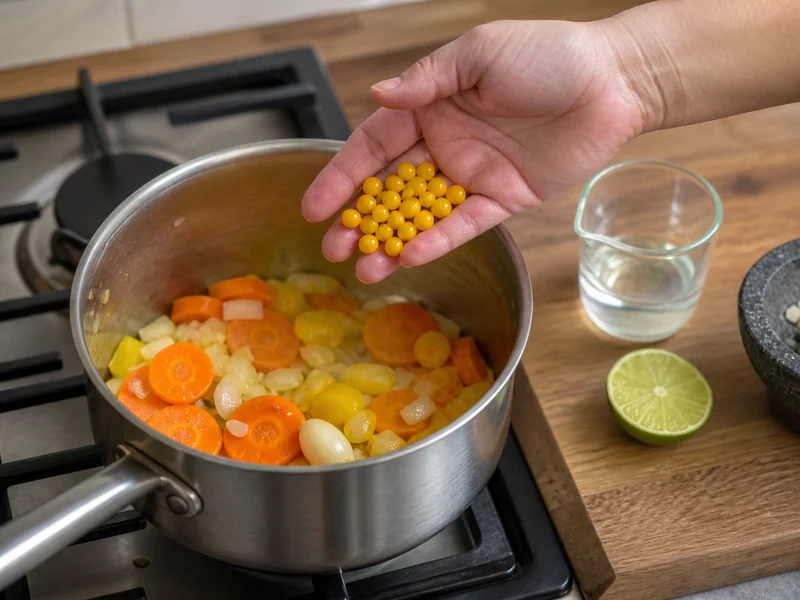
Cover the carrot, yellow bell pepper, onion, and garlic with 2 tablespoons of the measured vinegar and 2 tablespoons water. Simmer for 6 to 7 minutes, until the carrot bends under a spoon but the garlic remains pale.
Add the Aji Charapita pods only after the vegetables soften. Simmer uncovered for 2 to 3 minutes, just until the skins relax and the sauce smells distinctly fruity.
The covered first stage preserves enough liquid for blending, while uncovering after the pods go in prevents the small batch from tasting like a long vegetable stew.
Restart the base if the garlic browns or sticks. That bitterness is close to impossible to remove from a light, citrus-led sauce, and it is cheaper to lose a carrot than the pods.
Let the pan stand 3 to 5 minutes before anything goes into the blender.
Hot liquid in a sealed jar turns to steam and can push the lid off, throwing the contents upward.
Use a jar rated for warm liquids, vent the lid the way its instructions describe, and start at the lowest speed.
A fermented hot sauce needs a controlled salt brine and a separate timetable. Do not leave this quick vinegar sauce at room temperature and expect the same process.
Balance Vinegar Without Hiding the Citrus
Blend the softened mixture with the remaining vinegar, lime juice, and salt. This split addition gives the base enough liquid to cook and leaves a final acid adjustment after the pepper flavor is clear.
Taste the sauce on plain rice, bread, or egg rather than straight from the blender jar. Food softens the perception of acid, so this check shows whether the bottle needs salt, lime, or no change.
If acid reaches your nose before pepper aroma, stop adding vinegar.
Lime gives the fresh batch a brighter top note without making it shelf-stable, so keep the listed amount for flavor and rely on refrigeration for this untested home recipe.
The National Center for Home Food Preservation identifies pH 4.6 or lower as an acid-food threshold, but a target number alone does not validate this formula for canning. Vinegar strength, ingredient weight, final yield, meter calibration, and a tested process all matter.
Record the cleaned pepper weight and final vinegar amount because pod counts drift with fruit size, while weight gives the next bottle a useful reference.
Blend for a Pourable, Seed-Smooth Texture
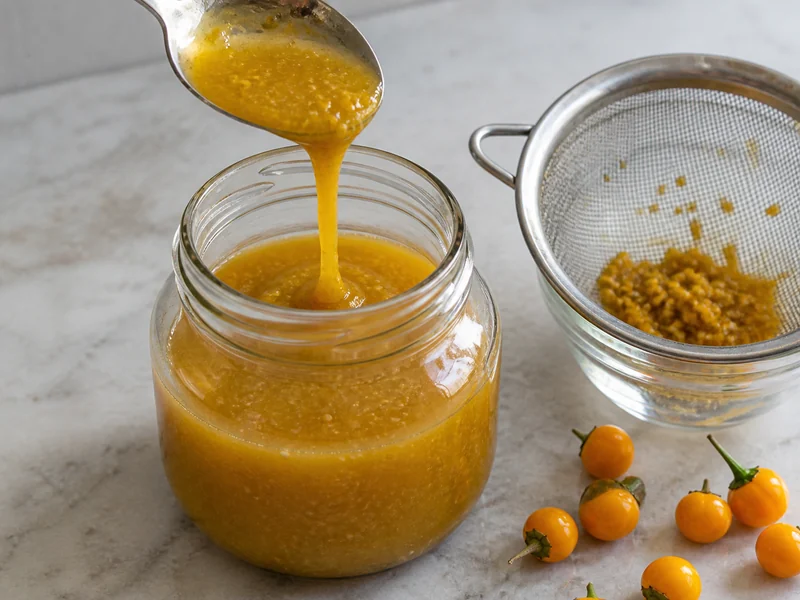
Blend until the sauce falls from a spoon in a narrow, continuous ribbon. Tiny skins and seeds should not leave a gritty edge in a squeeze bottle or jar.
Strain only when skins remain rough after a full blend because a fine sieve gives a polished pour, while an unstrained sauce keeps more pulp and tastes fuller on tacos, eggs, and rice.
Adjust thickness before you judge the seasoning, because water changes both.
Bitterness is the one fault you cannot blend your way out of.
Taste the pressed pulp before discarding it. Clean-tasting pulp can season mayonnaise, yogurt, or a pan sauce, while bitter or woody pulp should be discarded.
Fixing a Batch That Came Out Wrong
Most problems with this sauce are one of six, and five of them are correctable in the jar.
| What you taste | What went wrong | What to do |
|---|---|---|
| Vinegar reaches your nose before pepper | More acid than the body can carry | Blend in a spoonful of cooked carrot, then recheck salt |
| Hot but hollow | Under-salted, not under-peppered | Add salt in small pinches before adding any more chile |
| Thin, runs off the spoon | Too much liquid for the vegetable body | Return to a low pan for a few minutes, or blend in cooked carrot |
| Thick, will not pour | Too little liquid | Add water 1 tablespoon at a time, then recheck salt and acid |
| Gritty on the tongue | Skins and seeds not fully broken | Blend longer, then strain through a fine sieve if it is still rough |
| Bitter | Browned garlic or an over-long pepper simmer | Not correctable. Use a paler base and a shorter simmer next time |
Sweetener is not on that list on purpose. Sugar masks bitterness for one mouthful and does nothing for the aroma that the long simmer destroyed.
Where a Few Drops Work Best
Aji charapita is a native Capsicum chinense ecotype of the Loreto region of the Peruvian Amazon, where research on Amazonian ecotypes records it as a variety of high cultural value moving through short local supply chains.
That is the company the sauce was built for, mild starchy plates of rice, yuca, and plantain brightened with lime and onion.
A few drops add aroma and heat to food like that without supplying the moisture the dish already has.
It also works on eggs, grilled shrimp, roast chicken, fried potatoes, and simple grain bowls. Start with 1/4 teaspoon per serving, taste, and add more only when the pepper still belongs at the front of the dish.
Skip this small batch for chili, long braises, or a large marinade because extended cooking buries its fresh aroma, while Fresno hot sauce supplies more volume and a ripe red flavor that survives the longer job.
For citrus heat, Aji Charapita and Lemon Drop do not finish the same way. Lemon Drop is sharper and more lemon-led, while Aji Charapita is rounder and more tropical.
Refrigerate It, Don't Treat It as Canned
Transfer the cooled sauce to clean glass with a little headroom, refrigerate it promptly, and use a clean spoon or cap each time.
This formula is a refrigerator sauce, not a tested canning recipe. For a shelf-stable bottle, use a process written and validated for the exact ingredients and container size by the National Center for Home Food Preservation or another extension authority.
A bottle that seals as it cools is still not shelf-stable. Nothing about this recipe has been tested for room-temperature storage.
Keep it cold from the moment it is bottled.
We are not going to give you a keeping time, and the reason is worth stating.
A number like six months belongs to a formula whose acidity, yield, and process were measured. This one has none of that behind it, so any figure printed here would be a guess wearing a lab coat.
Treat it the way you treat any homemade refrigerated condiment. Make small batches, keep the spoon clean, and let the signs below decide rather than the calendar.
Do not taste the sauce to decide whether visible spoilage is safe. Follow the spoilage signs and discard the batch when any one appears.
The flavor should be vivid after cooling and more integrated the next day. If vinegar dominates after refrigeration, shorten the pepper cook and hold back more of the final vinegar on the next batch.
Label the bottle with its preparation date and cleaned pepper weight, then use aroma-faded sauce in cooked food when no spoilage sign is present instead of trying to revive it with extra vinegar.
Chef's Tip
Add the Aji Charapita near the end of cooking so the tiny pods soften without losing their citrus aroma.
Ingredients
-
1/2 cup fresh or frozen aji charapita peppersstems removed
-
1 small carrotthinly sliced
-
1/4 yellow bell pepperchopped
-
2 tablespoons chopped white onion
-
1 small garlic clovesmashed
-
1/3 cup white vinegar
-
2 tablespoons fresh lime juice
-
3/4 teaspoon kosher salt
-
2 to 4 tablespoons wateras needed
Full Recipe Instructions
Cover and simmer…
Cover and simmer the carrot, yellow bell pepper, onion, garlic, 2 tablespoons of the vinegar, and 2 tablespoons water for 6 to 7 minutes.
Add the Aji…
Add the Aji Charapita peppers and simmer uncovered for 2 to 3 minutes, just until softened.
Cool for 3…
Cool for 3 to 5 minutes. Transfer to a blender rated for warm liquids with the remaining vinegar, lime juice, and salt, vent the lid as directed, and start on low.
Blend until smooth,…
Blend until smooth, then thin with water 1 tablespoon at a time until the sauce falls from a spoon in a narrow ribbon.
Strain only for…
Strain only for a polished bottle texture. Taste on plain food, transfer to clean glass, and refrigerate promptly.
Aji Charapita Hot Sauce: Keep the Citrus, Control the Heat FAQ
- Frontiers in Soil Science - Capsicum chinense ecotypes of Alto Amazonas, Loreto
- NCHFP - Preserving Food, General Canning Information