Calabrian Chili vs Red Pepper Flakes: Jar or Shaker?

Calabrian chili is a flavored ingredient, often paste, oil-packed pods, or crushed Italian pepper. Red pepper flakes are a dry shaker product, so they add heat and texture without the same oil, salt, or fruit.

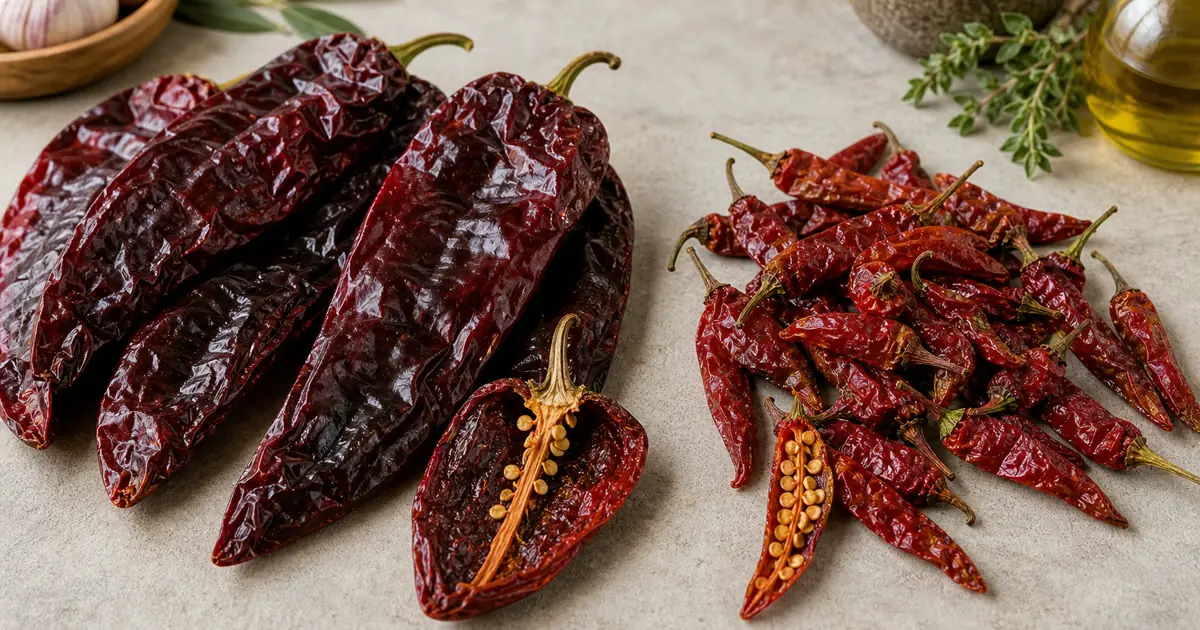
Calabrian chilies beside red pepper flakes on a wooden board for a side by side comparison
Quick Comparison

Calabrian Chili measures 25K–40K SHU while Red Pepper Flakes registers 15K–45K SHU. Their upper SHU ranges are close enough to treat as the same heat bracket. Calabrian Chili is known for its fruity, savory, lightly smoky heat flavor (C. annuum), while Red Pepper Flakes offers sharp and peppery notes (C. annuum).

Calabrian Chili
25K–40K SHU
Hot · fruity, savory, lightly smoky heat
Red Pepper Flakes
15K–45K SHU
Hot · sharp and peppery
  • Species: Both are C. annuum
  • Best for: Calabrian Chili excels in everyday cooking and salsas, Red Pepper Flakes in fresh salsas and mild recipes

Calabrian Chili vs Red Pepper Flakes Comparison

Attribute Calabrian Chili Red Pepper Flakes
Scoville (SHU) 25K–40K 15K–45K
Heat Tier Hot Hot
vs Jalapeño 5x hotter 6x hotter
Flavor fruity, savory, lightly smoky heat sharp and peppery
Species C. annuum C. annuum
Origin Calabria, Italy Global

Calabrian Chili vs Red Pepper Flakes Heat Levels

Position on the Scoville Scale
Calabrian
Red
0 SHU3.2M SHU

Red Pepper Flakes is in the same practical heat bracket.

Calabrian Chili spans 25K–40K SHU, roughly 5× a jalapeño at the upper end. Red Pepper Flakes spans 15K–45K SHU, about 6× a jalapeño at the upper end. Use the ranges to decide whether the recipe needs a measured dose, a mild overlap, or a hard substitution limit. Tools: Scoville chart and SHU calculator.

Flavor Profile Comparison

Calabrian Chili
fruity savory lightly smoky heat C. annuum

Calabrian chili is the hot red pepper profile behind many jars labeled peperoncino calabrese, crushed Calabrian pepper, or Calabrian chili paste. Secondary Scoville references commonly place it at 25,000-40,000 Scoville Heat Units, which puts it in the hot pepper range.

The source caveat matters. I did not find a primary lab record for one official Calabrian cultivar at 25,000-40,000 SHU, and the market name can cover several regional hot pepper products.

Red Pepper Flakes
sharp peppery C. annuum

The first thing you notice is the smell - a dry, dusty heat that rises off the jar before you've even shaken it. Then comes the taste: sharp, peppery, and direct, without the fruity complexity of fresh chiles.

At 15,000–45,000 SHU, the heat range is wide because the blend is rarely standardized. Most commercial flakes start with dried Capsicum annuum varieties - often cayenne-type chiles - though some regional blends incorporate hotter or smokier peppers.

Both peppers belong to C. annuum, so they share some underlying flavor chemistry. However, Calabrian Chili’s fruity, savory, lightly smoky heat notes contrast with Red Pepper Flakes’s sharp and peppery character.

Calabrian Chili brings fruity, savory, lightly smoky heat notes, so it fits recipes where that flavor should remain visible. Red Pepper Flakes leans sharp and peppery, which can change the sauce, filling, marinade, or garnish even when the heat range looks close.

Calabrian Chili and Red Pepper Flakes comparison

Culinary Uses for Calabrian Chili and Red Pepper Flakes

Calabrian Chili

Calabrian chili is most useful when it brings both heat and seasoned red-pepper flavor. Paste is the easiest form to use: stir a small spoonful into tomato sauce, beans, aioli, compound butter, vinaigrette, pizza sauce, or a pan sauce.

Dried flakes behave differently. They are closer to crushed red pepper flakes, but usually with a fruitier, more savory profile when the product is good.

Fresh Calabrian-style pods are less common outside specialty markets. If you have fresh pods, treat them like a hot red Fresno-style cooking pepper: slice thin for sauces and sauteed vegetables, or roast before blending.

Red Pepper Flakes

Red pepper flakes are one of the few spices that behave differently depending on when you add them. Bloom them in hot oil at the start of cooking and the heat mellows, the flavor deepens - this is the foundation of countless Italian pasta sauces and Chinese stir-fries.

For pizza, pasta, and grain bowls, the table-side shake is the obvious application. But flakes also work hard in marinades, compound butters, and spice rubs where the crushed texture holds up better than powder.

If you want less heat with more flavor, the mild, brick-red Kashmiri-style dried pepper offers a useful comparison - significantly lower SHU with more color payoff. For those wanting to understand how flakes compare to a Korean dried chile alternative, the <a href='/compare/gochugaru-vs-red-pepper-flakes/'>gochugaru vs.

Which Should You Choose?

Best fit

Choose Calabrian Chili if…

You want milder heat
You prefer fruity, savory, lightly smoky heat flavors
You need a C. annuum variety

Best fit

Choose Red Pepper Flakes if…

You want maximum heat
You prefer sharp and peppery flavors
You need a C. annuum variety

Can You Substitute One for the Other?

Start near 1:1 by amount. The heat ranges are close enough that flavor, form, and recipe role matter more than a strict Scoville conversion.

Growing Calabrian Chili vs Red Pepper Flakes

Growing notes

Calabrian Chili

If you buy true Calabrian chili seed, grow it like a warm-season C. annuum pepper and let the supplier's seed description define the exact plant habit. University of Minnesota Extension recommends starting pepper seed about eight weeks before outdoor planting and transplanting only after nighttime lows stay above 50 F.

Full sun, warm soil, steady moisture, and airflow matter more than a romantic Calabria story. Container plants need consistent watering because small pots swing quickly from dry to soaked.

Harvest fully red pods for the flavor people expect from Calabrian products. Green pods may be edible, but they will not taste like the preserved red paste or crushed pepper most cooks are trying to recreate.

Growing notes

Red Pepper Flakes

Red pepper flakes aren't a single variety - they're a product. But growing the peppers that go into them is straightforward if you start with cayenne-type C. annuum varieties, which are the most common base.

Sow cayenne-type flake peppers indoors 8 to 10 weeks before the last expected frost. Germination is reliable at soil temperatures between 75–85°F.

For flake production, the goal is full red ripeness - green or partially ripe pods won't dry with the right color or heat intensity. Most cayenne-type varieties reach maturity in 70–80 days from transplant.

Where They Come From

Origin & background

Calabrian Chili

Calabria, Italy · C. annuum

Calabrian chili is best understood through the region that made it famous. Calabria sits at the southern end of mainland Italy, and the Italian pepper tradition there uses peperoncino in cured meats, pasta, sauces, preserved vegetables, condiments, and table seasoning.

Italia.it calls peperoncino Calabria's red gold and highlights Diamante's annual chili festival.

Origin & background

Red Pepper Flakes

Global · C. annuum

Drying and crushing chiles is one of the oldest preservation methods in existence. After Columbus brought Capsicum species back from the Americas in the late 15th century, dried chile flakes spread rapidly through Mediterranean Europe, the Middle East, and Asia - each region developing its own preferred blend and grind.

In Turkey, coarsely ground flakes like the mild, oily Maras-style grind became staples of regional cooking. In China, the upward-pointing dried pepper with striking visual form contributed to regional spice blends.

Buying & Storage

Whether you’re shopping for Calabrian Chili or Red Pepper Flakes, the same quality indicators apply. Fresh peppers should feel firm and heavy for their size, with taut, glossy skin and no soft or wet spots. Minor stem cracks known as “corking” are perfectly normal and often indicate a mature, flavorful pod.

Selection

What to look for

  • Firm pods with taut skin and consistent color
  • Should feel heavy relative to size
  • Minor stem cracks (“corking”) are normal
  • Avoid anything soft, shriveled, or with dark wet spots

Storage

How to store them

  • Fresh: Paper bag, crisper drawer, 1 to 2 weeks
  • Frozen: Wash, dry, freeze on sheet pan, 6+ months
  • Dried: Airtight and away from light, up to 1 year

Mistakes to avoid

Common misses

Calabrian Chili

  • Blaming the seeds. Membranes hold most capsaicin.
  • Adding heat too early. Capsaicin breaks down with cooking.
  • Not tasting individual pods. Heat varies 30%+.

Common misses

Red Pepper Flakes

  • Blaming the seeds. Membranes hold most capsaicin.
  • Adding heat too early. Capsaicin breaks down with cooking.
  • Not tasting individual pods. Heat varies 30%+.
Final call

Calabrian Chili vs Red Pepper Flakes

Calabrian Chili and Red Pepper Flakes sit in the same heat tier but serve different roles. Red Pepper Flakes delivers its distinctive sharp and peppery character. Calabrian Chili, with its fruity, savory, lightly smoky heat profile, excels in everyday cooking.

Heat gap same bracket Calabrian Chili fruity, savory, lightly smoky heat Red Pepper Flakes sharp and peppery
Additional Calabrian Chili and Red Pepper Flakes comparison view

Jar Or Shaker

The first decision is format. Calabrian chili usually arrives as paste, crushed peppers, or oil-packed pods; red pepper flakes arrive dry in a shaker.

Oil Salt And Moisture

A spoonful of Calabrian paste changes more than heat. It can add oil, salt, acidity, garlic, or preserved pepper pulp depending on the jar.

Red pepper flakes add dry heat and seed texture. They do not thicken a sauce, stain oil as deeply, or bring the same preserved red-pepper body.

That is why a one-for-one spoon swap often fails. The dry flakes may hit the heat target while leaving the sauce thinner and less savory.

Bloom Timing Splits Them

Red pepper flakes are strongest when timing is controlled. Bloom them briefly in warm oil for pasta, pizza oil, beans, and stir-fries, or add them late when you want a sharper top heat.

Calabrian chili is already partly built as a condiment. Stir it into tomato sauce, aioli, beans, vinaigrette, or pan sauce after aromatics have softened so the preserved flavor stays clear.

If flakes scorch, they taste bitter. If Calabrian paste is cooked too hard, the fruit and oil taste dull.

For a sibling dry-heat question, cayenne vs red pepper flakes owns powder versus crushed texture. This page owns Italian jar condiment versus generic dry flakes.

Heat Numbers Do Not Choose

The heat ranges overlap: Calabrian chili is often listed around 25,000 to 40,000 SHU, while red pepper flakes can span roughly 15,000 to 45,000 SHU. The label matters because flake blends vary by producer.

So the useful rule is not "hotter." It is whether the recipe needs an ingredient with pulp and oil, or just dry heat.

Substitution Rebuild

To replace Calabrian chili with flakes, start with fewer flakes than the paste amount, then rebuild the missing body with olive oil, a pinch of salt, and a little tomato paste or roasted red pepper.

To replace red pepper flakes with Calabrian chili, use a smaller spoonful and reduce other salt or oil. The jar may season the dish more than the pepper heat alone.

Buy Calabrian products when the label names paste, whole peppers in oil, or peperoncino calabrese. Buy flakes in small amounts when you need a dry topping that stays shelf-stable.

Fact-Checked & Expert Reviewed
Editorial Standards: Head-to-head comparisons include blind tasting when applicable. Heat levels cross-referenced with multiple sources. All substitution ratios tested side-by-side.
Review Process: Written by James Thompson (Lead Comparison Reviewer) , reviewed by Karen Liu (Lead Fact-Checker & Science Editor) . Last updated June 29, 2026.

Calabrian Chili vs Red Pepper Flakes FAQ
Yes, but not directly. Use fewer flakes, then add olive oil, salt, and a little tomato paste or roasted red pepper to replace the missing body.

Not always. Their ranges overlap. Calabrian chili is often around 25,000 to 40,000 SHU, while red pepper flakes vary widely by blend.

Most Calabrian products are paste, crushed pepper, or oil-packed pods. They bring preserved pepper pulp, oil, salt, and fruit, not just dry heat.

Red pepper flakes are better for a dry table topping. Calabrian chili is better mixed into pizza sauce, oil, or a spread.

Start with about half as much Calabrian paste as the flake amount by spoon volume, then adjust for salt, oil, and heat.

Sources & References
KL
Fact-checked by Karen Liu
Research Contributor
SHU Verified
Sources Cited
Expert Reviewed
All Comparisons Browse Peppers Scoville Scale