
Peperone di Senise vs Calabrian Chili: Sweet 0 SHU Pepper or Fiery Chile?
Peperone di Senise is an Italian Capsicum annuum pepper at 0 SHU, completely sweet and suited to pepper flavor without heat. Calabrian Chili shares its country and species but reaches 25,000?40,000 SHU, giving it a genuinely fiery and radically different role in the kitchen.

Peperone di Senise
Calabrian Chili
HotQuick Comparison
| Attribute | Peperone di Senise | Calabrian Chili |
|---|---|---|
| Scoville evidence | 0-0 SHU | 25K-40K SHU |
| Heat Tier | n/a | Hot |
| vs Jalapeño | n/a | 5x hotter |
| Flavor | n/a | fruity, savory, lightly smoky heat |
| Species | C. annuum | C. annuum |
| Origin | Italy | Calabria, Italy |
How Hot Are Peperone di Senise and Calabrian Chili?
The heat gap here is about as wide as it gets between two peppers sharing a botanical family.
Peperone di Senise clocks in at 0 SHU - no capsaicin, no burn, none whatsoever. It sits firmly in the sweet pepper zone, which is exactly why southern Italians dry and grind it into peperone crusco without any concern for heat management.
Calabrian Chili lands between 25,000 and 40,000 SHU, placing it squarely in the hot pepper range. For context, a typical serrano runs around 10,000-23,000 SHU - so Calabrian Chili is roughly 1.7 to 4 times hotter than a serrano, depending on where a given pod falls in that range.
That is not subtle warmth. That is a pepper that demands respect in portioning.
The SHU scale reference measures capsaicin concentration, and Calabrian Chili has plenty of it.
The burn arrives quickly and spreads across the palate, it does not sneak up slowly. Senise, by contrast, will never trigger that response because it produces no meaningful capsaicin at all.
For cooks trying to understand the practical difference: you could eat a whole dried Senise pepper like a snack. A whole dried Calabrian Chili would be a challenge most people would not repeat.
These two peppers require completely different handling strategies, even though they share Italian roots and the same Capsicum annuum botanical family.
How Do Senise and Calabrian Chili Taste Different?
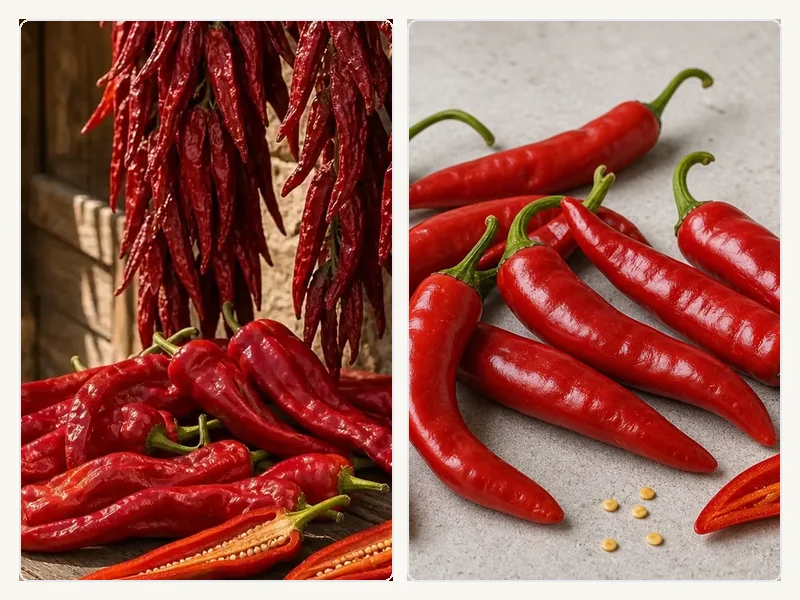
Strip away the heat question entirely and these two peppers still taste nothing alike. Peperone di Senise is prized for concentrated sweetness, when dried, it develops a deep, almost caramelized pepper flavor with subtle earthiness and a paprika-adjacent richness.
The drying process (traditionally air-dried in the Basilicata sun) intensifies its natural sugars dramatically. Ground into powder, it produces a rust-red condiment with genuine depth and zero fire.
Calabrian Chili brings fruity and smoky notes alongside its heat.
There is a brightness to it, almost tomato-adjacent when fresh, that shifts into something darker and more complex once dried or packed in oil. The smokiness is not as pronounced as, say, a chipotle, but it is present and it shapes how the pepper integrates into sauces and pasta dishes.
The cooking implications are significant.
Senise is essentially a flavor-delivery vehicle: all aroma, sweetness, and color with no thermal interference. Calabrian Chili is a flavor-plus-heat package where you are always negotiating both dimensions simultaneously.
A dish built around Senise powder can feature the pepper prominently without alienating heat-sensitive diners. A dish built around Calabrian Chili will always carry its signature warmth, no matter how it is prepared.
Aroma-wise, dried Senise has a sweet, slightly grassy fragrance. Calabrian Chili in oil has a pungent, fruity sharpness that hits immediately when you open the jar.
Both are distinctive, just pointing in completely different directions.
How Are Senise and Calabrian Chili Used in Cooking?
Peperone di Senise holds a PDO (Protected Designation of Origin) status in Italy, which signals how seriously Basilicata takes this pepper.
The classic preparation is peperone crusco - the dried pods are briefly fried in olive oil until they turn crisp, then crumbled over pasta, bread, or eggs. The texture becomes almost chip-like, and the flavor concentrates further.
Ground Senise functions as a sweet paprika substitute with more complexity than most commercial paprika. Use it anywhere you want pepper flavor without heat.
Calabrian Chili shows up in Italian-American kitchens most often as a jarred paste or oil-packed whole pods. It is the backbone of spicy Calabrian pasta sauces, a natural addition to pizza, and increasingly common in restaurant finishing oils.
The fruity-smoky character holds up well in long-cooked applications, braises, tomato sauces, braised greens, where milder chilis might fade.
For substitution: if a recipe calls for Calabrian Chili paste and you only have Senise powder, you cannot make a direct swap, the heat is simply absent. You would need to add another heat source (red pepper flakes, for instance) alongside the Senise.
The Calabrian Chili's swap options typically point toward other fruity-hot peppers rather than sweet varieties.
If a recipe calls for sweet paprika or mild pepper powder, Senise powder is an excellent upgrade, use a 1:1 ratio. Calabrian Chili paste substitutes well against other Italian-origin hot peppers at roughly 1:1, adjusting to taste.
These two peppers can actually work together: Senise provides color and sweet pepper body, Calabrian Chili adds the heat. Combined, they approximate the layered pepper character in traditional Calabrian 'nduja.
Verdict
The choice between these two comes down to what role pepper plays in your dish. If you want pepper flavor and color without any heat - for a crowd, for a pepper-forward dish where spice would distract, or for someone who cannot tolerate capsaicin - Peperone di Senise is the answer.
It is one of the most flavorful zero-heat peppers in the Italian pantry.
If you want fruity heat with Italian character - for pasta sauces, pizza, braised proteins, or finishing oils - Calabrian Chili delivers at 25,000-40,000 SHU with a flavor profile that stands up to bold ingredients.
For a Calabrian Chili vs red pepper flakes, that comparison clarifies where its fruity-smoky character sets it apart from generic heat sources. Neither pepper here is better in absolute terms, they solve different problems entirely.
Which One to Choose
This is not a mild-versus-hot version of the same Italian pepper.
Peperone di Senise is chosen for sweet dried pepper flavor, thin skin, red color, and the brittle texture of cruschi. Calabrian chili is chosen for heat that spreads through oil, tomato, cheese, cured meat, seafood, and condiments.
Senise can season beans, pasta crumbs, potatoes, and eggs without pushing heat. Calabrian chili can dominate those dishes if used like a sweet dried pepper.
How to Buy and Store Senise and Calabrian Chili
Buy Senise as whole dried peppers, cruschi, or powder, and keep it dry. Buy Calabrian chili as jarred chopped chile, paste, oil-packed pods, or flakes, then check salt and oil before seasoning the pan.
The jarred versions can change both heat and salt faster than expected.
Can You Swap Senise and Calabrian Chili?
Before swapping, check texture and fat. Senise often stays dry, crisp, or powdery.
Calabrian chili often arrives wet, oily, salty, and hot. That difference changes fried peppers, pasta crumbs, pizza, and tomato sauce more than the red color suggests.
Final Choice
Final Choice: pick Peperone di Senise for sweet dried pepper flavor, fried cruschi texture, mild powders, and Basilicata-style dishes. Pick Calabrian chili for heat, chile oil, spicy tomato sauce, and stronger condiments.
There is no clean heat ratio between them.
Peperone di Senise vs Calabrian Chili FAQ
- Peperone di Senise PDO — European Commission Protected Designations