

KnowThePepper
How Hot Is Peperone di Senise? Zero Heat, Thin Flesh Made for Drying
Peperone di Senise is a sweet Calabrian type at 0 SHU, best known for drying quality and concentrated pepper flavor. We use it as a flavor-building pepper, not a heat source.
- Species: C. annuum
- Heat tier: Mild (0-999 SHU)
What Kind of Pepper Is Peperone di Senise?
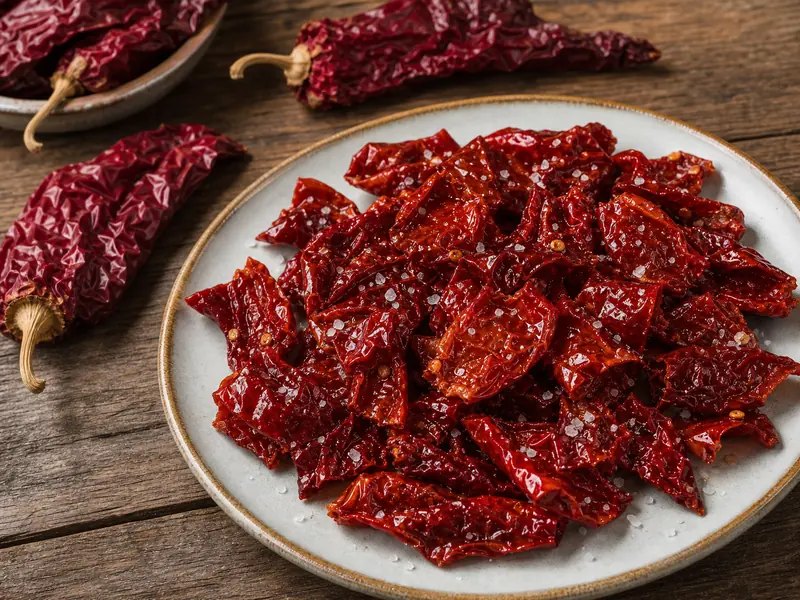
The Peperone di Senise is a sweet, zero-heat variety grown in the Agri River valley of Basilicata, Italy. Registered under Protected Designation of Origin (PDO) rules in 1996, it exists in three distinct forms: appuntito (pointed), tronco (truncated), and uncino (hooked).
The pepper's most celebrated characteristic is its exceptionally thin flesh and low water content, qualities that make it one of the best natural drying peppers in the world. Unlike thicker-walled types in the broader Capsicum annuum Varieties, Senise peppers lose moisture rapidly in the dry Basilicatan air, concentrating sugars without developing bitterness.
Flavor-wise, expect a pronounced sweetness with grassy, slightly smoky undertones, not unlike a more refined version of Bell Pepper but with far more complexity. The dried form develops notes of sun-dried tomato and toasted grain.
At 0 SHU, there's no capsaicin to speak of. The pepper's appeal is entirely about flavor depth and texture, particularly in its cruschi form: fried whole in olive oil until translucent and crackling.
The result is something between a chip and a garnish, intensely savory and impossible to stop eating.
With 0 SHU and no detectable capsaicin, these are among the safest options for heat-sensitive eaters and work in virtually any recipe.
Where Does Peperone di Senise Come From?
Senise, a small hilltop town in Basilicata, has grown this pepper since at least the 17th century, when Spanish colonial trade routes brought Capsicum annuum varieties to southern Italy. The Agri valley's microclimate, hot summers, low humidity, mineral-rich soils, proved ideal, and local farmers selected for the thin-walled, quick-drying characteristics that define the variety today.
For centuries, peperoni cruschi were peasant food, a way to preserve summer's harvest through winter. Strings of dried peppers (serte) hung from farmhouse rafters across italian peppers.
The 1996 PDO designation formalized what locals already knew: this pepper could not be replicated elsewhere. Production is regulated, with cultivation restricted to specific Basilicatan municipalities along the Agri and Sinni rivers.
How Hot Is Peperone di Senise, and What Does It Taste Like?
The Peperone di Senise delivers 0 Scoville Heat Units, placing it in the Mild tier (0-999 SHU).
How Nutritious Is Peperone di Senise?
Like most sweet C. annuum peppers, Senise offers solid nutritional value. Fresh peppers provide approximately 31 calories per 100g, with meaningful vitamin C content (around 80-100mg per 100g in red-ripe fruit) and vitamin A from carotenoid pigments.
The drying process concentrates nutrients dramatically.
Dried Senise peppers deliver concentrated iron, potassium, and B vitamins in a much smaller volume. The deep red pigmentation indicates high lycopene and capsanthin levels, antioxidants associated with cardiovascular benefits.
With 0 SHU, there is no capsaicin, so none of the thermogenic or metabolic effects associated with hot peppers apply here.
What Is Peperone di Senise Best Used For?
The kitchen applications split cleanly between fresh and dried.
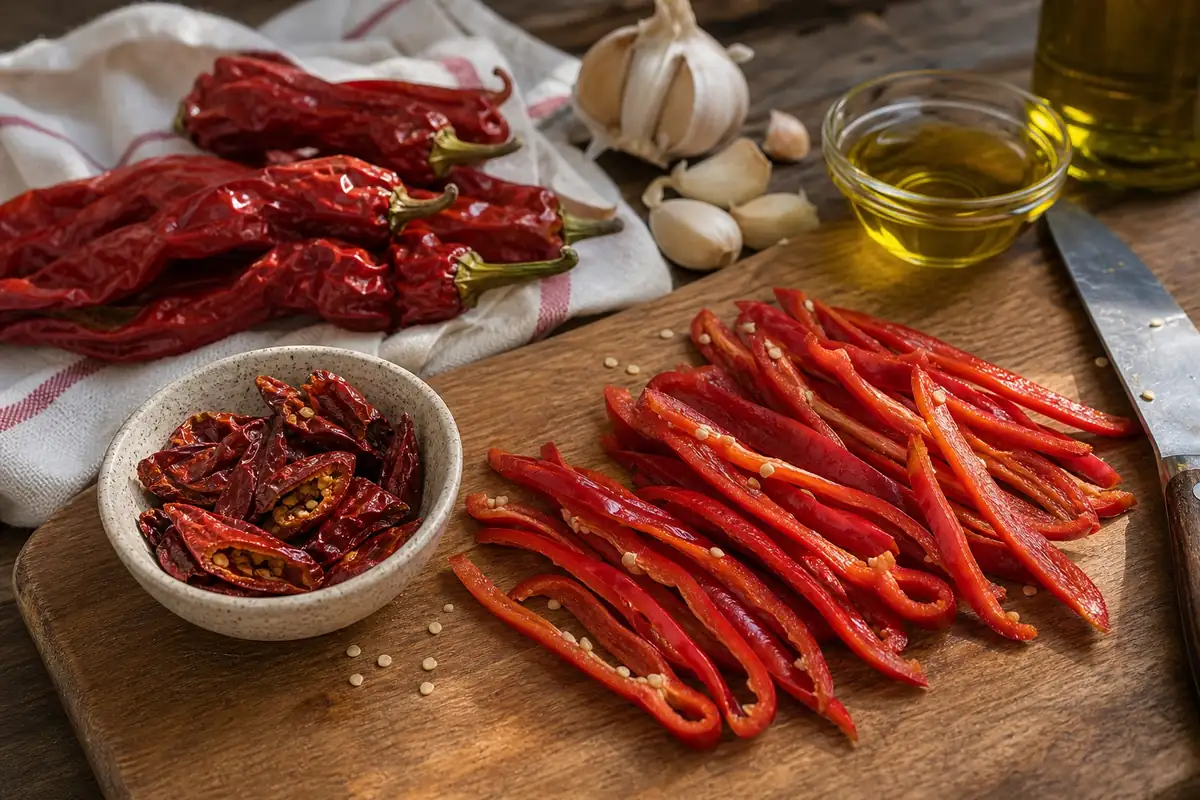
Fresh, the Senise pepper behaves like a thin-walled frying pepper, excellent stuffed, roasted, or sauteed with olive oil and garlic. Its low moisture means it softens without releasing excessive liquid, making it cleaner in sauces than thicker varieties.
Check out practical stir-fry pepper techniques if you want to browse that direction with fresh Senise.
Dried, the possibilities multiply. The cruschi preparation is essential: heat good olive oil to around 170°C (340°F), drop in whole dried peppers for 10-15 seconds per side until they puff and crisp.
They shatter like thin glass.
Use them crumbled over pasta, eggs, salt cod (baccala), or simply as a snack.
Ground dried Senise produces a sweet paprika-like powder called peperone crusco in polvere - milder and more complex than Hungarian sweet paprika. It's excellent on grilled fish or stirred into aioli.
For smoking applications, the thin walls and low moisture make Senise a candidate worth exploring, see how different peppers perform when smoked for technique guidance. The dried pepper also rehydrates beautifully in warm broth for pasta sauces.
How Do You Keep Peperone di Senise Fresh?
Fresh Senise peppers are a late-summer crop, typically available July through September in specialty Italian markets and online importers. Outside Italy, dried whole peppers and ground powder are the more practical find year-round.
Look for dried peppers with a deep brick-red to mahogany color and papery, flexible (not brittle) walls. Avoid anything with mold or off-odors.
Store dried whole peppers in a cool, dark, dry place - a sealed jar works well, for up to 12 months. Ground powder degrades faster.
Use within 6 months for best flavor.
Fresh peppers keep refrigerated for up to 2 weeks.
Which Peppers Can Replace Peperone di Senise?
Direct comparisons show where flavor, form, and preparation differ in the Peperone di Senise vs Calabrian matchups.
How Do You Grow Peperone di Senise Peppers?
Senise peppers are C. annuum plants that thrive in hot, dry conditions, precisely the opposite of what most gardeners instinctively provide. Overwatering is the primary failure mode.
Start seeds indoors 8-10 weeks before last frost. Germination is reliable at soil temperatures of 24-27°C (75-80°F).
Transplant after all frost risk passes, spacing plants 45-60 cm apart in full sun.
The key cultural requirement is restrained irrigation. Once established, water deeply but infrequently, the stress encourages thin walls and concentrated sugars.
Heavy clay soils are problematic.
Well-draining sandy loam mimics the Agri valley conditions best.
Plants reach 60-80 cm tall and produce prolifically. Fruits mature from green to a deep brick red over approximately 75-85 days from transplant.
For drying, harvest at full red maturity.
The mild, zero-capsaicin profile means these plants share space well with other sweet varieties like the similarly heat-free Mariachi type or mild ornamental-style sweet peppers. Avoid planting near hot varieties if seed saving, cross-pollination affects future generations, not the current fruit.
Senise peppers require a long, warm growing season - the Basilicata region's intense summer sun and low humidity are what produce the paper-thin walls that dry so well. In North America, grow as an annual in USDA zones 8-11 or in containers elsewhere.
Start indoors 10-12 weeks before last frost.
Expect 80-90 days from transplant to first harvest. The pods hang and dry naturally on the plant in dry climates, in humid areas, harvest at the orange-red stage and finish drying indoors on a string.
Peperone di Senise FAQ


- Peperone di Senise PDO - European Commission DOOR Database
- Capsicum annuum L. - USDA PLANTS Database
- Basilicata Regional Food Heritage - Slow Food Foundation
Species classification: C. annuum - based on published botanical taxonomy.