

KnowThePepper
Mad Hatter Pepper: Mild Crown Shape, Sweet Baccatum Bite
Mad Hatter pepper is a mild Capsicum baccatum hybrid that usually sits around 500-1,000 SHU. It looks like the Bishop's Crown pepper but eats much gentler: crisp, sweet, citrusy, and only sharp near the placenta.
The main point is simple: grow it when you want the crown shape and baccatum brightness without making every stuffed pepper hot.
- Species: C. baccatum
- Heat tier: Medium (1K-10K SHU)
Meet the Mad Hatter Pepper
Mad Hatter pepper is a mild, crown-shaped Capsicum baccatum hybrid bred for gardeners who like the look of the Bishop's Crown pepper but do not want the same heat swing. All-America Selections named it a 2017 national winner, and PanAmerican Seed lists the hybrid as a sweet, low-heat pepper for home gardens and fresh eating.
The useful answer is that Mad Hatter behaves more like a crisp snacking pepper than a hot chile. Most pods are sweet around the outer lobes, then pick up a small sting near the seed cavity.
The thin walls stay snappy in raw salsa, quick pickles, and blistered skillet batches.
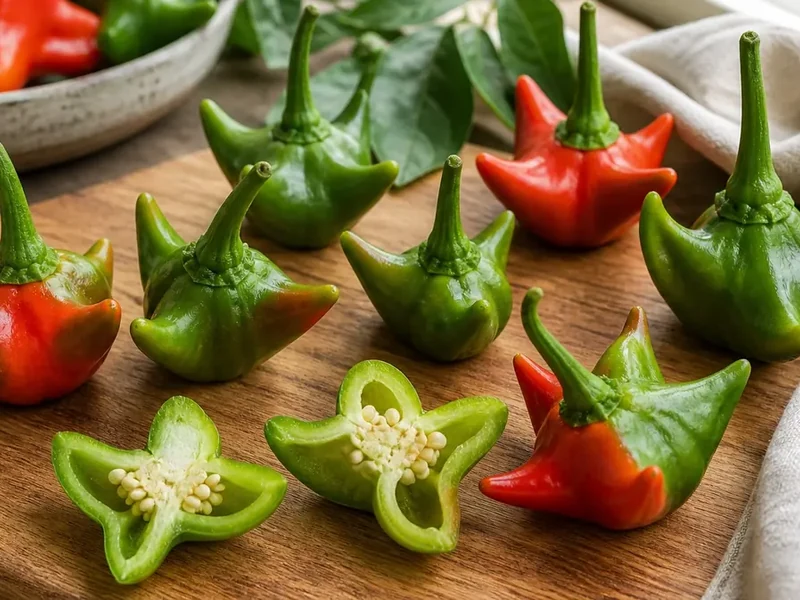
That shape matters. The three flared wings make the pepper look hotter and stranger than it eats, so it is easy to mislabel it as a hot the capsicum baccatum species at market.
Treat it as a mild specialty pepper first, not as a substitute for a full-heat Bishop's Crown.
For Mad Hatter Pepper, the heat lives in the placenta - the white inner membrane, not the seeds. Scraping out the placenta and seeds reduces heat by about 50%, while leaving them in keeps the full 500-1,000 SHU intensity.
The Origins of Mad Hatter Pepper
Mad Hatter came through PanAmerican Seed and won All-America Selections recognition in 2017. AAS trials judge new garden varieties across North America, so that award says more about home-garden performance than about old landrace history.
The parent story is tied to the Bishop's Crown look: a flat, winged, miter-like pod shape associated with Capsicum baccatum. Mad Hatter keeps that visual cue but narrows the eating experience toward mild, sweet pods.
That is why we do not treat it as a second name for Bishop's Crown.
It is also an F1 hybrid, so saved seed may not return the same plant. If you need the exact crown shape, mild heat, and garden habit, buy fresh seed from a stable supplier instead of expecting every second-generation seedling to match the AAS winner.
The Heat and Taste of Mad Hatter Pepper
The Mad Hatter Pepper delivers 500–1K Scoville Heat Units, placing it in the Medium tier (1K-10K SHU).
Flavor notes: sweet, crisp, citrusy, lightly floral.
The Nutrition Behind Mad Hatter Pepper
Mad Hatter is eaten like a mild fresh pepper, so nutrition is closer to sweet peppers than to a dried spice. USDA FoodData Central values for raw peppers are the right comparison layer for calories, vitamin C, and water content.
The important important point is portion size. Because the heat is low, people often eat several pods at once in salads or snack trays.
That makes freshness, washing, and clean cutting boards more relevant than capsaicin burn control.
How to Use Mad Hatter in the Kitchen
The Mad Hatter gets extra attention for its shape, but it earns its place at the table on flavor too.
The saucer shape works in your favor for stuffing, the wide, flat cavity holds more filling than a standard bell and cooks faster because of the thin walls. Stuff with cream cheese, crab mixture, or seasoned ground meat and bake at 375 F for 15-18 minutes.
The entire pod collapses into a tender bite.
For fresh use, slice across the equator to get dramatic rings. Lay them flat on an appetizer board, they hold toppings like a cracker.
For heat balance, the 500-1,000 SHU range is about half the warmth of a poblano, so no substitution adjustment is needed for most recipes.
One in ten pods runs near the upper end of the heat range. There is no way to tell from the outside, taste before serving to guests who avoid heat.
For blistered Mad Hatters, use a dry cast-iron pan for 3-4 minutes per side. The skin blisters and the interior softens without going mushy.
Finish with flaky salt and a squeeze of lime.
The saucer shape is ideal for stuffing, the wide, flat cavity holds cream cheese or crab filling and cooks faster than thick-walled peppers. Bake at 375 F for 15-18 minutes.
Slice across the equator for dramatic flat rings that hold toppings like a cracker.
One in ten pods runs near the 1,000 SHU upper range, taste before serving to guests who avoid heat.
Finding & Storing Mad Hatter Pepper
Buy Mad Hatter pods that feel firm and glossy with no soft dents around the wings. The lobes bruise more easily than straight peppers, so avoid piles where the crown tips are crushed.
Store fresh pods in a breathable bag in the refrigerator and use them within about a week. If the pods start to soften, chop them for relish or quick pickles instead of trying to stuff them.
For longer storage, freeze chopped pieces the same way we freeze other fresh peppers.
Dried form: Mad Hatter can be dried, but its main value is fresh crown shape and crisp mild flavor, not dried chile depth.
Mad Hatter Pepper Substitutes That Work
No dedicated substitute guidance is published for Mad Hatter Pepper yet.
Mad Hatter: A Growing Guide
Mad Hatter is a 2017 AAS (All-America Selections) winner, which means it performed well in standardized trials across multiple climates. That recognition translates to reliable production for home growers.
Start seeds indoors 8-10 weeks before last frost. Transplant when nighttime temps stay above 55 F. Spacing: 18-24 inches between plants.
In-ground plants outperform containers for this variety because the root system supports heavy pod loads.
Expect 65-70 days from transplant to first harvest at the immature yellow stage. Full red ripeness adds another 10-14 days and increases sweetness.
A healthy plant yields 25-40 pods per season in warm climates.
In short growing seasons, prioritize harvesting yellow rather than waiting for red, the plant sets more fruit if pods are picked before full ripeness.
Mad Hatter won a 2017 All-America Selections award, confirming reliable production across diverse climates. Space plants 18-24 inches apart.
Expect 65-70 days from transplant to yellow harvest.
Picking before full red ripeness encourages the plant to set more fruit, important in short growing seasons.
Mad Hatter Pepper FAQ


- All-America Selections - Mad Hatter Pepper
- Chile Pepper Institute, New Mexico State University
Species classification: C. baccatum - based on published botanical taxonomy.