

KnowThePepper
Aji Pineapple: Yellow Baccatum Heat for Salsa and Sauce
Aji Pineapple is a yellow-fruited Capsicum baccatum cultivar listed at 20,000-30,000 SHU by PepperScale. Its name describes the sweet tropical and citrus character reported by cultivar catalogs, while fresh salsa and bright hot sauce make better use of that profile than long storage as powder.
- Species: C. baccatum
- Heat tier: Hot (10K-100K SHU)
- Comparison: 3-12x hotter than a jalapeño, depending on where the jalapeño falls in its 2,500-8,000 SHU range
What Is Aji Pineapple?
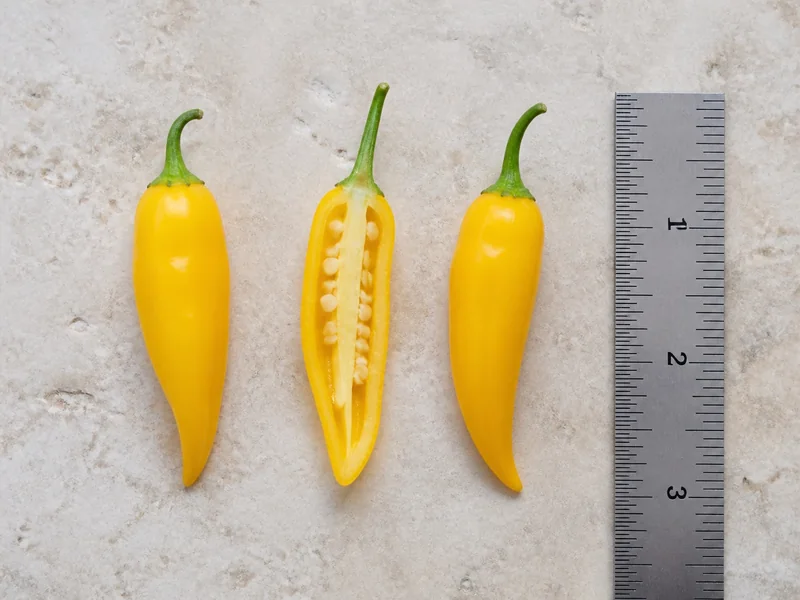
Aji Pineapple is a Capsicum baccatum cultivar with tapered pendant pods that ripen from green to a clear yellow. PepperScale describes mature fruit at roughly 2 to 3 inches long, which is useful for recognition but should not override the phenotype described by the seed supplier for a particular line.
PepperScale lists the cultivar at 20,000-30,000 SHU. That figure is a secondary catalog range rather than a published laboratory result, so it works as a buying and dosing reference, not a promise that every pod will test inside those endpoints.
Against Clemson Cooperative Extension's 2,500-8,000 SHU jalapeno range, the catalog endpoints put Aji Pineapple at about 2.5 to 12 times the heat. The practical lesson is to begin with less than one whole pod in an uncooked dish, then increase the amount after the pepper has been dispersed through the batch.
The New Mexico State University Chile Pepper Institute explains why a listed range cannot predict a single harvest: water stress, temperature, disease, and insect pressure can all affect pungency. Two yellow pods from different plants or seasons can therefore deliver different heat even when both are true to the named cultivar.
Treat the lower endpoint as a planning aid, then verify the actual batch with a small, well-mixed sample. A taste from one isolated pepper piece is a poor batch estimate because placental tissue is not distributed evenly through every chop.
The pineapple name refers to reported flavor, not botanical ancestry. Cultivar references describe sweet tropical and citrus notes, while the plant itself remains a chile pepper and has no botanical relationship to pineapple fruit.
Color is the simplest maturity check. Green fruit is unripe, while an even yellow surface signals the stage associated with the cultivar name and the appearance buyers expect.
Where Did Aji Pineapple Originate?
The reliable history belongs first to the species, not to the modern cultivar name. Barbara Pickersgill's archaeological review reports that C. baccatum was probably domesticated in Bolivia and reached the Peruvian coast during the late Preceramic period.
Genetic research published in PLOS ONE likewise places domesticated baccatum diversity across Bolivia, Peru, Ecuador, and Chile, with closely related wild accessions in the highlands of Peru and Bolivia. That evidence supports an Andean species history without proving that the named Aji Pineapple cultivar is ancient.
No reliable public breeding record identifies a breeder, release date, or original accession for Aji Pineapple. The defensible description is therefore a modern named selection within the older baccatum lineage, with its exact selection history still undocumented.
The word aji is widely used for chile peppers in Spanish-speaking parts of South America. The second half of the name describes the fruit association reported by sellers, not a cross with pineapple or proof of a Peruvian commercial release.
How Hot Is Aji Pineapple? Heat and Flavor
The Aji Pineapple delivers 20K–30K Scoville Heat Units, placing it in the Hot tier (10K-100K SHU). That makes it roughly 3-12x hotter than a jalapeño, depending on where the jalapeño falls in its 2,500-8,000 SHU range.
Aji Pineapple Nutrition Facts
No cultivar-specific FoodData Central entry establishes calories or vitamin percentages for Aji Pineapple. Publishing exact Aji Pineapple nutrition values from a generic chile record would imply a measurement that has not been made.
For context only, Utah State University Extension lists 30 calories and 182 mg vitamin C for a half cup of raw green chile. Ripeness, cultivar, water content, and serving size can all change the comparison, so those numbers describe the referenced generic food portion rather than this yellow cultivar.
Capsaicinoids supply the heat and concentrate mainly in placental tissue inside the pod. The seeds can pick up capsaicin from nearby tissue, but removing seeds alone is not a reliable percentage control for a batch.
Use Aji Pineapple as a flavor and heat ingredient, not as a medical treatment. The available evidence does not justify cultivar-specific metabolism, anti-inflammatory, or pain-relief claims for ordinary recipe servings.
How Do You Cook With Aji Pineapple?
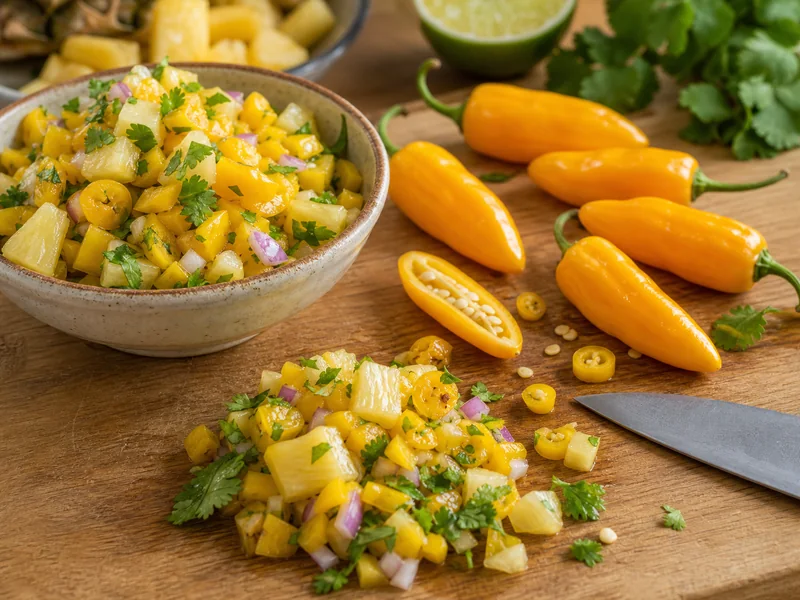
Fresh salsa gives the yellow pod its clearest job because the pepper can contribute color, crisp pieces, and cataloged tropical character at the same time. For a first batch, mince half a pod into enough salsa for several servings, mix thoroughly, then decide whether the remaining half belongs in the bowl.
Actual pineapple, mango, lime, and mild onion can support that fruit-forward direction, but sweetness does not neutralize capsaicin. Salt and acid sharpen the finished salsa, while batch size and the amount of chile control how much heat reaches each spoonful.
For hot sauce, choose whether the pepper or the fruit should lead. A chile-forward sauce can use yellow pods, vinegar, garlic, and only enough pineapple to round the aroma, while a fruit sauce needs a smaller chile dose so sugar does not hide how much capsaicin the batch contains.
Long cooking softens fresh texture and blends the pepper into the sauce. If the goal is a brighter finish, cook the sauce base first and add a reserved portion of finely minced pepper near the end, which is an editorial technique rather than a claim from a cultivar trial.
Substitution depends on which trait matters. Lemon Drop keeps a bright baccatum direction but is commonly listed at a higher heat range, Aji Amarillo keeps yellow Peruvian aji character with a fuller pod, and serrano supplies fresh green heat without the same tropical catalog description.
Choose the cut from the dish's texture. A fine mince distributes heat through pico-style salsa, thin rings leave visible concentrated bites for tacos or sandwiches, and a puree makes the pepper easier to divide through a sauce.
Pod count is a weak substitution measure because Aji Pineapple, Lemon Drop, Aji Amarillo, and serrano do not share one fruit size. Compare a measured spoonful of minced pepper or puree first, then correct flavor and heat separately instead of assuming one pod replaces one pod.
Utah State University Extension notes that heating and freezing do not remove chile heat. Cooking can soften the pod and spread capsaicinoids through a larger volume, but it should not be treated as a way to rescue a sauce that already contains too much pepper.
Remove the stem before blending, and remove placental tissue only when the dish needs less concentrated heat. Wear disposable gloves when preparing several pods, then wash the knife, board, and counter before touching the face or eyes.
| Cut | What it changes | Best fit |
|---|---|---|
| Fine mince | Spreads heat through every spoonful | Pico-style salsa |
| Thin rings | Leaves visible, concentrated bites | Tacos and sandwiches |
| Puree | Makes the dose easier to divide evenly | Hot sauce |
How Should You Buy and Store Aji Pineapple?
Fresh Aji Pineapple is more likely to come from a specialty grower or farmers market than from a standard produce aisle. Buy pods that have reached an even yellow color and still feel firm, and reject fruit with wet stem ends, spreading soft spots, or visible mold.
Utah State University Extension allows fresh chile peppers 2 to 3 weeks in the refrigerator. Keep the pods dry and unwashed until use because trapped surface moisture shortens useful storage.
Utah State's selection test adds more than color: a sound chile should be mature, heavy for its size, smooth, fresh, and crisp. That makes firmness and weight useful checks when several equally yellow pods are available.
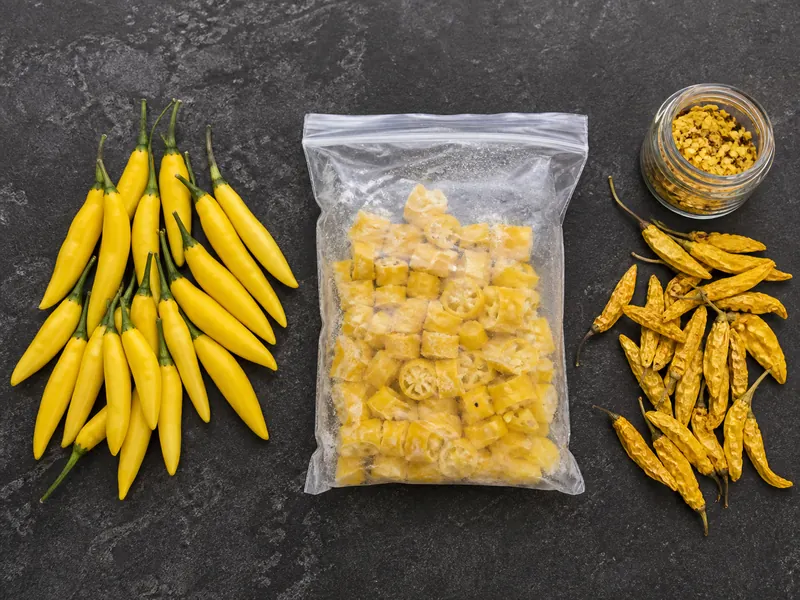
To keep whole peppers separate in the freezer, Utah State recommends freezing them first on a tray, then packing them with as much air removed as practical. Portioning before the final pack prevents a solid frozen block from forcing the cook to thaw more pepper than the recipe needs.
For a longer hold, the National Center for Home Food Preservation instructs cooks to wash hot peppers, remove the stems, package them, and freeze without blanching. Utah State gives properly packaged frozen peppers at 0 F or below a quality window of up to one year, although thawed pods will be softer and fit cooked sauce better than crisp salsa.
Drying creates a pantry seasoning rather than a substitute for fresh texture. Utah State says to dry sliced chile until brittle, then store whole pieces or powder in bags or glass jars at room temperature.
Choose the form from the next use. Refrigerate firm pods for fresh salsa, freeze cleaned portions for cooked sauces, and dry only when a concentrated seasoning is more useful than the cultivar's fresh yellow-fruit character.
Choose firm, evenly yellow pods for salsa. Utah State University Extension gives refrigerated fresh chiles a 2 to 3 week window.
Use cleaned portions in cooked sauces. The National Center for Home Food Preservation says hot peppers can be frozen without blanching.
Use brittle dried pieces or flakes as concentrated seasoning. Utah State advises room-temperature storage in bags or glass jars.
What Can You Use Instead of Aji Pineapple?
No dedicated substitute guidance is published for Aji Pineapple yet.
What Does Aji Pineapple Need to Grow Well?
Use extension guidance as the baseline because public cultivar listings do not provide a controlled Aji Pineapple growing trial. University of Minnesota Extension recommends starting pepper seed indoors about eight weeks before planting outside and using a heat mat at 80-90 F until seedlings emerge.
Bright overhead light matters after germination because weak light produces elongated seedlings. UMN recommends gradually exposing young pepper plants to more sun over one or two weeks, while bringing them inside when nights fall below 55 F during hardening.
Move plants into the garden after nighttime lows remain above 50 F. UMN uses about 18 inches between pepper plants, and its temperature guidance warns that dry soil, days above 90 F, or unsuitable night temperatures can weaken growth and fruit set.
A container should drain freely and hold enough potting mix that watering does not swing from saturated to dry in a single afternoon. Stake or cage the plant when branches begin carrying clusters, but let the actual growth habit of the purchased seed line decide how much support it needs.
Test the bed before choosing fertilizer. UMN says peppers perform best at pH 6.5 to 7, recommends applying phosphorus and potassium according to a soil test, and warns that excessive nitrogen produces leafy plants that are slow to bear fruit.
Keep this crop out of ground that held tomatoes, potatoes, peppers, eggplants, or tomatillos during the previous three to four years, following UMN's rotation guidance. That separation reduces carryover risk from problems shared by related nightshade crops.
Consistent moisture matters most once flowers and small fruit are present. UMN advises soaking the soil thoroughly at least weekly when rainfall supplies less than one inch, while avoiding overhead watering that leaves foliage wet and splashes possible disease spores onto leaves.
Do not solve sunscald by exposing more fruit. UMN describes white damaged patches when a pepper lacks enough leaf cover during hot, dry weather, so preserve a healthy canopy while using a stake to keep loaded branches off the ground.
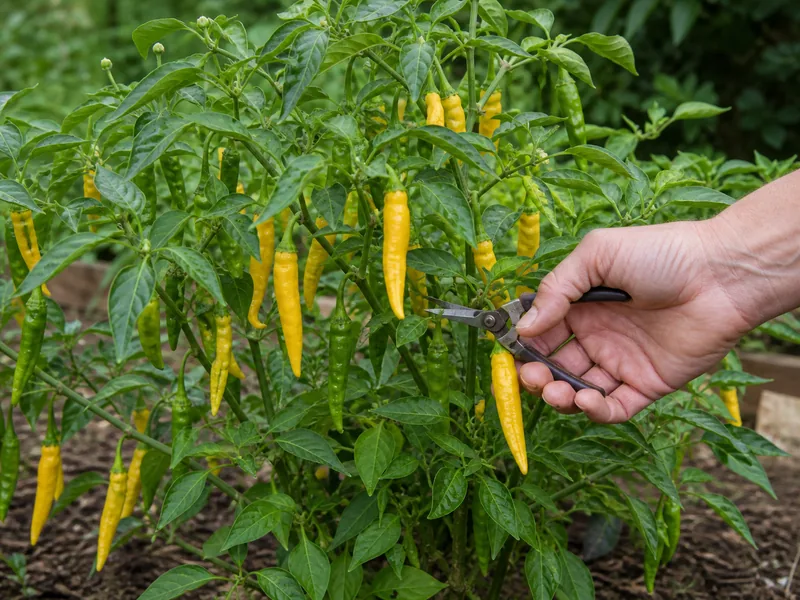
Harvest color provides a more dependable home cue than a universal day count. Leave green pods attached until the surface becomes evenly yellow when the goal is ripe Aji Pineapple flavor, then cut the stem rather than pulling the fruit from a loaded branch.
Cool or cloudy conditions can delay color and reduce pepper quality according to UMN's general pepper guidance. A pod that has reached full size but remains green therefore needs more warm, bright growing time rather than a guessed calendar deadline.
Aji Pineapple growing checkpoints
- Start seed about eight weeks before transplanting, following University of Minnesota Extension guidance.
- Keep the germination zone at 80-90 F until seedlings emerge.
- Transplant after nighttime lows remain above 50 F, with about 18 inches between plants.
- Use a soil test to target pH 6.5 to 7 and avoid excess nitrogen.
- Harvest when the pod surface is evenly yellow, then cut the stem instead of pulling the fruit.
Aji Pineapple FAQ


- The Archaeological Record of Chili Peppers and Domestication in Peru
- Genetic Diversity in Capsicum baccatum
- Growing Peppers in Home Gardens
- How to Preserve Chiles
- USDA Complete Guide to Home Canning - National Center for Home Food Preservation
- Growing Chile Peppers in New Mexico Gardens
-
Sourcing note: heat range is a widely cited figure, not an institutional measurement No university, government or research body publishes a Scoville measurement for this cultivar. The range given here is the figure growers and pepper references cite in common, and it has not been verified by a laboratory.
Species classification: C. baccatum - based on published botanical taxonomy.