

KnowThePepper
Fish Pepper: A Striped Chesapeake Heirloom That Heats Seafood Without Color
The fish pepper is an African American heirloom from the Chesapeake Bay region with a 5,000 to 30,000 SHU range and a bright, crisp flavor. Nearly lost to history, it was preserved by folk artist Horace Pippin and revived by seed savers in the late 20th century.
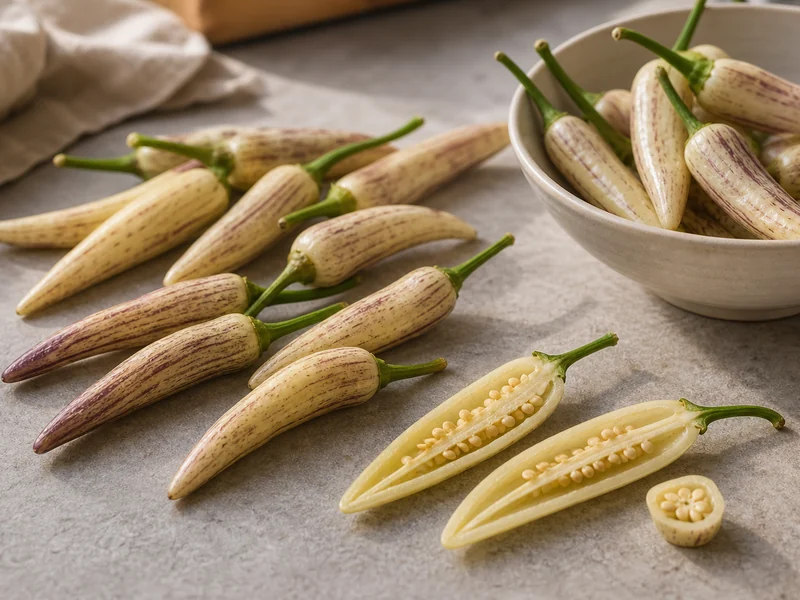
Its striking variegated foliage and cream-striped unripe pods make it as ornamental as it is edible.
- Species: C. annuum
- Heat tier: Hot (10K-100K SHU)
- Comparison: the same heat range as a jalapeño because their published ranges overlap
What Kind of Pepper Is Fish Pepper?
Long before the fish pepper became a seed-saver darling, it was a staple of Black-owned seafood restaurants and crab houses along the Chesapeake Bay in the late 1800s and early 1900s. The pepper's pale, cream-and-green striped unripe pods blended into white sauces and cream-based seafood dishes without adding color, a practical advantage when the cook wanted heat without a red tint in the chowder.
Mature pods ripen through orange to a deep red, but the unripe stage is where this pepper earned its cooking reputation. At 5,000 to 30,000 SHU, the heat sits in the same territory as a bright, moderately hot fresno - variable enough that individual pods can surprise you.
The plant itself is visually striking. Leaves show cream and green variegation, and the immature fruits carry white striping that fades as they ripen.
This makes it one of the more ornamental members of the fish pepper botanical species - a category that spans everything from bell peppers to cayennes.
Flavor-wise, the fish pepper delivers what the name of this site promises you'll find: brightness and crispness rather than the fruity depth of a habanero or the earthiness of a dried chile. It's a clean, direct heat that works particularly well in light-colored sauces, vinegar brines, and seafood applications where a darker pepper would muddy the visual.
The flavour arrives in a short sequence rather than all at once.
First is a clean vegetal brightness from the unripe pod, closer to a green bean than to a chile.
Then the heat, and this is where the variability shows. Pods from the same plant can land anywhere across 5,000 to 30,000 SHU, so one slice reads mild and the next does not.
Last is a faint sweetness that only the fully red pods carry. It sharpens rather than softens as the pod ripens.
Taste a sliver before committing a batch.
What Is the Origin of Fish Pepper?
The fish pepper's origins trace to African American cooking traditions in Baltimore and the broader Chesapeake region, where it circulated through Black communities and seafood workers from at least the mid-1800s. Oral histories suggest it traveled from the Caribbean, though its precise introduction remains undocumented.
The pepper nearly vanished entirely. Its survival is credited largely to Horace Pippin, the celebrated folk artist, who kept seeds through the mid-20th century.
Food historian William Woys Weaver received seeds from Pippin's descendants and documented the pepper's history in his 1999 book Heirloom Vegetable Gardening, which brought it to wider attention.
Seed libraries and heirloom preservationists subsequently spread the variety. Today it appears in catalogs from Baker Creek and similar sources, representing a broader the American pepper-growing tradition that includes many under-documented regional varieties.
What Does Fish Pepper Taste Like, and How Hot Is It?
The Fish Pepper delivers 5K–30K Scoville Heat Units, placing it in the Hot tier (10K-100K SHU). That makes it roughly the same heat range as a jalapeño because their published ranges overlap.
Flavor notes: bright and crisp.
What's in Fish Pepper? Nutrition Facts
Like other C. annuum peppers, fish peppers deliver solid nutritional value relative to their caloric weight. A 100g serving of fresh red pods provides roughly 40 calories, approximately 144mg of vitamin C (well over the daily requirement), meaningful amounts of vitamin A from carotenoids, and dietary fiber around 1.5g.
The compound responsible for the heat - capsaicin - has been studied for its potential anti-inflammatory and metabolic effects. At 5,000 to 30,000 SHU, fish peppers contain moderate capsaicin levels, sitting comfortably within the medium-heat pepper category where therapeutic concentrations become meaningful without being extreme.
What Is Fish Pepper Best Used For?
The fish pepper's historical role was specific: heat without color. Unripe pods are cream-and-white striped, and when used fresh or pickled at that stage, they add a clean kick to cream sauces, oyster stews, and crab dishes without turning them pink or orange.
At full red ripeness, the flavor sharpens and the heat pushes toward the upper end of its range. Dried and ground, it makes a pale-to-tan powder, unusual for a hot pepper, that works beautifully in béchamel-based dishes or anywhere you'd use white pepper but want actual capsaicin heat.
For a fresh salsa, the ripe red pods perform well alongside tomatoes, though the unripe version is the more historically interesting choice in green salsas or tomatillo-based preparations.
Pickled fish peppers in white wine vinegar with garlic and dill is a natural fit, the brine stays clear, the heat infuses, and the result pairs with shellfish the way the pepper was always intended. Think of it similarly to how cooks use Hungarian Wax - variable heat, flexible application.
Substituting for a fish pepper depends on which of its two jobs matters.
If the point is heat inside a pale sauce, nothing else on the shelf does it. A serrano at 10,000 to 23,000 SHU lands inside the fish pepper's own range, but it will tint a bechamel green.
Cayenne at 30,000 to 50,000 SHU matches only the top of that range, and it turns a cream sauce orange.
If colour is free and only the heat matters, either one works. Cut cayenne back to about half by volume.
If the point is colour and the heat is negotiable, white pepper keeps the dish pale but brings aroma rather than capsaicin.
The honest answer is that the unripe striped pod is its own substitute. That is the reason growers kept the variety alive.
| Stage | Pod colour | Where it works |
|---|---|---|
| Unripe | Cream and green striped | Cream sauces, oyster stew and crab, where heat must not tint the dish |
| Ripening | Orange | General fresh use once colour no longer matters |
| Full red | Deep red | Salsas, and drying for a pale-to-tan powder |
How Do You Buy and Store Fish Pepper?
Fresh fish peppers are rare in commercial markets - this is almost exclusively a farmers market, specialty grocer, or grow-your-own variety. When you do find them, look for firm pods with intact stems and no soft spots.
The variegated unripe stage is the prize.
Ripe red pods are more common.
Store fresh pods in the refrigerator crisper drawer in a paper bag for up to two weeks. For longer storage, slice and freeze on a sheet pan before transferring to bags, texture softens but heat and flavor hold well.
Seeds from reputable heirloom suppliers like Baker Creek are your most reliable source for growing your own.
Dried form: Dried fish pepper is one of the few hot peppers that does not produce a red powder, and that is the whole reason to dry it.
Ground from ripe red pods, the powder comes out pale to tan rather than crimson. It behaves like white pepper in a bechamel or any pale sauce, except that it carries real capsaicin heat rather than just aroma.
That makes it the dried counterpart to the fresh trick this pepper is known for.
Unripe striped pods deliver heat without colour while fresh. The dried powder does the same job once the season is over.
Dry only fully ripe red pods.
Unripe striped fruit has the lower heat of its stage and does not gain anything from drying.
For fresh fruit, freezing is the better keeping route. Slice and freeze on a sheet pan before bagging.
Texture softens, but heat and flavour hold.
What Is a Good Substitute for Fish Pepper?
No dedicated substitute guidance is published for Fish Pepper yet.
How Do You Start and Grow Fish Peppers?
The trickiest part of growing fish peppers isn't germination, it's maintaining the variegation.
The cream-and-green leaf pattern is a genetic trait that can fade or disappear if plants are crossed with solid-green varieties nearby. Isolate plants by at least 300 feet if you're saving seeds for true-to-type offspring, or use row covers during flowering.
Germination itself is straightforward for a the Capsicum annuum pepper group - 75 to 85°F soil temperature, 10 to 21 days to sprout.
Start seeds indoors 8 to 10 weeks before last frost. Transplant after nighttime temps stay above 55°F.
Full sun is non-negotiable: 6 to 8 hours minimum.
The plants respond well to consistent moisture but hate waterlogged roots. A well-draining, slightly acidic soil (pH 6.0 to 6.8) keeps them productive through the season.
Days to maturity runs roughly 80 to 85 days from transplant to ripe fruit.
Harvest unripe pods early and often if you want the pale cream stage, once they begin blushing orange, the color-neutral window closes. Plants tend to be moderately productive rather than prolific, so don't expect the volume you'd get from a cayenne.
Fish Pepper FAQ


- Cayenne Diane - Fish Pepper
- Adaptive Seeds Hot Pepper Scoville Chart 2025
- Chile Pepper Institute, New Mexico State University
Species classification: C. annuum - based on published botanical taxonomy.