

KnowThePepper
Chinese 5 Color: An Ornamental Pepper With a Sharp 10,000–30,000 SHU Bite
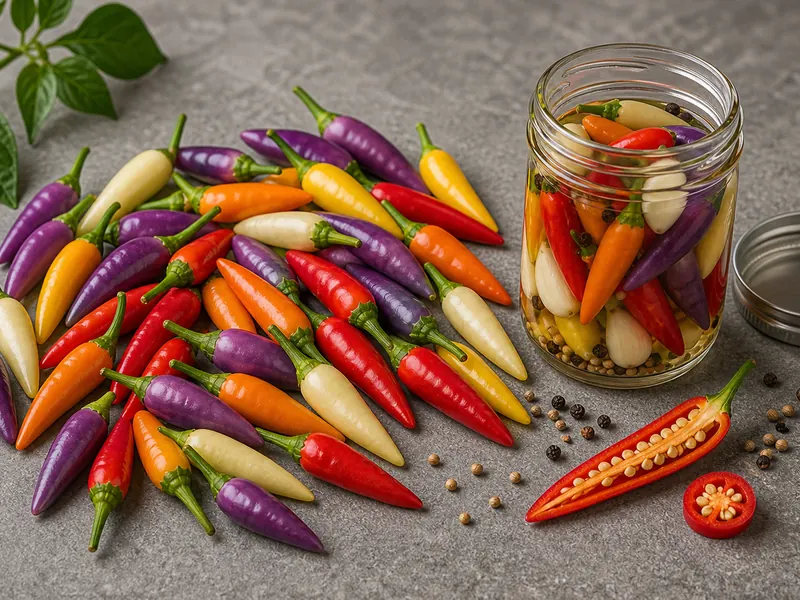
A Chinese 5 Color pepper carries a sharp, clean heat that builds fast, somewhere between 10,000 and 30,000 SHU, roughly 3x hotter than tabasco. What sets this the broader Capsicum annuum group apart is the ornamental spectacle: pods ripen through purple, yellow, orange, and red simultaneously on a single compact plant, making it as striking in the garden as it is sharp on the palate.
- Species: C. annuum
- Heat tier: Hot (10K-100K SHU)
- Comparison: 1-12x hotter than a jalapeño, depending on where the jalapeño falls in its 2,500-8,000 SHU range
What Kind of Pepper Is Chinese 5 Color?
Chinese 5 Color pods look ornamental enough to be treated as decoration. The heat corrects that assumption quickly.
It arrives bright and almost metallic, without the slow creep you get from something oilier like a habanero.
Chinese 5 Color sits in the 10,000 to 30,000 SHU range, which puts it solidly in the hot tier alongside peppers like the fiery, thin-walled kick of tabasco and the earthy, papery bite of de arbol. The heat is sharp rather than deep, it hits the front of the mouth and dissipates relatively cleanly.
Flavor-wise, the pods are bright and slightly grassy when green, developing a more concentrated fruitiness as they move through color stages. Fully red pods carry the most heat and the sweetest undertone, though "sweet" is relative at this SHU level.
The plant itself is compact, typically reaching 12 to 18 inches, and produces dozens of small tapered pods simultaneously in multiple ripening stages. That visual layering, purple, cream, yellow, orange, and red pods on the same plant, is what gives the variety its name.
Originally cultivated in China, it belongs to the broad annuum botanical family that includes everything from bells to cayennes.
The variety has since become popular globally as both an ornamental and a genuinely usable cooking pepper.
What Is the Origin of Chinese 5 Color?
Chinese 5 Color traces its roots to China, where small ornamental pepper cultivation has a long history tied to Chinese pepper-growing traditions. Unlike many ornamental varieties bred primarily for appearance, this one maintained genuine heat and flavor utility alongside its visual appeal.
The variety likely emerged through selection for both aesthetic qualities and productivity, traits valued in kitchen gardens where space is limited. Its compact size made it well-suited to container growing and courtyard plots common in Chinese domestic horticulture.
Western seed catalogs picked it up in the latter half of the 20th century, marketing it primarily as an ornamental. But growers who actually tasted the pods recognized its cooking potential.
Today it occupies an interesting niche: one of the few peppers equally at home in a decorative pot on a patio and in a jar of homemade chili oil.
What Does Chinese 5 Color Taste Like, and How Hot Is It?
The Chinese 5 Color delivers 10K–30K Scoville Heat Units, placing it in the Hot tier (10K-100K SHU). That makes it roughly 1-12x hotter than a jalapeño, depending on where the jalapeño falls in its 2,500-8,000 SHU range.
Flavor notes: bright and sharp.
What Nutrients Does Chinese 5 Color Provide?
Like most small hot peppers, Chinese 5 Color pods are nutrient-dense relative to their size. A 100g serving of fresh pods provides roughly 40 calories, significant vitamin C (often exceeding 100% of daily value in fully ripe red pods), and meaningful amounts of vitamin A from carotenoids that intensify as pods ripen through color stages.
Capsaicin, the compound responsible for the 10,000 to 30,000 SHU heat, has been studied for metabolic and anti-inflammatory effects, though dried pod quantities in typical cooking use are modest. The bright colors across ripening stages reflect increasing carotenoid content, making fully ripe red pods the most nutritionally concentrated.
What Is Chinese 5 Color Best Used For?
The sharp, bright flavor of Chinese 5 Color opens it to more uses than its ornamental reputation suggests. Fully red pods work well dried and ground into a coarse flake, the heat is direct and the flavor stays clean without the smokiness you get from something like a dried earthy red de arbol with its crackly texture.
Fresh pods at different ripeness stages offer different flavor profiles in the same harvest. Green pods are grassier and sharper.
Orange and red pods add a subtle fruitiness.
Mixing colors in a quick pickle gives you layered flavor from a single plant, the step-by-step approach to quick pickling works well adapted to these smaller pods.
For cooking, the small tapered shape is ideal for stuffing when the pods are at their largest, though at this heat level, stuffing with cream cheese or a mild cheese filling tempers the burn effectively. Check out stuffed peppers if you want a practical starting point.
Chili oil is probably the highest-use application: dried and cracked pods infused into neutral oil at low heat produce a condiment with real heat and a clean, sharp finish. The 10,000 to 30,000 SHU range means you can use it generously without overwhelming a dish.
| Stage | Flavour | Where it works |
|---|---|---|
| Green | Grassy and sharp | Quick pickles where bite matters more than sweetness |
| Orange | Sharpness easing into fruit | Mixed-colour pickles from a single harvest |
| Red | Most heat, with the sweetest undertone | Dried and ground into a coarse flake |
How Should You Buy and Store Chinese 5 Color?
Fresh Chinese 5 Color pods rarely appear in grocery stores, your best bet is farmers markets, Asian grocery stores, or growing your own from seed. Baker Creek Heirloom Seeds and several specialty vendors carry reliable seed stock.
Fresh pods store in the refrigerator for 1 to 2 weeks in a paper bag or loosely wrapped. For longer preservation, drying is ideal: the small size means whole pods dry completely in a dehydrator at 135°F in 8 to 12 hours.
Dried pods keep for 12 months in an airtight container away from light.
Avoid freezing fresh pods if you plan to use them dried, moisture damage affects texture.
Dried form: The pods are small enough that whole-pod drying is straightforward, which is unusual for a pepper grown mainly for display.
A dehydrator at 135F takes eight to twelve hours to dry pods through. The small size that makes the plant a container subject also means there is little flesh to hold moisture, so pods dry evenly without splitting or slicing.
Fully red pods are the ones worth drying.
They carry the most heat and the sweetest undertone, and they grind into a coarse flake with a clean, direct burn rather than the smokiness of a dried de arbol.
Dried pods keep for twelve months in an airtight container away from light.
One sequencing rule matters. Do not freeze fresh pods if the plan is to dry them later, because the moisture damage from freezing affects texture and the dried result is never as good.
Decide which preservation route a harvest is taking before it goes into the freezer.
What Is a Good Substitute for Chinese 5 Color?
No dedicated substitute guidance is published for Chinese 5 Color yet.
How Do You Start and Grow Chinese 5 Color Peppers?
Chinese 5 Color is one of the more rewarding compact peppers to grow, and the visual payoff during fruiting is unmatched. Start seeds indoors 8 to 10 weeks before last frost, they germinate reliably at soil temperatures around 80°F.
The plants stay small, typically 12 to 18 inches tall, which makes them excellent for containers.
A 5-gallon pot is sufficient for a single plant. Full sun is non-negotiable.
Anything less than 6 hours direct light and you get leggy growth and poor fruit set.
Fertilize moderately, too much nitrogen pushes foliage at the expense of pods. Once flowering starts, back off nitrogen and favor a balanced or phosphorus-forward feed.
The plants set fruit prolifically and may benefit from light pruning of early flowers to encourage stronger branching before full production begins.
For growers interested in comparing how this variety performs against other ornamental-but-edible types, the growing characteristics of the Lemon Drop - a Peruvian variety in the same heat range, offer an interesting contrast in plant structure and fruit yield.
Days to maturity run approximately 70 to 80 days from transplant. In cooler climates, prioritize heat retention with black plastic mulch and row cover early in the season.
Chinese 5 Color FAQ


- Varieties & Plant Breeding - Chile Pepper Institute, NMSU
- Baker Creek Heirloom Seeds - Chinese 5 Color
- USDA FoodData Central - Hot Peppers
Species classification: C. annuum - based on published botanical taxonomy.