
Chinese Peppers: Three Pods for Heat, Oil, and Color
China is the world's largest pepper producer. Sichuan cuisine relies on facing heaven peppers and er jing tiao for the region's famous málà (numbing-spicy) flavor.

All Chinese Peppers
Every variety in this collection, sorted by maximum Scoville heat rating. Click any card for the full profile with flavor notes, anatomy details, growing tips, and substitutes.


Species Breakdown
China peppers span multiple Capsicum species. Each species has distinct characteristics, which the profiles below explain in detail.
This Collection Has Three Clear Pepper Paths
The current Chinese pepper inventory contains three profiles: Tien Tsin, Facing Heaven, and Chinese 5 Color. All are listed as Capsicum annuum, but one species label does not make their pod shape, sold form, heat range, or kitchen role interchangeable.
This is a practical profile collection rather than a catalog of every chile used across China. Regional cooking includes many locally named cultivars and processed products, so use these three cards when one of these exact names appears on seed, a package, or a recipe.
Slender dried-pod path with the highest published range in this set.
Shorter upright-pod identity with a 30,000 to 50,000 SHU published range.
Compact ornamental growth with multistage color and usable heat.
Facing Heaven Describes How the Pod Sits
Facing Heaven refers to small pods that point upward on the plant, a growth habit that helps distinguish this named profile before drying. Its published range is 30,000 to 50,000 SHU, which supplies firm heat while leaving dosage room in a larger stir-fry, braise, or oil preparation.
The name should not be used for every short dried red chile in an Asian market. Confirm the package wording and compare the whole pod with the profile, especially when a recipe depends on a particular size, skin-to-seed ratio, or heat level.
Tien Tsin Leads the Slender Dried-Pod Path
Tien Tsin is the hotter profile in this collection at 50,000 to 75,000 SHU and is commonly encountered as a slender dried red pod. Whole dried pods can perfume hot oil and remain visually distinct in a dish, while broken pods expose more interior surface and usually release heat faster.
Keep oil temperature controlled because a dried chile can move from fragrant to bitter when its skin and seeds scorch. Remove the wok from excessive heat if the pods blacken rapidly, and treat a pile of whole chiles as an aromatic ingredient whose contact with oil matters, not as a signal to eat every pod.
| Pod treatment | What changes | Kitchen control |
|---|---|---|
| Whole dried | Slower contact with oil | Bloom briefly and watch skin color |
| Broken dried | More interior surface exposed | Start with fewer pieces |
| Ground | Fast, even dispersion | Measure before adding |
Chinese 5 Color Is an Ornamental With Real Heat
Chinese 5 Color plants carry upright pods through purple, cream, yellow, orange, and red stages, which makes the cultivar useful as a compact ornamental. Its published 10,000 to 30,000 SHU range also means the fruit is not a heat-free decoration.
Choose it for seed-growing interest and colorful pods rather than as a substitute for a bag of dried Tien Tsin. Harvest color affects appearance and ripeness, while the profile provides the specific growth and flavor notes needed before using the pods in food.
Chile Heat and Sichuan Numbness Come From Different Plants
Capsicum chiles burn because of capsaicinoids, while Sichuan pepper comes from Zanthoxylum and creates its characteristic tingling through compounds such as hydroxy-alpha-sanshool. Peer-reviewed sensory research identifies these as different chemical and botanical paths, so “mala” cannot be explained by chile heat alone.
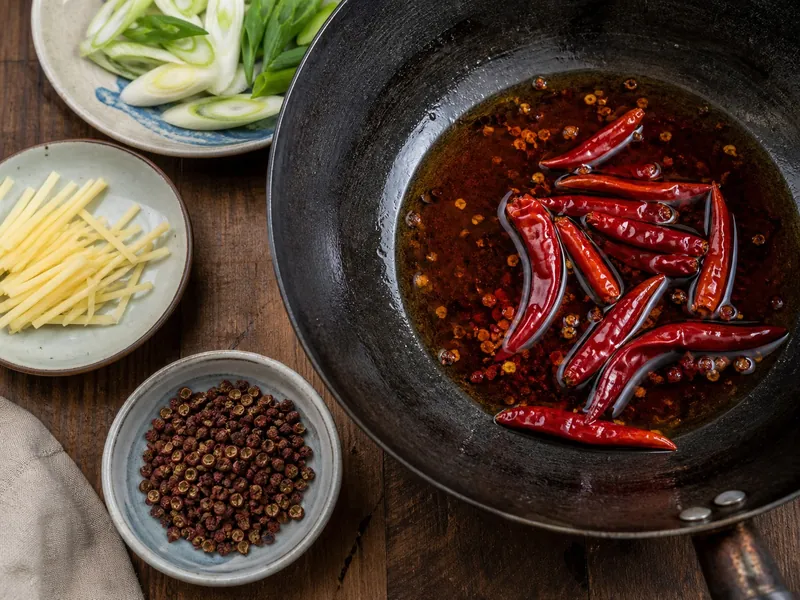
In the kitchen, bloom dried chiles carefully for aroma and capsaicin heat, then dose Sichuan pepper separately for its citrusy, numbing effect. The image below keeps the pepper husks in their own bowl so the two ingredients remain visually and conceptually distinct.
Buy the Whole Pod Before You Buy a Vague Label
For these profiles, a transparent bag of intact pods gives more identity evidence than a generic package marked only “dried red chilli.” Check pod length and width, stem condition, surface color, broken-pod percentage, and whether the exact cultivar name appears on the label.
Store dried pods sealed away from heat, moisture, and direct light, then discard any with mold or a damp musty odor. If a seller cannot distinguish Tien Tsin from Facing Heaven, buy for general heat only and do not present the product as an authenticated cultivar.
Check a bag of dried pods
- Look for the exact cultivar name.
- Compare intact pod shape and size.
- Reject moisture, mold, or musty odor.
- Store sealed away from heat and direct light.
Heat Level Distribution
How chinese peppers distribute across the Scoville scale. Click any tier to browse all peppers at that heat level.
Heat Range Comparison
Visual breakdown of where each variety falls on the Scoville scale. Wider bars show a larger documented SHU spread between individual pods.
The causes of pepper heat variation explain why pods from one cultivar do not always measure alike.
Related Comparisons
Side-by-side breakdowns of heat, flavor, and cooking uses. Each comparison covers Scoville ratings, pod anatomy, and substitution options.
 30K SHU
vs
75K SHU
30K SHU
vs
75K SHU
De Arbol vs Tien Tsin: Sauce Chile or Wok Chile?
De Arbol fits Mexican sauces, salsa, and chile oil when you want nutty red heat. Tien Tsin runs hotter and works better as a whole… 50K SHU
vs
75K SHU
50K SHU
vs
75K SHU
Facing Heaven vs Tien Tsin: Wok Chile Differences
Choose Facing Heaven pepper when the dish needs aromatic Sichuan-style dried chile flavor, especially in chili oil, braises, or dishes…Browse all comparisons in our comparison hub, or use the pepper tools for calculators and finders.
Related Guides
Reference guides and recipes tied to the same pepper family, region, or use-case.


Explore Other Origins
Peppers evolved in the Americas and spread worldwide through the Columbian Exchange. Each region developed distinct varieties shaped by local cuisine and climate.
Frequently Asked Questions
Keep Reading
Jump into the wider database, heat tiers, comparisons, and substitute references without another card wall.