

KnowThePepper
Ho Chi Minh Hot Pepper: A Cayenne-Type Chile That Ripens Yellow Before Red
Ho Chi Minh Hot Pepper is a productive Capsicum annuum pepper species cayenne-type chile usually listed around 5,000-30,000 SHU. It grows slender 4-6 inch pods that shift from green to bright yellow, orange-yellow, and finally crimson red, with a sharp grassy heat that works best in sauces, stir-fries, pickles, and dried flakes.
- Species: C. annuum
- Heat tier: Hot (10K-100K SHU)
- Comparison: the same heat range as a jalapeño because their published ranges overlap
What Makes Ho Chi Minh Hot Pepper Different?
Ho Chi Minh Hot Pepper is a productive cayenne-type chile with a documented 5,000-30,000 SHU range, putting it in the hot pepper tier, above most jalapenos and below many Thai bird chiles. It belongs to C. annuum botanical family, the same species group as Cayenne Pepper, De Arbol, and many long Asian hot peppers.
The easiest way to recognize this pepper is the color sequence. Seed sellers describe shiny pods that start green, turn bright yellow to orange-yellow, then finish crimson red.
Cayenne Diane records a slightly broader mature window, with 4-6 inch pods on roughly 3-foot plants.
That yellow middle stage is the useful clue. Many cayenne-style peppers go straight from green to red, but Ho Chi Minh Hot spends enough time in yellow and orange-yellow that growers can harvest it at different flavor points.
Yellow pods taste sharper and greener.
Fully red pods dry better and make a cleaner chile flake.
That range deserves an explanation rather than a citation. A sixfold spread from 5,000 to 30,000 SHU is what a seed-catalogue figure looks like when it covers a pepper that has been kept alive by seed savers rather than fixed by a breeding programme and tested in a lab.
Ripeness accounts for much of it, since a yellow pod picked early sits near the bottom of the range and a fully crimson one reaches the top.
Growing conditions account for the rest. Treat the number as a working band rather than a specification, and taste a pod from each plant before deciding how many a dish needs.
What Is the Origin of Ho Chi Minh Hot Pepper?
The public seed story is unusually specific for a small catalog pepper.
Cayenne Diane credits Minnesota farmer Steven Schwen with naming the pepper after receiving seed from Vietnamese immigrants visiting his farm in the 1980s. Truelove Seeds gives a related version: Vietnamese refugees shared the seed with Schwen, and he later sent some to Fedco Seeds.
We would not treat that as a formal breeder record.
It is a seed-preservation story, not a university release or protected cultivar registration. Still, both accounts agree on the important pieces: Vietnamese seed provenance, Steven Schwen, Minnesota, and a cayenne-style C. annuum plant.
The name can carry political weight, so the practical identity matters more than the label. For gardeners and cooks, this is a Southeast Asian hot pepper line with long pods, high productivity, and a heat range that overlaps fish pepper heat range and the lower end of Thai Chili.
How Hot Is Ho Chi Minh Hot Pepper? Heat and Flavor
The Ho Chi Minh Hot Pepper delivers 5K–30K Scoville Heat Units, placing it in the Hot tier (10K-100K SHU). That makes it roughly the same heat range as a jalapeño because their published ranges overlap.
Flavor notes: bright, sharp, grassy.
What's in Ho Chi Minh Hot Pepper? Nutrition Facts
USDA FoodData Central does not publish a cultivar-specific entry for Ho Chi Minh Hot, so the best nutrition reference is generic raw hot chile pepper data. Treat the numbers as a close estimate, not a lab test of this exact seed line.
A 100 gram serving of raw hot chile pepper is low in calories and high in vitamin C. In real cooking, most people eat far less than 100 grams of a 5,000-30,000 SHU pepper, so the nutrition impact is usually small unless the pepper is used as a major ingredient.
The meaningful active compound is capsaicin. UMN Extension notes that capsaicin concentrates around the inner membranes and seed area, so removing those parts lowers the perceived heat before cooking.
Which Dishes Suit Ho Chi Minh Hot Pepper?
Use Ho Chi Minh Hot anywhere you want a clean, narrow-pod heat without the fruitiness of a habanero or Scotch bonnet. The flavor is bright and grassy when yellow, then sharper and more chile-forward when red.
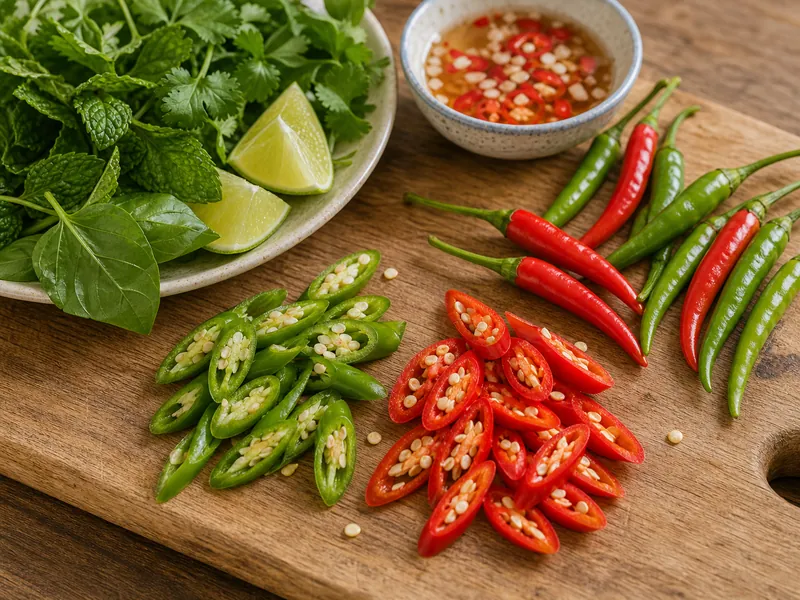
For fresh cooking, slice one yellow pod into a pan of garlic, greens, and fish sauce, or mince a red pod into vinegar-based dipping sauce.
The wall is thinner than a jalapeno, so it cooks fast and does not add much body to salsa. If you need bulk, pair it with a sweeter pepper and let Ho Chi Minh Hot provide the heat.
For dried use, wait until the pods are fully red or deep crimson.
Dry them whole, then crush into flakes. The result sits closer to a lean cayenne flake than a smoky Mexican dried chile, so it works in noodle bowls, fried rice, broths, chili oil, and quick pickles.
Where Can You Buy Ho Chi Minh Hot Pepper, and How Do You Store It?
Fresh Ho Chi Minh Hot peppers are uncommon in grocery stores. Seeds are the normal route, and availability tends to come from small seed companies or seed-saving networks rather than large transplant racks.
Store fresh pods in a breathable bag in the refrigerator and use them within about a week. UMN Extension notes that peppers can keep for a week or more under refrigeration, but chilling injury can pit skins if they sit too long.
For longer storage, freeze sliced pods for cooked dishes, pickle yellow pods in vinegar brine, or dry fully red pods for flakes.
Wear gloves when processing a large batch. This pepper is not a superhot, but a 30,000 SHU pod can still leave capsaicin on your hands.
Dried form: Ho Chi Minh Hot makes the most sense as a dried flake or thin chile powder. The red pods dry faster than thick-walled peppers because the walls are narrow and cayenne-like.
Use fully red pods for drying.
Yellow pods are better fresh because their flavor is greener and less concentrated. Once dried crisp, store the flakes in an airtight jar away from light and heat.
Use them anywhere you would use a clean cayenne-style flake, but start with less if your batch came from late-season red pods.
Drying is not the only route, and the stage decides which one fits. Yellow pods pickle well in vinegar, where the greener, grassier character of that stage survives the brine instead of being cooked away.
Red pods are the ones for drying, and sliced red pods freeze well for dishes that will be cooked anyway, since texture matters less once the pod goes into a pan.
For fresh storage, a breathable bag in the refrigerator and about a week is the working window. University of Minnesota Extension notes that peppers keep a week or more refrigerated, but chilling injury pits the skin once they sit past that.
What Can You Use Instead of Ho Chi Minh Hot Pepper?
No dedicated substitute guidance is published for Ho Chi Minh Hot Pepper yet.
How Do You Start and Grow Ho Chi Minh Hot Peppers?
Ho Chi Minh Hot is worth growing when you want a productive hot pepper in a compact garden. Truelove Seeds lists 68 days to maturity, which is early for a hot pepper with 4-5 inch pods, though real timing still depends on heat, light, and transplant age.
Start seed indoors 8-10 weeks before your last frost date, then transplant after cold nights have passed. University of Minnesota Extension recommends setting peppers outside only after nighttime lows stay above 50 F, and it notes that peppers grow best with warm soil, steady moisture, and full sun.
Give each plant enough airflow and harvest often. Cayenne-type plants keep setting flowers when ripe pods are removed.
If you are saving seed, isolate it from other C. annuum pepper varieties because peppers self-pollinate but insects can still move pollen between nearby plants.
Harvest by color instead of waiting for every pod to turn red. Pick yellow pods for fresh vinegar sauces and quick stir-fries, then leave a second wave on the plant for red dried flakes.
That split harvest is the main reason this cultivar earns its space: one plant can cover fresh green-yellow heat and dried cayenne-style seasoning without needing two separate pepper varieties.
Ho Chi Minh Hot Pepper FAQ


- Cayenne Diane - Ho Chi Minh Hot Pepper
- Chile Pepper Institute, New Mexico State University
Species classification: C. annuum - based on published botanical taxonomy.