

AI-generated image, edited by KnowThePepper
Criolla Sella Pepper: A Citrusy Bolivian Baccatum for Salsa and Drying
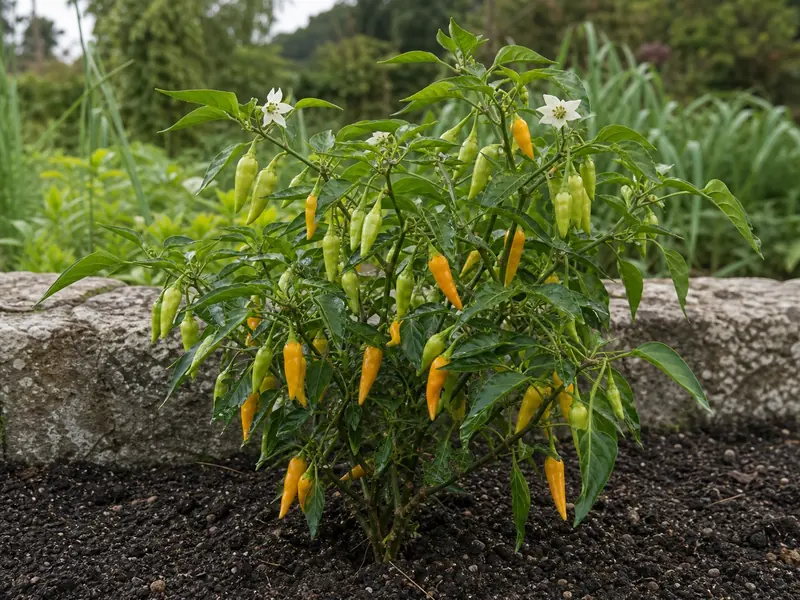
Criolla Sella is a compact Bolivian Capsicum baccatum with narrow pods that ripen from green to golden yellow-orange. Published listings place it around 15,000-30,000 SHU, with citrus-led flavor and thin walls suited to salsa, fermented sauce, and drying.
- Species: C. baccatum
- Heat tier: Hot (10K-100K SHU)
- Comparison: 2-12x hotter than a jalapeño, depending on where the jalapeño falls in its 2,500-8,000 SHU range
What Is Criolla Sella Pepper Known For?
Criolla Sella is a Bolivian Capsicum baccatum selected for a compact plant and a heavy set of narrow, pendant pods. Cornell University's Vegetable Varieties for Gardeners records a hot chile from Bolivia on a 16-to-24-inch plant, with fruit that tapers to a point and ripens from green to yellow.
Reimer Seeds gives a useful fruit scale of about 2.5 inches long by 0.5 inch wide and describes the ripe color as golden yellow-orange. Its listing also records white flowers with yellow-green markings, a visible clue that supports the baccatum species identity.
The pepper is sometimes sold as Ají Criolla Sella, but available records support only Bolivia and the wider Andean context rather than a named village, breeder, or introduction year.
At 15,000-30,000 SHU, Criolla Sella belongs in the hot heat range without approaching habanero intensity. Gaia Organic Seeds publishes that broad interval, while several other seed sources cluster the upper end near 25,000 to 30,000 SHU.
Where Did Criolla Sella Pepper Originate?
Criolla Sella belongs to the cultivated South American baccatum group, a species widely associated with Andean food traditions. A 2022 morphological review of Capsicum notes that baccatum peppers are widely used in Bolivian and Peruvian cooking and identifies Criolla Sella among the known varieties.
That species history does not make Criolla Sella an ancient documented cultivar because Cornell and seed records support Bolivia without naming an original community, breeder, or release date.
The word criolla can indicate a locally established type in Latin American usage, but the name alone cannot prove who selected it. The reliable profile therefore begins with the recorded fruit, plant, and country rather than turning the name into a detailed migration story.
How Hot Is Criolla Sella Pepper? Heat and Flavor
The Criolla Sella Pepper delivers 15K–30K Scoville Heat Units, placing it in the Hot tier (10K-100K SHU). That makes it roughly 2-12x hotter than a jalapeño, depending on where the jalapeño falls in its 2,500-8,000 SHU range.
Flavor notes: Citrusy, fruity, with mango notes.
Criolla Sella Pepper Nutrition Facts
USDA FoodData Central does not publish a cultivar-specific Criolla Sella analysis. Generic raw hot-chile values can describe the food category, but they cannot support exact calories, vitamin C, vitamin A, or daily-value claims for this seed line.
Capsaicin concentrated primarily in placental tissue creates pungency, but the capsaicin mechanism does not convert SHU into a verified health benefit or nutrient dose.
How Do You Use Criolla Sella Pepper in the Kitchen?
Supplier descriptions agree on a fruit-led profile because Uprising Seeds calls it rich and citrusy while La Société des Plantes adds mango notes.
Criolla Sella keeps that identity visible in fresh salsa, fermentation, cooked hot sauce, and dried seasoning rather than serving as heat alone.
For fresh salsa, mince a small amount first and let the fruit character sit beside tomato, onion, herbs, or tart fruit. Its published heat range overlaps the broad territory of a serrano pepper, but the baccatum flavor makes the substitution noticeable rather than neutral.
A fermented sauce preserves the pod's bright direction when the recipe does not bury it under smoke or very sweet fruit. Use the same salt-controlled fermentation discipline as any pepper sauce and judge the finished heat after blending because individual pods can vary.
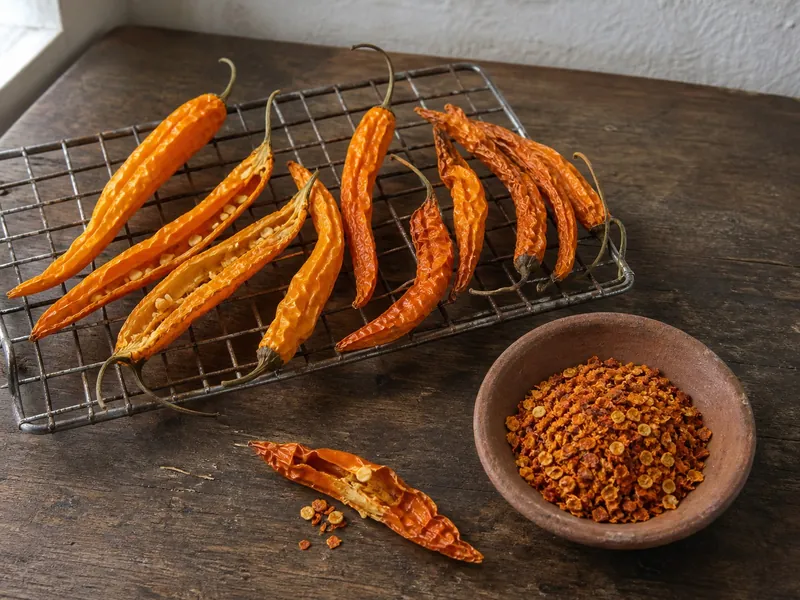
Thin walls make the cultivar useful where moisture is a drawback because whole dried pods, coarse flakes, or powder season soups, beans, fish, roasted vegetables, and table sauces without fresh-chile water.
Choose the form from the dish rather than processing the whole harvest one way. Fresh golden pods preserve color and a brighter top note, fermentation rounds the edges into a pourable sauce, and complete drying concentrates a small harvest into flakes that can be dosed over time.
Criolla Sella can cover part of a serrano's heat job, but it does not disappear as a neutral substitute. Reduce or rebalance fruit, citrus, or sweet ingredients when the baccatum character would otherwise push a salsa or sauce too far in the same direction.
| Form | Best job | Adjustment |
|---|---|---|
| Fresh golden pod | Salsa or a bright sauce | Start small and preserve the fruit-led flavor |
| Fermented mash | Pourable hot sauce | Use a measured salt process and judge after blending |
| Whole dried pod | Soup, beans, or later grinding | Dry until crisp before sealing |
| Coarse flakes | Table seasoning or roasted vegetables | Add gradually because flakes distribute concentrated heat |
| Powder | Dry rub or smooth sauce | Use the smallest starting dose and protect from steam |
Where Can You Buy Criolla Sella Pepper, and How Do You Store It?
Criolla Sella is usually encountered as seed, so a credible listing should agree on Bolivia, C. baccatum, narrow pendant fruit, green-to-golden ripening, and roughly 85 to 90 or more days.
Do not use current stock status or a vendor's superlative as identity evidence. Cornell records 90-120 days, Reimer lists 85 days, and Uprising Seeds lists about 90 days, so seed lot, climate, and the starting point used for the count explain part of the spread.
Store sound pods dry and cold in a breathable container, freezing them for cooked uses or drying them completely when the harvest exceeds the near-term plan.
Dried pods and flakes belong in an airtight container away from light, heat, and steam. Keep them whole as long as practical because grinding exposes more surface area to oxygen and shortens aroma retention.
Keep the seed packet or order record until the first ripe harvest. Flower pattern can confirm the species during bloom, while pendant shape and golden maturity later test whether the plant matches the cultivar description rather than another yellow baccatum.
When fresh pods are offered, choose firm fruit with intact stems and an even mature color. A green pod may still be usable, but it cannot prove the seller's promised ripe appearance or show the same flavor stage described by the seed sources.
Dried form: Criolla Sella earns a separate dried form because its wall is narrow enough to lose moisture efficiently. Reimer labels it a drying spice pepper, and La Société des Plantes specifically says the thin skin dries well while retaining an attractive color.
Dry clean, sound, fully ripe pods until crisp, splitting thicker examples lengthwise so the inner wall is exposed before sealing.
Keep whole dried pods when aroma retention matters and crush them only as needed. Flakes spread visible pieces through a dish, while powder disperses heat fastest and therefore needs the smallest starting dose.
Follow the pepper dehydration process rather than humid room air, and discard pods with wet spots, fuzzy growth, or musty odor instead of hiding damage in powder.
Seed identity checks
- Bolivia appears as the recorded origin
- The species is Capsicum baccatum
- Pods are narrow, pendant, and about finger length
- Fruit changes from green to golden yellow-orange
- Maturity is listed near 85 to 90 days or longer
What Can You Use Instead of Criolla Sella Pepper?
No dedicated substitute guidance is published for Criolla Sella Pepper yet.
What Does Criolla Sella Pepper Need to Grow Well?
Plan for an early-to-midseason baccatum because Reimer lists 85 days, Uprising about 90, and Cornell 90 to 120, with local temperature and counting method explaining part of the spread.
Start seed indoors with warm germination conditions and enough lead time for slow emergence. Uprising Seeds recommends sowing six to eight weeks before the last frost and moving plants outdoors only after frost danger, while its seed notes place germination around 70-85°F.
Uprising describes a bushy plant around three feet while Cornell records 16 to 24 inches, so treat height as a seed-lot and environment range and support only the crop that develops.
Uprising suggests 12 to 24 inches between plants and full sun. A container should hold one plant with reliable drainage, while an in-ground plant needs airflow around the branching canopy.
Use early ripening as a reason to track color rather than promise cold tolerance, and use the pepper seed-starting sequence for light, hardening, and transplant timing.
Read maturity figures from the same starting point. A seed seller may count from transplant while a gardener counts from sowing, so an 85-day listing and a 90-to-120-day garden record can describe different clocks without proving that one seed lot is wrong.
The reported plant heights also change the container decision. Start one plant in at least a five-gallon pot, then use a wider or heavier container if the actual seed lot reaches the three-foot habit described by Uprising rather than the shorter Cornell record.
Ripening order is more useful than a date alone. Mark the first full-size green pod, then watch the same pod turn golden so later harvests are not taken merely because the calendar has reached the catalog estimate.
Criolla Sella Pepper FAQ


- Criolla Sella Peppers, Cornell Vegetable Varieties for Gardeners
- Criolla Sella Pepper Seeds, Reimer Seeds
- Hot Pepper Criolla Sella, Uprising Seeds
- Criolla Sella Hot Pepper, Gaia Organic Seeds
- Piment Criolla Sella, La Société des Plantes
- Morphological Characterization of Capsicum Species, 2022
- USDA FoodData Central, SR Legacy 170106, Peppers, hot chili, red, raw
Species classification: C. baccatum - based on published botanical taxonomy.