

KnowThePepper
Aji Panca: Mild Peruvian Chile, Paste, and Dried Pods
Aji Panca is a mild Peruvian Capsicum chinense pepper used mainly as a brown-red dried pod, powder, or paste. It gives marinades and sauces dark fruit, gentle smoke, and color, while the heat depends strongly on whether the sample is fresh or dried.
- Species: C. chinense
- Heat tier: Medium (1K-10K SHU)
- Comparison: the same heat range as a jalapeño because their published ranges overlap
What Is Aji Panca?
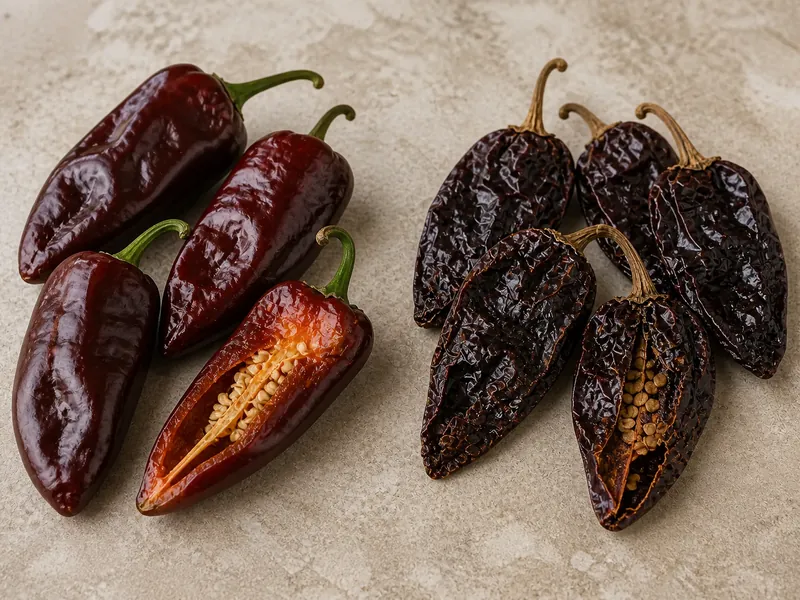
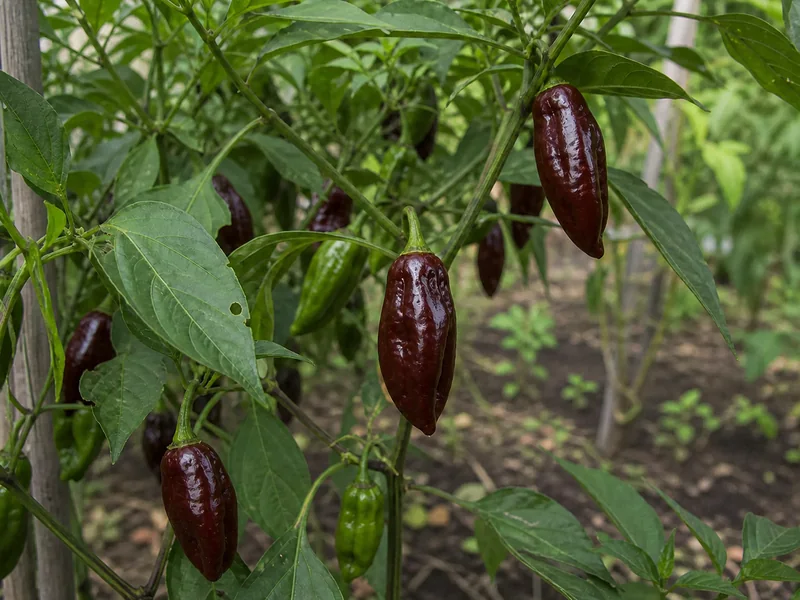
Peru's Aji Panca is an elongated pepper that ripens brown and is sold mainly after drying or grinding into paste. The Peruvian National Institute for Agrarian Innovation, known as INIA, identifies its documented accession 354-PER 017847 as Capsicum chinense.
That INIA accession produced fresh fruit averaging 79.7 mm long, 24.6 mm wide, and 14 g. Those measurements describe one conserved accession, so they help recognition without promising that every seed line or commercial pod will match exactly.
Heat changes with form, and INIA measured the same accession at 1,500 SHU fresh and 8,400 SHU dried. Water loss can concentrate capsaicinoids in a dried sample, while New Mexico State University explains that genetics and growing conditions can also shift HPLC results.
The dried pod contributes brown-red color, dark fruit, light smoke, and much less sharp heat than Aji Amarillo. Ancho covers some of the same mild dried-chile body, but its raisin and earth notes move a sauce toward a Mexican dried-chile profile.
Some secondary references classify Aji Panca as C. baccatum. We follow INIA's accession record and a University of Lima study that both identify the pepper as C. chinense, while keeping the disagreement visible instead of presenting the label as uncontested.
What Is the Origin of Aji Panca?
Aji Panca belongs to Peru's long chile tradition, but ancient evidence for Capsicum use does not establish the age of this named cultivar. The reliable claim is narrower: modern Peruvian agriculture and cooking recognize Aji Panca as a brown chile used in dried, ground, and paste forms.
INIA's native-pepper catalog records the accession's plant, fruit, color, capsaicinoids, and agronomic measurements. That record gives Aji Panca a cultivar-level source rather than borrowing broad history from every pepper grown in the Andes.
A current cooking link is easier to document than a cultivar origin story. Peru Travel's official anticucho recipe combines ground Aji Panca with garlic, cumin, oregano, vinegar, and dark beer, then uses another Aji Panca and oil mixture to baste the skewers on the grill.
This evidence places Aji Panca inside a specific Peruvian preparation without claiming that one recipe defines every regional use. Aji Amarillo remains the brighter and hotter paste pepper, while Aji Panca supplies the darker base used in marinades, adobos, stews, and braises.
How Hot Is Aji Panca? Heat and Flavor
The Aji Panca delivers 1.5K–8.4K Scoville Heat Units, placing it in the Medium tier (1K-10K SHU). That makes it roughly the same heat range as a jalapeño because their published ranges overlap.
Flavor notes: smoky, berry-like, mildly sweet.
How Nutritious Is Aji Panca?
INIA measured 185 mg of ascorbic acid per 100 g of fresh fruit in accession 354-PER 017847. That is cultivar evidence for one fresh sample, not a nutrient guarantee for every pod, dried package, paste brand, or normal serving.
Drying removes water and makes values per 100 g look more concentrated, while prepared paste can add salt, oil, vinegar, or preservatives. Check the jar label when sodium or serving size matters, because generic raw-pepper numbers do not describe a commercial paste.
The same INIA record found capsaicinoids in both pulp and placental tissue, with much more in the placenta. That result explains heat distribution but does not support a medical or supplement claim.
How Do You Cook With Aji Panca?
Choose Aji Panca when a dish needs dark chile color and fruit without a large heat increase. It works especially well in anticucho marinades, adobos, beans, stews, braised meat, and sauces built around garlic, cumin, vinegar, or smoke.
Peru Travel's anticucho method uses ground Aji Panca in the seasoning mixture and again with oil for basting. The meat marinates for at least a couple of hours, so the chile works through both contact time and repeated brushing over the grill.
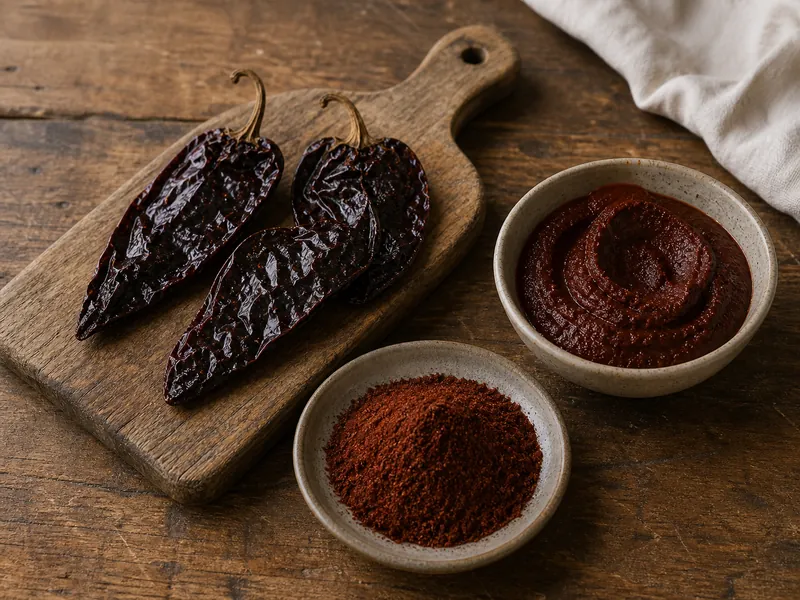
Whole dried pods give the most control over seeds, soaking liquid, and final thickness. Jarred paste dissolves faster, but its salt, vinegar, oil, and concentration vary by brand.
Powder disperses quickly in a dry rub or sauce, though it loses aroma faster after grinding.
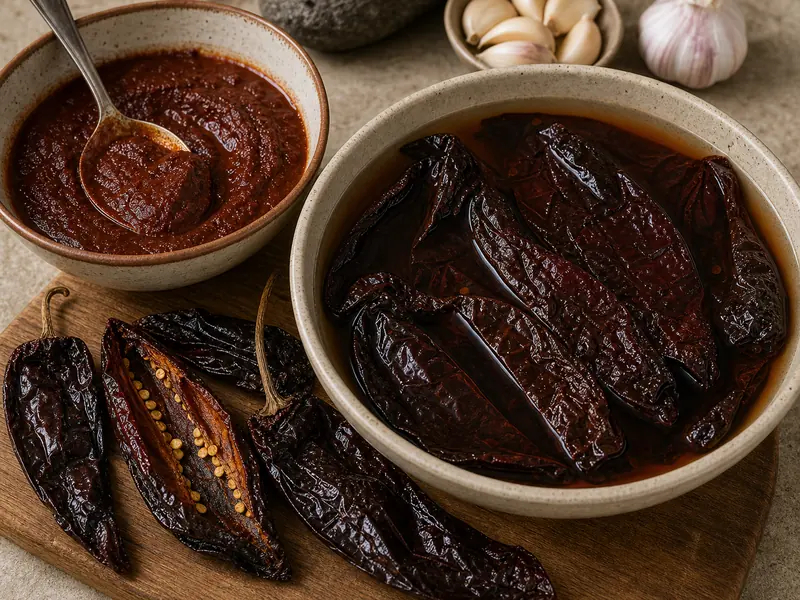
To prepare a whole pod, wipe it clean, remove the stem and loose seeds, then warm it briefly in a dry pan without blackening the skin. Cover it with hot water until pliable, blend with a little soaking liquid, and strain only when the sauce needs a very smooth texture.
A darkened spot from gentle warming can deepen the aroma, but a blackened pod tastes bitter. Keep the pan time short and move directly to soaking as soon as the chile becomes fragrant.
For an unfamiliar commercial paste, our editorial starting point is 1 teaspoon per cup of sauce or marinade. Stir, wait for the paste to disperse, then adjust for the jar's salt, acidity, and concentration rather than applying one universal pod-to-paste conversion.
Substitution depends on the missing job. Ancho gives mild body and a raisin note, guajillo gives brighter red fruit, and pasilla gives a darker dried-fruit edge.
None duplicates Aji Panca, and a measured swap also needs per-dish changes to chile quantity, salt, and acidity.
How Do You Buy and Store Aji Panca?
Buy the form that matches the work. Whole dried pods suit a blended sauce, powder suits quick dispersion, and jarred paste suits marinades or weeknight cooking when soaking and blending would slow the recipe.
A documented fresh Aji Panca ripens brown and has an elongated shape. Dried pods should keep that dark brown-red identity and smell clean, fruity, and lightly smoky rather than dusty, damp, or sour.
Reject any package with visible mold, wet clumps, insect damage, or a musty odor. A dried pod may crack when bent, which is different from the soft damp patches that signal unsafe storage.
Utah State University Extension advises drying chile until brittle, then transferring it to bags or glass jars. Keep whole pods and powder airtight, away from heat, light, and moisture, and buy powder in smaller amounts because its aroma fades faster.
After opening paste, follow the manufacturer's refrigeration and use-by directions and use a clean spoon. If a jar is too large for the rate you cook with it, freeze small portions for cooked sauces and marinades instead of repeatedly warming the full container.
Dried form: Dried dark burgundy pods or dark red paste.
| Form | What it gives you | Where it belongs |
|---|---|---|
| Whole dried pods | Full flavour, but needs soaking and blending | A sauce you are building from scratch and have time for |
| Powder | Quick dispersion with no soaking step | Seasoning mixes, and anticucho marinades built on ground panca |
| Jarred paste | The shortest route, already soaked and blended | Marinades and weeknight cooking where soaking would slow the recipe |
What Can You Use Instead of Aji Panca?
Compare substitutes for Aji Panca by form, flavor, and heat before choosing a ratio. Measured adjustments must account for the dish and the concentration of the replacement.
Direct comparisons show where flavor, form, and preparation differ in the Aji Amarillo vs Panca matchups.
How Do You Start and Grow Aji Panca Peppers?
Grow Aji Panca as a warm-season C. chinense pepper and wait for the cultivar's brown ripe color before drying. INIA recorded its accession as a 100.2 cm prostrate plant, which supports giving branches room and support without treating that height as universal.
University of Minnesota Extension recommends moving peppers outside after frost risk has passed, into warm soil and full sun. Steady moisture matters most during flowering and fruit development, while waterlogged soil can damage roots.
Green or red-brown fruit is not yet the same ingredient as a fully brown ripe pod. Let the fruit reach its mature color and firm texture when the goal is the dark dried form associated with Aji Panca.
Wet outdoor conditions can interrupt that plan. Harvest mature fruit before prolonged rain, inspect it for damage, and use a dehydrator or another controlled, ventilated method until every piece is brittle as Utah State University Extension specifies.
Seed labels deserve scrutiny because Aji Panca is sometimes sold under conflicting species names. Compare ripe color, elongated fruit shape, and the seed supplier's provenance with INIA's documented accession before saving seed as true-to-name stock.
Aji Panca FAQ


- INIA - Caracterizacion agro-morfologica de ajies nativos peruanos
- University of Lima - Capsaicin and dihydrocapsaicin in Aji Panca oleoresin
- Peru Travel - Anticucho recipe
- New Mexico State University Circular 706 - Measuring chile pepper heat
- University of Minnesota Extension - Growing peppers in home gardens
- Utah State University Extension - How to preserve chiles
Species classification: C. chinense - based on published botanical taxonomy.