

KnowThePepper
Pimenta de Neyde: Dark Chinense Heat (100,000-250,000 SHU)
Pimenta de Neyde runs 100,000-250,000 SHU with unusual dark pigment and a chinense aroma profile. We use it when you want extra-hot heat plus distinctive visual identity in fresh and sauce prep.
- Species: C. chinense
- Heat tier: Extra-Hot (100K-1M SHU)
- Comparison: 13-100x hotter than a jalapeño, depending on where the jalapeño falls in its 2,500-8,000 SHU range
What Is Pimenta de Neyde Known For?
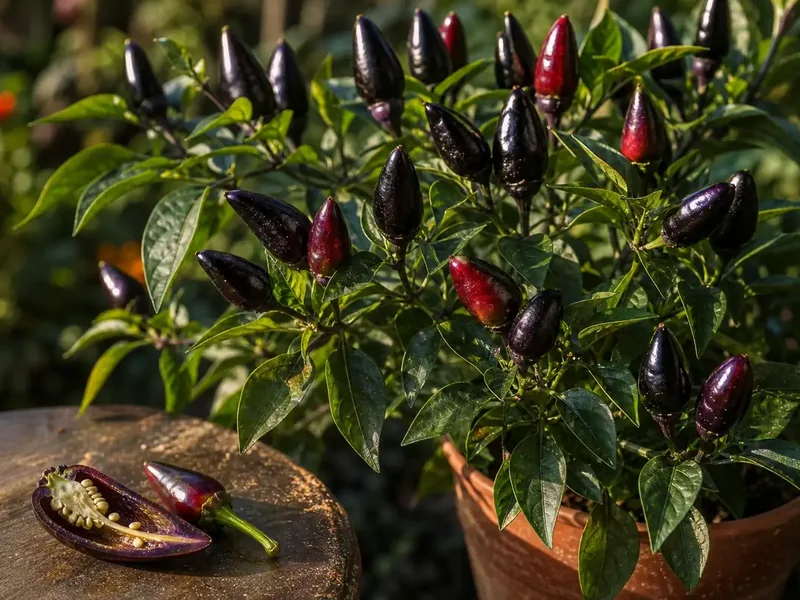
Pimenta de Neyde earned its place in pepper circles not because it breaks heat records, but because it breaks expectations. The plant produces foliage and pods in shades of deep violet and near-black, a pigmentation driven by anthocyanin accumulation that signals the plant's genetic complexity within the broader C. chinense botanical family.
Heat sits at 100,000-250,000 SHU, which moves it into extra-hot territory alongside lower-to-mid habanero heat. Compared to a serrano, expect a much harder hit and a slower, more lingering burn, enough heat that sauce makers should treat it like a serious chinense pepper, not a medium-heat ornamental.
Flavor data on this variety remains sparse. Unlike many C. chinense peppers with documented fruity or floral profiles, Pimenta de Neyde's taste characteristics are not well-established in published sources.
What growers consistently report is that the heat has the characteristic slow build of the chinense species, it arrives after a pause, then lingers.
The pepper is believed to be a natural hybrid, possibly crossing C. chinense with C. annuum genetics, which could explain some of its unusual traits. Its origin traces back to south american peppers, where diverse wild and cultivated varieties have developed over centuries in varied climates and ecosystems.
What Is the Origin of Pimenta de Neyde?
The pepper takes its name from Neyde Hidalgo, a Brazilian pepper enthusiast credited with discovering or cultivating this variety. Unlike many heirloom peppers with centuries of agricultural documentation, Pimenta de Neyde's recorded history is recent and relatively informal, it spread primarily through seed-sharing networks and online pepper communities in the early 2000s.
Brazil's pepper diversity is extraordinary, and this variety fits within a regional tradition that has long embraced ornamental and cooking peppers simultaneously. The deep purple coloration, unusual even among C. chinense varieties, attracted collectors quickly.
Its spread across North America and Europe happened almost entirely through enthusiast networks rather than commercial seed channels, which is why documentation remains thin compared to peppers with institutional research behind them.
What Does Pimenta de Neyde Taste Like, and How Hot Is It?
The Pimenta de Neyde delivers 100K–250K Scoville Heat Units, placing it in the Extra-Hot tier (100K-1M SHU). That makes it roughly 13-100x hotter than a jalapeño, depending on where the jalapeño falls in its 2,500-8,000 SHU range.
What's in Pimenta de Neyde? Nutrition Facts
Like other C. chinense peppers, Pimenta de Neyde contains capsaicin and related capsaicinoids responsible for its heat, along with vitamin C, vitamin A (from carotenoids), and dietary fiber. The deep purple pigmentation indicates elevated anthocyanin content, the same antioxidant compounds found in blueberries and purple cabbage.
Specific nutritional data for this variety has not been independently published.
General fresh pepper nutrition applies: low calorie, negligible fat, and meaningful micronutrient content relative to serving size. The anthocyanin load may be higher than in standard red or orange chinense peppers, though no peer-reviewed analysis has confirmed exact values for this cultivar.
How Do You Use Pimenta de Neyde in the Kitchen?
Because flavor documentation is limited, cooking with Pimenta de Neyde requires some experimentation. The heat profile, slow-building, lingering, chinense-characteristic, suggests it behaves similarly to other mid-range C. chinense varieties rather than the sharp, immediate heat of annuum types.
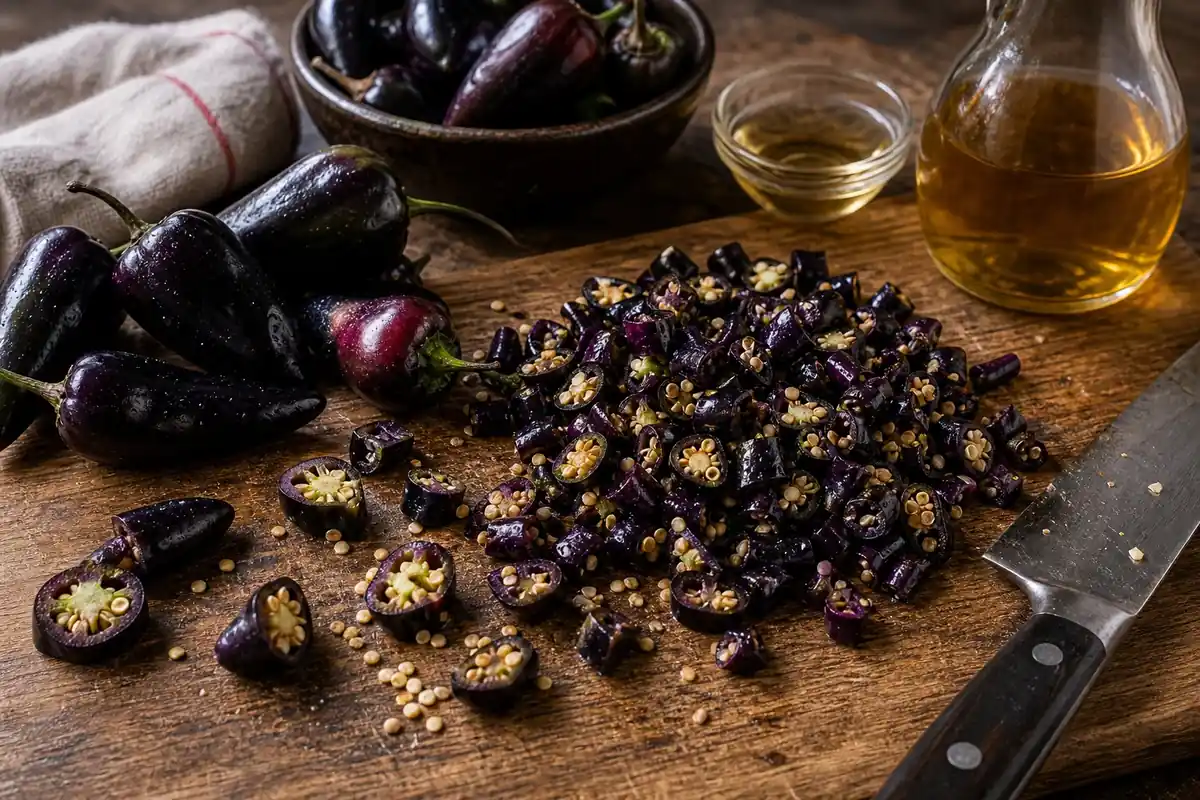
The dramatic dark coloration adds visual interest to fresh preparations. Sliced pods in a salad or scattered over a dish create contrast that most peppers simply cannot match.
Some growers report that color fades significantly with cooking, so raw or lightly pickled applications preserve the visual appeal.
For those exploring similar heat ranges with better-documented flavor, Bishop's Crown offers an interesting comparison point, as does Kashmiri Chili for dried applications.
Pickling is probably the most practical use given the limited cooking data, a simple brine preserves both heat and color reasonably well. Heat level is assertive enough to contribute to hot sauces without dominating, making it a useful blending pepper.
How Do You Buy and Store Pimenta de Neyde?
Pimenta de Neyde is rarely found in retail markets. Seeds are the most accessible entry point, look through specialty pepper seed vendors and enthusiast seed swaps, where this variety circulates regularly.
If you grow your own, harvest when pods reach their mature color stage (which varies, some stay dark, some shift toward red). Fresh pods store in the refrigerator for 1 to 2 weeks.
For longer storage, freeze whole or slice and dry.
The Dundicut-style approach pepper of drying whole for later use works well with small-fruited chinense types. Keep dried pods in an airtight container away from light to preserve both heat and any remaining color.
What Is a Good Substitute for Pimenta de Neyde?
No dedicated substitute guidance is published for Pimenta de Neyde yet.
How Do You Start and Grow Pimenta de Neyde Peppers?
The purple-black foliage makes Pimenta de Neyde one of the most ornamental peppers you can put in a container, and it performs beautifully in pots, check the practical guidance on peppers for containers before deciding on pot size, since chinense varieties need more root space than most people expect.
Start seeds indoors 10 to 12 weeks before last frost.
Soil temperature for germination should stay at 80 to 85°F - chinense species are slower to germinate than C. annuum, so patience matters. Expect 14 to 28 days to see sprouts.
Once established, the plant wants full sun and consistent moisture without waterlogging.
Anthocyanin pigmentation intensifies with sun exposure, so a shadier spot will produce greener foliage and less dramatic coloration. Fertilize with a balanced NPK during vegetative growth, then shift to lower nitrogen once flowering begins.
This variety shares the compact-to-medium growth habit common to many chinense peppers.
Compare its container suitability to small-fruited hot peppers with intense flavor or Piquin Pepper - all manageable in pots with the right drainage. Days to maturity run approximately 90 to 120 days from transplant, typical for the species.
Pimenta de Neyde FAQ


- Pimenta da Neyde chili seeds - Tummelsta Chili
- Capsicum chinense Jacq. - USDA GRIN Taxonomy
- Pepper Joe's
- American Chemical Society
- Baker Creek Heirloom Seeds
- Food and Agriculture Organization of the United Nations
-
Sourcing note: heat range is a widely cited figure, not an institutional measurement No university, government or research body publishes a Scoville measurement for this cultivar. The range given here is the figure growers and pepper references cite in common, and it has not been verified by a laboratory.
Species classification: C. chinense - based on published botanical taxonomy.