

KnowThePepper
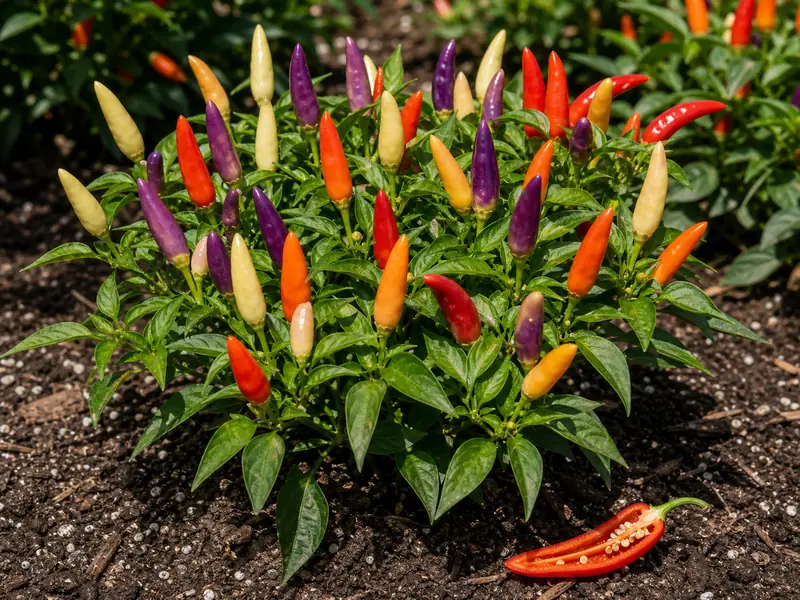
Aji Omnicolor: Purple, Yellow, Orange, and Red Pods on One Peruvian Plant
Aji Omnicolor is a C. baccatum pepper from Peru that earns its name by ripening through purple, yellow, orange, and red tones on the same plant. At 30,000-50,000 SHU, it sits in cayenne-level heat with a bright, fruity flavor that makes it useful for ornamental growing and fresh cooking alike.
- Species: C. baccatum
- Heat tier: Hot (10K-100K SHU)
- Comparison: 4-20x hotter than a jalapeño, depending on where the jalapeño falls in its 2,500-8,000 SHU range
What Is Aji Omnicolor?
The Aji Omnicolor is a South American Capsicum baccatum variety produces small, pointed pods that cycle through purple, cream, yellow, orange, and red as they mature, sometimes all on the same plant at once. The visual effect borders on theatrical.
At 30,000-50,000 SHU, the heat sits in a practical range: cayenne-level and clearly hot. For context, that puts it right alongside sharp, citrusy Peruvian heat and not far below the Jwala Pepper.
The burn is clean and relatively fast-fading, which is characteristic of the baccatum species.
The flavor is where the Omnicolor earns real respect. Fruity and bright, with a slight floral note that baccatum varieties are known for, these peppers taste genuinely different from the more common annuum types.
That complexity makes them useful in the kitchen, not just in the garden.
This is a pepper that straddles two audiences: ornamental growers who want a compact, colorful container plant, and cooks who want something with actual flavor behind the heat. It delivers on both counts, which explains why it has developed a dedicated following despite being rarely found in grocery stores.
What Is the History of Aji Omnicolor?
Aji Omnicolor traces its roots to the Andean pepper traditions of South America, where Capsicum baccatum has been cultivated for thousands of years. The baccatum species is one of the five domesticated Capsicum species, and it forms the backbone of Peruvian and Bolivian cuisine through varieties like the golden, tropical-flavored aji amarillo.
The specific Omnicolor variety appears to be a relatively modern selection, bred primarily for its multi-stage color display rather than any single cooking trait. It gained traction in the ornamental pepper market during the early 2000s as home gardeners began seeking plants that were both edible and visually striking.
While its exact breeding origin is not thoroughly documented, the variety is now maintained by several specialty seed companies and has built a steady following among pepper enthusiasts who grow it for both the garden display and the kitchen.
How Hot Is Aji Omnicolor? Heat and Flavor
The Aji Omnicolor delivers 30K–50K Scoville Heat Units, placing it in the Hot tier (10K-100K SHU). That makes it roughly 4-20x hotter than a jalapeño, depending on where the jalapeño falls in its 2,500-8,000 SHU range.
Flavor notes: fruity and bright.
Aji Omnicolor Nutrition Facts
Like other hot peppers in the 30,000-50,000 SHU range, Aji Omnicolor pods are nutritionally dense relative to their small size.
A 100g serving of fresh red pods delivers roughly 40 calories, with significant vitamin C content, baccatum peppers are noted for high ascorbic acid levels. The red-ripe stage contains more capsaicinoids and antioxidants than earlier color stages.
The capsaicin that produces the heat sensation also triggers endorphin release, which partly explains why hot peppers like this one are so satisfying to eat. Capsaicin content scales with ripeness, peaking at the fully red stage.
How Do You Cook With Aji Omnicolor?
The Aji Omnicolor works best when its fruity brightness can actually be tasted, which means using it fresh or with minimal processing. Slice the small pointed pods into salsas or ceviches where the flavor comes through without heat domination.
Ripe red pods carry the fullest fruit character and the highest heat. Yellow and orange stages offer a slightly milder burn with more pronounced sweetness, useful when you want complexity without pushing the 30,000 SHU ceiling.
Purple pods, harvested early, are the mildest and work well in dishes where color contrast matters.
For dried applications, Omnicolor sits closer to Aleppo Pepper, though the baccatum brightness comes through differently. Drying concentrates the fruity notes and makes a flavorful powder for seasoning grilled proteins or finishing sauces.
Think of it as a pepper with real range: fresh in a chimichurri, pickled whole for visual impact, or blended into a hot sauce where you want fruit-forward heat. The Bishop's Crown hints at the family resemblance in flavor, tangy, bright, and a bit floral.
| Stage | Heat | Best for |
|---|---|---|
| Purple (early) | Mildest | Dishes where the colour contrast is the point |
| Yellow to orange | Milder, sweeter | Complexity without pushing the ceiling |
| Red (ripe) | Full 30,000-50,000 SHU | Fullest fruit character, dried applications |
Where Can You Buy Aji Omnicolor, and How Do You Store It?
Fresh Aji Omnicolor pods are rarely found in mainstream grocery stores. Specialty Latin markets, farmers markets, and online vendors like Etsy pepper sellers are your best bets.
Look for pods with firm skin and no soft spots, the color stage matters less than texture.
For seeds or live plants, Baker Creek Heirloom Seeds and Pepper Joe's carry them seasonally. Dried pods and powder occasionally appear through specialty spice retailers.
Fresh pods keep 1-2 weeks refrigerated in a paper bag. For longer storage, freeze whole pods or dry them at 135-140°F in a dehydrator.
The fruity flavor holds reasonably well through drying.
What Can You Use Instead of Aji Omnicolor?
Direct comparisons show where flavor, form, and preparation differ in the Aji Omnicolor vs Bolivian Rainbow matchups.
How Do You Grow Aji Omnicolor at Home?
Aji Omnicolor is a Capsicum baccatum, which means it needs a longer season than most annuum types, plan on 90-100 days from transplant to ripe fruit.
Starting seeds indoors 10-12 weeks before your last frost date is essential in most climates. For practical guidance on grow habaneros applies directly here, the timing and technique transfer well.
Plants grow compact and bushy, typically reaching 18-24 inches, making them well-suited to containers. They handle heat and moderate drought better than many varieties, though consistent moisture during pod set improves yield.
Full sun is non-negotiable, at least 6-8 hours daily. Baccatum varieties are somewhat more tolerant of cooler nights than chinense types, which makes them a good choice for gardeners in zones with unpredictable summers.
The multi-color display happens naturally as pods mature at different rates.
Resist the urge to harvest everything at once, leaving pods at various stages keeps the ornamental effect going for weeks. Fertilize moderately with a balanced feed during vegetative growth, then switch to lower nitrogen once flowering begins.
Aji Omnicolor FAQ


- Aji Omnicolor Pepper
- Capsicum baccatum L. - USDA GRIN Taxonomy
- Capsicum - USDA GRIN Taxonomy
- Baker Creek Heirloom Seeds
-
Sourcing note: heat range is a widely cited figure, not an institutional measurement No university, government or research body publishes a Scoville measurement for this cultivar. The range given here is the figure growers and pepper references cite in common, and it has not been verified by a laboratory.
Species classification: C. baccatum - based on published botanical taxonomy.