

KnowThePepper
Jamaican Hot Chocolate: A Rare Brown Chinense With Fruity, Smoky Heat
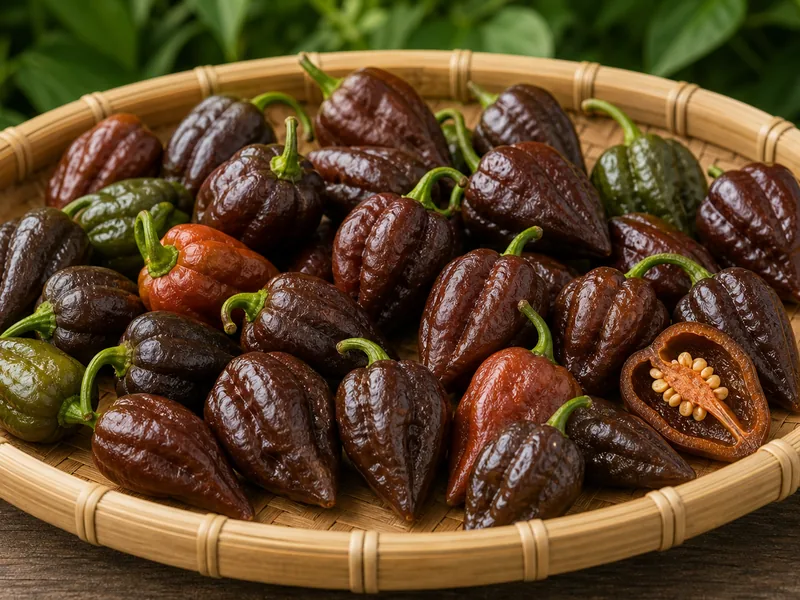
The Jamaican Hot Chocolate is a rare C. chinense variety from Jamaica, registering 100,000-200,000 SHU - roughly matching the extra hot. Its deep brown, lantern-shaped pods carry a distinctive fruity-smoky flavor that sets it apart from most Caribbean chinense varieties.
About 40x hotter than a jalapeño, this pepper is as striking to look at as it is intense to eat.
- Species: C. chinense
- Heat tier: Extra-Hot (100K-1M SHU)
- Comparison: 13-80x hotter than a jalapeño, depending on where the jalapeño falls in its 2,500-8,000 SHU range
What Is Jamaican Hot Chocolate?
The Jamaican Hot Chocolate announces itself by colour. The pods ripen to a rich chocolate-brown, hanging like small lanterns from compact plants, a color so unusual it stops gardeners mid-row.
Botanically, it belongs to Capsicum chinense Varieties that gave the world habaneros and Scotch bonnets. That lineage shows in the heat: 100,000-200,000 SHU, within the Jamaican hot pepper range documented by external pepper references.
What separates it from its Caribbean cousins is the flavor profile. The smokiness isn't added, it's native to the pod, a quality that emerges during ripening alongside deep fruity notes.
The combination makes it genuinely interesting for cooking, not just a heat delivery mechanism.
The lantern shape is classic chinense, slightly irregular, with a blunt tip and thin walls that dry beautifully. Fresh pods have a waxy sheen and firm texture.
As they ripen from green through intermediate stages to full chocolate brown, the flavor complexity builds.
This sits firmly in the Caribbean chile tradition, a region that has produced some of the most flavorful high-heat varieties anywhere. The Jamaican Hot Chocolate is one of the lesser-known gems of that tradition, not because it's inferior, but because it hasn't been commercialized the way its relatives have.
What Is the History of Jamaican Hot Chocolate?
Jamaica's pepper culture runs deep, shaped by centuries of trade, migration, and agricultural exchange across the Caribbean. The Jamaican Hot Chocolate emerged from this context, a landrace variety developed and selected by Jamaican growers who prized both heat and flavor in their cooking.
The chocolate coloration in C. chinense varieties isn't specific to Jamaica, similar brown-ripening types appear across the Caribbean basin, including peppers with the Madame Jeanette and Panama's intensely hot cooking staple. These parallel developments suggest independent selection pressure toward similar traits across the region.
Jamaican cuisine's reliance on intensely hot, flavorful peppers, particularly in jerk seasoning, created ideal conditions for preserving and refining varieties like this one. The pepper likely remained a regional specialty for generations before seed collectors and specialty growers began distributing it more broadly in the late 20th century.
What Does Jamaican Hot Chocolate Taste Like, and How Hot Is It?
The Jamaican Hot Chocolate delivers 100K–200K Scoville Heat Units, placing it in the Extra-Hot tier (100K-1M SHU). That makes it roughly 13-80x hotter than a jalapeño, depending on where the jalapeño falls in its 2,500-8,000 SHU range.
Flavor notes: fruity and smoky.
What Nutrients Does Jamaican Hot Chocolate Provide?
Like other C. chinense varieties, Jamaican Hot Chocolate delivers meaningful nutrition alongside its heat. A 100g serving of fresh pods provides approximately 40 calories, with significant vitamin C content, often exceeding 200% of the daily recommended value in ripe red or brown chinense peppers.
Capsaicin, the compound responsible for the heat, has been studied for anti-inflammatory and metabolic effects. The capsaicin explains why the burn feels so intense even in small quantities.
The brown pigmentation indicates the presence of anthocyanins and carotenoids - antioxidant compounds associated with the ripening process. Iron, potassium, and B vitamins round out the nutritional profile.
How Do You Cook With Jamaican Hot Chocolate?
The smoky-fruity character of Jamaican Hot Chocolate makes it a natural fit for jerk-style marinades, where it reinforces the allspice and thyme without competing with them. The smokiness reads as depth rather than char.
At 100,000-200,000 SHU, heat management matters. A single fresh pod is enough for a pot of sauce serving six to eight people if you want heat that builds rather than overwhelms.
Removing seeds and pith drops the intensity considerably without losing the flavor.
The flavor profile overlaps with Scotch Bonnet but adds a smoky dimension those peppers lack. That difference opens up applications beyond traditional Caribbean cooking, the chocolate pepper works well in mole-adjacent sauces, dark chocolate-based hot sauces, and BBQ glazes where the smokiness reads as intentional complexity.
Drying concentrates the smokiness dramatically. Dried and ground Jamaican Hot Chocolate powder is excellent in dry rubs.
The pods also pickle well, though the color turns somewhat muddy, flavor is unaffected.
For fresh applications, thin slicing and quick-cooking preserves the fruity brightness. Long braises tend to mellow the fruit notes while amplifying the heat, so adjust accordingly.
Where Can You Buy Jamaican Hot Chocolate, and How Do You Store It?
Fresh Jamaican Hot Chocolate pods appear most reliably at farmers markets during late summer through early fall - peak harvest season for long-maturing chinense varieties. Specialty grocers and Caribbean food markets occasionally carry them.
Availability is regional.
Online seed vendors are the most consistent source for both seeds and dried pods. Look for pods that are fully chocolate-brown with no soft spots or wrinkling.
Fresh pods keep 1 to 2 weeks refrigerated in a paper bag, not plastic, which traps moisture. For longer storage, freeze whole pods or dry them at 135°F until brittle.
Dried pods sealed in airtight containers hold flavor for 12+ months.
What Is a Good Substitute for Jamaican Hot Chocolate?
No dedicated substitute guidance is published for Jamaican Hot Chocolate yet.
How Do You Grow Jamaican Hot Chocolate at Home?
Jamaican Hot Chocolate performs best in long, warm growing seasons, not surprising given its Caribbean origins. Start seeds 8 to 10 weeks before last frost, using bottom heat around 80 to 85°F for germination.
Expect 14 to 21 days to sprout; C. chinense varieties are notoriously slower than annuums.
Transplant after nighttime temperatures stay consistently above 55°F. These plants need warmth at their roots, cold soil stalls growth even when air temperatures are fine.
Black plastic mulch helps in marginal climates.
Mature plants reach 24 to 36 inches and appreciate staking once pods load up. The chocolate coloration develops fully only with adequate sun, at least 6 to 8 hours daily.
Shaded plants may produce pods that never fully ripen to brown.
Water consistently but don't overwater; C. chinense plants in soggy soil drop flowers readily. A light stress period during flowering can actually improve fruit set.
Compare this to White Habanero - both need patient, attentive growing.
Days to maturity run 90 to 100 days from transplant. In short-season climates, starting early indoors and using row cover at season's end is the difference between a full harvest and a disappointing one.
Also browse grow peppers from seed if you're new to chinense varieties.
Jamaican Hot Chocolate FAQ


- Capsicum - USDA GRIN Taxonomy
- Capsicum chinense Jacq. - USDA GRIN Taxonomy
Species classification: C. chinense - based on published botanical taxonomy.