

KnowThePepper
Fatalii: Lemon-Bright Central African Heat at 125,000–400,000 SHU
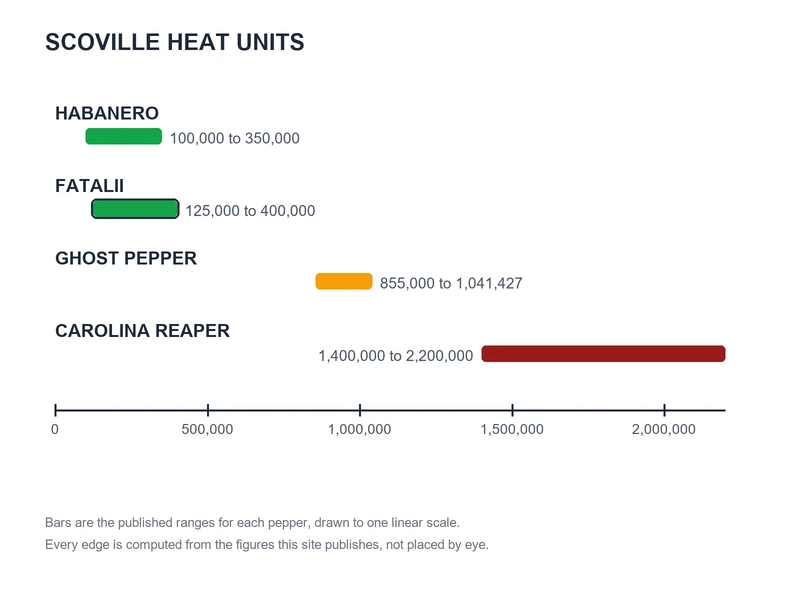
The Fatalii is a Central African C. chinense pepper hitting 125,000 to 400,000 SHU - up to 80 times hotter than a jalapeño. What sets it apart from other superhots is its striking citrus-forward flavor: bright, almost lemon-like, with a clean fruity finish.
That combination of serious heat and genuine taste complexity makes it a favorite among hot sauce makers and adventurous cooks.
- Species: C. chinense
- Heat tier: Extra-Hot (100K-1M SHU)
- Comparison: 16-160x hotter than a jalapeño, depending on where the jalapeño falls in its 2,500-8,000 SHU range
What Kind of Pepper Is Fatalii?
The Fatalii leads with aroma rather than heat: a sharp citrus burst closer to a zest grater than to a chile. The scent is clean and almost tropical, hinting at what the flavor delivers: a bright lemon-lime fruitiness that arrives before the heat even registers.
Then the 125,000 to 400,000 SHU kicks in. It builds fast and spreads wide across the palate, with less of the slow creep you get from something like a deeply earthy, smoky habanero and more of a direct, face-forward intensity.
The burn is sustained but not punishing in the way extreme superhots can be, there's actual flavor underneath it.
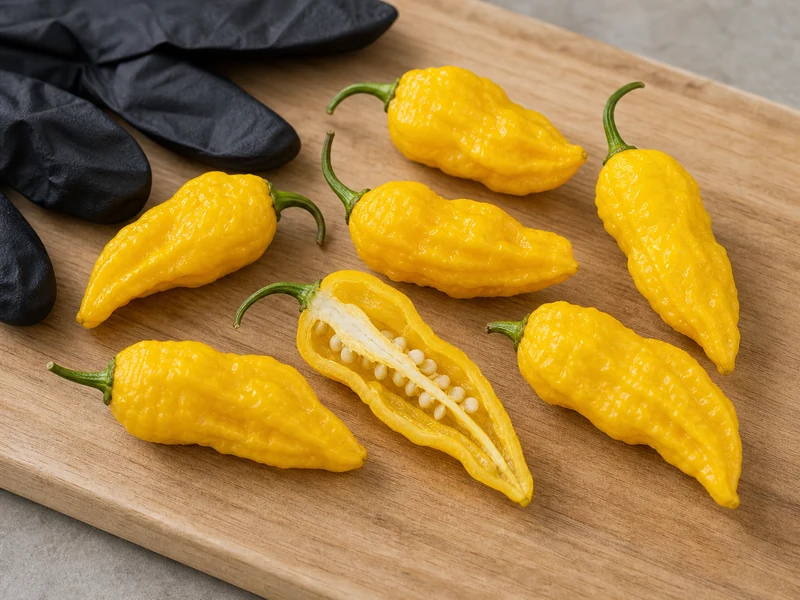
The pepper itself is elongated and tapered, typically 2 to 3 inches long, ripening from pale yellow-green to a bright golden yellow. That yellow form is the classic, though red and chocolate variants exist.
The thin walls and relatively few seeds make it easier to work with than blocky chinense varieties.
Fatalii sits comfortably in the extra-hot heat category alongside other serious chinense peppers, though its citrus profile genuinely distinguishes it. Compared to the Scotch Bonnet, the Fatalii's flavor is sharper and more acidic.
It's a pepper that rewards people who want heat with purpose.
Where Does Fatalii Come From?
The Fatalii traces its roots to Central Africa, where it grows in countries including the Democratic Republic of Congo and South Africa. Unlike many peppers in the C. chinense species that followed Caribbean or South American trade routes, the Fatalii's path into Western seed markets came largely through European chili enthusiasts in the 1990s.
Its name's exact origin is debated, likely derived from a regional place name or local designation, but the pepper gained wider recognition as the specialty hot pepper community expanded online. Seed traders and growers in Finland and Germany were particularly early adopters, which is why European seed banks often carry strong Fatalii stock today.
The broader tradition of African hot peppers includes well-known varieties like peri-peri, but the Fatalii occupies a distinct niche: a chinense-species pepper with African rather than Caribbean origins, carrying flavor notes that reflect that different terroir.
How Hot Is Fatalii, and What Does It Taste Like?
The Fatalii delivers 125K–400K Scoville Heat Units, placing it in the Extra-Hot tier (100K-1M SHU). That makes it roughly 16-160x hotter than a jalapeño, depending on where the jalapeño falls in its 2,500-8,000 SHU range.
Flavor notes: citrusy and fruity.
Fatalii Nutrition Facts
Like other C. chinense peppers, Fatalii delivers a solid nutritional profile relative to its small size. A 100g serving provides roughly 40 calories, significant vitamin C (often exceeding 200% of daily value in hot peppers at this ripeness stage), and meaningful amounts of vitamin A and vitamin B6.
The compound responsible for all that heat - capsaicin - has been studied for anti-inflammatory properties and potential metabolic effects. The yellow-ripe Fatalii also contains carotenoids that contribute to its golden color and provide antioxidant activity.
Realistically, you won't eat 100g at once, but even small amounts contribute micronutrients.
What Is Fatalii Best Used For?
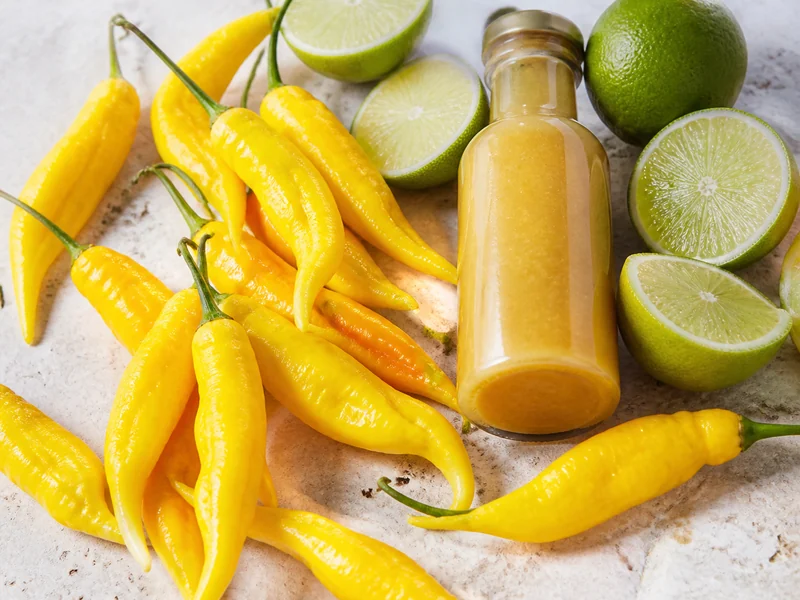
The Fatalii's citrus character makes it genuinely flexible, not just a heat delivery mechanism. Hot sauce is the obvious application, and the lemon-forward flavor works especially well in vinegar-based sauces where the acidity complements rather than clashes.
For fresh applications, the pepper pairs naturally with fish, shellfish, and tropical fruits. A Fatalii mango salsa hits differently than one made with a fruity, rounded-heat Caribbean-style Madame Jeanette - the citrus edge cuts through rich proteins in a way that feels almost like a squeeze of lime.
Dried and powdered Fatalii adds brightness to spice rubs, particularly on chicken or pork. The yellow color holds reasonably well through drying, giving finished powder a warm golden hue.
Use about 1/4 teaspoon of powder where you'd use a full fresh pepper, the concentration is significant.
For fermented hot sauces, Fatalii ferments cleanly. The fruit notes develop further during lacto-fermentation, often picking up a slightly floral quality.
Pair it with pineapple, mango, or even peach for a sauce that leads with flavor before the heat lands.
Seed and membrane removal drops the heat meaningfully while preserving most of that citrus flavor, useful if you want the taste profile without the full 400,000 SHU ceiling.
Keeping the citrus in
- Buy or pick pods only when fully yellow, since the citrus develops with the colour
- Add the pepper late rather than early, because heat drives the volatiles off
- Build it into vinegar-based sauces, where acidity holds the brightness
- Avoid long simmering, which leaves the heat and loses the reason you chose it
- Freeze whole pods rather than chopped if you want the aroma months later
How Should You Buy and Store Fatalii?
No supermarket is going to stock this. Specialty markets, farmers markets and online pepper retailers are the realistic places to find pods.
Look for firm, unblemished, fully yellow pods with no soft spots or wrinkling.
Refrigerate fresh peppers in a paper bag or loosely wrapped. They'll keep 1 to 2 weeks.
For longer storage, freeze whole or halved pods, the texture softens but the flavor and heat hold well for 6 to 12 months.
Dried Fatalii powder and flakes are more widely available online and store well in an airtight container away from light for up to one year. Seeds for growing are readily available from specialty seed companies.
Which Peppers Can Replace Fatalii?
Compare substitutes for Fatalii by form, flavor, and heat before choosing a ratio. Measured adjustments must account for the dish and the concentration of the replacement.
Direct comparisons show where flavor, form, and preparation differ in the Fatalii vs Scotch Bonnet and Fatalii vs Habanero matchups.
How Do You Grow Fatalii Peppers?
Fatalii seeds need warmth to germinate reliably - 80 to 85°F soil temperature is the target. Start them 10 to 12 weeks before last frost.
This is a pepper that rewards patience during the seedling phase. If your seedlings are stretching toward the light, the fixing leggy pepper seedlings covers exactly what to adjust.
Once established, the plants grow to 2 to 3 feet tall with a somewhat open, branching structure. They prefer full sun and consistent moisture without waterlogging.
Like other C. chinense varieties, Fatalii is slower to mature than annuum types, expect 90 to 100 days from transplant to ripe yellow fruit.
In containers, a 5-gallon pot works but a 7-gallon gives the root system more room and tends to produce heavier yields. The plants are somewhat sensitive to temperature swings, especially cool nights below 55°F, which can stall fruit development.
Fatalii shares growing characteristics with other extra-hot chinense peppers. If you've grown fiery African peri-peri or similar thin-walled varieties, the care requirements translate well.
For anyone starting from scratch, the pepper growing covers germination through harvest in practical detail.
Harvest at full golden yellow for peak flavor. The peppers don't hold well on the plant once fully ripe, so check frequently during peak season.
Fatalii FAQ



- University of Wisconsin-Green Bay
- Capsicum chinense Jacq. - USDA GRIN Taxonomy
- USDA FoodData Central, Peppers, hot chile, red, raw
Species classification: C. chinense - based on published botanical taxonomy.