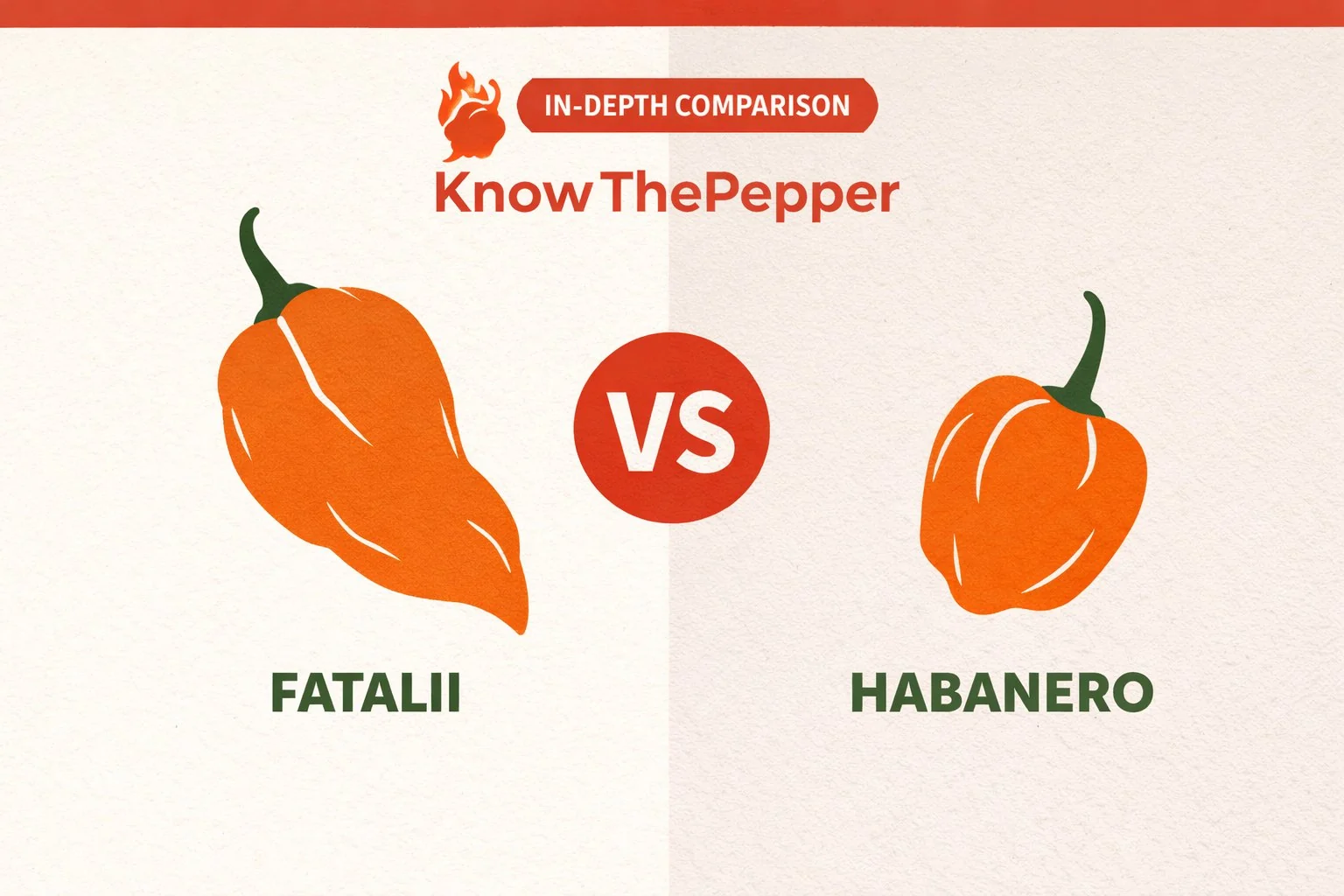
Fatalii vs Scotch Bonnet: Citrus Cut or Jerk Heat?

Choose Fatalii when a sauce, seafood dish, or fruit blend needs sharp lemon-like heat. Choose Scotch Bonnet when the dish needs Caribbean pepper flavor, jerk marinade, stew aroma, or a whole pod that can perfume food without being cut open.

Fatalii vs Scotch Bonnet comparison
Quick Comparison

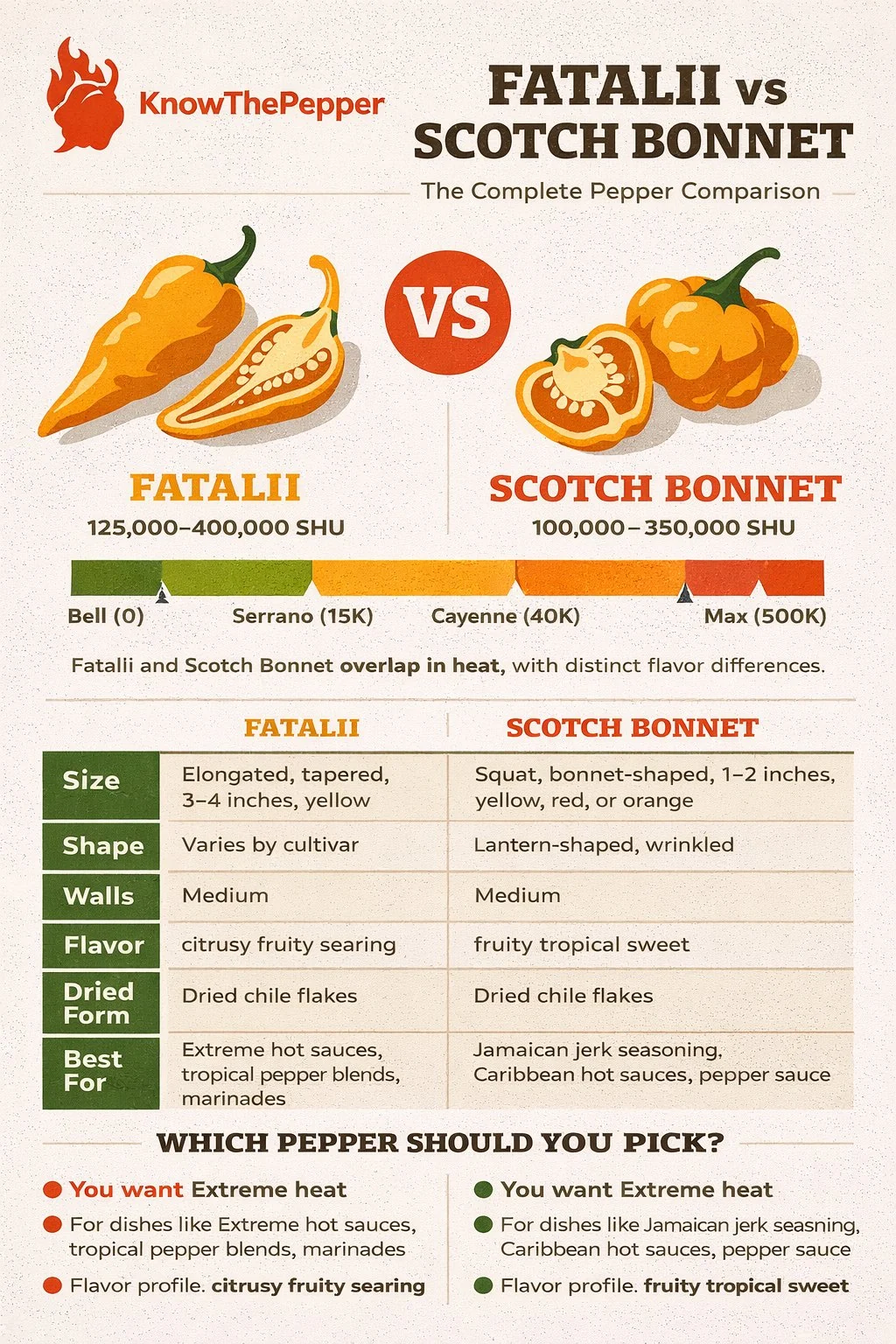
Fatalii measures 125K–400K SHU while Scotch Bonnet registers 100K–350K SHU. Their upper SHU ranges are close enough to treat as the same heat bracket. Fatalii is known for its citrusy and fruity flavor (C. chinense), while Scotch Bonnet offers fruity and tropical notes (C. chinense).

Fatalii
125K–400K SHU
Extra-Hot · citrusy and fruity
Scotch Bonnet
100K–350K SHU
Extra-Hot · fruity and tropical
  • Species: Both are C. chinense
  • Best for: Fatalii excels in hot sauces and extreme dishes, Scotch Bonnet in hot sauces and spicy dishes

Fatalii vs Scotch Bonnet Comparison

Attribute Fatalii Scotch Bonnet
Scoville (SHU) 125K–400K 100K–350K
Heat Tier Extra-Hot Extra-Hot
vs Jalapeño 50x hotter 44x hotter
Flavor citrusy and fruity fruity and tropical
Species C. chinense C. chinense
Origin Central Africa Caribbean

Fatalii vs Scotch Bonnet Heat Levels

Fatalii and Scotch Bonnet overlap enough that heat alone should not decide the page. Fatalii spans about 125,000-400,000 SHU; Scotch Bonnet spans about 100,000-350,000 SHU. A hot Fatalii can outrun a hot Scotch Bonnet, but a mild Fatalii can land inside the same practical range.

The cooking consequence is simple: dose both like extra-hot peppers. The difference worth paying for is the direction of flavor, not a tidy Scoville winner.

If your recipe already includes allspice, thyme, scallion, ginger, brown sugar, or stewed beans, Caribbean pepper cooking makes Scotch Bonnet the safer fit. If your recipe includes fish, vinegar, mango, lime, pineapple, or a bright fruit sauce, Fatalii usually cuts cleaner.

Both need the same handling discipline: gloves, small test batches, and no casual whole-pod chopping for mixed audiences.

Flavor Profile Comparison

Fatalii
125K–400K SHU
citrusy fruity
C. chinense

Bite into a Fatalii and the first thing you notice is the aroma - a sharp, citrusy burst that smells more like a zest grater than a pepper.

Scotch Bonnet
100K–350K SHU
fruity tropical
C. chinense

The Scotch bonnet is the defining pepper of Caribbean cooking - the chile behind Jamaican jerk, Trinidad pepper sauce, Bajan hot sauce, and hundreds of island recipes that can't be accurately replicated with any substitute.

Fatalii tastes like citrus with heat attached. The edge can feel like lemon zest, grapefruit pith, and yellow fruit, so it can brighten a sauce without needing much actual citrus.

Scotch Bonnet is warmer and rounder. Its tropical sweetness is why Scotch Bonnet peppers are tied so tightly to jerk, pepper sauce, rice, peas, stews, and Caribbean-style marinades.
Fatalii and Scotch Bonnet comparison

Culinary Uses for Fatalii and Scotch Bonnet

Fatalii
Extra-Hot

The Fatalii's citrus character makes it genuinely flexible - not just a heat delivery mechanism. Hot sauce is the obvious application, and the lemon-forward flavor works especially well in vinegar-based sauces where the acidity complements rather than clashes.

View full profile
Scotch Bonnet
Extra-Hot

The fundamental technique in Caribbean cooking with Scotch bonnet is using the whole pod for flavor without rupturing it. Floating a whole Scotch bonnet in a pot of rice, stew, or beans releases the fruity aromatics into the dish without the heat - the pod acts as a flavor balloon.

View full profile

The whole-pod trick belongs to Scotch Bonnet. Float one intact pod in rice, beans, soup, or stew, then remove it before serving. The dish gets aroma without the full heat release.

Fatalii is less forgiving in that role. Its elongated shape and sharper heat make it better cut, blended, fermented, or powdered in measured amounts.

For hot sauce, Fatalii wants acid and fruit: vinegar, mango, pineapple, carrot, lime, or peach. Scotch Bonnet wants allspice, thyme, mustard, turmeric, brown sugar, scallion, or garlic.

That difference matters more than the 50,000 SHU ceiling gap. A Fatalii jerk sauce can taste bright but wrong; Madame Jeanette vs Scotch Bonnet is a better sibling decision when Caribbean aroma is the priority. A Scotch Bonnet seafood sauce can taste round but less cutting.

Which Should You Choose?

Use Fatalii when the dish needs citrus lift. Use Scotch Bonnet when the dish needs Caribbean warmth.

Can You Substitute One for the Other?

Hotter replacement

Replacing Scotch Bonnet with Fatalii

Use slightly less by weight. Start below the recipe amount and adjust after tasting.

Milder replacement

Replacing Fatalii with Scotch Bonnet

Increase gradually, but expect the flavor balance to change before the heat matches exactly.

Growing Fatalii vs Scotch Bonnet

Growing notes

Fatalii

Fatalii seeds need warmth to germinate reliably - 80–85°F soil temperature is the target. Start them 10–12 weeks before last frost; this is a pepper that rewards patience during the seedling phase.

Once established, the plants grow to 2–3 feet tall with a somewhat open, branching structure. They prefer full sun and consistent moisture without waterlogging.

In containers, a 5-gallon pot works but a 7-gallon gives the root system more room and tends to produce heavier yields. The plants are somewhat sensitive to temperature swings, especially cool nights below 55°F, which can stall fruit development.

Growing notes

Scotch Bonnet

Growing Scotch bonnets follows the same parameters as habanero because both are C. chinense with similar heat and growing requirements.

Start seeds 10–12 weeks before last frost at 80–85°F soil temperature. Germination takes 14–21 days and benefits strongly from a heat mat.

Transplant spacing: 18–24 inches apart in full sun with 8+ hours daily. They need warm nights - below 55°F stalls growth and causes blossom drop.

Where They Come From

Origin & background

Fatalii

Central Africa · C. chinense

The Fatalii traces its roots to Central Africa, where it grows in countries including the Democratic Republic of Congo and South Africa. Unlike many peppers in the C. chinense species that followed Caribbean or South American trade routes, the Fatalii's path into Western seed markets came largely through European chili enthusiasts in the 1990s.

Its name's exact origin is debated - likely derived from a regional place name or local designation - but the pepper gained wider recognition as the specialty hot pepper community expanded online. Seed traders and growers in Finland and Germany were particularly early adopters, which is why European seed banks often carry strong Fatalii stock today.

Origin & background

Scotch Bonnet

Caribbean · C. chinense

The Scotch bonnet's origin is the same story as the habanero's: both descended from C. chinense varieties that spread from South America through the Caribbean basin during the pre-Columbian and early colonial periods.

The pepper is documented in Jamaica from at least the 18th century, though Caribbean peoples cultivated C. chinense varieties long before European records captured the specifics. Jerk cooking - the technique of marinating meat in scotch bonnet-allspice seasoning and slow-smoking it - is documented in Maroon cooking traditions dating to escaped enslaved Africans in Jamaica's Blue Mountains in the 17th and 18th centuries.

Buying & Storage

Whether you’re shopping for Fatalii or Scotch Bonnet, the same quality indicators apply. Fresh peppers should feel firm and heavy for their size, with taut, glossy skin and no soft or wet spots. Minor stem cracks known as “corking” are perfectly normal and often indicate a mature, flavorful pod.

Selection

What to look for

  • Firm pods with taut skin and consistent color
  • Should feel heavy relative to size
  • Minor stem cracks (“corking”) are normal
  • Avoid anything soft, shriveled, or with dark wet spots

Storage

How to store them

  • Fresh: Paper bag, crisper drawer, 1 to 2 weeks
  • Frozen: Wash, dry, freeze on sheet pan, 6+ months
  • Dried: Airtight and away from light, up to 1 year

Mistakes to avoid

Common misses

Fatalii

  • Skipping gloves. Capsaicin absorbs through skin.
  • Using too much. Start with a quarter pod.
  • Drinking water for the burn. Use dairy instead.

Common misses

Scotch Bonnet

  • Skipping gloves. Capsaicin absorbs through skin.
  • Using too much. Start with a quarter pod.
  • Drinking water for the burn. Use dairy instead.
Final call

Fatalii vs Scotch Bonnet

Fatalii and Scotch Bonnet sit in the same heat tier but serve different roles. Fatalii delivers its distinctive citrusy and fruity character. Scotch Bonnet, with its fruity and tropical profile, excels in everyday cooking.

Heat gap same bracket Fatalii citrusy and fruity Scotch Bonnet fruity and tropical

Swap Context Not Ratio

A clean Fatalii substitute or Scotch Bonnet swap needs context, not just a ratio. In a fruit hot sauce, replace Scotch Bonnet with Fatalii at slightly less volume and expect a sharper finish. In jerk marinade, start with a real Scotch Bonnet substitute before reaching for Fatalii.

Replacing Fatalii with Scotch Bonnet gives you similar heat but less lemon edge. Add lime zest or a small splash of vinegar only if the dish can handle the extra acid; otherwise accept a warmer sauce rather than forcing a fake Fatalii profile.

Fact-Checked & Expert Reviewed
Editorial Standards: Head-to-head comparisons include blind tasting when applicable. Heat levels cross-referenced with multiple sources. All substitution ratios tested side-by-side.
Review Process: Written by James Thompson (Lead Comparison Reviewer) , reviewed by Karen Liu (Lead Fact-Checker & Science Editor) . Last updated June 29, 2026.

Fatalii vs Scotch Bonnet FAQ

Sometimes. Fatalii reaches about 400,000 SHU, while Scotch Bonnet reaches about 350,000 SHU. The ranges overlap, so individual pods can feel very close.

Scotch Bonnet is better for jerk because its tropical, rounded heat matches allspice, thyme, scallion, and brown sugar. Fatalii makes the marinade sharper and more citrus-heavy.

Fatalii is better for bright fruit or vinegar hot sauce. Scotch Bonnet is better for Caribbean pepper sauce, jerk sauce, mustard-style sauces, and warmer tropical blends.

It can replace the heat, but not the same flavor. Use a little less Fatalii, then decide whether the dish can handle its sharper citrus edge.

Sources & References
KL
Fact-checked by Karen Liu
Research Contributor
SHU Verified
Sources Cited
Expert Reviewed
All Comparisons Browse Peppers Scoville Scale