

KnowThePepper
Congo Trinidad: Reported 150K-300K SHU Heat, Flavor & Uses
The Congo Trinidad is a red, wrinkled C. chinense habanero type. Sellers report 150,000 to 300,000 SHU, but no public cultivar-specific laboratory result was located, so dose it cautiously and treat the range as source-dependent.
- Species: C. chinense
- Heat tier: Extra-Hot (100K-1M SHU)
- Comparison: 19-120x hotter than a jalapeño, depending on where the jalapeño falls in its 2,500-8,000 SHU range
What Is Congo Trinidad?
The Congo Trinidad is a red, wrinkled Capsicum chinense pepper in the habanero group. A University of Minnesota study lists the cultivar as C. chinense, and UC Master Gardeners describes it as an intensely hot, productive habanero type with a long season.
Its identity is clearer than its heat measurement. Trade Winds Fruit reports 150,000 to 300,000 SHU, but that figure is a seller listing rather than a public cultivar-specific laboratory result.
Treat the range as a useful market description, not a certified fixed value.
It should not be extended to every seed line carrying a similar Congo name.
The ripe fruit is usually red and deeply folded, with a broad shoulder and tapered lower half. Trade Winds describes fruit up to about 2 inches wide and one-half ounce, while other seed lines sold under similar Congo names can differ in size and color.
Buyers should match the full cultivar name, ripe color, pod photographs, and seed provenance. A packet labeled only Congo or Trinidad does not establish that it is this red Congo Trinidad selection.
| Claim | Evidence owner | Confidence |
|---|---|---|
| C. chinense identity | University of Minnesota cultivar list | Institutional record |
| Habanero type, very hot, productive, long season | UC Master Gardeners | Institutional horticulture guide |
| 150,000 to 300,000 SHU | Trade Winds Fruit | Seller-reported, not an independent lab result |
What Is the History of Congo Trinidad?
Reliable records place Congo Trinidad in a Caribbean cooking context, but they do not establish a breeder or a documented naming story. The 2014 UC Master Gardeners festival guide calls it a staple of Caribbean cooking and identifies it as a habanero type.
Trade Winds attributes the pepper to Trinidad and the Caribbean region. That seller record supports the market name and origin claim, while the University of Minnesota cultivar list independently confirms that a Congo Trinidad accession was used as C. chinense.
Claims that Congo refers to a specific African influence are plausible cultural interpretation, not documented cultivar history.
No breeder release, accession narrative, or authoritative etymology was located, so this article does not assign one.
What Does Congo Trinidad Taste Like, and How Hot Is It?
The Congo Trinidad delivers 150K–300K Scoville Heat Units, placing it in the Extra-Hot tier (100K-1M SHU). That makes it roughly 19-120x hotter than a jalapeño, depending on where the jalapeño falls in its 2,500-8,000 SHU range.
Flavor notes: fruity and floral.
Congo Trinidad Nutrition Facts
No cultivar-specific nutrient analysis was located for Congo Trinidad. Generic fresh-hot-pepper values cannot establish exact calories or vitamin content for this cultivar, especially at the tiny portion normally used.
How Do You Cook With Congo Trinidad?
Use Congo Trinidad when a sauce needs habanero-type aroma and substantial heat from a very small amount. Seller descriptions range from fruity to smoky, so the exact aroma should be confirmed from the pod or powder in hand rather than treated as uniform across seed lines.
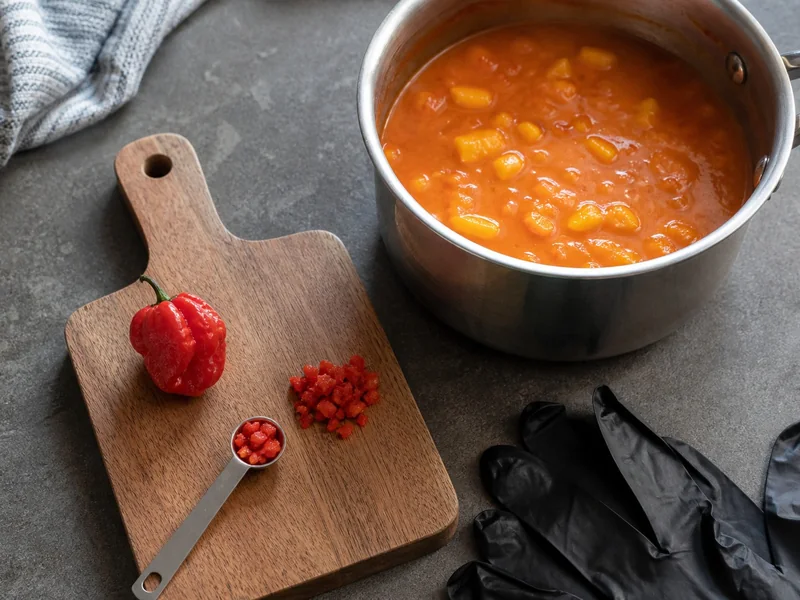
For a medium pot of mango, pineapple, tamarind, or vinegar-based sauce, begin with 1/8 teaspoon of finely minced fresh pepper. This is a cautious editorial starting point, not a laboratory conversion, and the amount should be reduced further when serving people with low heat tolerance.
A whole pod can overwhelm a small batch before its fruit character becomes useful.
Stir in the measured portion, simmer long enough to distribute it, then taste the finished base before adding another measured amount.
Coconut milk, beans, and fatty cuts of pork can carry the pepper through a larger dish, but fat does not remove capsaicin. Keep the initial dose small even when the sauce contains coconut or oil.
For a less intense C. chinense profile, Scotch bonnet keeps a Caribbean association and a fruit-forward role. It remains a hot pepper, so substitution still begins below the original amount when the batch or diners are unfamiliar.
Where Can You Buy Congo Trinidad, and How Do You Store It?
Fresh Congo Trinidad is more likely to come from a specialty grower than a supermarket. Ask for the ripe color, a current pod photograph, the seed source, and whether the lot was isolated if cultivar identity matters.
Natural wrinkles belong on this habanero-type fruit. Reject pods with wet dark patches, leaking flesh, collapsed shoulders, or mold rather than rejecting a sound pod simply because its surface is folded.
University of Minnesota Extension says peppers keep for a week or more in the refrigerator, although long refrigeration can pit the skin.
Keep intact pods dry and refrigerate them promptly rather than washing the whole lot before storage.
Freeze surplus pods for cooked dishes after washing and drying them. Label the container with the cultivar and date so a loose frozen red pod is not mistaken for a milder pepper later.
Dried form: Dried Congo Trinidad is easier to portion repeatedly than a fresh pod, while removing water concentrates the pepper by weight. Begin the powder by the pinch and store it airtight away from light, heat, and steam.
Check identity before buying
- Full Congo Trinidad cultivar name
- Ripe color and current pod photograph
- Seed source or grower provenance
- No wet lesions, leakage, or mold
- Clear heat-range attribution
What Is a Good Substitute for Congo Trinidad?
No dedicated substitute guidance is published for Congo Trinidad yet.
How Do You Grow Congo Trinidad at Home?
Plan Congo Trinidad as a long-season pepper. UC Master Gardeners specifically notes that its productive season extends well into fall, which makes an early indoor start important where summers are short.
University of Minnesota Extension recommends starting pepper seed about 8 weeks before outdoor planting. Sow one-quarter inch deep and use a heat mat at 80 to 90°F until seedlings emerge, while watching moisture because heated mix dries faster.
Transplant after nighttime lows remain above 50°F.
UMN recommends 18 inches between pepper plants and rows 30 to 36 inches apart, with consistent soil moisture because uneven moisture weakens flowers and young fruit.
Too much nitrogen can produce a leafy plant that is slow to bear. Use a soil test to guide phosphorus and potassium rather than adding them automatically, then support branches if a productive plant begins to lean under mature pods.
Clip ripe fruit with shears instead of pulling it from the plant. Continued harvest encourages more flowering and fruit set while warm weather remains.
Congo Trinidad FAQ


- University of California Master Gardeners, 2014 Tomato and Vegetable Festival Guide
- University of Minnesota Extension, Growing Peppers in Home Gardens
- University of Minnesota, Effects of Chili Pepper Extracts on Microbial Growth
- Trade Winds Fruit, Congo Trinidad Pepper Cultivar Listing
Species classification: C. chinense - based on published botanical taxonomy.