
Cascabel Pepper vs Guajillo Pepper: The Nutty Accent and the Red Sauce Base
Cascabel and guajillo are mild dried Mexican chiles with overlapping heat, but they do different work. Choose small round cascabel for nutty toasted depth and long guajillo for brighter red fruit, more puree, and a smoother main sauce.

Cascabel Pepper
MediumGuajillo Pepper
MediumQuick Comparison
| Attribute | Cascabel Pepper | Guajillo Pepper |
|---|---|---|
| Scoville evidence | 1K-3K SHU | 2.5K-5K SHU |
| Heat Tier | Medium | Medium |
| vs Jalapeño | n/a | 1x hotter |
| Flavor | nutty and earthy, not smoke-cured | tangy and sweet |
| Species | C. annuum | C. annuum |
| Origin | Mexico | Mexico |
Is Guajillo Hotter Than Cascabel?
Cascabel and guajillo are both mild dried Mexican chiles, but guajillo usually gives more heat and much more chile flesh per pod. Choose by flavor and sauce texture before worrying about the overlapping Scoville ranges.
For a direct answer, use cascabel for nutty toasted depth and use guajillo for a bright red, fruitier sauce. Guajillo is the more practical main chile for a large batch, while cascabel works well in salsa or as one layer in a blended chile base.
KnowThePepper's cascabel profile uses 1,000 to 3,000 SHU, while its guajillo profile uses 2,500 to 5,000 SHU, so their ranges overlap even though guajillo can finish hotter.
Those figures describe pepper material rather than a guaranteed finished dish. New Mexico State University explains that modern heat testing measures capsaicinoids, but the amount of chile, seeds, sauce, and other ingredients still changes what you taste.
A guajillo sauce can therefore taste mild when diluted across a braise. A compact cascabel salsa can taste warmer when several pods are concentrated into a small serving.
Pod size creates a larger practical difference because INIFAP describes cascabel as nearly spherical and about 3 centimeters across, while guajillo is a long dried chile with substantially more wall area.
That makes a one-pod-for-one-pod swap misleading. One guajillo can contribute much more softened flesh, color, and puree than one small cascabel even when their heat ranges look close.
Use weight when precision matters. Equal dry weights give a better starting comparison than equal pod counts, though the finished flavors will still move in different directions.
Cascabel's heat generally sits behind its roasted flavor, whereas guajillo can bring a clearer warm edge with its fruit, and neither should be treated like a high-heat chile de arbol.
For diners sensitive to heat, begin with less puree than the recipe requests and add it after the sauce has simmered briefly. Tasting the hydrated mixture is more useful than judging a brittle dried pod.
The named ranges also vary by crop and source. Growing conditions, maturity, drying, and natural pod variation prevent every bag from matching one exact number.
In most recipes, the decision is not mild versus hot because both are manageable dried chiles, and the meaningful choice is round nutty cascabel depth versus the brighter color, larger yield, and fruitier warmth of guajillo.
How Do Cascabel and Guajillo Taste Different?
Cascabel is known for a pleasant nutty flavor with an earthy roasted quality. INIFAP describes the dried pod as red-brown, smooth, hard, moderately hot, and somewhat nut-like.
The Spanish name refers to a rattle. Loose seeds can knock against the dry shell when the round pod is shaken, which makes shape and sound useful identification checks.
That rattle does not prove freshness by itself because very old pods can also be dry and loose, so aroma, surface condition, and flexibility still matter.
Guajillo comes from a mirasol chile after drying, according to Mexico's public education resource on fresh and dried chile names. The same resource identifies bola as the fresh chile associated with cascabel.
Guajillo usually tastes tangy, sweet, and lightly tea-like. Its cleaner red-fruit character is why it can lead a sauce rather than simply deepen a mixed chile blend.
Cascabel reads darker because its nutty aroma and brown-red color push the sauce toward toasted earthiness instead of bright fruit.
Toasting strengthens those differences, but scorching destroys them. Warm each opened chile only until fragrant, then remove it from the pan before dark spots turn black.
Cascabel's small round shell can roll on a skillet, so press it gently with a spatula for even contact. Split guajillo lengthwise so its flatter skin can touch the hot surface without curling away.
After soaking, guajillo usually produces more smooth red flesh from each pod, while cascabel contributes less volume and can leave more skin fragments if the blender or strainer cannot break them down.
Color follows the same pattern because guajillo makes a clearer brick-red puree, while cascabel tends toward a browner red. Tomatoes, stock, nuts, and other chiles can soften that visual difference in a finished sauce.
Both belong to Capsicum annuum, yet species alone does not make them cooking twins. Pod structure, fresh-chile identity, ripeness, dehydration, and preparation all shape the result.
Aroma should guide buying because Mexico's consumer agency Profeco advises rejecting dried chiles that smell rancid or show dust, dampness, mold, rot, cracks, or pest damage.
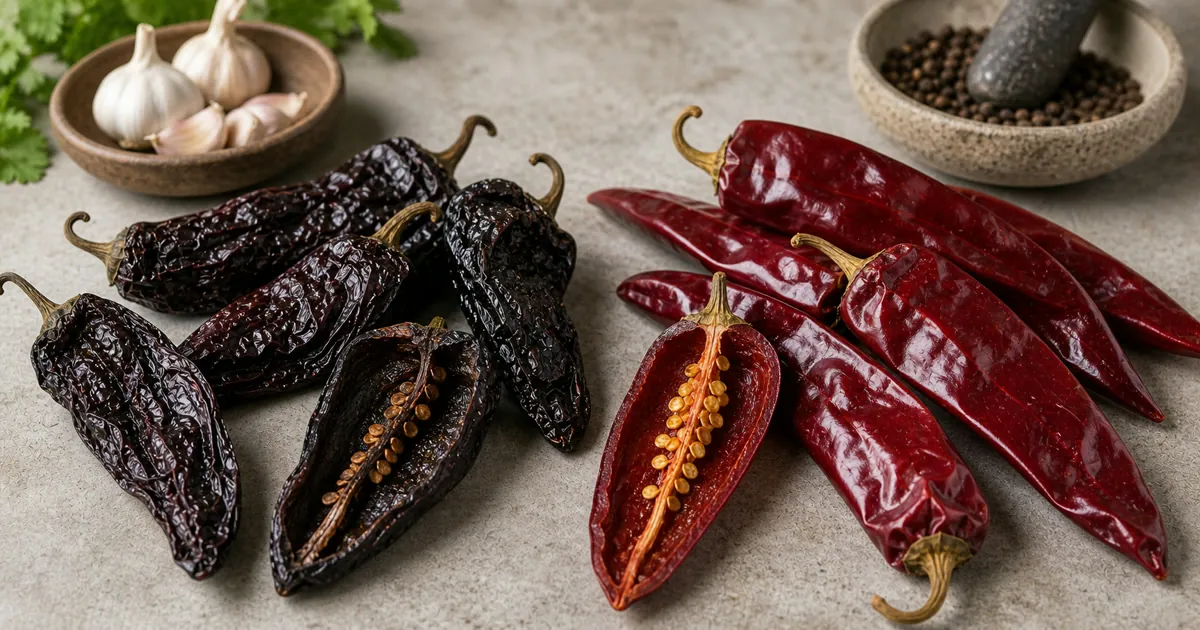
Choose pods that still smell like chile rather than cardboard. Guajillos should look long and red with intact skins, while cascabels should look compact and round rather than broad and heart-shaped.
Culinary Uses
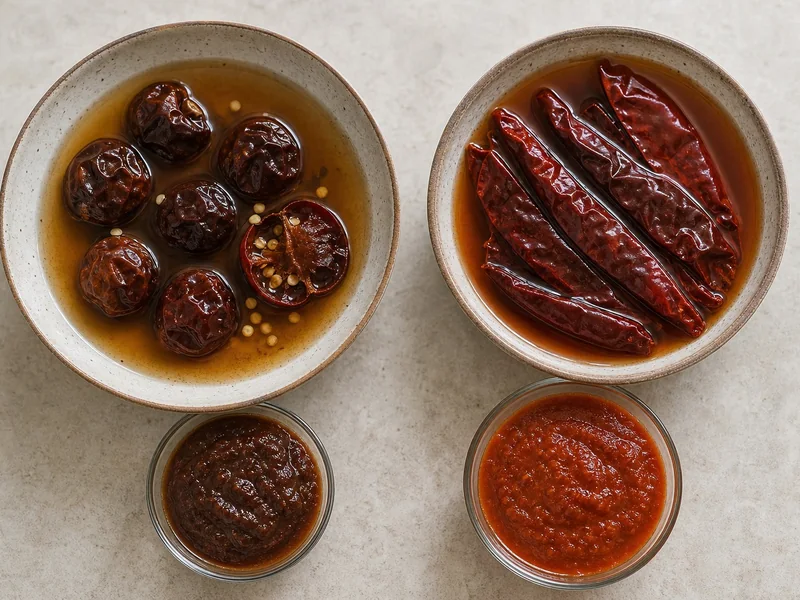
Use guajillo as the main chile when a recipe needs enough red puree to coat tortillas, meat, or a pot of stew. Its large pods make enchilada sauce, adobo, chile colorado, pozole rojo, and marinades easier to build at scale.
Use cascabel when a salsa, bean dish, soup, adobo, or braise benefits from roasted nutty depth, a role consistent with the stews, adobos, soups, and seasoned sauces listed by INIFAP.
Mexico's tourism authority also documents guajillo, cascabel, and pasilla in the cooking of Coahuila, confirming that both chiles belong in regional stews and red preparations.
Start either chile by wiping the pod clean, removing the stem, and opening it to shake out loose seeds. Removing pale inner tissue can reduce bitterness and makes inspection for damage easier.
Toast in a dry skillet over moderate heat until the aroma opens, using smell and color rather than a rigid timer because pan temperature and pod thickness change how quickly the skin scorches.
Cover the toasted chiles with hot water until they soften enough to bend and blend without hard shards.
Taste the soaking liquid before using it because scorched or old chiles can make it bitter. Fresh water, stock, or tomato liquid is the safer blending medium when the soak tastes harsh.
Blend guajillo longer than its smooth appearance suggests and strain when the sauce must coat tortillas cleanly because even its leathery skin can leave tiny fragments in a weak blender.
Straining matters even more for cascabel when the goal is a polished sauce. Its small shell contributes useful flavor but not the same volume of fleshy puree as guajillo.
For table salsa, cascabel can lead with tomato, garlic, and onion because a small batch does not need guajillo's yield. Its toasted flavor remains easy to notice at that scale.
For a large red sauce, let guajillo provide the color and body, then add cascabel as a supporting chile near two parts guajillo to one part cascabel by dry weight when you want guajillo to remain forward.
Rick Bayless uses guajillo and cascabel as options in salsa macha with nuts, seeds, garlic, and oil. That example shows that both can work in a textured chile oil where a perfectly smooth puree is not the goal.
For meat marinades, guajillo's fruit and color make it the clearer base. Cascabel can add roasted complexity, but it will not reproduce the same bright red coating by itself.
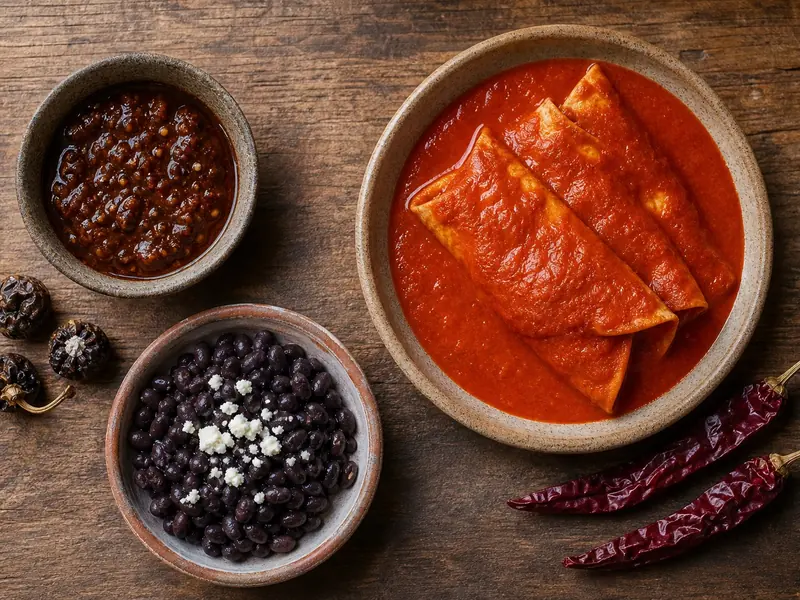
For beans or a dark braise, cascabel can be more noticeable because its nutty note fits the earthy base, while guajillo gives the pot a fruitier and redder direction.
Do not compensate for cascabel's lower puree yield by adding unmeasured pods until the texture matches. Weigh the dry chiles, blend, then adjust body with liquid or tomato so heat and bitterness stay under control.
Which Dried Chile Should You Buy First?
Buy guajillo first if you want one versatile dried Mexican chile for red sauces, marinades, soups, and braises. Its larger pod, brighter color, and smoother puree solve more common kitchen tasks.
Add cascabel when you want a different flavor rather than a smaller version of guajillo because the round pod brings a roasted nutty note that can deepen salsa, beans, adobo, soup, and multi-chile sauces.
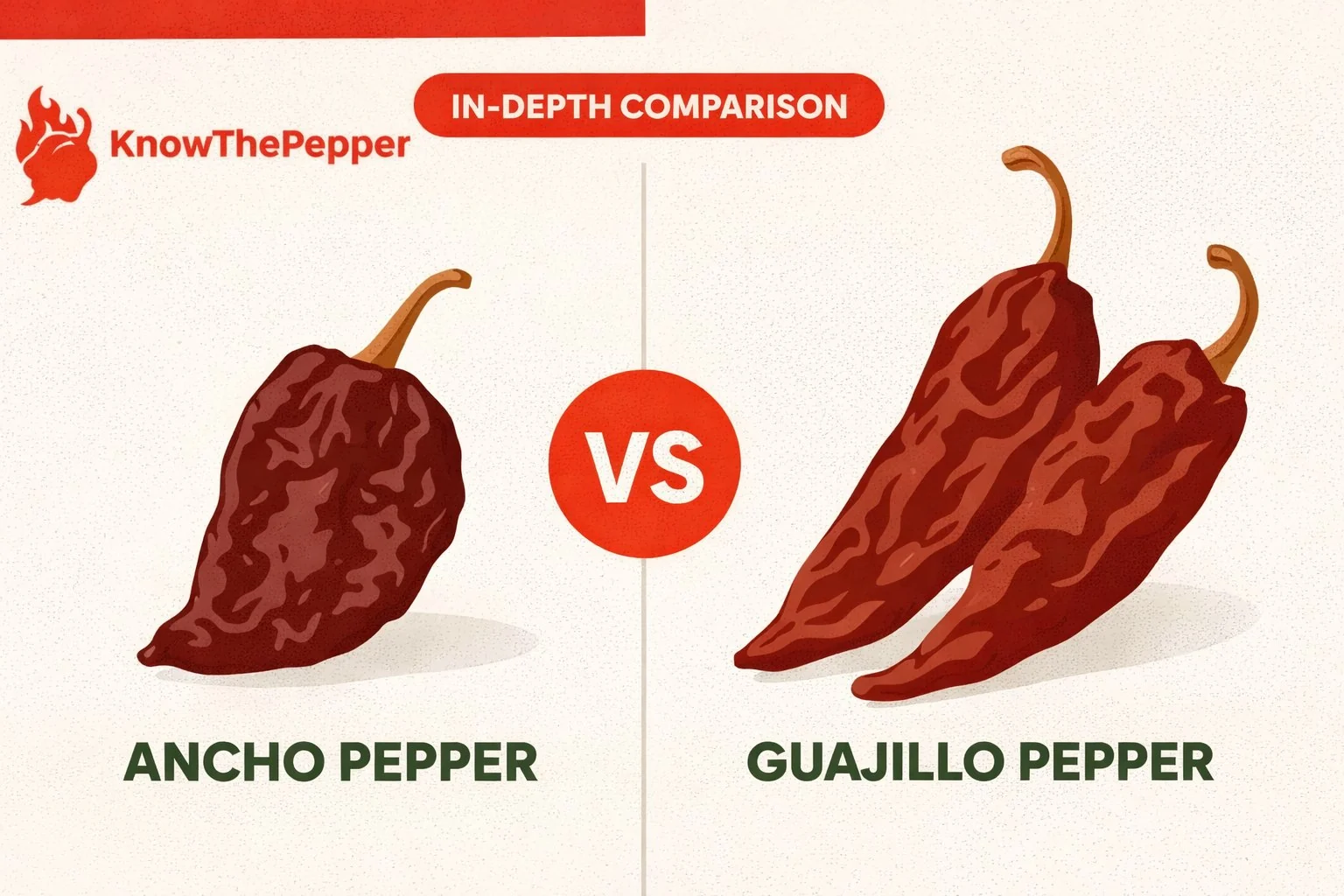
At the market, identify cascabel by its small round or nearly spherical body and reddish-brown shell, not by a broad heart shape.
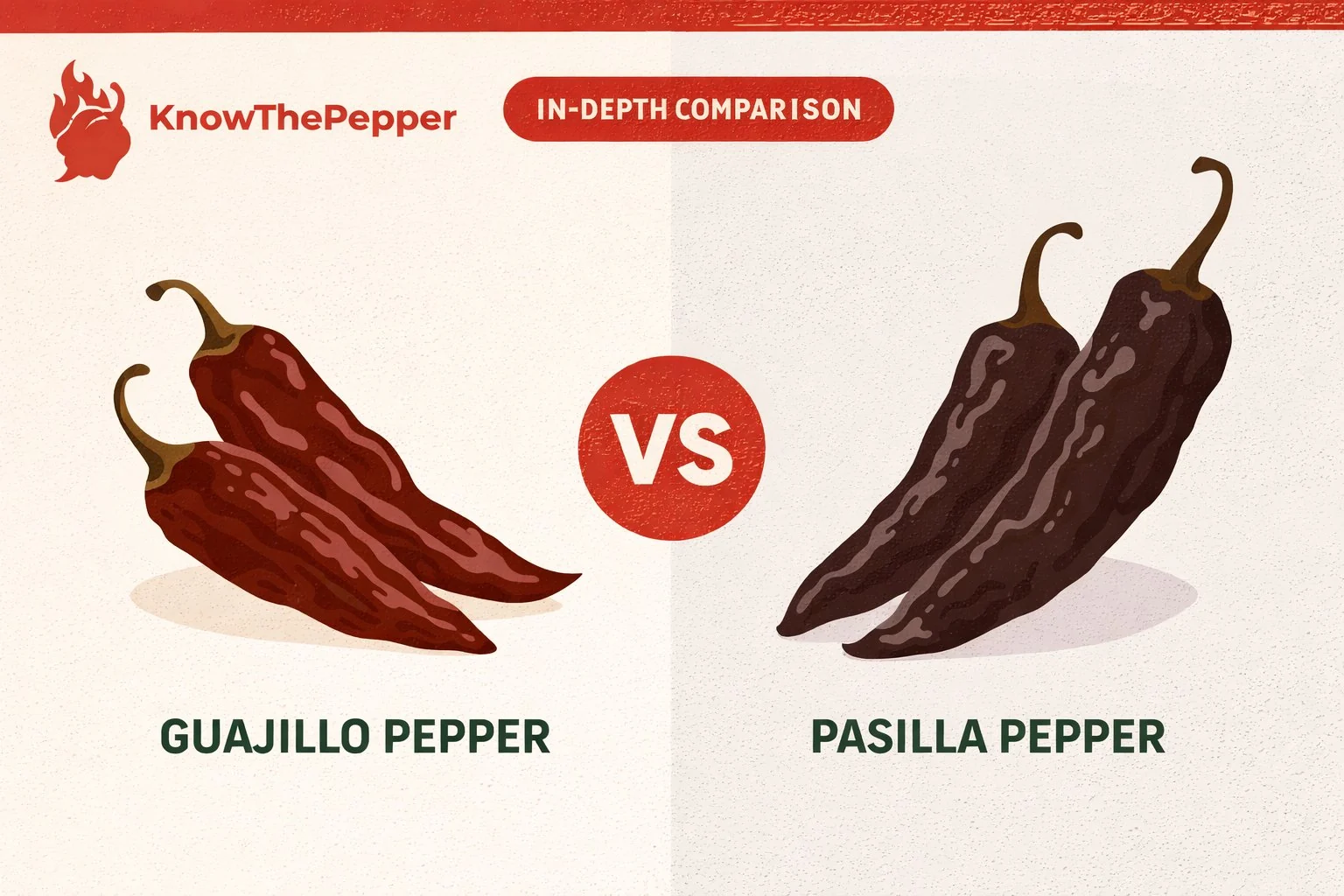
Identify guajillo by its long narrow body and deep red leathery skin. Avoid bags with visible moisture, mold, insect holes, or a stale rancid smell.
For substitution, begin with equal dry weight rather than equal pod count, expecting cascabel to make a browner, nuttier, lower-yield puree and guajillo to make a brighter, fruitier, smoother one.
If guajillo replaces cascabel, a small amount of ancho can restore some dark fruit and body, but it will not recreate cascabel's exact nutty aroma.
If cascabel replaces guajillo, tomato can restore sauce volume and acidity can restore some brightness. Strain carefully because extra cascabel shells can leave grit.
Do not add lime or vinegar automatically because tomato, stock, and other recipe ingredients may already provide enough acidity once the finished sauce has simmered and been tasted.
The official Mexican dried-chile standard lists cascabel and guajillo as distinct commercial types. Treating either name as a loose synonym erases real differences in shape, yield, color, and flavor.
The swap works best in a multi-chile sauce where other ingredients share the load. It is less convincing in a simple guajillo sauce or cascabel salsa where one chile supplies the defining character.
The final choice is straightforward because cascabel provides compact pods and nutty toasted depth, while guajillo provides larger pods, red fruit, and a smooth sauce base.
When a recipe names one specifically, use that chile if possible because the method was built around its yield and flavor. When substitution is necessary, match dry weight, correct texture, and taste before changing heat or acidity.
If you buy ground chile instead of whole pods, confirm the pepper name and check for a fresh chile aroma. Powder hides the shape, skin condition, and loose seeds that help you distinguish these two dried chiles.
Whole pods are the better learning purchase because they let you verify cascabel's round shell and guajillo's long body, control seed removal, and compare how much usable puree each measured weight produces.
Cascabel Pepper vs Guajillo Pepper FAQ
- INIFAP - Cultivo del chile en Mexico
- Nueva Escuela Mexicana Digital - Los chiles cambian de nombre y sabor cuando se secan
- Diario Oficial de la Federacion - NMX-FF-107/1-SCFI-2014
- Profeco Revista del Consumidor - Chiles secos
- Rick Bayless - Salsa Macha
- New Mexico State University Circular 706 - Measuring Chile Pepper Heat