
Ancho Pepper vs Guajillo Pepper: Sauce Body or Bright Tang
Choose ancho when the sauce needs sweet body, raisin-cocoa depth, and a darker base. Choose guajillo when the dish needs brighter red color, sharper fruit, and a little more heat. They work together in many Mexican dried-chile sauces, but swapping one for the other changes the sauce structure.

Ancho Pepper
MediumGuajillo Pepper
MediumQuick Comparison
| Attribute | Ancho Pepper | Guajillo Pepper |
|---|---|---|
| Scoville evidence | 1K-2K SHU | 2.5K-5K SHU |
| Heat Tier | Medium | Medium |
| vs Jalapeño | n/a | 1x hotter |
| Flavor | sweet, raisin-like, earthy, lightly cocoa-like | tangy and sweet |
| Species | C. annuum | C. annuum |
| Origin | Mexico | Mexico |
What Are Ancho and Guajillo Chiles?
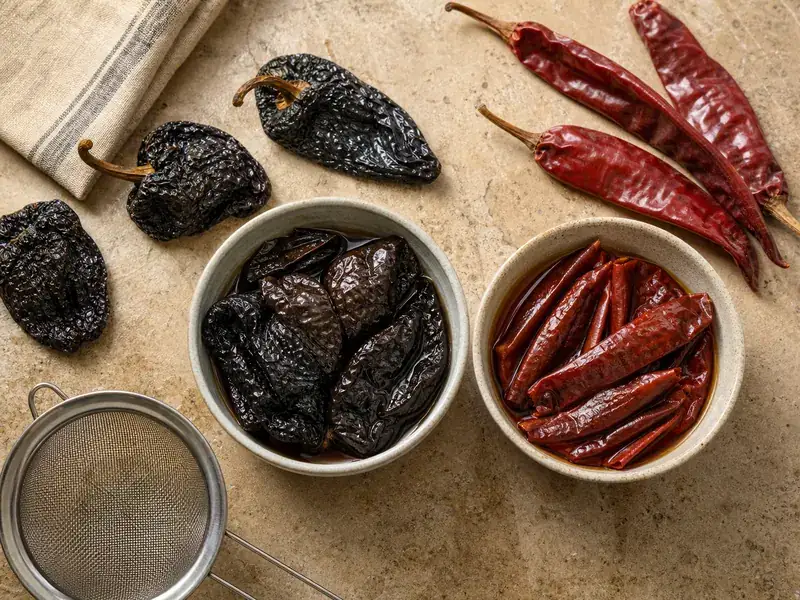
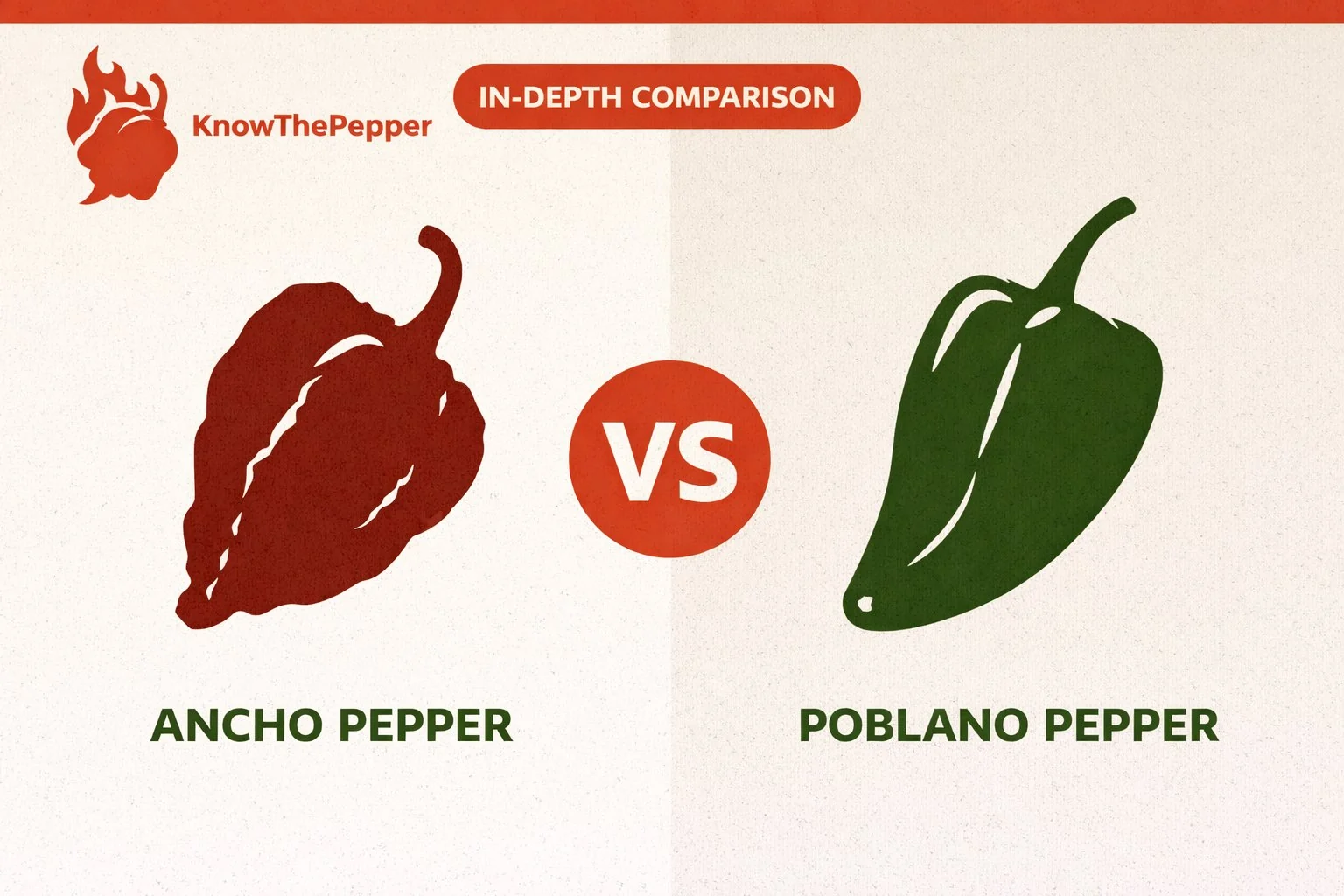
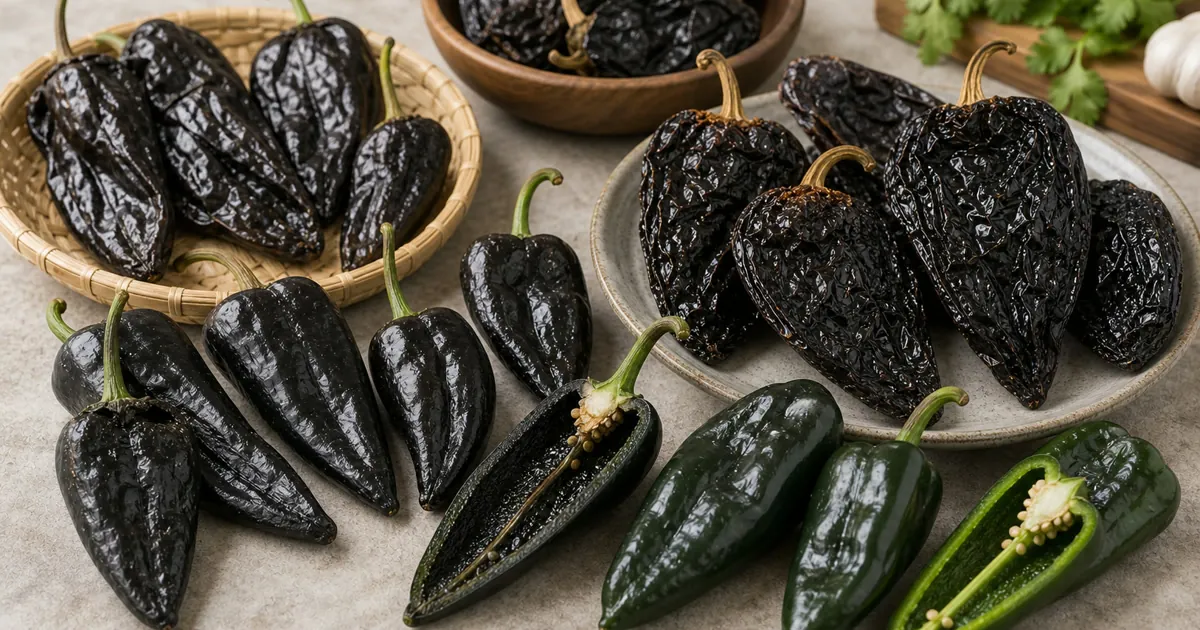
Ancho and guajillo are both dried red chiles from Capsicum annuum, but they begin as different fresh peppers. The Chile Pepper Institute identifies ancho as a dried poblano, which explains its broad shoulders, wrinkled skin, and dark reddish-brown color.
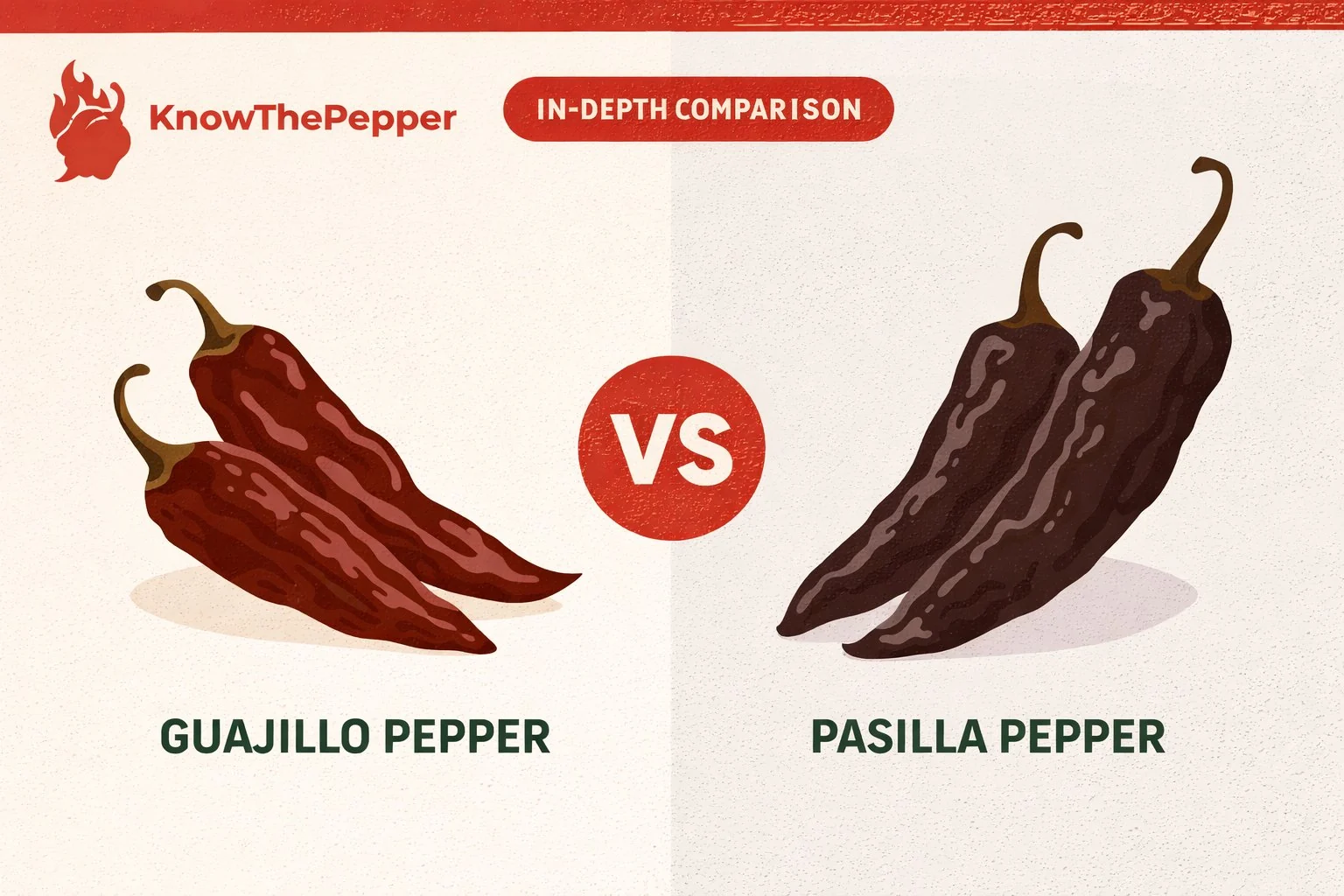
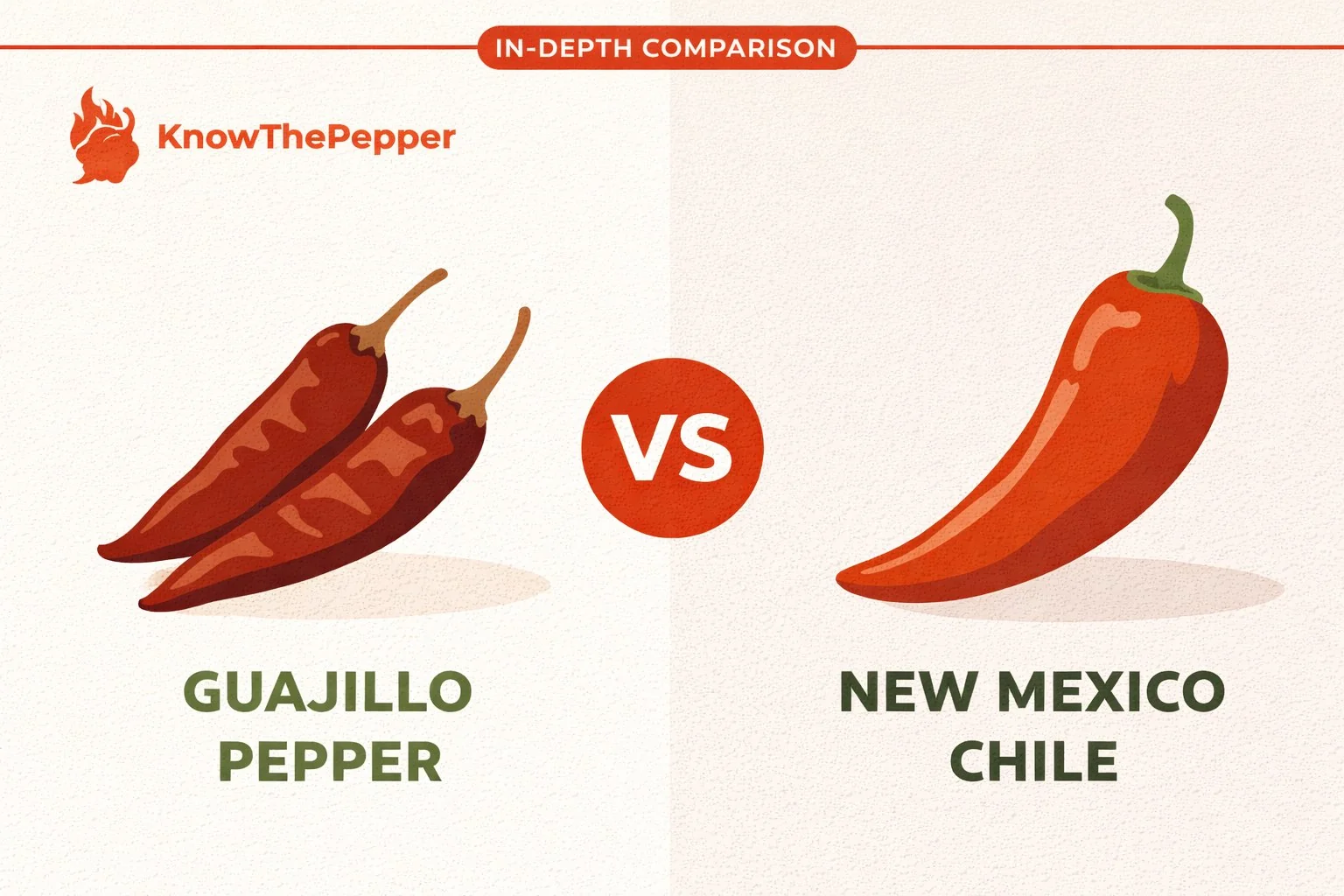
Guajillo is the dried form of mirasol.
Its pod is longer, narrower, smoother, and brighter red, so you can usually separate the two before opening the package.
That identity difference matters because drying concentrates the character of the fresh fruit. Ancho contributes a soft dried-fruit sweetness and a broad base, while guajillo contributes a cleaner red-chile taste with a tangy edge.
Neither one is primarily chosen for aggressive heat. Ancho commonly sits near 1,000 to 2,000 SHU, and guajillo is commonly listed around 2,500 to 5,000 SHU.
The practical answer comes first.
Choose ancho when the sauce needs dark sweetness and body, choose guajillo when it needs brighter color and a clearer chile line, and blend them when the dish needs both.
How Do Ancho and Guajillo Taste Different?
Ancho tastes rounder and sweeter after rehydration. The Chile Pepper Institute describes it with sweet, smoky, and dried-fruit notes, which is why cooks often connect it with raisin, prune, cocoa, or mild tobacco flavors.
Guajillo tastes brighter and less heavy.
Its fruit character can suggest tart berry or tea, while a clean dried pod adds red-chile aroma without making the sauce taste roasted and dark.
Texture changes the result as much as aroma. Rehydrated ancho flesh breaks down readily and adds suspended solids that make a puree feel fuller on a spoon.
Guajillo skin is tougher and can leave small flakes in a blender sauce. A strong blender helps, but a medium-mesh strainer gives a cleaner result when the sauce must pour smoothly over enchiladas or through a birria consomme.
Taste the soaked flesh before building the sauce.
A stale or scorched chile makes the puree bitter, and extra sweetener cannot restore the fruit character that the pod has lost.
Which Chile Should Lead Your Sauce?
Start with the sauce you want to pour. If it must cling to meat or tortillas, ancho should carry more of the blend because its rehydrated flesh makes a thicker puree.
If the sauce should stay vivid red and move easily through broth, guajillo should lead.
Rick Bayless describes guajillo powder as brighter than ancho in an Oaxacan pork marinade, which captures the difference in a practical dish.
That decision often matters before heat. A dark mole-style sauce can taste hollow with only guajillo, while a clear birria broth can look muddy and feel heavy when ancho dominates.
Tomato and cooking time can change either result, so judge the chile puree before the remaining ingredients go into the pot. A spoon dragged through an ancho-heavy puree should leave a visible trail, while a guajillo-heavy puree should settle more quickly.
Use color as evidence, not as the only goal.
A brilliant red sauce still needs enough chile flesh, aromatics, and fat to carry flavor across the finished dish.
How Do You Toast, Soak, and Blend Ancho and Guajillo?
Remove the stems and most loose seeds before the pods reach the pan. Tear large anchos into flatter pieces so every surface has brief contact with the skillet, and open guajillos so their narrow ends do not curl away from the heat.
Toast each piece only until it becomes fragrant and slightly pliable.
Dark smoke, black patches, or a sharp burnt smell mean the chile has crossed from toasted to bitter.
Rick Bayless uses a short toast of about 10 seconds per side in his fish zarandeado marinade. Treat that timing as a cue to pay attention rather than a guarantee, because pan temperature and pod thickness vary.
Cover the toasted pieces with hot water and keep them submerged until flexible. Bayless soaks ancho and guajillo for 20 minutes in his red pozole recipe, which is a useful starting point for whole pods.
Blend with fresh water or stock when the soaking liquid tastes harsh.
Guajillo may need longer blending and straining, while ancho usually becomes smooth sooner and thickens the puree faster.
Which Chile Goes in Mole, Birria, and Enchiladas?
Mole often benefits from ancho because its sweetness and body support nuts, seeds, spices, tomato, and chocolate without turning the finished sauce sharply hot. The Chile Pepper Institute specifically lists ancho as a key chile for Mexican mole sauce.
Guajillo still has a place in mole when the recipe needs red color and a brighter top note.
Rick Bayless uses both chiles in mole coloradito, with twice as much ancho by weight as guajillo in the published ingredient list.
Birria usually reverses that emphasis. A guajillo-led puree keeps the consomme red and pourable, while a smaller amount of ancho can add depth without making the broth resemble a thick enchilada sauce.
For enchiladas, match the chile to the filling and finish. Ancho suits a darker sauce for beef, beans, or cheese, while guajillo suits a brighter sauce for chicken or vegetables.
A recipe name does not set one universal ratio.
Regional versions vary, so preserve the sauce behavior the recipe describes rather than forcing a fixed formula onto every mole, birria, or enchilada.
Can You Substitute Ancho for Guajillo?
Ancho can replace guajillo when the darker color and sweeter flavor will not fight the dish. Begin with the same weight of cleaned chile, then thin the puree with stock and restore brightness with tomato, tomatillo, lime, or vinegar as the recipe allows.
Guajillo can replace ancho when the sauce does not depend on ancho for most of its body.
Begin with the same cleaned weight, then add roasted tomato, cooked onion, toasted tortilla, nuts, or another darker chile if the finished puree feels thin.
Count is a poor conversion because a broad ancho can weigh much more than a narrow guajillo. A kitchen scale protects the chile concentration and leaves only flavor and texture to adjust.
Cayenne can raise heat, but it cannot rebuild ancho sweetness or guajillo fruit. Fresh poblano provides green flavor and water, so it also cannot reproduce the concentrated role of dried ancho.
A mixed correction is often more reliable than a complete replacement.
Two parts guajillo to one part ancho keeps a broth bright with added body, while two parts ancho to one part guajillo keeps a dark sauce rounded with a cleaner red finish.
Should You Use Whole Pods, Powder, or Paste?
Whole pods give the most control because you can inspect color, smell the chile before use, remove the stem and seeds, and stop the toast before bitterness develops. They also let you adjust the soaking liquid and strain only when the skin requires it.
Pure powder saves time in rubs, marinades, and small batches.
Check that the package lists one chile rather than a seasoning blend, because commercial chili powder may contain cumin, garlic, oregano, and salt.
Measure pure powder by weight when replacing whole pods. The stem, seeds, moisture, and pod size make a spoon-for-pod conversion unreliable.
Prepared chile paste is convenient for broths and braises, but salt, vinegar, oil, and preservatives can change the recipe. Read the label before adding the full amount of seasoning requested elsewhere.
Choose the form around the job.
Whole pods are best for a sauce in which chile flavor is central, while pure powder is efficient when chile supports a larger marinade or spice mixture.
How Much Ancho and Guajillo Should a Blend Use?
Build the first blend by cleaned weight, not by pod count. For a balanced starting point, equal weights give ancho body and guajillo brightness without allowing either character to dominate.
Change the ratio after tasting the strained puree.
Add more ancho when the flavor is thin or sharply red, and add more guajillo when the puree is dark, sweet, and missing a fresh chile edge.
Correct texture before correcting heat. Stock or water thins an ancho-heavy sauce, while tomato, onion, tortilla, seeds, or nuts can give a guajillo-heavy sauce more structure.
Salt comes after the puree has cooked in fat or simmered with the base ingredients. Reduction concentrates salt, and dried chiles can taste flatter before their aromas bloom in the finished sauce.
Keep a small portion of the first puree aside.
That reserve lets you restore chile character after dilution without adding dry powder directly to a nearly finished sauce.
How Do You Pick Good Ancho and Guajillo Pods?
Buy ancho pods that are broad, flexible, and dark reddish brown rather than dusty black. The skin should be wrinkled, but the pod should bend without breaking into dry flakes.
Choose guajillos with smooth, taut skin and a deep transparent red when held toward light.
Avoid pale orange pods, broken bags full of seeds, and brittle skins that suggest long storage.
Smell the package when the shop permits it. Good ancho should retain a sweet dried-fruit aroma, while good guajillo should smell clean and distinctly of red chile.
Store both in airtight containers away from heat and sunlight. Whole pods keep their aroma better than preground powder, although any dried chile eventually becomes dull and should be replaced when fragrance is weak.
Buy for the planned dish rather than for a generic pantry slot.
A mole cook needs flexible ancho with plenty of flesh, while a broth or marinade cook benefits from bright, clean guajillo pods that will strain smoothly.
Final Choice
Choose ancho for a dark, sweet, spoon-coating sauce. It is the stronger single-chile option for mole-style bases, bean dishes, beef braises, and enchilada sauces that need to cling.
Choose guajillo for a brighter red, tangier, more fluid sauce.
It is the stronger lead for birria broth, chile colorado, lean-meat adobo, and marinades where color and clean chile flavor matter.
Use both when the dish needs structure and lift at the same time. Rick Bayless combines ancho and guajillo in red pozole and mole coloradito, showing that the two pods solve different parts of one sauce.
If only one is available, preserve the requested texture first and adjust acidity second. Heat is the smaller difference and can be raised separately without adding enough replacement chile to distort the sauce.
The shortest buying rule is easy to apply.
Broad dark ancho builds body, long red guajillo builds brightness, and a measured blend gives the cook control over both.
Ancho Pepper vs Guajillo Pepper FAQ
- Ancho (Dried Poblano) - New Mexico State University Chile Pepper Institute
- Slow-Cooker Red Chile Pozole - Rick Bayless
- Mole Coloradito with Runner Beans - Rick Bayless
- Chile-Marinated Pork, Oaxacan-Style - Rick Bayless
- Fish Zarandeado - Rick Bayless