
Ancho vs Pasilla: How to Tell Them Apart and Cook With Each
Ancho is the broader, sweeter dried poblano for fuller sauces. Pasilla is the long dried chilaca for a darker, leaner finish. Their mild heat ranges overlap, so choose by identity and recipe role.

Ancho and pasilla are different dried Mexican chiles. Choose ancho for sweeter, fuller sauce body and pasilla for a darker, leaner finish. Their mild heat ranges overlap, so shape, flavor, and recipe role matter more than the small SHU difference.
- Identity: Ripe, dried poblano vs Dried chilaca
- Shape: Broad, flat, heart-shaped vs Long, narrow, wrinkled
- Scoville evidence: 1,000 to 2,000 SHU vs 1,000 to 2,500 SHU
- Flavor direction: Sweeter dried fruit vs Darker fruit and tea-like edge
- Sauce role: Builds body vs Adds contrast
- Best first use: Enchilada sauce or adobo vs Mole or dark braise
Ancho Pepper
MediumPasilla Pepper
MediumQuick Comparison
| Attribute | Ancho Pepper | Pasilla Pepper |
|---|---|---|
| Identity | Ripe, dried poblano | Dried chilaca |
| Shape | Broad, flat, heart-shaped | Long, narrow, wrinkled |
| Scoville evidence | 1,000 to 2,000 SHU | 1,000 to 2,500 SHU |
| Flavor direction | Sweeter dried fruit | Darker fruit and tea-like edge |
| Sauce role | Builds body | Adds contrast |
| Best first use | Enchilada sauce or adobo | Mole or dark braise |
Are Ancho and Pasilla the Same Chile?
Ancho and pasilla are two different dried chiles, even though grocery labels sometimes blur the names. The University of Florida IFAS Extension identifies ancho as the ripe, dried form of poblano, while Diana Kennedy distinguishes pasilla as the dried chilaca chile.
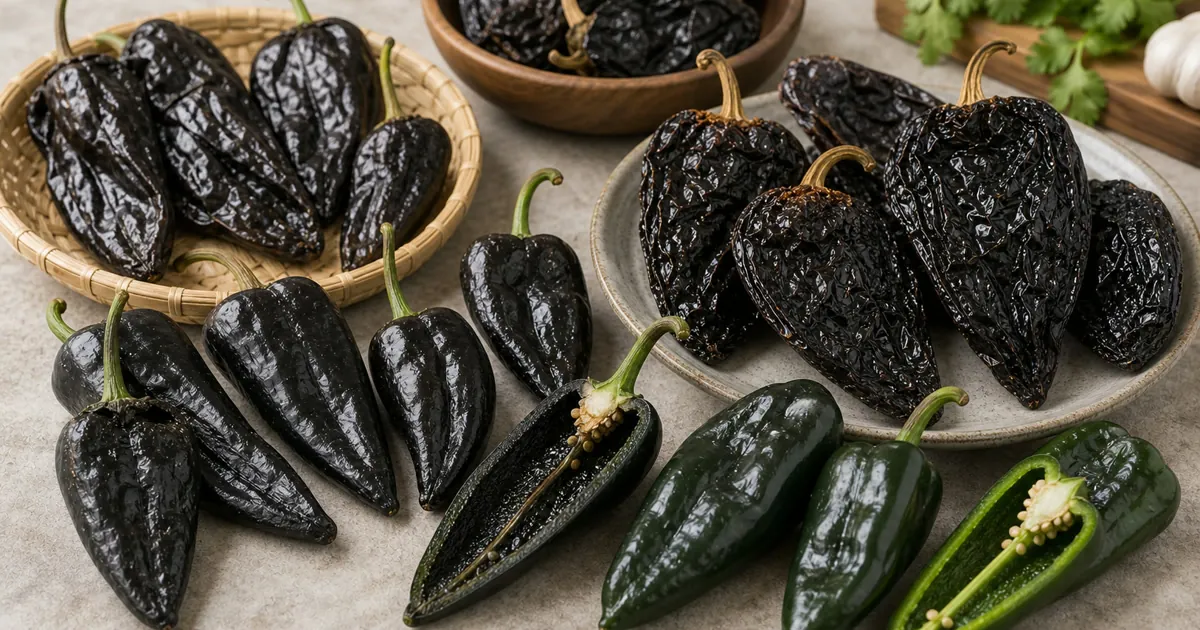
Shape gives you the quickest useful check before cooking. An ancho is broad at the shoulders, flattened, and often heart-shaped, while a pasilla is long, narrow, and deeply wrinkled.
Color alone is less reliable because both pods can look nearly black under store lighting. Check the silhouette first, then look for pliable skin and a clean dried-fruit aroma rather than trusting a bin label by itself.
The label problem matters because the two purees do different work in a sauce.
A wide dried poblano usually contributes more flesh and body, while the slimmer dried chilaca gives less puree per pod and a darker flavor direction.
This comparison covers dried ancho and dried pasilla, not the fresh poblano sold beside bell peppers. The fresh-to-dried relationship is useful for identification, but fresh poblano has different water content and cannot replace either dried chile without changing the recipe.
Is Pasilla Hotter Than Ancho?
Heat should rarely decide this comparison because their published ranges overlap. UF/IFAS places poblano and ancho at 1,000 to 2,000 SHU, while KnowThePepper's sourced pasilla profile uses a 1,000 to 2,500 SHU range.
That 500-SHU difference at the upper edge does not make every pasilla hotter than every ancho.
New Mexico State University's Chile Pepper Institute explains that genetics, weather, growing conditions, and fruit age can all change capsaicinoid concentration.
In a mole or enchilada sauce, the finished dish dilutes either chile with stock, tomatoes, nuts, seeds, or other ingredients. Choose by flavor and sauce body first, then taste the actual batch before adjusting heat.
A package that lists a cultivar or measured heat range gives stronger dosing evidence than the generic name alone.
If the meal must stay mild, prepare the chile puree separately and add it to the main sauce in stages.
Neither range supports treating these chiles as heat-free. Capsaicin can still irritate eyes and skin, so wash your hands after removing stems and seeds and avoid touching your face.
The ranges overlap
UF/IFAS lists ancho at 1,000 to 2,000 SHU, while pasilla commonly reaches about 2,500 SHU. That small overlap means the actual batch matters more than declaring one universally hotter.
How Do Ancho and Pasilla Taste Different?
Ancho generally supplies the rounder and sweeter base. Diana Kennedy's dried-chile descriptions and New Mexico State University references associate ripe dried poblano types with mild heat and dried-fruit character, while the pod's broader flesh produces a fuller puree after soaking.
Pasilla moves in a darker direction, commonly described with raisin, berry, cocoa, or tea-like associations in Mexican chile references. Those words describe a flavor direction, not ingredients that every pod literally contains.
The structural difference becomes clearest after hydration.
Ancho puree tends to feel broad and coating, while pasilla puree is leaner and can leave a slightly tannic finish that keeps a rich sauce from reading as merely sweet.
Age can erase the distinction. Brittle pods with dusty or hay-like aromas may yield weak, flat puree no matter which name appears on the package.
To compare a purchase without turning the test into a recipe, remove the stems and loose seeds, briefly toast one piece of each until fragrant, and soak them in separate bowls.
Blend each with the same measured amount of clean soaking liquid so color, aroma, and body remain easy to compare.
Do not burn the skins to force a stronger aroma. Blackened bitter spots can overwhelm the chile's normal differences and make both samples taste harsh.
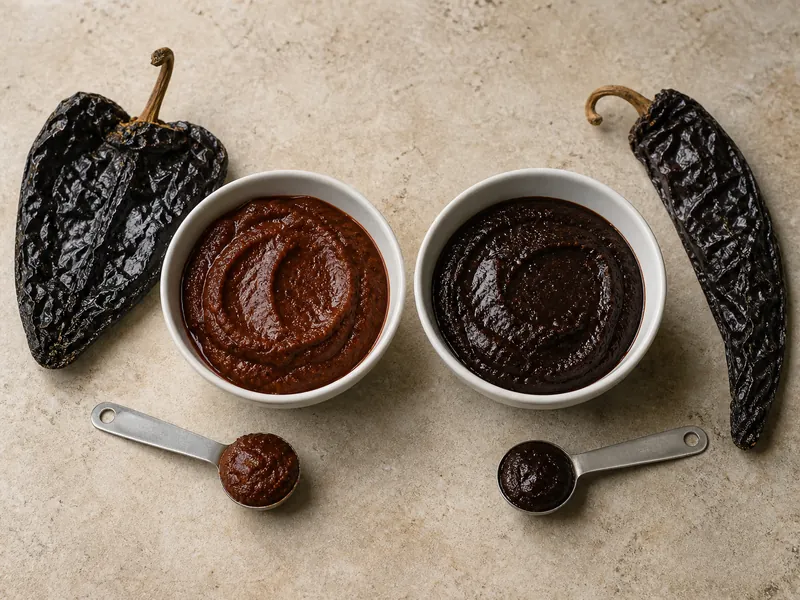
Compare equal purees
Use the same seeded weight and the same amount of blending liquid. The side-by-side result shows sauce body and flavor direction more clearly than dry pod color alone.
When Should You Cook With Ancho or Pasilla?
Choose ancho when one chile needs to carry most of a sauce. Its mild dried-fruit sweetness and fuller puree suit enchilada sauce, tamale filling, adobo, beans, braised beef, and chile paste where body is part of the job.
Choose pasilla when a dish already has body and needs a darker counterweight. It fits black bean soup, long braises, marinades, and mole formulas where nuts, seeds, bread, tortillas, or stock already supply thickness.
Many traditional mole formulas use both because they are complementary rather than redundant.
Ancho fills the middle of the sauce, while pasilla can deepen the finish without requiring more sugar or another thickener.
The recipe name should outrank a general preference. If a mole specifically calls for pasilla, keeping pasilla preserves the chile balance that the recipe author designed, even when ancho is easier to find.
For a simple red sauce built from one dried chile, ancho is usually the more forgiving first purchase.
For a dark sauce that already contains sweet or rich ingredients, pasilla often provides the more useful contrast.
Whole pods also let you control texture better than an unidentified chile powder. A commercial powder may contain salt, cumin, garlic, or several chile varieties, which makes both flavor and substitution ratios harder to predict.
| If the dish needs | Better first choice | Why |
|---|---|---|
| A mild red sauce with its own body | Ancho | The broader flesh produces a fuller puree. |
| A dark counterpoint in a rich sauce | Pasilla | Its leaner, tea-like finish offsets sweet or rich ingredients. |
| A mole recipe that names both | Use both | Each chile supplies a different part of the balance. |
| An emergency swap | Match seeded weight | Pod count hides the large difference in pod size. |
Which Should You Buy First, Ancho or Pasilla?
For an all-purpose dried chile, start with ancho. It gives mild heat, enough flesh to build a smooth sauce, and a sweeter flavor that works across enchiladas, tamales, beans, adobo, and braises.
Choose pasilla when the dish calls for a long narrow dried chilaca or when a rich sauce needs darker fruit and a tea-like edge. It is especially useful when the other ingredients already provide sweetness and body.
Buy both for mole work if the recipe names both.
Treating them as interchangeable removes a deliberate contrast between ancho's broad sweet base and pasilla's leaner dark finish.
When a store label conflicts with the pod in front of you, use the physical evidence. Broad and heart-shaped points to ancho, while long and narrow points to pasilla.
How Do You Buy, Store, and Prep Ancho and Pasilla?
Buy whole pods when possible because they reveal identity and condition better than powder.
Look for intact, flexible skin and a clean aroma, and reject packages with moisture, mold, insect damage, or a stale dusty smell.
A good ancho should bend before it cracks and should feel substantial for its size. A good pasilla can be thinner, but it should still have some flexibility rather than shattering when handled.
For preparation, wipe the skins, remove stems and loose seeds, and open the pods so they toast evenly. Heat each side only until aromatic because scorched chile skin introduces bitterness that soaking cannot remove.
Cover the toasted pieces with hot water until pliable, then blend with fresh water or a clean portion of the soaking liquid.
Taste the soaking liquid first because some batches release bitterness that should not go into the finished sauce.
Store remaining pods in an airtight container away from heat, light, and moisture. Label the container with the purchase date and chile identity because a dark pantry makes long pasillas and other dried pods easier to confuse later.
Substitution
Ancho and pasilla can replace each other in a blended sauce when the recipe does not depend on one chile's identity. Start with 1:1 by seeded weight, not by pod count, because one broad ancho can outweigh several narrow pasillas.
When pasilla replaces ancho, expect a thinner, darker puree with less round sweetness. Add more blended solids or an ingredient already native to the recipe before adding sugar, then judge the sauce again after simmering.
When ancho replaces pasilla, expect more body and a sweeter finish. Reduce other sweet ingredients first, and add acidity or bitterness only when the complete dish needs it.
An ancho substitute decision should preserve the original form as well as the heat band. Compare whole dried chile with whole dried chile, and compare pure powder with pure powder.
A pasilla substitute also needs the recipe's role to remain clear. If the dish specifically names pasilla or depends on its lean dark finish, buying the correct chile is safer than trying to reconstruct that effect with unrelated ingredients.
Do not use pod count as a precision measure. Remove stems and seeds, weigh the usable chile, prepare the puree, and add it in stages so the final sauce controls the conversion rather than a generic ratio.
Ancho Pepper vs Pasilla Pepper FAQ
- University of Florida IFAS Extension, Peppers Ranked by Scoville Heat Units
- New Mexico State University Chile Pepper Institute, Measuring Chile Pepper Heat
- Diana Kennedy, The Art of Mexican Cooking