

For Dried Pasilla, Use Mulato in Mole or Ancho as the Easy-to-Find Swap
Use mulato for the closest dark, earthy replacement in mole or braises. Choose ancho for an accessible mild swap, or combine ancho with guajillo when a brighter red sauce is welcome. First confirm that the recipe means dried pasilla rather than a fresh poblano sold under that name.
Is your pasilla dried or fresh?
True pasilla is a dried chilaca pepper. Mexico's agriculture ministry lists the fresh-to-dried pairing as chilaca to pasilla, while poblano becomes ancho when ripe and dried.
That distinction matters because some stores in the United States use “pasilla” for a fresh poblano. A dried mole recipe and a recipe for roasted green strips are asking for different ingredients even when the package uses the same word.
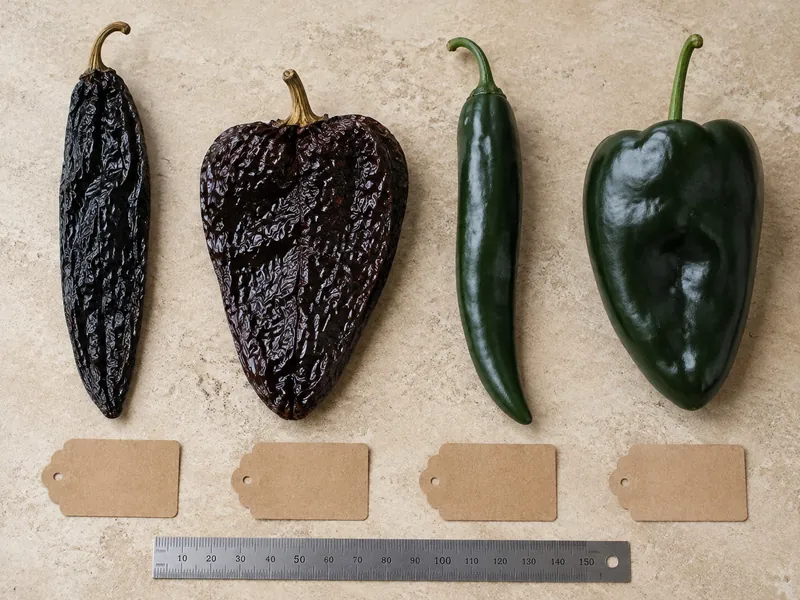
| What you have | Likely identity | Use this substitution path |
|---|---|---|
| Long, narrow, nearly black dried pod | Pasilla or chile negro | Choose another mild dried chile |
| Broad, heart-shaped reddish-brown dried pod | Ancho | It can substitute, but expect sweeter fruit |
| Long, slim fresh dark-green pod | Chilaca | Use in fresh or roasted preparations |
| Broad, shouldered fresh green pod | Poblano | Treat it as a fresh pepper, not dried pasilla |
What must a pasilla substitute preserve?
A useful replacement must do more than overlap pasilla's mild heat. INIFAP describes pasilla as the long dried form of chilaca and studies it specifically for mole, where its dark color, dried-chile flavor, and rehydrated flesh all affect the finished sauce.
Decide which property your dish exposes most clearly before choosing a chile.
| Pasilla contribution | Where you notice it | First replacement to consider |
|---|---|---|
| Dark, earthy dried-fruit flavor | Mole, braises, beans | Mulato |
| Mild chile body | Enchilada sauce, adobo | Ancho |
| Red brightness | Broth, table sauce | Ancho plus guajillo |
| Nutty toasted edge | Salsa, seed-and-chile sauces | Cascabel |
Color and deep flavor dominate in a dark mole. Texture matters more in a chile-based enchilada sauce, while a thin broth can tolerate less puree body.
Which pasilla substitute fits your dish?
Mulato for dark mole and braises
Closest MatchMulato is the closest choice when dark depth matters more than an exact flavor match. Its brown-black color and cocoa-like, dried-fruit character suit mole, beef braises, beans, and sauces built around toasted nuts or seeds.
The pod is usually broad, so compare prepared weight rather than replacing one narrow pasilla with one whole mulato.
Begin with enough soaked mulato puree to restore the sauce's body, then judge sweetness after simmering. A recipe that already contains raisins, ripe plantain, or sweet chocolate may need less of those ingredients.
Ancho when you need an accessible mild chile
Runner-UpAncho is the practical supermarket replacement for a mild dried chile. It brings generous flesh and a rounded raisin-like sweetness, which works well in enchilada sauce, adobo, chili, and marinades.
Its broad fruit and red-brown color make the sauce sweeter and warmer in appearance than pasilla.
Use prepared weight as the first control, but hold back any added sugar until the ancho has cooked into the sauce. If the result lacks pasilla's earthy edge, a small portion of mulato or cascabel is more useful than extra heat.
Ancho and guajillo for a brighter red sauce
Also GreatThis two-chile build works when the recipe needs body and a clean red finish. Ancho supplies mild puree and fruit, while guajillo contributes brighter color, a firmer skin, and a lightly tangy direction.
It is especially useful for enchiladas, red broth, and table sauce where a black-brown result is not required.
Start with more ancho puree than guajillo puree, then adjust after blending. Strain the sauce if the guajillo skin leaves a coarse texture, and do not use this blend as the first choice for a dark mole.
Cascabel for nutty salsa and bean sauces
Cascabel brings a toasted, nutty character that supports roasted tomato salsa, beans, and braised meat. Its round pod contains less flesh than a large ancho, so it works best as a flavor replacement rather than the only source of sauce body.
Toast it gently and blend it with the recipe's existing tomato, seeds, nuts, or broth.
If the sauce becomes sharp or hollow, restore body first and then check acid. Adding several cascabels only to chase volume can raise the toasted bitterness without recreating pasilla.
Fresh chilaca for recipes that never needed a dried chile
Fresh chilaca is the correct family match when the recipe calls for a long green pepper to roast, blister, or cut into strips. It is the fresh fruit that becomes pasilla after drying, so it preserves shape and green-pepper use better than any dried replacement.
It does not supply the concentrated dark flavor of a dried pod.
Use it in rajas, roasted salsa, eggs, or a fresh chile filling. For mole or a dried-chile sauce, choose mulato or ancho instead of trying to char fresh chilaca until it behaves like pasilla.
How much substitute should you start with?
Compare prepared weight when you can, not whole pod count. A broad ancho can contain much more usable flesh than a narrow pasilla, and brittle old pods may weigh less and absorb liquid differently from supple ones.
Weight controls sauce body more reliably, but it still cannot guarantee identical heat or flavor.
- Prepare both chiles the same way. Remove stems, damaged tissue, and loose seeds before weighing.
- Use part of the substitute first. Blend it into a small portion of the recipe liquid or sauce base.
- Match texture before heat. Compare puree thickness and add reserved liquid only as needed.
- Let the sample settle. Taste after the chile has hydrated or cooked through the same stage as the recipe.
- Scale the accepted change. Add the tested amount to the main batch, then make one final adjustment.
How do you prepare the swap without bitterness?
Handle mulato, ancho, guajillo, and cascabel as dried ingredients rather than dropping them directly into a wet sauce. NMSU's postharvest guide identifies these as dehydrated chile types, and their dry skins need controlled heat and moisture before they blend smoothly.
- Open and inspect the pods. Discard any with mold, insect damage, or a stale musty smell.
- Remove the stem and loose seeds. Keeping some inner tissue preserves flavor, but hard seeds can make a puree gritty.
- Toast briefly. Warm each side only until the aroma rises and the skin becomes pliable. Blackened spots taste bitter.
- Soak until flexible. Use hot water or recipe broth, then bend the thickest part to check that it has softened.
- Blend with measured liquid. Add more only after the skins break down, because a flooded blender makes the sauce difficult to thicken.
Taste the soaking liquid before using it. Keep it when it tastes clean and chile-rich, but discard it when it tastes sharply bitter or stale.
Strain a mole or smooth table sauce when visible skin fragments remain; rustic beans or a braise may benefit from keeping that texture.
Can pasilla powder or flakes replace a whole chile?
Powder or flakes can replace pasilla's seasoning role, but they do not replace its rehydrated flesh. That makes the form change easier in soup, beans, a dry rub, or a sauce that already has tomato, nuts, seeds, or another source of body.
It is harder in a puree where whole chiles are the main thickener.
| Form available | How to use it | What remains missing |
|---|---|---|
| Whole dried substitute | Toast, soak, and blend | Only the flavor and color gap |
| Fine powder | Bloom a small amount in existing oil or hot liquid | Chile flesh and some fresh aroma |
| Coarse flakes | Hydrate early in a long-cooked dish | Uniform puree texture |
| Commercial paste | Read the label, then test separately | Control over salt, acid, and added spices |
Start with a small measured amount because grind size and freshness change how quickly flavor disperses. Record the brand and amount that worked instead of turning the result into a universal spoon-per-pod conversion.
When does the sauce color change the answer?
A substitute that tastes acceptable can still make the finished dish look unrelated to the intended sauce. Mulato reinforces a brown-black mole, ancho moves toward warm red-brown, and guajillo produces a clearer brick-red direction.
The difference matters most when the chile sauce is visible on the plate rather than buried in a stew.
For enchiladas or a red broth, the brighter color may be an advantage. For a dark mole, combine guajillo with mulato or ancho instead of letting it carry the entire chile base.
- Choose dark depth for mole, beef braise, and black-bean sauce.
- Choose red clarity for enchiladas, pozole-style broth, and bright table salsa.
- Ignore cosmetic precision when the chile is a small background note in a dark stew.

Which pasilla substitutions usually fail?
- Cayenne alone: it raises heat but contributes almost no rehydrated chile flesh, dark fruit, or sauce body.
- Chipotle as a neutral replacement: smoke becomes a new dominant flavor. Use it only when the recipe already welcomes smoke.
- A fresh green chile in mole: fresh water and vegetal flavor pull the sauce away from the concentrated dried-chile base.
- Leaving pasilla out of a chile-based sauce: omission is reasonable when one pod is a background note in a large stew, but not when dried chile puree defines the sauce.
How do you correct the sauce after blending?
Taste after the substitute has fully hydrated and the sauce has reached its intended cooking temperature. Change one variable at a time, because sweetness, bitterness, color, body, and heat can hide one another.
Add a small amount of mulato puree, then simmer briefly before tasting again.
Use reserved chile puree or another solid already present in the recipe instead of adding random starch.
Dilute with the unsalted sauce base and check for scorched skins. Sugar can conceal bitterness without removing it.
Increase the non-chile portion of the recipe. Acid may brighten the sauce, but it does not remove capsaicinoids.
Balance with recipe-appropriate acid or a darker chile before adding more salt.
Stop when the correction restores the dish's direction, even if it does not imitate pasilla perfectly. Chasing an exact copy with several late additions usually makes the sauce muddy.
Substitution tip: When substituting Pasilla Pepper, start with less of a hotter substitute and add more to taste. For milder substitutes, increase the quantity.
Our swap ratio calculator gives precise conversion amounts, and the heat unit converter translates between Scoville and other scales.
Questions about replacing pasilla chile
- Growing Chiles in New Mexico, Guide H-230 — New Mexico State University
- Postharvest Handling of Dehydrated Chiles, Guide H-236 — New Mexico State University
- Ahora es cuando chile verde — Secretaría de Agricultura y Desarrollo Rural
- Physicochemical and capsaicinoid analysis of pasilla chile for mole — INIFAP