Banana vs Cubanelle: Tangy vs Sweet Frying

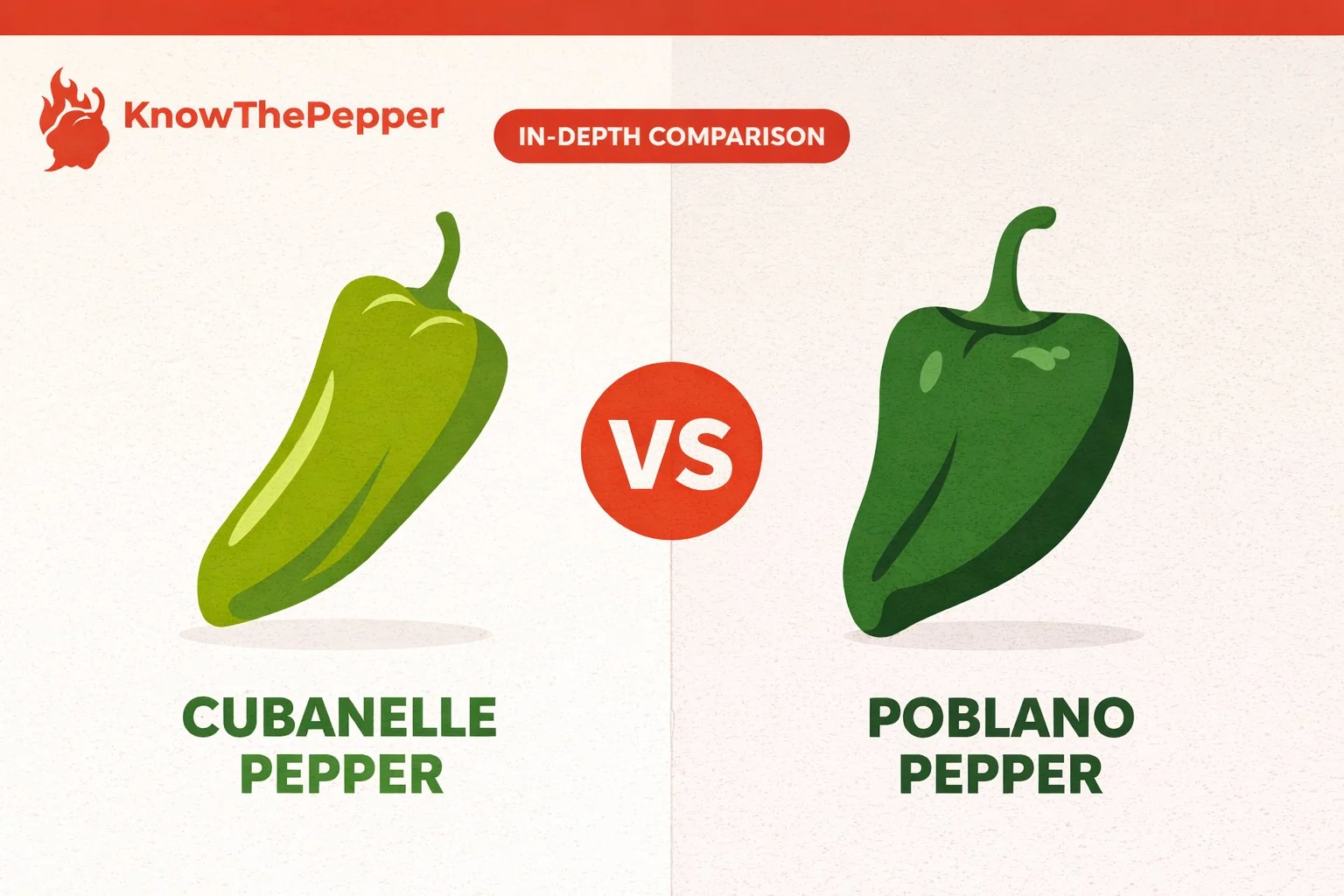
Banana peppers and cubanelle peppers are both mild, sweet, thin-walled peppers that sit at the very bottom of the Scoville scale — each registering 0-0 SHU in their sweetest forms. The differences between them are almost entirely about flavor character and culinary application rather than heat. Knowing which to reach for comes down to texture, taste profile, and what you're cooking.

Banana and Cubanelle peppers arranged side by side with sliced examples
Quick Comparison

Banana Pepper measures 0–500 SHU while Cubanelle Pepper registers 100–1K SHU. That makes Cubanelle Pepper about 2x hotter by upper SHU range. Banana Pepper is known for its mild, tangy, slightly sweet flavor (C. annuum), while Cubanelle Pepper offers sweet and mild notes (C. annuum).

Banana Pepper
0–500 SHU
Mild · mild, tangy, slightly sweet
Cubanelle Pepper
100–1K SHU
Medium · sweet and mild
  • Heat difference: Cubanelle Pepper is about 2× hotter by upper SHU range
  • Species: Both are C. annuum
  • Best for: Banana Pepper excels in everyday cooking and salsas, Cubanelle Pepper in fresh salsas and mild recipes

Banana Pepper vs Cubanelle Pepper Comparison

Attribute Banana Pepper Cubanelle Pepper
Scoville (SHU) 0–500 100–1K
Heat Tier Mild Medium
vs Jalapeño n/a n/a
Flavor mild, tangy, slightly sweet sweet and mild
Species C. annuum C. annuum
Origin n/a Cuba

Banana Pepper vs Cubanelle Pepper Heat Levels

Both peppers land at the absolute floor of the mild heat spectrum - 0 SHU for their sweetest cultivars, with some banana pepper varieties creeping up to a barely perceptible warmth in certain growing conditions. Neither will challenge anyone's tolerance.

For context, a guajillo's moderate dried-pepper warmth sits at roughly 2,500-5,000 SHU - meaning even a spicy banana pepper variant is still dramatically milder than a guajillo at its gentlest. These are peppers you can eat whole without flinching.

The distinction worth noting: banana peppers actually come in two types - the sweet banana pepper (essentially 0 SHU) and the hot banana pepper, sometimes called Hungarian wax, which can nudge toward 500 SHU or slightly beyond. Cubanelles, by contrast, are consistently non-hot across virtually all cultivars. If you're buying unlabeled peppers at a farmers market, a quick taste test settles any uncertainty fast.

Capsaicin content in both is negligible to nonexistent. The science behind why peppers produce heat involves capsaicinoid binding to TRPV1 receptors - a mechanism that simply isn't triggered at these SHU levels. Both peppers are genuinely appropriate for heat-sensitive diners, children, and anyone who wants pepper flavor without the physiological burn response.

Flavor Profile Comparison

Banana Pepper
0–500 SHU
mild tangy slightly sweet
C. annuum

Banana pepper is a mild, curved yellow chile in the Capsicum annuum pepper group group.

Cubanelle Pepper
100–1K SHU
sweet mild
C. annuum

Walk through any Italian neighborhood market in New York or a Cuban home kitchen, and you will almost certainly find cubanelles.

Start with aroma, because that's where cubanelles assert themselves first. Fresh cubanelles carry a grassy, slightly floral scent - almost reminiscent of green bell pepper but thinner and more delicate. Banana peppers, by comparison, smell tangier on the nose, with a faint acidic brightness that hints at the vinegary pickled form most people encounter in delis.

In terms of taste, cubanelles are sweeter and more vegetal when raw, with a thin skin that cooks down quickly into silky, almost buttery strips. The flavor mellows considerably under heat, losing its raw grassiness and developing a gentle sweetness. They're closer to a refined bell pepper than anything else.

Banana peppers bring more tang to the table - a subtle tartness that persists even when cooked, making them more assertive in raw applications like salads and sandwiches. The pickled version amplifies this quality dramatically, which is why they're a staple on hoagies and antipasto plates.

Texturally, both are thin-walled and floppy compared to bell peppers, but cubanelles are slightly more irregular in shape - longer, twisted, and tapered - while banana peppers are more uniformly cylindrical. This matters for stuffing: banana peppers hold their shape better. Cubanelles tend to collapse more readily during cooking, which is actually desirable in Italian frying applications.

For raw eating, banana peppers win on brightness. For cooked dishes where you want the pepper to melt into the background, cubanelles are the better pick.
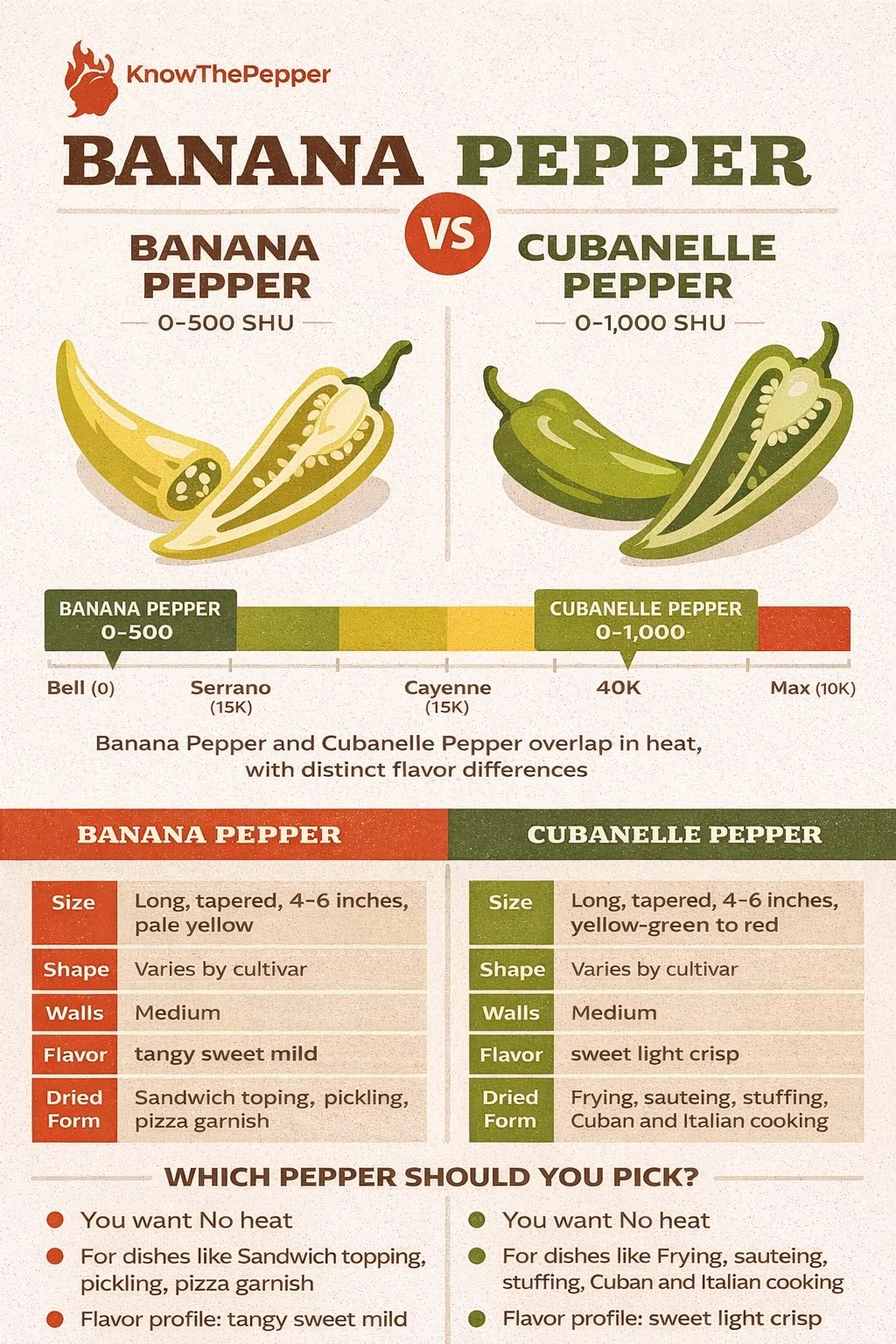
Banana Pepper and Cubanelle Pepper comparison

Culinary Uses for Banana Pepper and Cubanelle Pepper

Banana Pepper
Mild

Pickling is the banana pepper's strongest kitchen role. The National Center for Home Food Preservation publishes a tested yellow pepper rings formula that explicitly includes yellow banana peppers and uses 5% vinegar for water-bath processing.

View full profile
Cubanelle Pepper
Medium

Cubanelles shine in high-heat applications where bell peppers fall flat. Toss them whole into a dry cast-iron skillet and let them blister - the thin skin chars quickly, the flesh softens, and the sweetness concentrates.

View full profile

Cubanelles are the pepper of choice in Italian-American cooking - specifically for frying peppers, the classic preparation where thin strips are sauteed in olive oil with onions and sometimes sausage. Their thin walls cook in minutes and develop a sweet, slightly caramelized character. They're also traditional in Puerto Rican and Cuban sofrito, where they're blended with onion, garlic, and herbs as a flavor base. For a direct comparison of how cubanelles stack up against another mild cooking pepper, the cubanelle vs. poblano matchup in terms of heat and body is worth reading - poblanos are noticeably thicker and carry a faint earthiness that cubanelles lack.

Banana peppers shine in cold applications. Raw rings on sandwiches, layered into salads, or stuffed with cream cheese and served as an appetizer - these are their best uses. Pickled banana peppers are practically essential on Italian beef sandwiches and Chicago-style hot dogs (the mild version). The heat difference between banana peppers and Hungarian wax peppers matters here: if your recipe calls for pickled banana peppers and you grab hot Hungarian wax by mistake, the result will be noticeably spicier.

For stuffing, banana peppers are the practical choice - their consistent cylindrical shape accommodates fillings cleanly. A classic preparation: halve lengthwise, fill with a mixture of cream cheese, sharp cheddar, and herbs, then bake at 375°F for about 20 minutes.

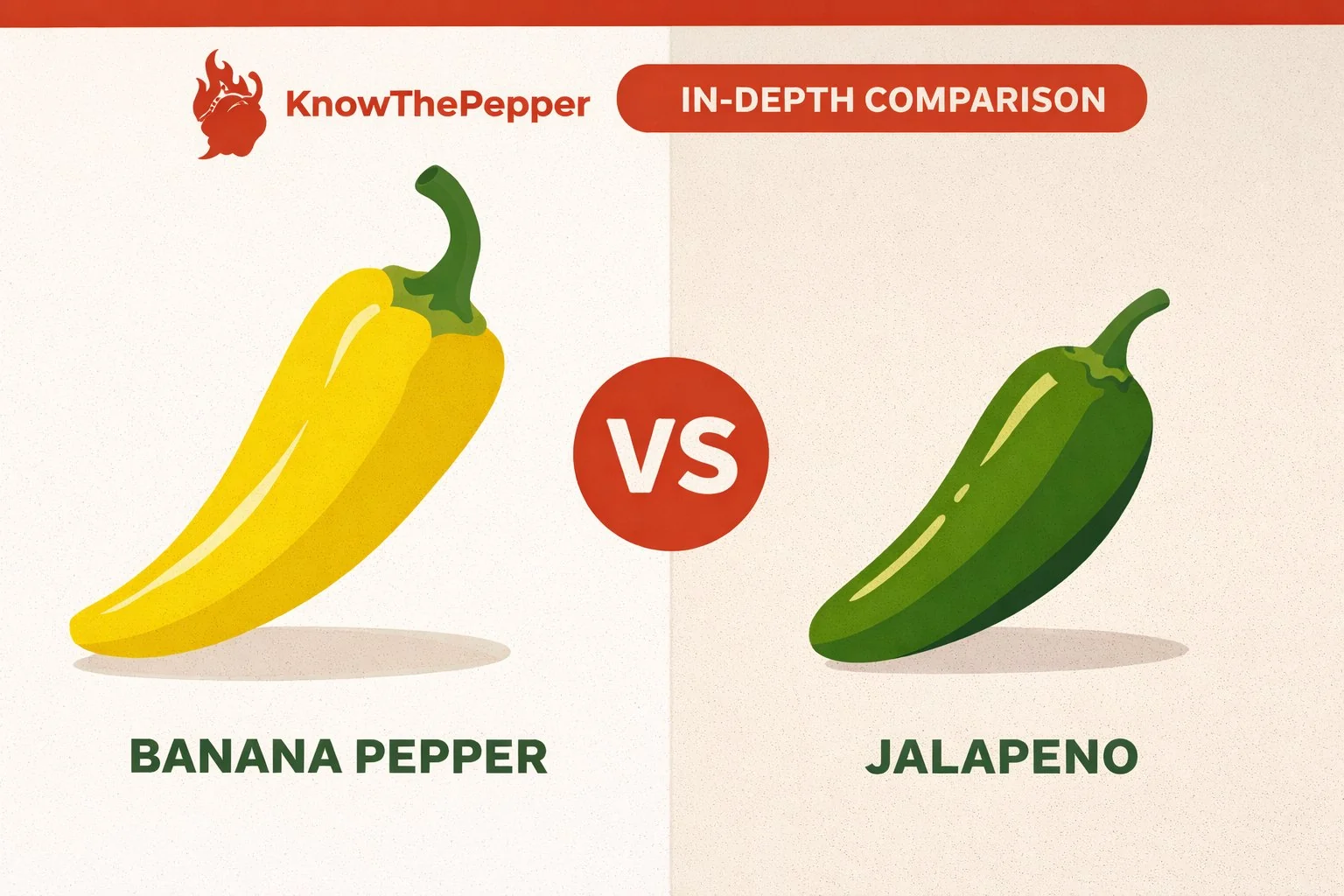
Substitution ratios are essentially 1:1 between these two peppers in most cooked recipes. Raw substitutions work too, though the slight tang of banana pepper will be noticeable if you swap it into a dish designed around cubanelle's neutral sweetness. If you're comparing either to a jalapeño - a common reference point - the banana pepper vs. jalapeño contrast in raw heat shows just how dramatically different these mild peppers are from even a moderately spicy variety.

Which Should You Choose?

Choose cubanelles when heat is irrelevant and texture is everything - they're the superior frying pepper, better suited to Italian-style preparations, sofrito bases, and any dish where you want the pepper to cook down into something soft and sweet.

Reach for banana peppers when raw brightness matters, when you need a consistent shape for stuffing, or when you're building a sandwich or cold dish that benefits from a little tangy edge. Pickled banana peppers are essentially their own category - no cubanelle substitution works there.

For heat-sensitive cooking or feeding guests who avoid spice entirely, both are safe choices. The practical distinction is cooking method: high-heat saute favors cubanelles, while raw or lightly cooked applications favor banana peppers. Neither will ever be mistaken for a hot pepper, which is precisely the point - these are flavor-first vegetables that happen to be classified as peppers.
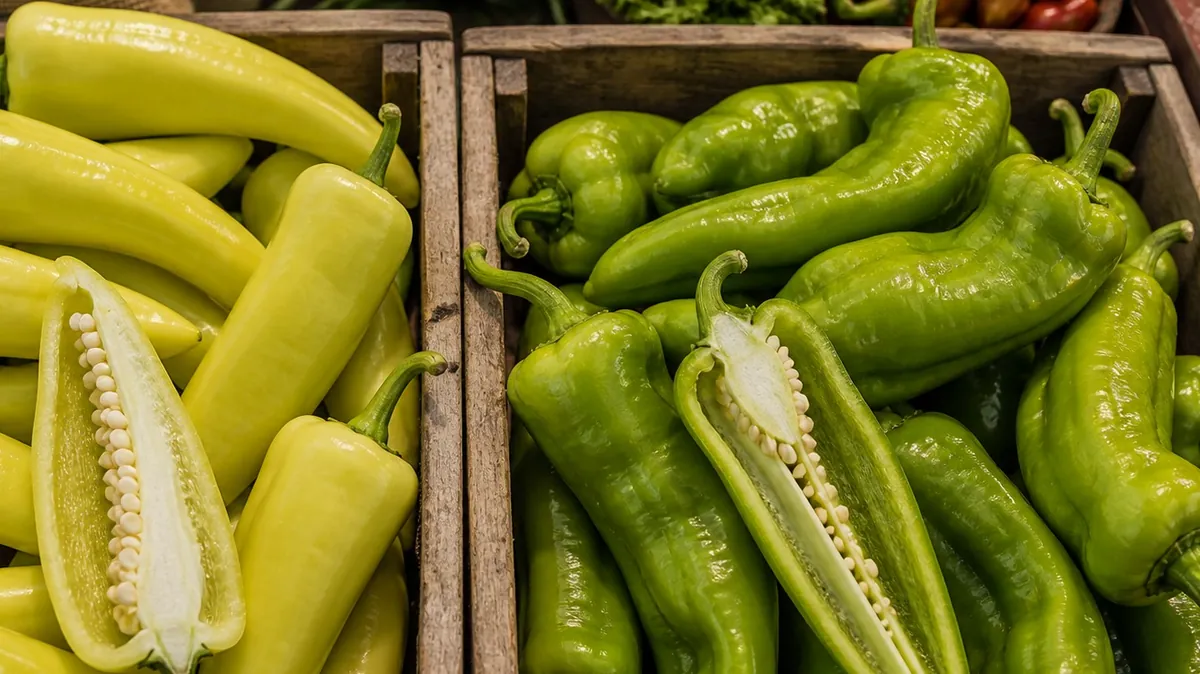
Can You Substitute One for the Other?

Start near 1:1 by amount. The heat ranges are close enough that flavor, form, and recipe role matter more than a strict Scoville conversion.

Growing Banana Pepper vs Cubanelle Pepper

Growing notes

Banana Pepper

Grow sweet banana peppers with the same warm-season rules used for other C. annuum peppers. University of Minnesota Extension recommends starting pepper seed about eight weeks before outdoor planting and transplanting after nighttime lows are above 50 degrees F. Warm soil and steady moisture matter more than heavy fertilizer.

Choose seed or starter plants labeled sweet banana if your goal is mild pickling rings. Hot banana, Hungarian wax, and mixed wax-pepper seed can look close at the seedling stage, so tag plants early if you grow more than one yellow wax type.

A hot fruit on a plant sold as sweet banana pepper is not proof that today's flower cross-pollinated into a hot fruit. Cross-pollination mainly matters when saved seed is planted in a later generation.

Growing notes

Cubanelle Pepper

Cubanelles are among the more forgiving peppers to grow, which makes them a good choice for gardeners who want reliable production without fussing over soil conditions. Start seeds indoors 8–10 weeks before last frost - pepper seed-starting and transplant timing after soil temperature reaches 65°F consistently gives them the best start.

Plants typically reach 24–30 inches tall and produce heavily once established. Days to maturity run around 65–70 days from transplant to green-stage harvest, which is when most cooks want them.

They prefer full sun and well-drained soil with consistent moisture. Inconsistent watering leads to blossom drop and uneven fruit set.

Where They Come From

Origin & background

Banana Pepper

Origin data pending · C. annuum

Banana pepper has a weaker documented origin trail than named landraces or university-bred cultivars. The sources used for this profile support the species and market type, but they do not support a precise single breeder, town, or year.

The broader pepper species has deep roots in the Americas, while banana pepper as shoppers know it is tied to fresh-market and pickling use in North American gardens, delis, and grocery jars. That distinction matters: a species-origin claim is not the same as a cultivar-origin claim.

Origin & background

Cubanelle Pepper

Cuba · C. annuum

The cubanelle takes its name from Cuba, where it has been cultivated for centuries as part of the island's essential cooking trinity alongside onion and garlic. Cuban immigrants brought it to the United States, particularly to New York and Florida, where it became a fixture in Latin grocery stores long before specialty produce became mainstream.

Italian immigrants adopted the pepper enthusiastically, calling it the Italian frying pepper - a name that stuck in northeastern U.S. markets.

Buying & Storage

Whether you’re shopping for Banana Pepper or Cubanelle Pepper, the same quality indicators apply. Fresh peppers should feel firm and heavy for their size, with taut, glossy skin and no soft or wet spots. Minor stem cracks known as “corking” are perfectly normal and often indicate a mature, flavorful pod.

Selection

What to look for

  • Firm pods with taut skin and consistent color
  • Should feel heavy relative to size
  • Minor stem cracks (“corking”) are normal
  • Avoid anything soft, shriveled, or with dark wet spots

Storage

How to store them

  • Fresh: Paper bag, crisper drawer, 1 to 2 weeks
  • Frozen: Wash, dry, freeze on sheet pan, 6+ months
  • Dried: Airtight and away from light, up to 1 year

Mistakes to avoid

Common misses

Banana Pepper

  • Equating green with unripe. Different products.
  • Overcooking. Cell walls break down fast.
  • Sealed plastic storage. Causes rot. Use paper bags.

Common misses

Cubanelle Pepper

  • Equating green with unripe. Different products.
  • Overcooking. Cell walls break down fast.
  • Sealed plastic storage. Causes rot. Use paper bags.
Final call

Banana Pepper vs Cubanelle Pepper

Banana Pepper and Cubanelle Pepper occupy very different positions on the heat spectrum. Cubanelle Pepper delivers about 2× more upper-range heat with its distinctive sweet and mild character. Banana Pepper, with its mild, tangy, slightly sweet profile, excels in everyday cooking.

Heat gap about 2× by upper range Banana Pepper mild, tangy, slightly sweet Cubanelle Pepper sweet and mild
Additional Banana Pepper and Cubanelle Pepper comparison view

Service Examples

Choose banana pepper when the dish needs tangy sweetness, a narrow ring shape, and a pepper that is easy to pickle. It is the better fit for sub sandwiches, pizza, chopped salads, antipasto plates, and vinegar-forward relish because the flesh stays bright and the heat usually stays very low.

Choose cubanelle pepper when the dish needs a larger frying pepper with thin walls and a mild green-pepper sweetness. Cubanelle is better for sauteed peppers and onions, sofrito-style bases, stuffed mild peppers, and quick skillet dishes where the pod should soften without turning watery.

For sandwiches, banana pepper wins because brine is part of the appeal. For the skillet, cubanelle wins because its broader pod gives more flesh and less sharp vinegar flavor.

Swap Limits

Banana pepper can replace cubanelle in raw salads or chopped sandwich toppings, but it is not ideal for stuffing. The pod is usually too narrow, and pickled banana peppers bring acid that changes rice, meat, and cheese fillings.

Cubanelle can replace fresh banana pepper in cooked dishes at a 1:1 volume ratio, but it will not taste like a pickled topping unless you add vinegar and salt separately. If a pizza recipe calls for banana pepper rings, cubanelle strips will taste milder and greener.

The deciding question is form. Use banana pepper for rings and brine. Use cubanelle for strips, frying, and stuffing.

Buying And Prep Notes

Fresh banana peppers should feel firm and glossy, with pale yellow to light green skin. Pickled jars should have clear brine and intact rings. Very soft rings usually mean the jar will taste flat on sandwiches.

Cubanelle peppers should be long, slightly wrinkled, and firm at the stem. Avoid pods with soft shoulders if they will be stuffed, because thin walls split easily once heated.

Slice banana peppers crosswise for rings. Slice cubanelle lengthwise for frying strips, or cut a long window in the side if stuffing. Those prep shapes are the main reason the two peppers do different jobs in the kitchen.

Quick Choice Matrix

Use banana pepper for pizza, hoagies, pickles, chopped salads, and bright vinegar bite.

Use cubanelle for frying, stuffing, sofrito, sausage-and-pepper skillets, and mild cooked pepper flavor.

If the recipe says pickled, choose banana pepper. If it says fry or stuff, choose cubanelle.

Common Mistake

The common mistake is using pickled banana peppers in a cooked cubanelle recipe. Brine can make the whole pan taste sour before the pepper has time to soften.

Ratio Note

Use 1 cup cubanelle strips for 1 cup fresh banana pepper strips in cooked dishes. For pickled banana peppers, replace only the pepper volume and add vinegar separately.

Cooking Texture Difference

Banana peppers stay snappy when sliced thin, especially after pickling. That makes them useful as a cold or room-temperature accent, but less useful as the main cooked pepper in a pan.

Cubanelle softens faster and gives more pepper flesh per pod. It can brown lightly at the edges, fold into onions, or hold a filling without the sharp brine note that defines pickled banana peppers.

If the dish needs crunch, acidity, and rings, banana pepper is right. If the dish needs a mild pepper that becomes part of the cooked base, cubanelle is right.

Do Not Use When

Do not use pickled banana peppers as the main pepper in sausage-and-pepper skillets unless you want vinegar to lead. Do not use cubanelle as a pizza-ring replacement unless you add acid, salt, and a thinner slice.

Shopping Shortcut

Shopping shortcut: buy banana peppers by jar quality when the dish is cold, and buy cubanelles by pod firmness when the dish is cooked.

Final Choice

Final choice: banana pepper is the better condiment pepper, especially when sliced, pickled, and served cold. Cubanelle is the better cooking pepper, especially when the recipe needs a mild pod that can soften in oil, carry onions and garlic, or hold a filling. If the dish would suffer from vinegar, do not choose jarred banana peppers. If the dish would suffer from a thin, soft cooked strip, do not choose cubanelle.

Fact-Checked & Expert Reviewed
Editorial Standards: Head-to-head comparisons include blind tasting when applicable. Heat levels cross-referenced with multiple sources. All substitution ratios tested side-by-side.
Review Process: Written by James Thompson (Lead Comparison Reviewer) , reviewed by Karen Liu (Lead Fact-Checker & Science Editor) . Last updated June 26, 2026.

Banana Pepper vs Cubanelle Pepper FAQ
In cooked dishes, they substitute 1:1 without major issues — both are thin-walled, mild, and cook quickly. Raw applications are trickier: banana peppers carry a slight tang that cubanelles lack, so the flavor shift will be noticeable in salads or sandwiches.

Cubanelles are the traditional choice for Italian frying peppers — their thin skin collapses into silky strips in hot oil within a few minutes. Banana peppers can be fried but hold their shape more stubbornly and don't develop the same soft, sweet character.

Sweet banana pepper cultivars and cubanelles both register at essentially 0 SHU — well below any perceptible heat threshold. Some banana pepper varieties labeled 'hot' can reach around 500 SHU, but standard grocery store banana peppers and all common cubanelle cultivars are genuinely non-spicy.

The pickling brine — typically white vinegar, salt, and sometimes sugar — amplifies the natural tartness of banana peppers and softens their texture considerably. Fresh banana peppers have a mild, slightly tangy crunch; pickled ones are sharper, softer, and more acidic, which is why they pair so well with fatty meats and rich cheeses.

You can, but cubanelles' irregular tapered shape makes clean stuffing harder than with the more cylindrical banana pepper. For baked stuffed peppers, banana peppers hold fillings more reliably; cubanelles work better when the stuffing is loose or the pepper is halved rather than kept whole.

Sources & References
KL
Fact-checked by Karen Liu
Research Contributor
SHU Verified
Sources Cited
Expert Reviewed
All Comparisons Browse Peppers Scoville Scale